


By Jack Sargeant
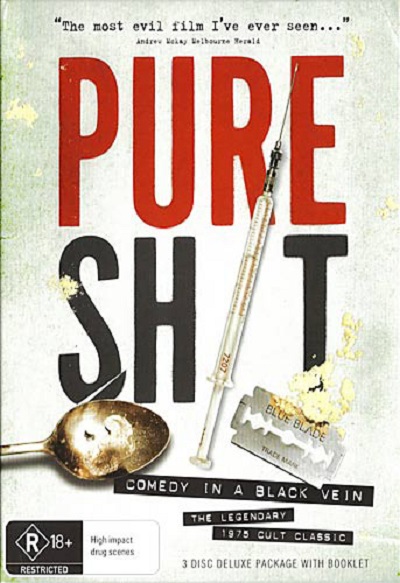
With the passing of writer/director Bert Deling over the Christmas period, Australia lost one of its most potent and singular cinematic voices. Though he would later toil in the script department on TV’s Neighbours, on various games, and on children’s television like The Ferals (along with top quality small screen product including Louis Nowra’s The Last Resort, the classic eighties music drama Sweet & Sour, and the telemovie Matthew & Son), Bert Deling’s hard-nosed reputation was built on his scabrous 1975 cult classic Pure Shit.
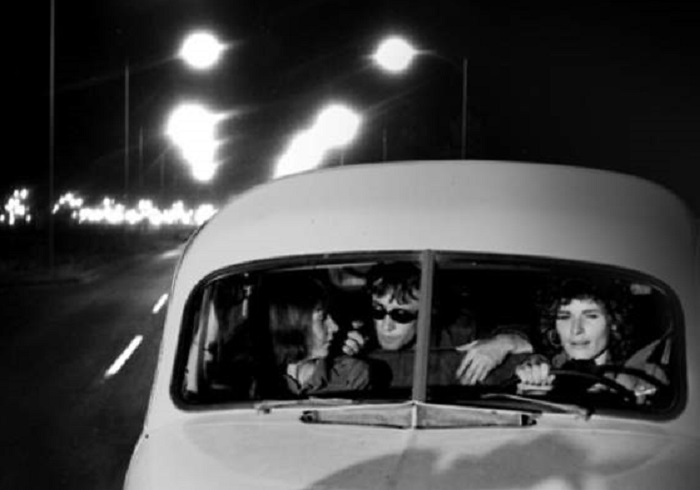
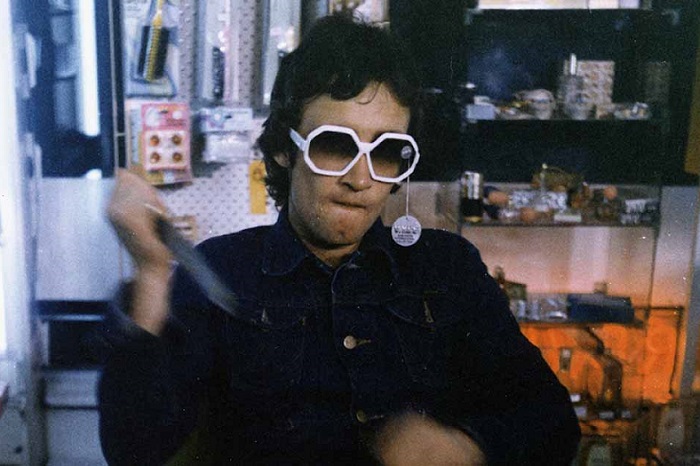
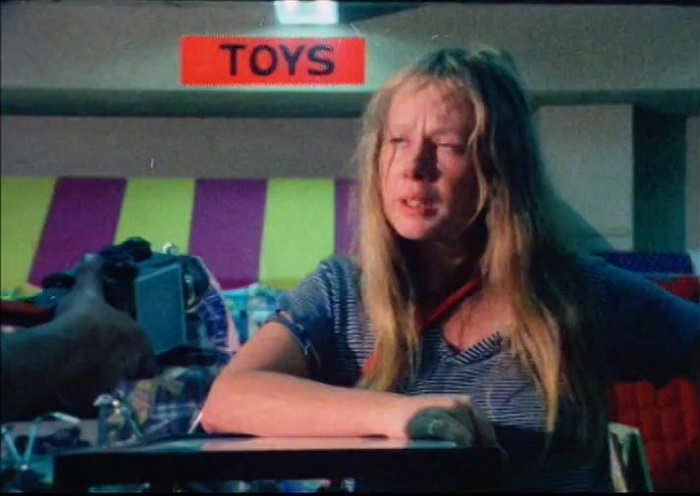
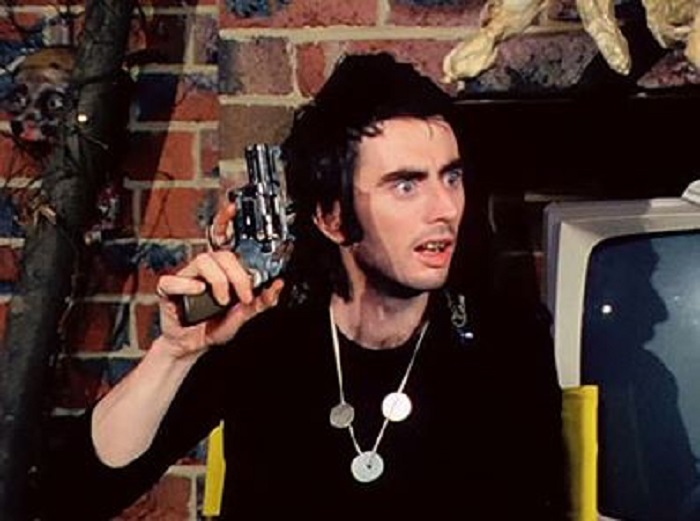
For its time, Bert Deling’s Pure Shit (aka Pure S…) was a unique Australian take on the drug film. A story of narcotics and crime that avoided the pseudo-moralistic tongue-clicking common in much of the media, it was unashamedly located deep within Melbourne’s heroin milieu. Predominantly taking place over one night, the film tells of a quartet of drug users increasingly anxious to score. Furiously paced, the film follows the denim-clad junky misfits as they drive around the city all night, searching endlessly for heroin. The protagonists become ever more desperate in their dealings as they are ripped off by petty drug dealers, chased by a mob of violent beer-swilling skinheads, and forced to deal with their own (often thoroughly drug fucked) associates. With its scenes of people shooting up in grubby squats, vomit slathered overdoses, grotty slum living, nasty and brutal cops, and the reality of street life, Pure Shit still retains a unique authenticity, and a palpable sense of the squalor of the protagonists’ lives.
Director Bert Deling recalls that, amongst many young people in the seventies, there was a divide between notions of “good” and “bad” drugs, between drugs like marijuana and drugs like heroin. Deling first became interested in what would become Pure Shit when he saw heroin make inroads into the creative community. “I was gobsmacked by this, and I was interested to find out why people were doing it,” the director told FilmInk in 2009 upon the film’s DVD release. “At that time, there wasn’t a lot of heroin use. There was very little organised selling of it. People who used opiates of any kind tended to break into chemist shops at night.”
Deling began collecting stories about heroin use from users and ex-users who he met through The Buoyancy Foundation, a place he remembers as “the very first safe place for these kids. I sat around there and talked and listened and listened and listened, and out of that came a conglomeration of stories that I wrote up into a script.”
Then in its infancy, the newly formed Australian Film Commission funded the movie. “We were there when the whole thing started,” Deling explained to FilmInk. “Gough Whitlam came to power, and once they decided that there was going to be a Film Commission and there was going to be funding for quite a while, it was a bit chaotic.” It was during this period that Pure Shit was started. “Initially, the idea that we were all talking about was that the Film Commission would be run by filmmakers; they’d come in for three or six months, commit totally to the job, and then go back and make films. That was the dream. It was like that for a short time, but then the government bureaucrats came in and said, ‘That’s out the window’. Apparently, it would have been too complicated, and there would have to be interviews every three or six months. So everyone had to be on for three years.”
Invariably, the long tenure on the board meant that filmmakers would have to take time off from their careers. Suddenly it was no longer filmmakers at the commission, but bureaucrats. This led to a cultural shift in what was considered worthy of funding. Unfortunately for Deling, “Pure Shit straddled that [first] period with the next, when the bureaucrats took the whole thing over. Pure Shit was funded during the non-bureaucratic period, and we made the film. We had a contract with the Film Commission. The arrangement with all the filmmakers was that there was a stage where you fine-cut the image, and then you bring it in and show it to them before it’s completely finished. When they saw the film, they did everything that they could to make sure that it wouldn’t see the light of day. They refused to give us the final stage of the money. As far as they were concerned, no one would ever see it.”
Deling was eventually able to raise the funds needed to complete the film, but more problems lay ahead when the Film Commission refused to take the film to The Cannes Film Festival. Ultimately, Deling suggests that they were lucky to get money to make the film, and wryly observes that “it was unlucky that we didn’t get another six months” to complete the movie before the bureaucrats took over.
Stylistically, the film is exceptionally fast paced, and rarely lets up. “Before we started to shoot Pure Shit, I gathered everybody together and I screened Howard Hawks’ His Girl Friday [1940],” Deling recalled to FilmInk. “That’s still the fastest film that’s ever been made, and I said to them, ‘That’s how fast we want it. When I tell you on the set that I want you to ‘speak faster’ or ‘cut out the gaps in the dialogue’, you’ll understand why I’m doing it.’ I have a theory that when you blow something up onto the big screen, unless you are talking about 10% faster, it feels a bit leaden. You’re spending too much time to get over a small amount of information. With Pure Shit, I was trying to make a drive-in movie with a political message.”
The film’s sense of immediacy and narrative velocity emerged as a result of the collaborative atmosphere on the shoot. “It was an informal shooting process,” Deling explained. “Half the time, it was really just the cameraman, the soundman and me in a small room with the actors; we really got to know each other. It was the best filmmaking experience I’ve had; it was just glorious. We had a damn good time.”
Although some who saw the final film believed that it had been improvised, it was actually tightly scripted. “No scenes were improvised,” Deling explained. “If you’re a filmmaker and you look at that film, you’ll see that there’s not a split second gap between any of the dialogue. All the dialogue is one or two sentences, and you know that it hasn’t been improvised. It just feels improvised because they’re talking like Australians; that seems to be startling to people. People learned their lines and we did it.”
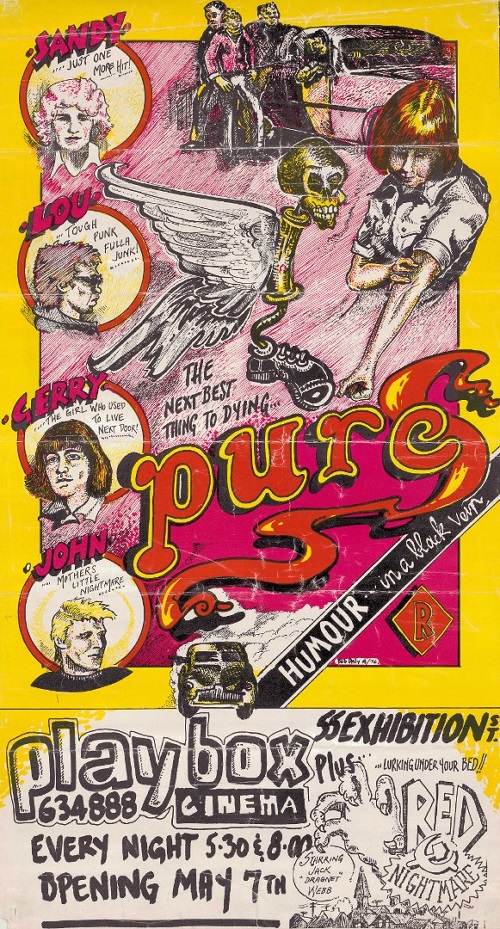
With the film completed, however, a new problem emerged. The censor refused to certify Pure Shit, making it the first Australian film to be banned. “We were surprised,” recalled Deling. “No films had been banned.” After what Deling remembers as a five-month media campaign, Pure Shit was finally given an R certificate and screened at The Perth Film Festival, with a handful of subsequent screenings in Sydney and Melbourne. So notorious was the film, however, that even the adverts designated for publication in the print media had to be signed off by the censor. In common with a handful of classic drug movies (Gus Van Sant’s Drugstore Cowboy, Shirley Clarke’s The Connection and Conrad Rook’s Chappaqua), Pure Shit allowed the protagonists a voice, and it was a voice that many found to be unpalatable.
In the intervening years, only two 16mm prints of the film existed: one was rented out by the AFI and was rapidly deteriorating, while the other was held by The National Film And Sound Archive. Yet somehow the film’s cult reputation grew, leading to Kodak paying for the film to be digitised, effectively saving the movie as an Australian classic. Meanwhile Warren Ellis, violinist for The Bad Seeds and The Dirty Three, contacted Deling and told the director that he was a huge fan of the film. Pure Shit was subsequently screened at the Nick Cave And The Bad Seeds-curated All Tomorrow’s Parties music and arts festivals that transpired in Mount Bulla, Sydney and Brisbane, exposing the film to a new and appreciative audience.
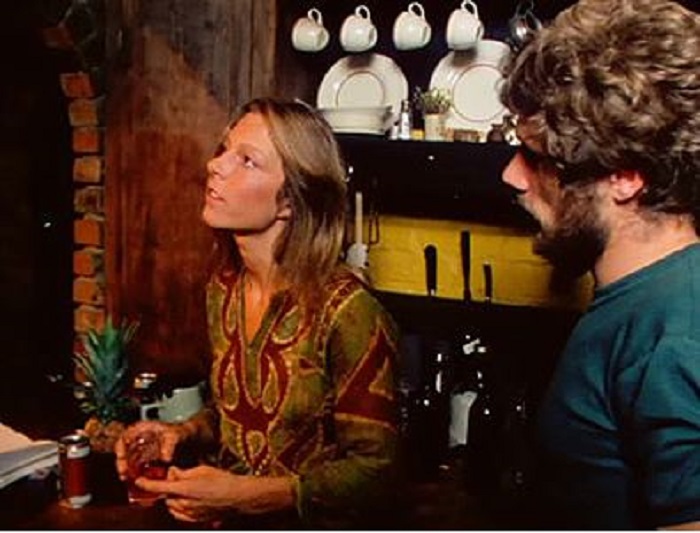
With its release on DVD, Pure Shit was finally saved from obscurity and literal disintegration, but it remains difficult to source and see today. “It doesn’t seem to have dated, in terms of its rhythm and speed,” Deling told FilmInk in 2009. “It doesn’t seem to have slowed down. They had a screening of it at ACMI too, and it worked pretty well.”
After the events of the seventies, Deling admits that the whole process of discovering that the film had a cult following was “a very funny experience. I haven’t thought about the film for a very long time, and suddenly it’s front and centre.” Asked if he feels vindicated for the battles and rejection of the past, Deling replied in measured tones. “It is a kind of resolution of the whole process,” he said, searching for the right words. “It’s a kind of closure.”
Vale Bert Deling…a true pioneer of Australian underground cinema.
Pure Shit can still be found on DVD.
