


by Dov Kornits
 How are you feeling about Carol Raye’s passing; it must be partly satisfying to have captured one of the final interviews with her for your film; to acknowledge her legacy?
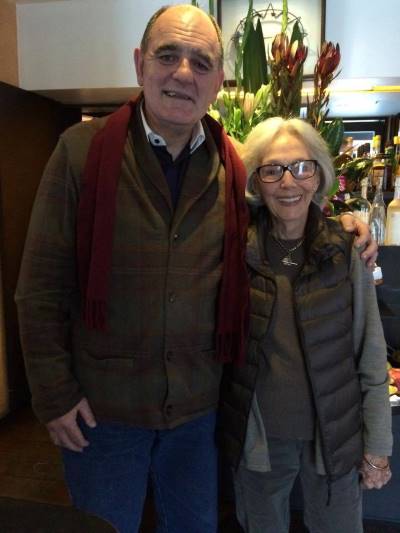
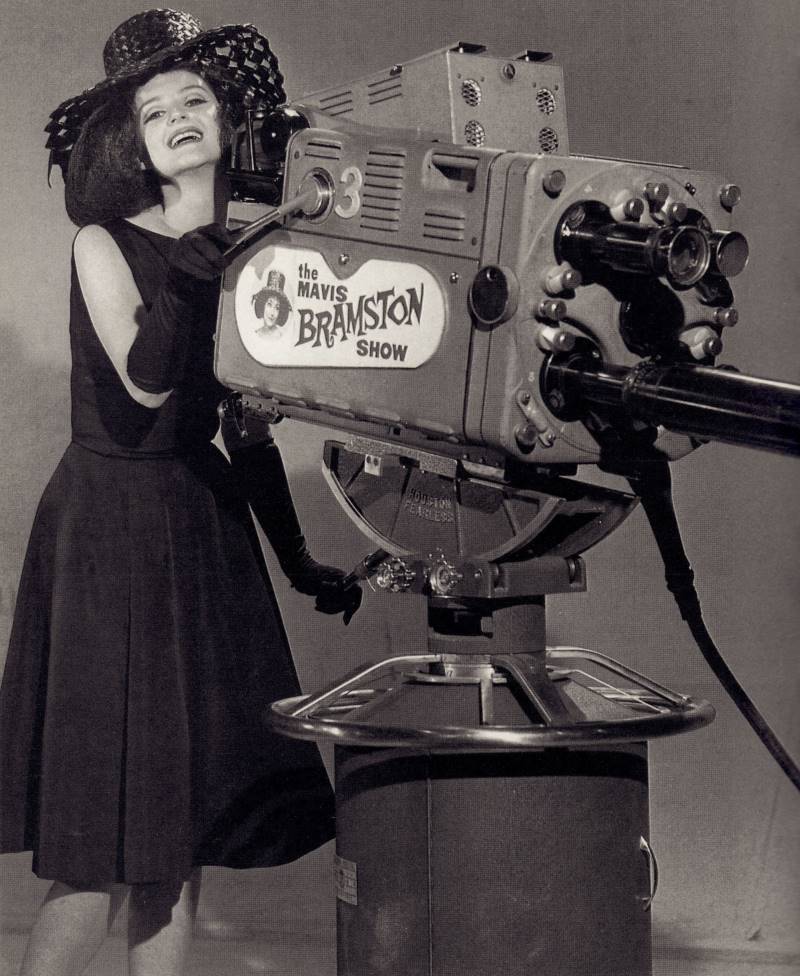
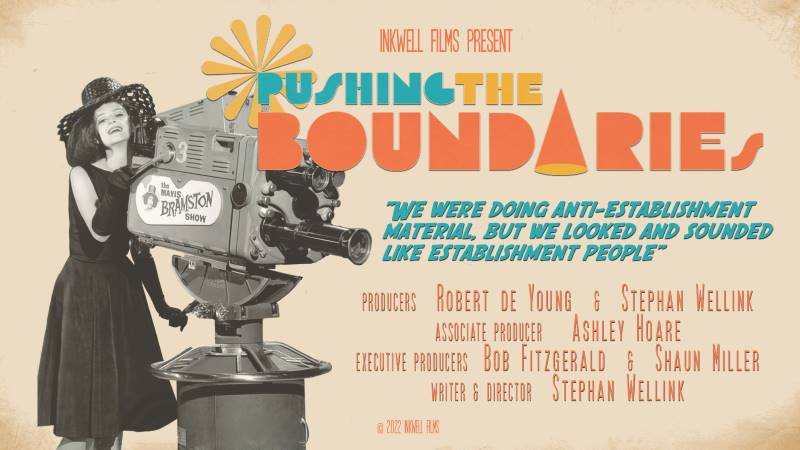
I shall miss Carol [pictured left with Stephan Wellink] very much and I am pleased that we were able to craft a film that duly recognises her contribution to the entertainment industry in Australia. Carol’s legacy is significant, not just for her body of work on stage and screen but also for her pioneering work as a producer on television which was completely dominated by men. Against the odds and the juggernaut that was Graham Kennedy on Channel 9, she created and was a star of The Mavis Bramston Show, which quickly became the number one show on television. It was an extraordinary achievement.
Above all else, Carol was a lovely, supportive and generous person. I was delighted when she received a well-deserved Order of Australia in the Queen’s Birthday Honours, which came just six days before she left us.
Can you discuss your personal thoughts on The Mavis Bramston Show, at the time, and how important it was in terms of Australia’s satirical tradition?
[In the film] We talked about The Mavis Bramston Show within the context of the time it was produced. We looked at the show through the lens of the 1960s, which was a time of great social change in Australia and throughout the Western world. Australians had been living a monochromatic existence post World War II and the ‘60s brought colour and vibrancy. Revolution was everywhere. The citizens of Australia were ready – almost – for a show like Mavis.
We also put a spotlight on the people that made the show: the actors, writers and producers and captured rare insights about what was required to get the show on air.
As for my thoughts on Mavis: I was a young boy when it premiered in 1964 so I can’t recall it in great detail. However, I do remember my parents watching and enjoying the show. It was a highlight of their television-viewing week, as it was for so many Australians. During the documentary, Carol says “we were considered a bit naughty” and some of the sketches we chose for the film support her comment. Nothing was sacred. The Mavis creatives were clever without being crass as they tackled religion, women’s rights, sexuality, politics and racism in ways that had never been done before.
The importance of The Mavis Bramston Show to Australia’s satirical tradition is clear. It is recognised as the mother of satirical shows on Australian television, and it set the benchmark for programs such as The Big Gig, Full Frontal, Fast Forward, The Norman Gunston Show, The Gillies Report, Clarke and Dawe and Mad As Hell.
When speaking with people involved with the show, do you feel like they are bitter at all about it being virtually forgotten today?
There was no bitterness at all. The people we interviewed were grateful for the opportunity Mavis provided them to enjoy further success beyond the life of the show. They were proud of their achievements on Mavis and they were very successful post-Mavis. David Sale created Number 96; Ken Shadie wrote for the Paul Hogan Show and co-wrote Crocodile Dundee; Bill Harding became a writer on The Norman Gunston Show; Barry Creyton wrote for The Mike Walsh Show and subsequently authored successful plays and novels as well as acting in and directing for the theatre in the US; Gordon Chater went directly from Mavis to star in My Name’s MacGooley. What’s Yours? and he was sensational in the play The Elocution of Benjamin Franklin which he performed around the world; Noeline Brown was a star of The Naked Vicar Show and in the theatre; Maggie Dence [above], who received an Order of Australia the same day as Carol Raye, continues to be a force on stage and screen; Lucky Starr was a popular performer when he appeared on Mavis in 1965 and he still plays to packed houses; and John-Michael Howson who interestingly also wrote sketches for That Was The Week That Was, created Adventure Island and The Magic Circle Club for television and produced theatrical productions such as Shout! The Legend of the Wild One.
Two other key members of the show, June Salter and Tommy Tycho, had passed away before we shot the film. June appeared regularly on stage and television and is regarded as one of Australia’s finest actresses. Tommy was called ‘The Maestro’ with good reason. He was the finest musician in Australia from the 1960s through to the 2000s.
Have you got a favourite aspect of the show that you can discuss?
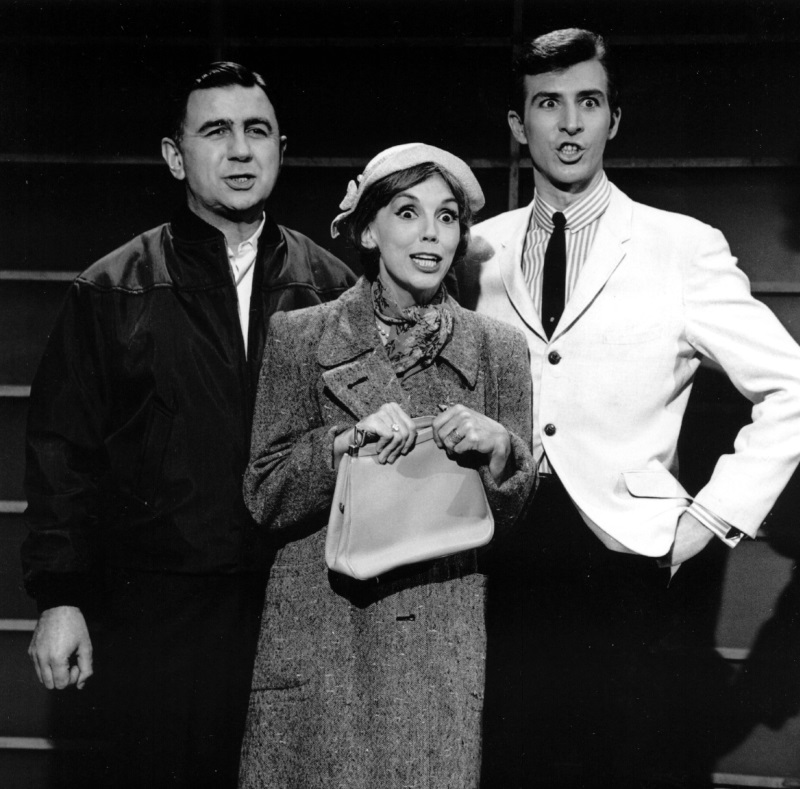
The chemistry between Gordon Chater, Carol Raye and Barry Creyton [all above] in combination with the brilliant satirical sketches from writers Ken Shadie, David Sale, Bill Harding and Richard Walsh made the show a runaway success. However, it is a serious sketch during a Mavis Bramston Viewpoint segment in 1965 that made a great impact on me. Gordon, Barry and Carol recited the poetry of Kath Walker (Oodgeroo Noonuccal) in front of footage of Aboriginal reservations. The living conditions looked dire and the sketch is critical of Australia’s appalling treatment of Aboriginal and Torres Strait Islander people who would not receive citizenship status until 1967. It is a powerful performance piece.
I really like this aspect of Mavis because sketches like this – and Mavis produced many – held up a mirror and made Australians look more closely at themselves and their attitudes.
How many years has it taken to complete the film?
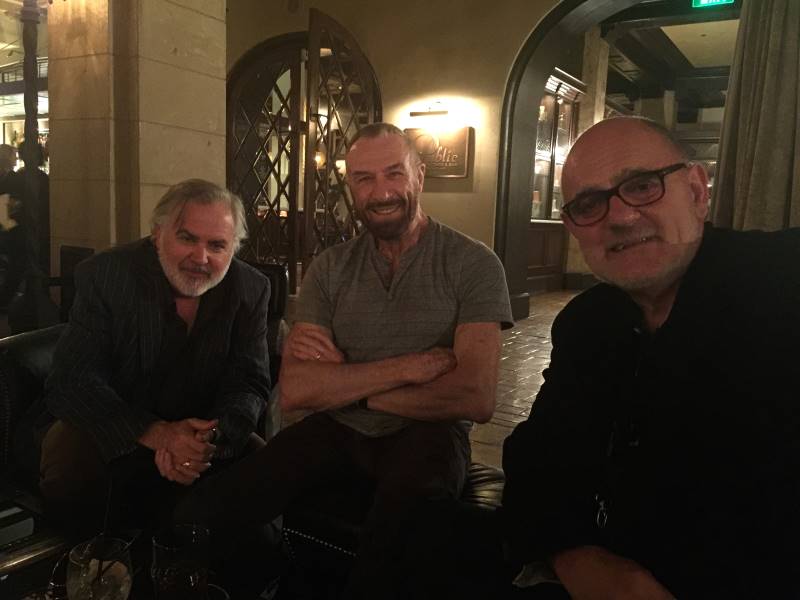
It took six years. I started my research the second half of 2015 and we completed the film early this year. I must acknowledge Bob Fitzgerald who is an Executive Producer, cinematographer and editor on Pushing The Boundaries. Bob has done a wonderful job on the film. In addition, this is the fourth film I have worked on with my friend Robert de Young [above, left, with Barry Creyton and Stephan Wellink].
How did you choose some of the people in the film who discuss being influenced by the show?
Patrick Condon was an executive at Channel 9 when The Mavis Bramston Show premiered on ATN7. He recalls the impact Mavis had on many people in the industry, including Graham Kennedy, who changed his style to match the audacious Mavis.
We chose Max Gillies (The Gillies Report), Peter Moon (Fast Forward) and Anthony Ackroyd (The Big Gig) to participate in Pushing The Boundaries because they were part of successful satirical programs that followed in the footsteps of Mavis and therefore well placed to comment on the importance of satire to society.
Writer and Rock Historian Glenn A Baker spoke about the significance of 1964. It was the year Mavis premiered on Network 7, The Beatles visited Australia and conscription was reintroduced. There is a nice interaction between Glenn and Billy Thorpe, where Billy talks about performing for many thousands of Baby Boomers at Surf City each weekend from late 1963. It was a period of awakening for that generation.
I felt we needed an historian who was well informed about The Mavis Bramston Show to guide us through the period leading up to and during the years that Mavis was produced (1964 – 1968). Andrew Mercado was the obvious choice and his knowledge and observations add much to our film.
Do you think that Gordon Chater and [producer] Michael Plant deserve their own films?
Yes. Both men were prodigious talents and both were gay when coming out in the mid-1960s was a career-ending step in the television industry. A clean-cut image was everything to the studios. Against this background, it would be fascinating to explore the life and times of both men who achieved great heights in their respective careers.
Pushing the Boundaries: The Mavis Bramston Show is streaming at the Melbourne Documentary Film Festival, July 1 – 31, 2022

Best show I ever saw on TV. Watched religiously every week. It was the highlight of TVVeiwing for me at the time…
Thanks for your comment. It is hard to believe that MAVIS premiered almost 58 years ago. Fond memories of those times.
Please don’t leave out the gifted Andonia Katsaros, who was with me in the UK touring production of FIDDLER ON THE ROOF in 1971. She lives in L. A.
Hi Miriam. Thanks for your note. We mention Andonia Katsaros under Special Thanks in the closing credits. I hope you have an opportunity to view our film and any feedback you wish to make would be appreciated. Stephan Wellink (Director)
Worked at 7 from 1966 to 1970 loved watching the show from studio A Bramston was before it’s time , was a great place to be and work in those days.
Thanks for sharing this memory.
Interesting that in an interview about a ground-breaking inspirational woman, ALL the names you mention – Andrew Mercado, Glenn Baker, Max Gillies, Peter Moon, Anthony Ackroyd, Patrick Condon, Graham Kennedy – are notably NOT women. That alone says way too much about how far we haven’t come in terms of gender bias in our entertainment industry. Shame.
Hello and thank you for your comment. For the record: every effort was made to include women from the industry in our film. We contacted many of them from prominent shows that followed in the footsteps of MAVIS. Unfortunately, for one reason or another, the interviews did not happen. Thanks again. Regards, Stephan Wellink (Director)
I worked at 7 in Bramston days and was married to Hugh Taylor Producer Director…loved the whole vibe xx
I worked in the studio on Bramston often .. it was such a great experience .. working with those professional performers made me feel like we were part of their family .. I even bumped into Barry Creyton at a pub in 1981 in London who greeted me like a brother.