


By Simone Kussatz
The Albanian filmmaker’s 30-minute award winning short film, produced by Mateo Cingo, is an adaption of a short story with the same title written by Albanian writer and scriptwriter Ylljet Aliçka. The Planting of Trees screened at the 2022 Cannes Film Festival.
Inspired by true events, the film is about the oppression of Albanians under the Communist dictatorship of Enver Hoxha. However, it presents the suffering from a point of view that is relatable to the history and politics of many autocratic countries.
Censorship is the film’s core theme, and the harsh consequence of not abiding by the rules under tyranny. The film also zeros in on concerns such as hunger, poor nutrition, and the overall brutal living conditions within prisons. Intentionally, or unintentionally, it also sheds light on a prisoner’s refusal of eating as an act of political protest.
The movie begins with the haunting music of Endri Sina, followed by the opening scene of a jeep shot in a low angle driving over a muddy road towards a prison. Upon arrival, the main protagonist Lindi (Roerd Torce), a male student, is taken out by force and pushed into the inspector’s office, where he’s accused of having propagandized others through a work of banned literature and for wanting to escape Albania. After the first electroshock treatment and beatings, Lindi is pushed into a prison cell, where he’s supposed to serve seven years.
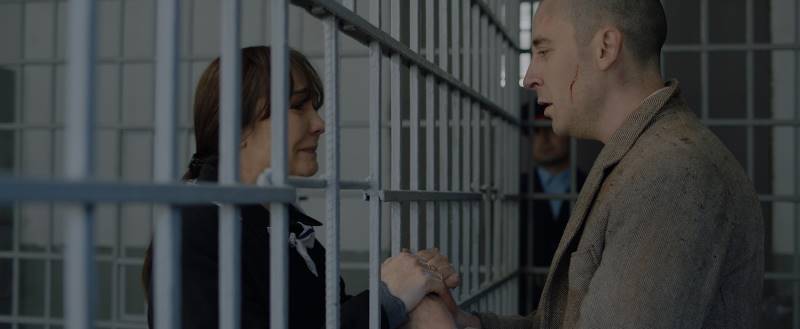
His mother (Luiza Xhuvani), a primary school teacher who lost her job due to this, brings him food every day. Yet, on some days, she’s not allowed to see him. Lindi, whose stomach keeps turning by the horrific smell inside the prison, refuses to eat despite the well-meaning encouragement by Marku (Gulielm Radoja), a prison fellow.
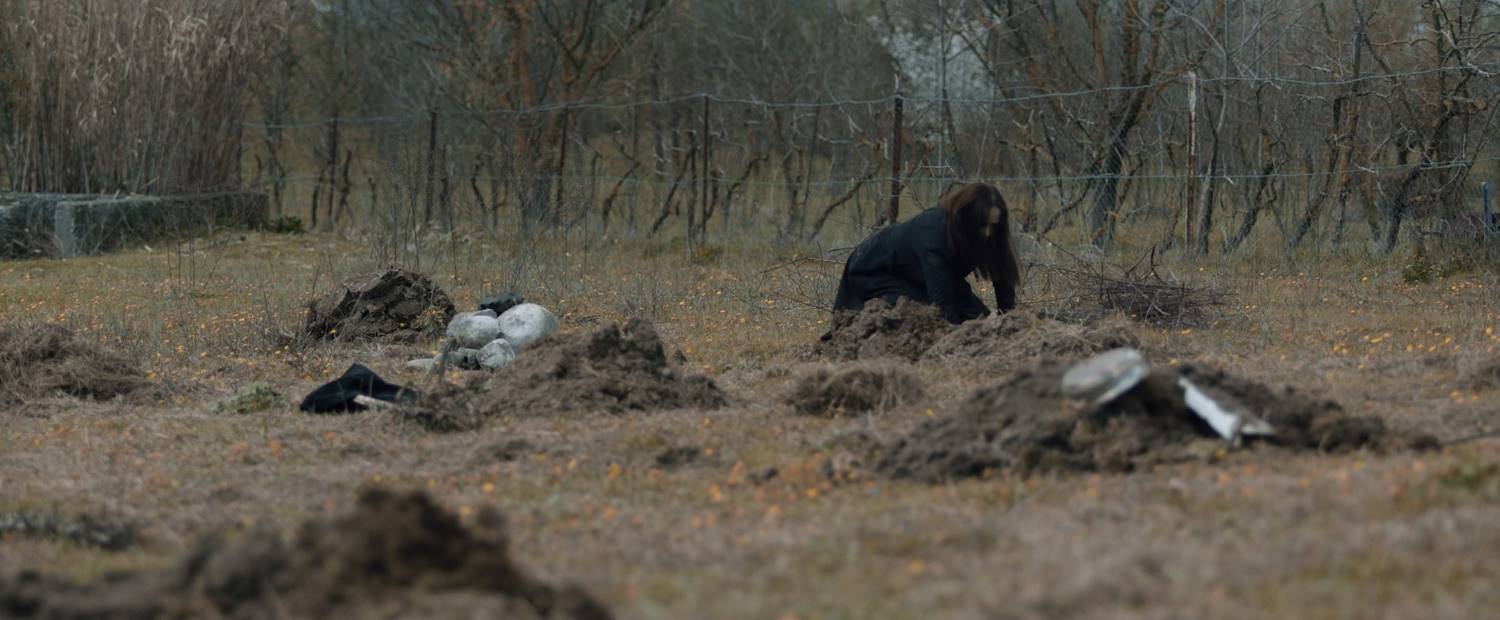
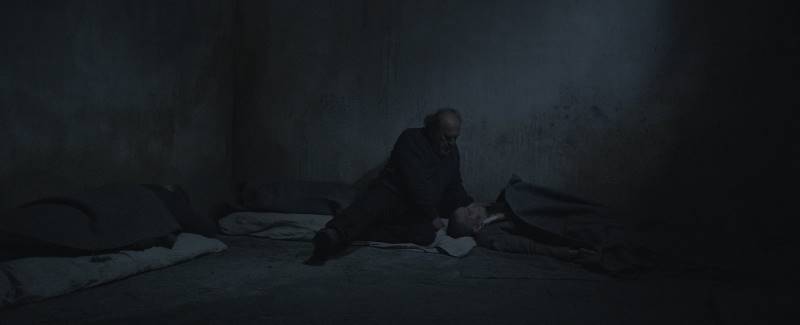
Instead, he gives his mother’s food away. Happy about the extra portion of food, the two other prisoners, played by Edvin Mustafa and Myzafer Zifla, wolve it down shamelessly. Marku however doesn’t touch any of it. One day, Marku finds Lindi dead and the two other inmates suggest keeping quiet about the corpse to have a few more days of extra food. When Lindi’s mother finally finds out her son is dead, she looks for his corpse and digs holes in the barren ground behind the prison cell. This pleases the chief ward, who received critics from the city for not having planted any trees there. Now the work has been partly done.
Whereas the opening scene and closing scene and visits by the mother are shot using natural lighting, the mise-en-scene indoors is pervaded by low lighting to enhance the darkness of living under a dictatorship.
Seferi’s film can be regarded both as a historic short fiction film and an antidote to dictatorships.
In order to gain a deeper understanding of the film, I sat down with Fabio Seferi to pick his brain about life under communism in Albania, his choice of actors, on planting trees, and his wish to turn his short film into a feature.
Why did you choose the screenplay by Ylljet Aliçka?
The reason I chose this story was because during my childhood, I grew up hearing such stories from my parents about how difficult life was during the dictatorial regime. I’ve often heard from parents about events where people have been imprisoned or entire families have had their lives ruined, for the most trivial reasons.
Young people who were beaten up in the offices of the investigation or police stations, just because they tried to follow a style of dress and appearance which was considered decadent and hostile.
Besides cases, when families were sent into exile, just because one of them happened to complain about the lack of freedom of expression or even worse, the lack of milk or oil in state stores.
One incident in my family connects me particularly to the story. It happened to my uncle, who was taken to the police station and kept for three days in a row, just because he was wearing cowboy style jeans.
During this time, he was physically and psychologically abused in order for him to stop wearing them.
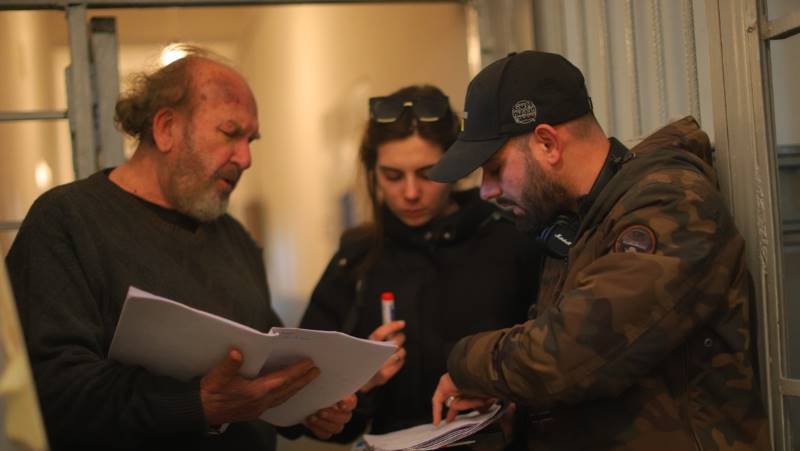
Since you haven’t had much experience as a film director yet, how did you gain the trust of the actors to perform in your film?
As far as the group of young actors, I had collaborated with them several times during my years at the university. In my opinion, they are among the most promising actors of the new generation in Albania, especially the actor Roerd Toçe who plays Lindi, the young man in prison. It was his first appearance on a huge screen.
Then, the two actors who played the investigator and the head of the prison guards, Kastriot Çaushi and Alert Çeloaliaj, we had previously collaborated on other projects.
In regard to the actors who play the mother and Marku, Luiza Xhuvani and Gulielm Radoja, that was special, because both of them were connected with similar cases in their lives.
At first it was a little difficult to convince the actress Luiza Xhuvani to take on the role of the boy’s mother, but after many meetings she was able to see my vision and the seriousness with which I had started this project. And then she accepted.
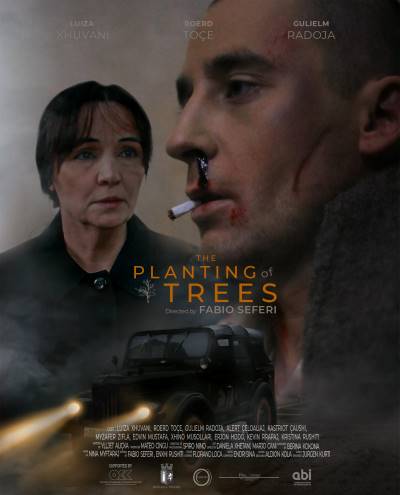 What does the title stand for?
The title “Planting Trees” is set by the screenwriter as a metaphor for life. Planting a tree symbolises the birth of a new life, and in our film, the painful irony is that this new life is born where another life is unjustly interrupted.
In the movie this action happens in the worst possible way. Precisely by exploiting the pain and despair of a mother.
Also in reality, these practices were common to cover up crimes; reduced to the point of finding bodies by planting trees in the fields where those who lost their lives in prisons were buried.
To this day, the bodies of 6023 people are still missing and it is not yet known where they are buried.
I’ve read somewhere that you’d like to see your film as a feature film. What would you add or change?
Yes, it’s true, I would like to see this story as a feature film. What I would like to add to the story and what I think is necessary would be to introduce the characters in their lives before the boy is arrested. This is to describe in more detail the way of life of the people during that period, their truncated dreams as well as the usual difficulties of young people in a country totally isolated from the world, like North Korea today.
And from this moment, practically the turning point would be the arrest of Lindi.
Then I would like to recount his mother’s suffering from exile, the pain she feels for her son, and up to the difficulty in gathering food for him and also the long journey she had to make to meet him.
It is also worth mentioning that the regime of the time ensured that the prison and the place where his relatives were interned were as far away from each other as possible to make the visits more difficult.
