


by James Mottram
Justin Chon is the actor-director who hardcore Twilight devotees might remember as Eric Yorkie, Bella’s classmate. Since then, his career has seen him branch out into filmmaking, writing and directing Gook (2017) and Ms. Purple (2019).
His latest film Blue Bayou, which premiered earlier this year in Cannes and now plays at the Sydney Film Festival, is his most telling yet.
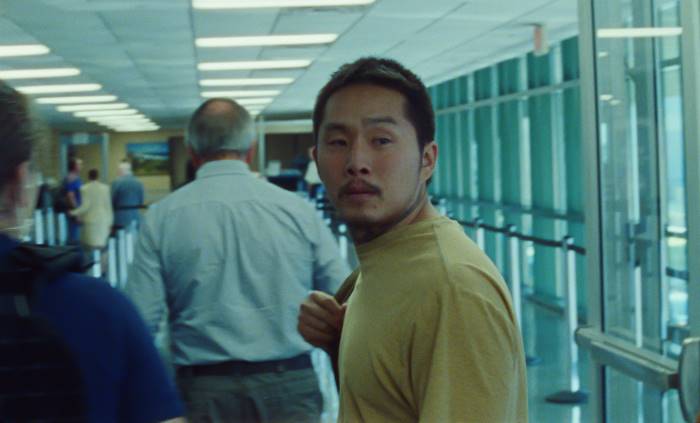
Chon plays Antonio, a tattoo-artist from Louisiana who discovers he may be deported back to Korea, the country he was adopted from by American parents when he was a child.
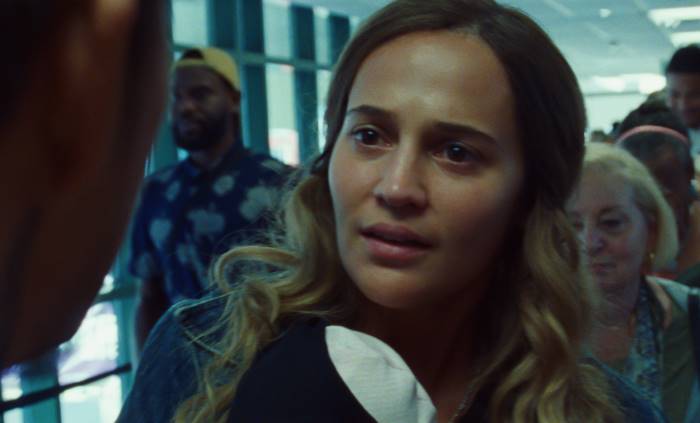
Inspired by real-life cases, where adoptees are being expelled by the U.S. Immigration and Customs Enforcement Agency, due to irregular paperwork, the film co-stars Alicia Vikander as Antonio’s wife Kathy, who must join him in a fight to stay in his adopted homeland.
FilmInk sat down with Chon earlier this year to talk about bringing this heartfelt movie to screens.
How much did you know about international adoption before you started this film?
“It was something I never questioned when I was young. I just knew a lot of adoptees and then I found out that the idea of international adoption began in Korea, so that became very interesting. As it pertains to this film, I started hearing through the community about people being adopted [and later deported], and I was horrified. I found out it wasn’t just happening to Korean American adoptees but also adoptees from South America and India. It just was very puzzling. I thought, ‘There must be a way for them to figure it out.’ Like all issues in the world, out of sight, out of mind. So, I started to look more. I said, ‘Holy shit! These people are getting deported.’ And the chances of getting back are very, very slim.”
What do you feel should be done?
“Simply put, if an infant is brought from a different country and a U.S. citizen adopts them, the U.S. government – no matter what mishaps with the paperwork happen – need to honour this child. Because the child had no say in coming. It’s different when a family from Mexico cross the border and come as a family. I think it’s ludicrous to think that the U.S. government says thirty years later you’re not a citizen, just because ICE [Immigration and Customs Enforcement] wants to crack down and find people to deport.”
Do you feel this is an issue that became prevalent during the Trump administration?
“We have to speak about it as it is. It’s been going on through every administration. I can’t really pin it on Trump. That’s the dangerous thing to do in this film. When the trailer launched, I looked at some comments… [people] immediately say, ‘This is the far left… they’re bitching and whining again. If you’re a criminal, of course you should be deported.’ I’m not trying to divide people. I’m not saying what’s right or wrong. I’m just posing questions. I’m just showing one man’s case very honestly. I didn’t make him an unflawed saint. He’s very flawed. But he’s not abusive or anything. If we want to talk about this, we have to talk about this very frankly. I don’t want it to become where it’s left or right.”
Were you expecting these comments, that people would make it out to be a political issue?
“Everybody wants to make it that immediately. Me personally, I’m not that political. I just think it would be the right thing to do to let them stay. Just because of how they were brought here. I’d love for the people who have been sent overseas to be able to come back. I want people to watch this and not get caught up in liberal or conservative.”
What made you choose New Orleans, Louisiana, as a setting. Was it due to the Vietnamese population there?
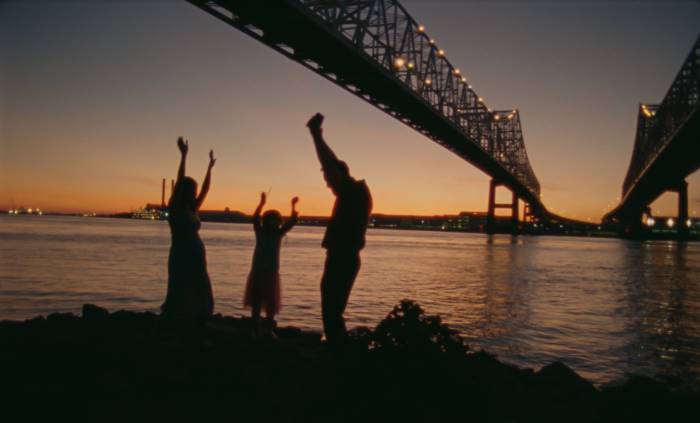
“Yes, that was a big reason. I wanted two adjacent Asian ethnicities in one film, and of course the character Antonio befriends, Parker – played by Linh-Dan Pham – is a mirror to him in the film and also makes him get introspective about where he’s from, where he’s going. And as an Asian-American man… in American cinema, I’ve never seen Asian men have a southern-Louisiana accent and be portrayed that way.”
Were you always going to play the main role of Antonio?
“I think the main reason was, frankly, it’s a lot easier to tell myself what to do! Because it is, ultimately, an issue-driven film… it’s a lot to ask of an actor, once a film has premiered, to speak to the subject or be involved in any way. So, that’s a big reason. And then in the writing of this script, part of me is in there. It’s unavoidable. I get so emotionally involved, and especially with a topic like this, I felt very compelled… it was hard to let it go and just have someone inhabit it. It’s like I’m living with it for years.”
What made you want to cast Alicia Vikander?
“The biggest reason I really wanted to cast her was I had seen her first film Pure. It’s beautiful and she is just incredible. She has so much fire and I saw so many things… [that] in her successive work weren’t really utilised or exposed. The biggest thing is, the subjectivity of her being foreign and looking at an American story… what choices is she going to make for this American character? A blue-collar strong woman in the south. It’s such a specific thing and I was very interested in the choices she would make.”
Did you sense she was nervous at all, playing a woman from Louisiana?
“She’s a beast! I never sensed any nervousness on her part. She’s just such a pro and so amazing. A master of her craft. Both of us had dialect coaches and she worked hard to make sure she got it right. She treated it with respect. The only thing I could say for sure is, she’s a consummate professional and, Jesus Christ, she cares about the right things.”
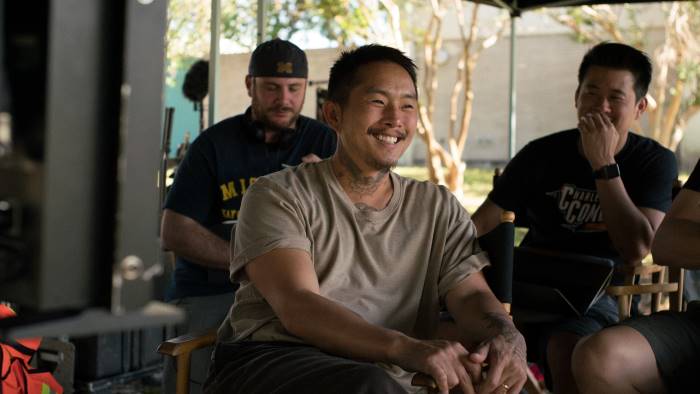
Looking at your career, your father was an actor in Korea. Did he inspire you?
“It’s inevitable. It’s hard to say he didn’t inspire me. And I grew up watching his black and white films. But growing up in the U.S., it was a pipe dream. Especially in the ’90s. There are no Asian-Americans on television. When I told him I was going to become an actor, he said ‘You do whatever you want with your life, but that sounds fucking stupid! That sounds an impossibility!’”
You featured early on in your career in Twilight. Was that a big moment for you?
“I’ve got to say, my Dad watched the first one and I said, ‘What did you think?’ It was becoming such a phenomenon and he was like, ‘You were barely in it!’ You can’t win!”
How was it to be a part of the Twilight hysteria?
“It was really incredible to experience and watch the machine and business side of it, and not have to deal with the frenzy. Their lives [Robert Pattinson, Kristen Stewart] changed for better and worse. And I realised that some of the things I thought I wanted are maybe not what I want. I love acting, I love storytelling, but maybe not the other stuff where I have to hide in the trunk of a car to go out.”
You’ve just shot your next film, Jamojaya. What’s it about?
“It’s about an Indonesian father and son, the son is about to blow up as a rapper and the dad was the manager. It’s a breakdown story. I cast an actual rapper and it’s this kid, Rich Brian, from Indonesia, who learned how to speak English from YouTube.”
Blue Bayou plays at the Sydney Film Festival on November 13 and 14. It goes on general release on November 18.


My name is Jet Vertz. I am a Korean American who lost biological parents during the Korean War and lived in the war torn streets of Korea and orphanages until I was adopted by an American GI and immigrated to USA in 1959. I had a very successful career and wrote a memoir titled “American Dream”.
I was not planning to publish the book, until I saw Mr. Justin Chon’s film: Blue Bayou. I personally liked the film, Blue Bayou. However, there was some push backs and called for a boycott from numerous Asian American adoptee groups. My adoption story is an antithesis to Blue Bayou’s Korean adoptee story. The Blue Bayou film inspired me to complete the book and publish it. The book, American Dream by Jet Vertz, can be purchased from the Amazon book store.
It is my hope that Mr. Chon will consider making a follow-up movie to Blue Bayou based on my memoir, as very successful adoption story, to enhance Mr. Chon’s reputation as a film maker.
Whoever reads this note: I will appreciate very much if you can forward this note to Mr. Justin Chon, his publicist or his agent.
Thank you,
Jet Vertz