


by FilmInk Staff
In 1983, Ronald Reagan was in the White House, Yuri Andropov was President of the USSR, and between them and their allies, they were stacking the nuclear stockpile sky-high. The Cold War then was hotter than in the dark days of the ‘60s. Yet, no one in power talked about nuclear annihilation. They talked about winning once the mushroom clouds had cleared.
TV networks are not known for their social conscience or political courage, but this situation begged for a response. US giant ABC took a leap of faith on Thanksgiving weekend thirty-eight years ago when they screened The Day After, and the made-for-TV movie would never quite be the same again.
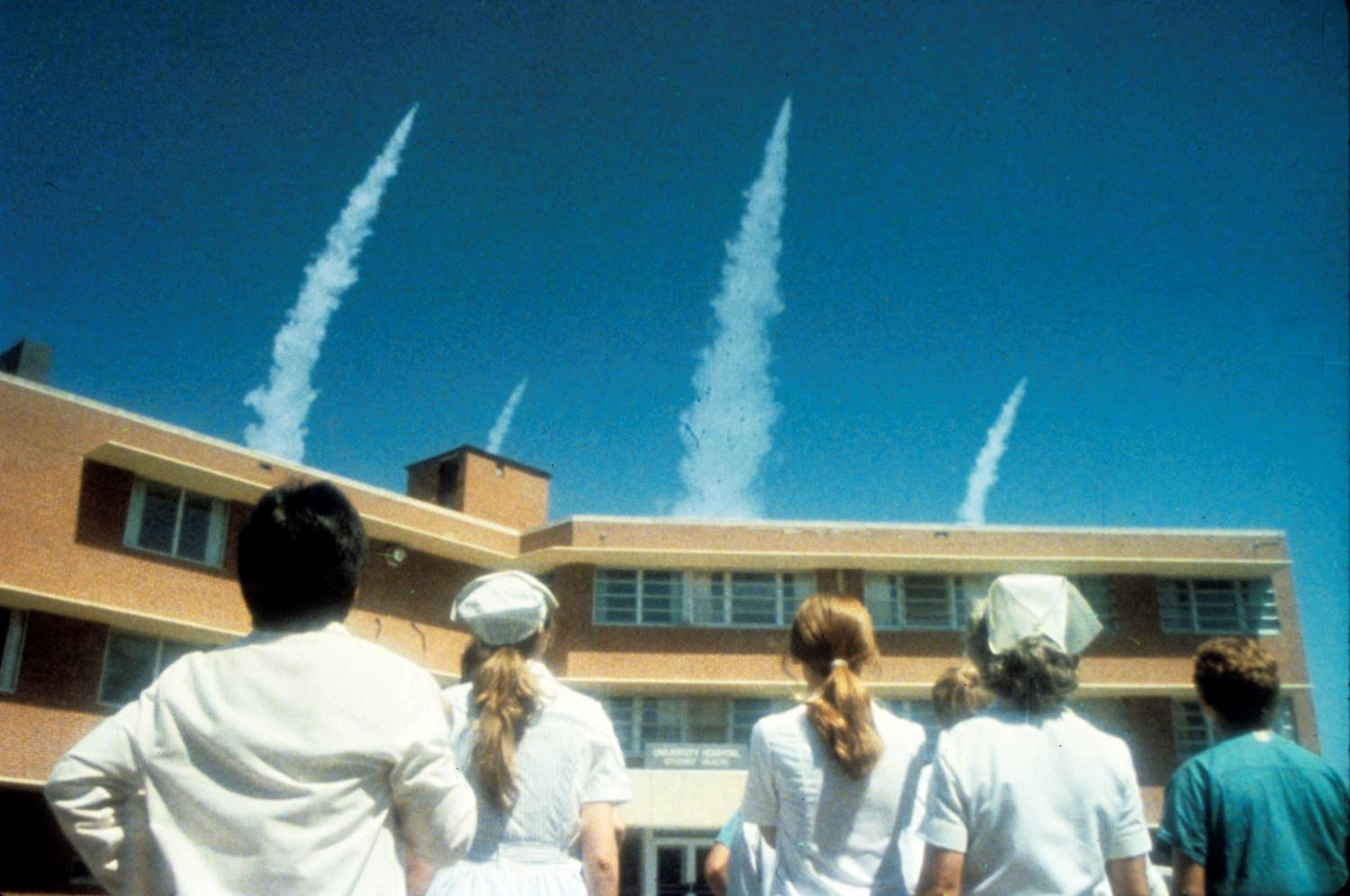
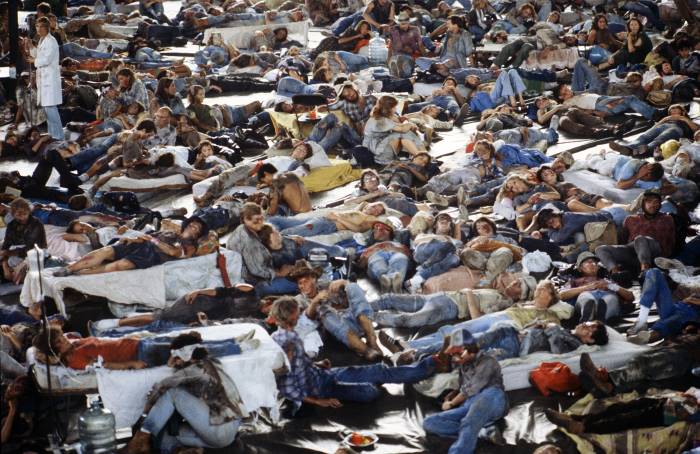
Set in a small town in Kansas, the plot was a grim and even gory rejoinder to the dogged optimism of the disaster genre. Here, survivors of a nuclear war suffer and suffer some more – and spoiler alert – there are no happy endings once an ICBM turns the surface of the earth into a Moon Rock. The show cost ABC a fortune because advertisers ran for cover. Meanwhile, the executives behind the show were scorned and shunned for their ‘no nukes’ stand. It was, after all, the time of the USSR as ‘Evil Empire’.
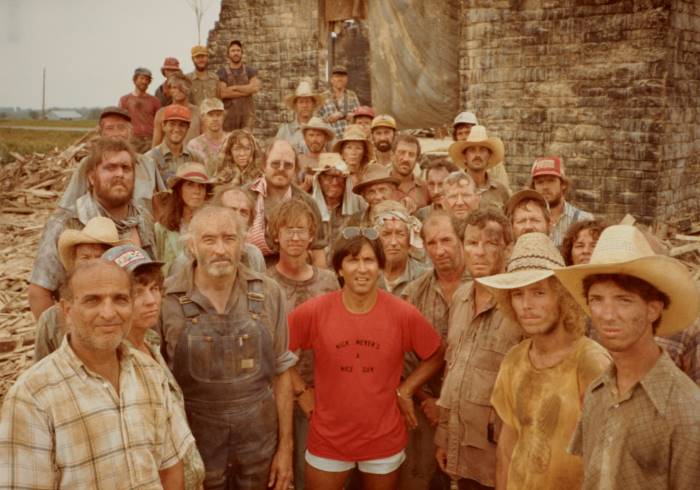
Directed by outspoken author turned filmmaker Nicholas Meyer (Time after Time, Star Trek: Wrath of Khan), The Day After has not aged well (some with long memories may recall it was not so great in the first place).
Still, as Jeff Daniels, director of Television Event, a feature doc about the making of The Day After, tells us, an estimated one hundred million people watched it and there is some evidence that impacted US policy.
“It had power,” Daniels, from the Bronx, who lives and works in Australia says. “This is the power of what artists can do. They can force this otherwise political discussion into an emotional realm.”
After months of promotion and controversy The Day After screened Sunday 20 November 1983. What were you doing?
“[Laughs] I was five at the time. There was blanket advertising – you know, the mushroom cloud image with the skull and crossbones in it? I saw that on the bus ride on the way to school. Nuclear War was a discussion that was had in our family at that time at our dinner table. My mother studied physics under some of the people involved in the Manhattan Project. My grandfather was a photographer in WWII. He was one of the handful of photographers to film the effects of the nuclear bombing of Nagasaki. Mum did not hide her understanding of the more gruesome realities that might happen in the event of a nuclear war.”
Before Day After went to air, the American Psychiatric Assoc. warned about its possible effects.
“Well, my point is of course my family was going to watch this movie. But my parents put me to bed before the iconic bombing sequence. But I understood that all those characters who had been introduced to at the beginning of the film, they were all going to die a slow and horrible death.”
What did you take away?
“The experience gave me an early and healthy scepticism about adults. They weren’t the all-knowing, all good folk I grew up thinking they were. They can destroy the world as we know it with the press of one button. That scared the crap out of me. I saw The Day After [all the way through] on video when I was ten – I was still too young! [Laughs].”
Nicholas Meyer was on the rise in his career. It was quite something to get a name like that attached to a TV movie.
“[Laughs] Well, at that time, 1983 you had more people in the US and Europe watching network TV than ever before or after. But it was a passion project for him.”
But what was on air then was a long way from the 21st century’s ‘prime TV’. That point you make in hilarious fashion in the opening of the film, a ‘season promotion’ reel of exquisite bad taste, it had us diving under the seat!’
“[Laughs] Yes! Family friendly ABC, the home of Fantasy Island and The Love Boat, asks Meyer to make this movie about nuclear war! I spend the first ten minutes establishing the context [how unusual a project Day After was]. TV movies in those days were shit, I mean Dallas Cowboy Cheerleaders (1979). C’mon.”
Like all the archival used, it’s high impact; the film is like a time machine.
“I spent four years trying to gather as much archive material as I could. I started [as a filmmaker] on Ken Burns’ Jazz series as a researcher, so going through archives is part of my process. Sometimes, people on YouTube had better copies than broadcasters! That particular promo reel you mentioned… I got the one inch from the original editor, who was working with Ridley Scott!”

There was an Australian connection in the archive too?
“Right. Some of the best archive I could find was from an [Australian] ABC Four Corners report shot in Lawrence. What a brilliant piece of TV journalism.
“I wanted to look at the reception of The Day After. I thought, ‘How do we explain these indigestible global issues in a way that is emotional, on a personal level?’
“That Four Corners report begins with a cut of this woman’s face… horrified by this TV movie. It just gave equal weight to their understanding of it on an intellectual or political level, all from this most simple form of storytelling.”
The cast of talking heads is impressive. These include, besides Meyer, producer Bob Papazian, writer Edward Hume, executive Brandon Stoddard and actor Ellen Moore, who was a juvenile at the time [big names players from the cast, John Lithgow, Amy Madigan and JoBeth Williams are MIA]. They are very emotional. We understand Meyer can be difficult?
“He doesn’t like interviews, doesn’t like talking about the process of filmmaking…but I got him to talk about the experience he went through.”
Everyone involved seems to suffer for this. What did Meyer think of it in the end?
“He told me he watched it at the time, with his then girlfriend and he said, he had turned to her during the broadcast and asked: ‘would you be watching this if I hadn’t made it?’ He was saying it was not good cinema. I look at it now, and yes, it’s not the best made piece. But as Television Event shows, it was manipulated in the editing by the network which is a nightmare. It was four hours over two nights, and they cut it down. As to its [status as Art]? What about the effect it had on a hundred million people? And the effect it had on the same people at the same time? They could have the same conversation over the issue despite their differences.”
The film suggests The Day After influenced US nuclear policy.
“Some of the top officials in the Reagan administration had a meeting that asked, ‘what are we gonna do about this TV move, The Day After?’ I’d say that was pretty significant.”
The film shows that a few weeks after the screening, Reagan gave a State of the Union speech and said that nuclear war was not winnable, and no one could survive it.
“The Day After visualised something that was otherwise unthinkable, or impossible or unpalatable to imagine. That’s what artists do.”
Television Event screens on July 2, 2022 at the Castlemaine Documentary Festival
