



by James Mottram
Kurzel is one of the local film industry’s success stories. His muddy, bloody 2015 version of Macbeth with Michael Fassbender and Marion Cotillard was in Cannes competition. He followed that with a Hollywood blockbuster take on video game Assassin’s Creed, starring the same two actors. But even this burgeoning reputation didn’t help matters.
“When it was announced that we were making it, it was an incredibly volatile time,” Kurzel says, when we meet during the Cannes Film Festival in a leafy garden rented by the film’s sales agent Wild Bunch. “It brought up a lot of pain and wounds for many people. And obviously, [with] those closely connected to it, which we completely understood and respect. So, it was a really interesting debate about what can you make art from? Are there subjects, stories, that you can’t tell?”
It’s an interesting question, though one it seems that many in Australia refused to engage with. Film Victoria’s board was against funding the film. Screen Australia felt the same. Tasmanian Premier Peter Gutwein didn’t reply to Kurzel. Likewise, Elise Archer, the Tasmanian Attorney-General, refused a meeting with the director. It meant that he couldn’t gain access to the Victim of Crime service, as rumour around his approach to the story spread. “We knew that it was about the lead up to the shootings, and we weren’t showing the shootings in Port Arthur,” he says. “But others didn’t know that.”
The film, called Nitram, is scripted by Shaun Grant, who previously wrote Kurzel’s 2011 debut Snowtown, an equally dark and disturbing tale of true-crime in Australia. “Shaun wrote Nitram in Los Angeles,” explains Kurzel. “He’d experienced very close a couple of mass shootings. There was enormous proximity to him… so the horror of that, and the fatigue of that, and the hopelessness that he was experiencing, made him reach back to the event that happened in Australia, where gun reform changed in twelve days. Over 650,000 guns were handed in.”
Good to his word, Kurzel does not focus on the killings, but explores Bryant’s earlier life. Nicknamed ‘Nitram’, much to his annoyance, this youngster is a lonely and isolated figure, despite living with his parents (Anthony LaPaglia, Judy Davis). He finds solace in the company of Helen Harvey (Kurzel’s actress-wife Essie Davis), an eccentric heiress to the Tattersall’s lottery fortune who ultimately leaves him a significant inheritance. Tragically, it’s this unexpected financial windfall that leads Nitram to purchase a cadre of weapons.
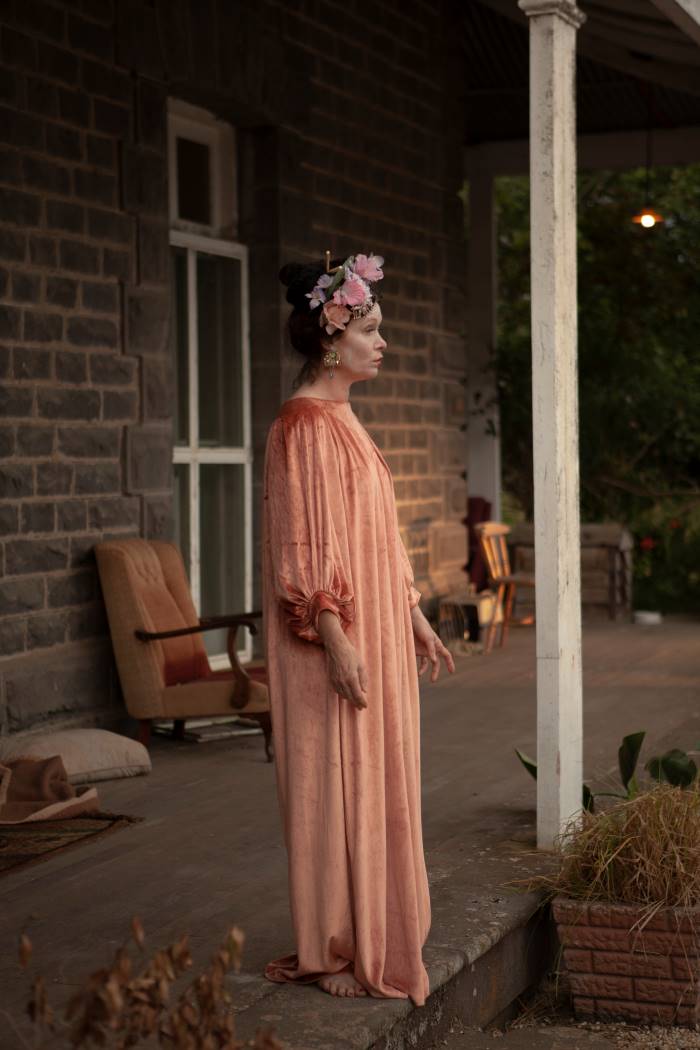
The focus on this unusual co-dependent relationship will undoubtedly surprise some, especially in Australia, who are expecting something altogether more troubling. Already, critics have compared Davis’ performance to Edie Beale in the Maysles brothers’ documentary Grey Gardens. “Essie and I… we had a lot of discussions: how do you make an eccentric character feel real and land within a world that is very real and authentic?” says Kurzel. “And that was really tricky because you can easily go a very big, quite colourful way!”
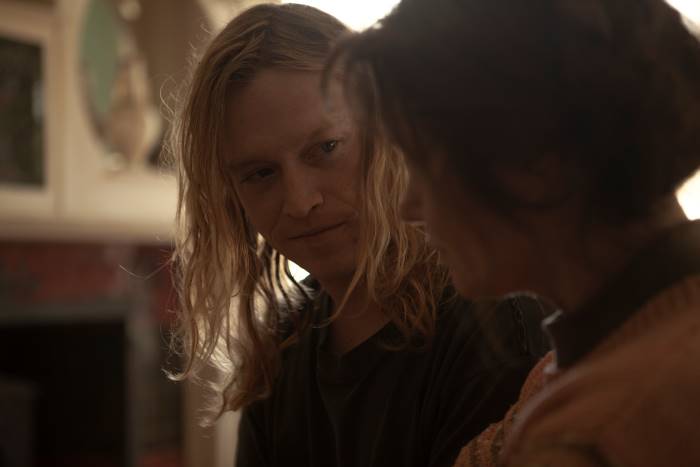
Sitting with the director is Caleb Landry Jones, the American actor from Three Billboards Outside Ebbing, Missouri and X-Men: First Class. It’s several days before his performance in the title role will win him Best Actor in Cannes, the first major award of his career. But it came at a cost. The role really shook him. “I couldn’t wait to stop talking in Australian, ’cos I was a little worried!” he drawls. “After we were done, I very deliberately tried to get away!”
The actor had some idea of what he was letting himself in for, playing a real-life figure who ultimately would commit a horrifying act of mass murder. “I was told at the very beginning… not in these words, but you’re gonna have thoughts, it’s gonna be okay. Allow yourself to have these. It’s okay. And I did. I told many inappropriate jokes and many things that I probably shouldn’t have done. I’m very, very glad that the crew was understanding.”

Kurzel calls Jones “one of the most extraordinary actors I’ve ever worked with”, crediting his immersive approach. “He lives with the character, he speaks with the character’s voice the whole time. That switch on, switch off button, he doesn’t really have. So, the toll is massive, but it’s kind of what’s extraordinary about him as an actor. The work that he did was unlike any work I’ve ever seen an actor do.”
With Victoria at that point out of lockdown, the production existed in a bubble. “There was fifty to sixty of us all living in a convention centre,” adds the director. “We couldn’t go into the city.” It meant that Jones could never switch off fully from the character. “That I think definitely rubbed off on the film,” says Kurzel. “And the film does deal with isolation, in a really interesting way. That was reflecting the same sort of isolation we were feeling, and I guess many were even before we started shooting. So, there was something about the making of this that did speak to particular themes in the film.”
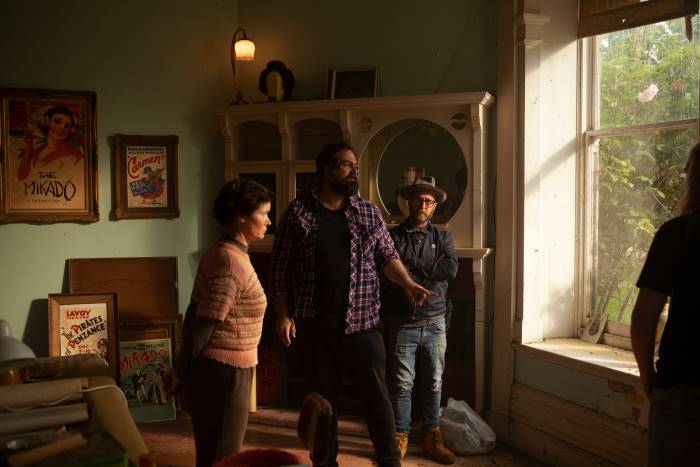
Kurzel also made the artistic decision to surround Jones with authentic non-actors in key roles. Like the travel agent that Nitram visits to buy a ticket to America. Or, more chillingly, the gun salesman that he purchases weapons from. Real people who worked in those respective fields. “To have the knowledge and the know-how… he brought an enormous amount to that,” says Kurzel, of the gun seller. “That really helped Caleb. For it to just feel so horrifically casual. It had a lot to do with his naturalness around selling the guns but also handling the guns.”
While that scene signals the disturbing direction that the final act heads towards, for those who don’t know the story of Bryant, it will catch them unawares. Until then, it’s almost like a domestic drama; Kurzel even compares it to a Chekhov play. “I guess Shaun was making a political film, but at the same time, it felt like this very familiar, recognisable, almost family-like drama. And I think that’s what was really powerful about it; it took away, I guess, the notions of monsters, which our character does become at the end and takes you into a world that you can recognise.”
Now Kurzel must wait and see how the film plays in Australia when it opens this week. “I’m not gonna lie to you, people are very, very nervous about it,” he says. “But we knew that. The film is going to generate some pretty strong discussion. It’s also an event that happened twenty-five years ago, that still feels as though it happened yesterday. There’s a lot of silence around it. So, that was what was important too. How do you reach back into history and tell dark stories, tell chapters that we wish we could forget?”
Nitram opens in cinemas on September 30, 2021
