


by FilmInk Staff
WARNING: Aboriginal and Torres Strait Islander readers are warned that the following interview contains references to deceased persons.
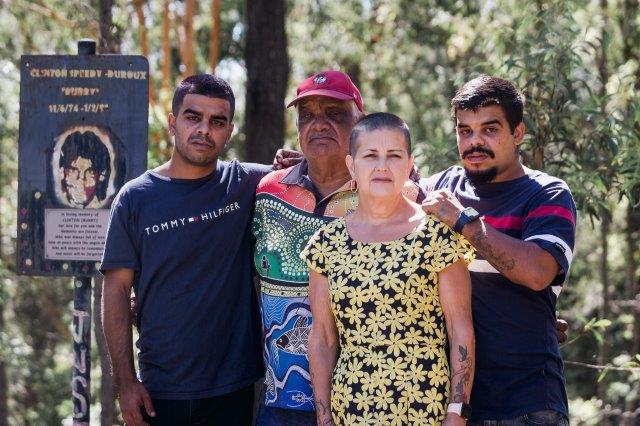
Bowraville is a tiny town on the mid north coast of New South Wales. Between September 1990 and January 1991, three children disappeared there: Clinton “Speedy” Duroux 16, Colleen Walker-Craig 16 and Evelyn Greenup, aged 4, who all lived on the same street at the Aboriginal Mission. It was widely held that all three were killed. A white man called Jay Hart was arrested, tried and acquitted on two of the murders. In 1997, Det. Gary Jubelin led a taskforce that re-opened what was essentially a ‘cold case’. The families involved, including a new generation not even born in 1991, spent three decades fighting to reach some peace and a just resolution in this story, which says a great deal about Australia’s cruel history of racism.
A new feature documentary, The Bowraville Murders takes us deep inside the culture and society of the people involved. Intimate, frank and saddening, the filmmakers chart thirty years of legal struggle including trials, inquests, high court appeals and a parliamentary inquiry.
Still, it is the human story that speaks most powerfully here, feeding the inescapable conclusion that the police response in 1991 to the missing kids is directly related to the unhappy history of black/white relations in Australia, a history as old as White Settlement.
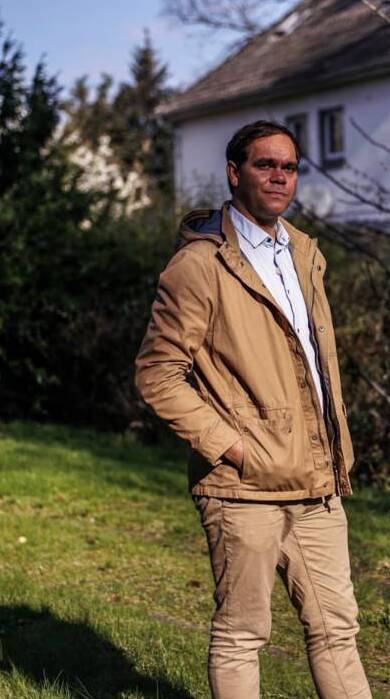
Made by a crack team including writer/producers Stefan Moore (Tyke: Elephant Outlaw), Dan Goldberg (Finding the Archibald), and co-producer Anna Cater (Tick F*cking Tock) and award-winning investigative reporter, director Allan Clarke (Blood on the Tracks), The Bowraville Murders is a powerful plea for justice.
We spoke to Clarke about this important documentary.
How did you get involved?
“A lot of my work in journalism had been around looking into unsolved Aboriginal homicides. Stefan Moore, one of the film’s producers, asked whether I might be interested in directing.”
All documentary filmmaking by its nature treads a thin line between the private and the public. How did you negotiate the sensitivities involved here?
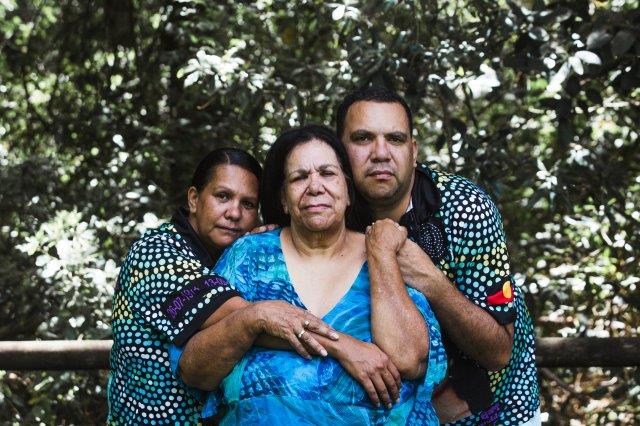
“We had many discussions with the families about what they wanted to put out there and what was important to them. I had asked them whether they would be willing to be involved in a film in a far more personal way. This film was about thirty years trying to get justice. Throughout that time, the families have been in the media on and off. Many times, they have been misrepresented. Many times, their voices have been cut out altogether. They were extremely generous about opening up. The interviews were long and harrowing. What you see in the film is what Aboriginals go through. Daily. There’s no point trying to tone that down.”
The families experienced legal set back after set back; the frustration becomes very intense.
“[The editorial choices of emphasising their grief] was a challenge to the default position that happens in these stories, you know, ‘these fellas have a chip on their shoulder, they have an issue with the system’. It is absolutely valid that they do! They have an issue because there is institutionalised racism.”
Can you talk about the relationships you established with the people involved?
“It helped that I was Aboriginal myself. We shared similar experiences. Coming from that background, they understood that I understood what they were going through… Feeling that they were thought of as worthless and not being listened to. I’ve had similar issues in my own family. They trusted that I would be able to understand them in a way that a non-indigenous filmmaker may not. I think every Aboriginal person has had these encounters with bodies of power.”
Had you ever been to Bowraville?
“Yes! I knew the town through a family connection and stayed there as a boy. I grew up in Bourke. These were small towns divided on racial lines. It’s safe to say at one point in the history of Australian cities and towns, Aboriginals were not welcome. In Brisbane, there’s a Boundary Street – that was the boundary that Aboriginals weren’t allowed to cross!
“Aboriginals were not allowed into towns and cities without permission. This was part of the White Australia Policy here that allowed certain policies and laws and regulations on the basis of race. That was part of a never- ending cycle; it started with colonisation, then the frontier wars, Aboriginal lives being under control of government; then the stolen generation…
“I mean, it wasn’t until 1967 that Aboriginals were counted as citizens.”
This is clear in the film; it toggles between the immediate story of the murders and its legacy and connects it to a long history of injustice.
“From the start, I wanted to look at the seeds of racism.”
Stan Grant is in the film. He plays a role of guiding us into the historical narrative. He is interviewed in the Bowraville Cinema, a place where once upon a time, not really that long ago, Aboriginal people could only enter through a side entrance and could only sit in certain parts of the auditorium…
“While the film was about the murder of three Aboriginal children, their families and their fight for justice, underpinning all of that is a story of racism in Australia.
“Stan Grant came on board to do that within the film, though what he says is not scripted and I didn’t want ‘Stan the journalist’! He’s incredibly knowledgeable, has a background in this history and he grew up in a segregated community. In discussing this, we are supporting what the family is saying, the attitudes, [the complacency]…”
The film is not positioned as a ‘murder mystery’, but it does re-cover investigations, evidence, a suspect…. this must have presented practical challenges?
“It was a legal nightmare. We have these incredible lawyers who backed us 100% and came on and made cases for things we wanted in the film, but there were things I wanted to put in but remain legally contentious. Everything [in it] is factually correct and in public domain. But putting it together, we were able to find grey areas.”
How do you see the film?
“For me, the film was about taking the viewer into a community to show how the murders impact them day to day and say, ‘it could have been avoided’. Realistically, this is more an indictment on the police who originally investigated the case. They ignored the families. They wasted time. This had a domino effect. Thirty years later, the courts are trying fix those issues. I wanted viewers to have some sort of empathy for these families and see where the anger is coming from. I wanted viewers to come away questioning courts and government. People wanted this story to be told. We were able to make the film with an enormous amount public support.”
The Bowraville Murders is in select cinemas from September 2, 2021
