


by FilmInk Staff
Thirtysomething Matthew Victor Pastor is thought to be Australia’s most prolific filmmaker of recent years. Since 2018, he has shot half a dozen features alone, adding to a large raft of short films and experimental works.
Experimental, often strange, but always compelling, Pastor’s movies are quite unlike anything else. Based in Melbourne, Pastor has forged a unique vision of the city on film. Its familiar streets, and trams and adventurous architecture are made strange and wonderful, scary and ominous, beautiful and comforting in his camera-eye. These are rich settings for his movies that deal with alienation, and loneliness.
Here, Pastor speaks about his career and his latest film The Neon Across the Ocean on the eve of its screening at the Revelation Perth International Film Festival.
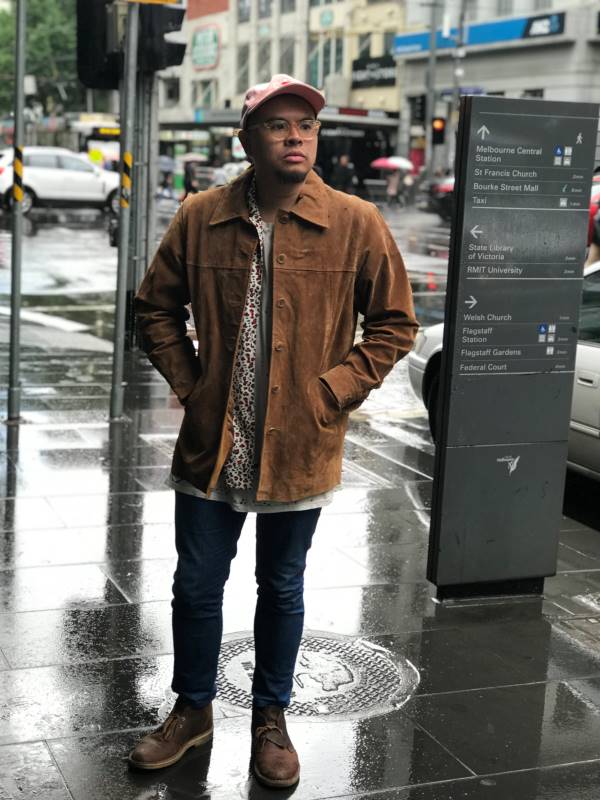
You’ve been characterised as a Filipino-Australian filmmaker, that’s a self-styled description too.
“I was someone who grew up not knowing and questioning their identity. Identity is tied to a lot of my work. It’s a broader discussion than representation. There is more to it than just seeing a face on a screen. Who is behind the face? What’s the generational trauma?
“For someone who is creative like me, who has to question their own creative process, I think that is something that people from certain backgrounds don’t get the chance to explore. Because I work in a certain way, I can explore that. That’s especially encouraging to younger people who get a lot of, and have access to a lot of, information but it’s in small bites. With a two-hour movie, when you connect deeply to these questions, it becomes part of one’s identity.”
You are very prolific. You’ve made and/or shot four movies in well under two years. Traditionally movies are a ‘conservative’ medium in the sense that they don’t allow for much immediacy like writing, or painting, or music and performance. Typically, they require, even at the ‘low-end’ of production, a great many resources and take a long time to reach an audience. How can you move so fast, do so much?
“I have worked with traditional crews, with a lot of equipment and a locked in script. Right now, I’m working ‘solo’. Now, with very lightweight equipment that’s highly portable, you can just keep making films! What is filmmaking? A camera, sound, an actor, two actors, an image! I had no traditional crew on Neon. People would drop in for an hour and help. Sometimes I would write scenes on the day.
“Covid lockdown was a chance for me to spend hours practicing filmmaking techniques. For A Pencil to the Jugular, I was learning how to use a gimbal because I wanted to explore long tracking shots [ a gimbal is a piece of hand-held camera equipment that allows smooth motion like a Steadicam.]
“I hope to scale up again soon when its ethical to do so. Working this way allows me flexibility. My work is very much an immediate response to what is going on in the world. It’s almost narrative documentary.”
The Neon Across the Ocean is part of a trilogy; apart from Neon and Jugular there is Plans That They’ve Made all dealing with the impact of Covid.
“All three films were shot at various stages of the lockdown, but I don’t want to say that this is the only way to make a film [solo]…With Neon…well, I always feel lonely and when Covid happened, I thought ‘people will get this’ [loneliness]. It’s a coming of age story about a girl, Mandy (Waiyee Rivera). The theme deals with how we are separated by borders [of all kinds]. It’s about the ‘new normal’ of fear and isolation. It’s like an historical time stamp about what we are going through.”
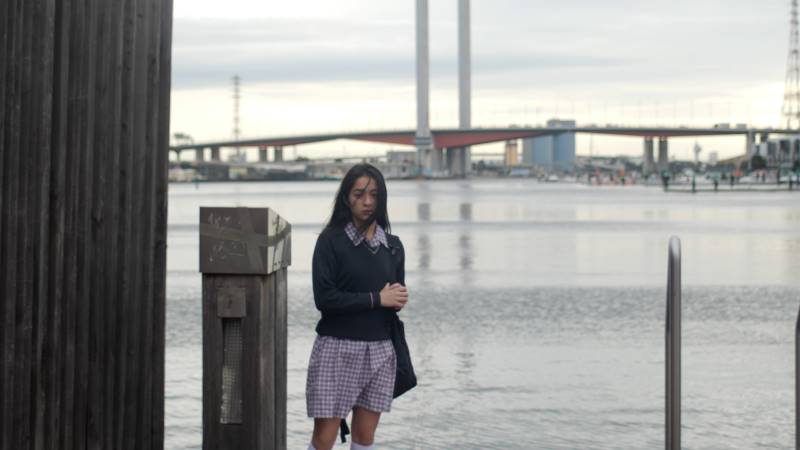
There’s a tricky narrative shift between poetic passages set in the Philippines that bookend the main narrative which is a more conventional story about adolescence and parental divorce.
“Those moods in the film, that’s how I feel inside. The stuff in the Philippines was shot in 2015! When you make films quickly, you can only reflect on them in a certain kind of way. This was about the division of time and distance. It’s very downbeat, and quiet, unlike many of my other films which have a lot of chaos in them. It appeared at the Moscow Film Festival in April and did very well.”
You’ve been compared to a certain avant-garde tradition where you shoot material and find a form for it later.
“I definitely do that. Some days I just wake up feeling like I need to shoot stuff. You would be walking the street and there would a big construction site and I’ll shoot that – these things happen spontaneously, even with cast and crew.
“You see an empty street, you feel as though you should document it.”
Movies, even serious movies are ‘sold’ as objects that aim to take us ‘outside of ourselves’ but your films take us ‘inside ourselves’, if we can put it like that?
“Yes. People respond to movies because there is always something they can identify with. Where you are in life has a lot to do with the way you relate to a film. I deal a lot with my family upbringing in my films.”
A key moment for you was seeing Shunji Iwai’s All About Lily Chou-Chou (2001). It’s a time shifting narrative, and has a very special mood and a story that deals with school bullying amongst many other things…its ambience lives on in your pictures?
“Yes. Getting into film was all about this movie. It’s the most depressing film about adolescence ever made! [Laughs] I saw it on SBS when I was about thirteen. I was a cross cultural identity living in suburban Australia, Noble Park, Melbourne and I related to everything about it. The loneliness. The use of music…Being creative in that environment makes you a bit of an outsider.
“My biggest influence has really been the Filipino New Wave of the early Naughties though. I like Lavrente Indico Diaz (Evolution of a Filipino Family), his use of digital technique to play with form, I love that. I also love Wong Kar-wai, Chris Doyle…”
Your films are very personal, are you open to working with other material?
“Yes. As I have said before in other interviews, filmmaking saved my life. It’s a way I have of dealing with my Borderline Personality Disorder. Without it, I don’t have an anchor. With BPD, your emotions really swing. With film, you must be focused to finish it. It’s a difficult task that involves a lot of moving parts. I know the triggers for the manic stage that’s part of the condition. When it comes, I can anticipate it and if I can catch that wave, I can write a script in three days!
“I live a dream. Making films. I get to do it. Waking up every day to that is…film is very empowering.”
