by FilmInk Staff
With an expansive career in creating documentaries for the BCC, Bill Leimbach is known for his films on tribal cultures. From Australia to New Guinea to the Amazon, Leimbach has travelled extensively to capture his subjects. His research has resulted in a variety of stories of acculturation – how cultures overlap with one another.
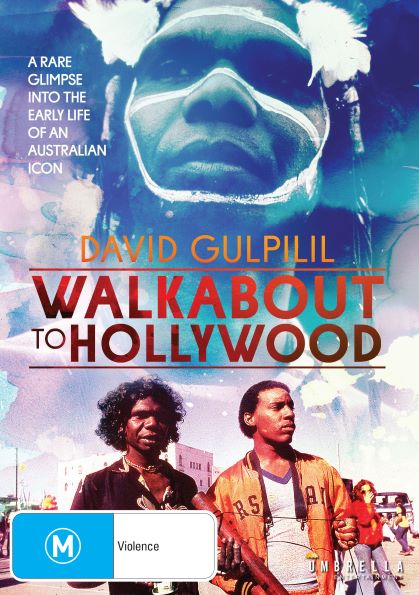
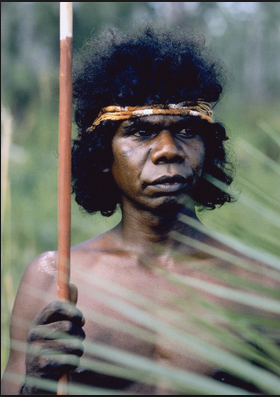
In the late ‘70s, Leimbach cast David Gulpilil in the lead role of his upcoming film about Indigenous historical figure Woollarawarre Bennelong. While the film never came to fruition, Gulpilil became the subject of Leimbach’s documentary David Gulpilil: Walkabout to Hollywood.
Filmed over 40 years ago, the documentary, released by Umbrella Entertainment, finally made its DVD debut in February this year.
Detailing the way in which Gulpilil balanced his newfound fame in the USA with his deep-rooted Yolngu identity, the documentary highlights the disparity between Gulpilil’s Indigenous lifestyle and Western cultures. Despite this, Gulpilil isn’t portrayed as torn between two worlds, but passionate and eager to learn about other cultures and to teach other people of his own.
“He was a fish out of water [who] had been to see the Queen, been to Paris, been to New York,” Leimbach says, detailing how Gulpilil travelled internationally to perform traditional dances. “And now he was a film star and was treated like that [in America] – he loved it.”
Gulpilil’s multi-faceted personality – his ability to adapt between indigenous and urban living – is palpable throughout the documentary. It’s clear, however, that he is emotionally and spiritually tethered to his homeland, Arnhem Land, in the Northern Territory.
“[In the USA] he had some money to buy Western clothes – Urban Cowboy with John Travolta was a really big hit at that time and everyone was buying hats and Levis and cowboy boots and cowboy shirts. He was right into all that; he filled up his luggage. […] As soon as we crossed the border into the Northern Territory, he just totally changed. This was his territory, his land. He feels at home there, but also, they don’t recognise him as a film star – they just recognise him as David Gulpilil. By the time we got back to his place, all that carload of cowboy stuff had been given away. He had given away the Levis and a pair of boots, hats, CDs, DVDs.
“He had a pair of boots – no shirt – you can see in the film that those Levis and those boots were the only things he had when he came back. You can’t refuse to give things away up there. They’d always say ‘David, can I have that? Oh, can I have that shirt? David, can I have those shoes?’ He just couldn’t say no. He is so generous.
“When he gets back there, he just falls into line: he gets right into cattle riding again and mustering and digging and making didgeridoos, hunting kangaroos – all that sort of stuff.
“We were heading back to Arnhem Land and he says ‘Stop!’ He got out of the car, ran about 30 metres ahead of the car, went around the backside of a tree and grabbed this goanna […] then we started this fire on the side of the road and we had lunch! He’s just so good, so adept, and he can just fish and hunt. There’s nothing he really couldn’t do.”
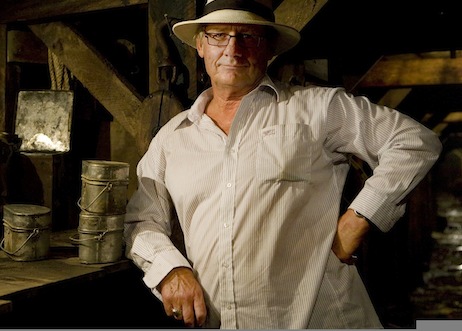
Leimbach and Gulpilil’s professional relationship was symbiotic; they helped each other navigate the cultural rifts of one another’s lifestyles. While in Arnhem Land, Leimbach let David guide him.
“I had to look after him in LA and he had to look after me up there [in the Northern Territory]. It was just a role reversal. As soon as we crossed into Arnhem Land, [David] was like ‘I’m taking over. Move over guys, I’m driving. This is my territory now; you follow me, you listen to me.’ It is survival out there, too: if your car breaks down, if you don’t have water, if you don’t have food, you can die. I felt totally secure. [David’s] an amazing tracker and bushman – he can just make something out of nothing.”
Gulpilil is currently receiving treatment in South Australia for lung cancer, but his expansive career as an entertainer and performer has made a significant mark on the Australian arts and cultural landscape.
“He’s made so many [Indigenous Australians] proud. Forty years ago, he was a pioneer and so many [Indigenous Australians] were so proud of him and inspired by him and went forward because of him.”
You can find the DVD version of Walkabout to Hollywood at Umbrella Entertainment’s official website.