



By Liam Heitmann-Ryce
If, as Emily Dickinson once suggested, fame is a fickle food upon a shifting plate, then it stands to reason that the entertainment industry is a shifty business. In front of or behind the camera, a person can undergo an entire evolution cycle of job roles and titles across the course of their career.
Cinematographers might decide they want to try their hand at directing (looking at you, Barry Sonnenfeld). Sometimes the director might have a go at screenwriting (hello, Mr. Spielberg) and, in the case of Australian composer Christopher Gordon, the music makers might dip their toes into completely different waters.
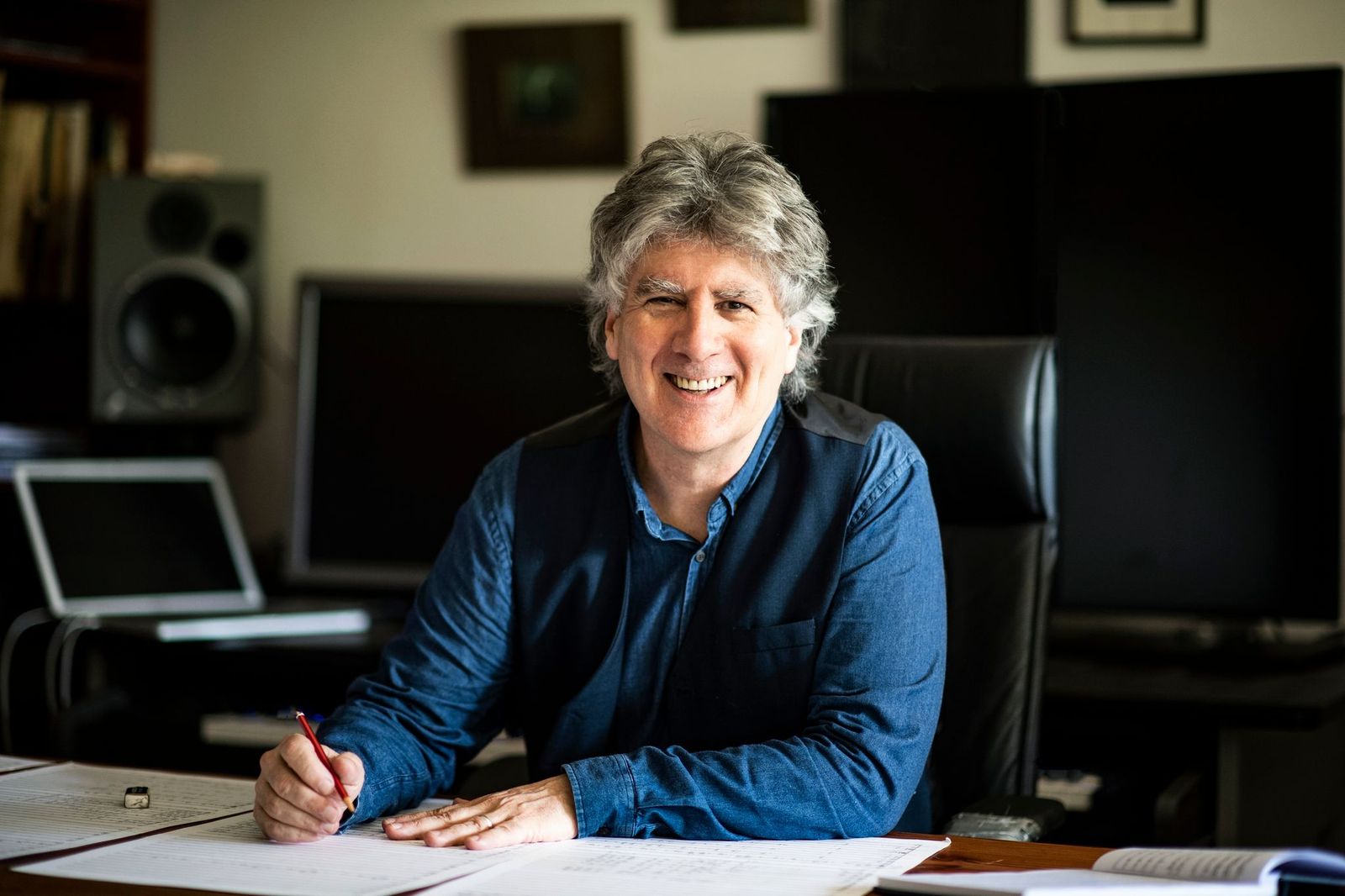
Elected to City of Ryde council in September 2017, the former Hollywood composer served as Deputy Mayor for the Northern Sydney suburb after accumulating numerous high-profile credits, such as swashbuckling Russell Crowe vehicle Master and Commander and gory vampire flick Daybreakers.
But Gordon does not see this as an impediment in any way. Quite the contrary, he feels his musical background is an advantage. “It is important that our politicians, collectively, have a wide range of life experience. When the opportunity came to stand for council, I felt that as a composer and without formal education, I might be able to make a contribution that was a bit different.”
The balance between composer and Greens councillor is one that Gordon finds to be “quite complimentary,” given that his role in the New South Wales council is only part-time, allowing him to “strictly compose in the morning, leave the afternoon flexible, and attend to council commitments in the evening.”
It is a career transition for which he seems to be especially grateful, being able to satisfy his artistic sensibilities as a composer but also get his fill of social interactions. Comparing the life of a composer to that of a city councillor, Gordon says, “One is a solitary, introverted life and the other is more gregarious and outwardly focused.”
Talk about the best of both worlds.
Of course, being in the film industry will have been a very useful proving ground for the kind of compelling rhetoric and skills of persuasion that surely play a key role in local politics. Often receiving “a phone call out of the blue … from a director, a producer, an agent,” Gordon is accustomed to making deals and establishing a comfortable middle ground between the desired outcomes of multiple parties.
“Sometimes I am offered the job on the spot, other times it is a process of discussion, usually with the director who is trying to get a feel for which composer is best for his or her film.”
But the art of the deal is not what led Gordon to becoming a composer in the first place. When asked what drove him to the career path of making music for a living, he remembers, “I was thirteen when I decided to become a composer,” having been a member of the Australian Boys Choir in Melbourne for three years up to that point.
“I was introduced to a lot of wonderful music by composers like Kodaly, Brahms, Schubert, Palestrina. I remember being haunted by de Victoria’s Tenebrae factae sunt. But it was Benjamin Britten who had a particularly profound effect upon me. He was my first ‘favourite’ composer and I suspect the fact that he was still alive at that time shaped the way I viewed what a composer was.”
For all the bombast and excitement of his score for naval epic Master and Commander, some of Gordon’s most accomplished orchestral work of the silver screen can be found in the rather more unassuming 2013 drama Adoration, starring Naomi Watts and Robin Wright. Scored with Gordon’s friend Antony Partos, , the film “poses an interesting moral situation where two women have affairs with each other’s son, all having closely known each other since the boys’ childhood.”
Set in a wealthy beach suburb, the film is inhabited by characters who Gordon considers to be “really quite self-centred, ultimately allowing their desires to destroy their extended families.” This kind of conflict, however, is excellent material for any composer worth their salt and of course Partos and Gordon both provide a compelling, complex score that gently illustrates the lusty turmoil of its protagonists.
The result is strings-heavy, vaguely meditative, and orchestrated with expansive single-note sweeps that offer a feeling of vast open space. The music reflects the sun-dappled, breezy environs of its setting, as well as what the composer calls the “emotional push-and-pull of desire and doubt. I felt it could best be supported musically by waves of orchestral sound, a continual ebb and flow of primal emotion. This is what music can bring to a film; the deep undercurrents of urges and motivation in a character.”
Reflecting on the collaborative process of scoring the film with Antony Partos, Gordon called it “a somewhat strange experience, in that we never worked together on the film or discussed approaches.” The two composers only realised how well their individual approaches had worked when it was time “to compile the soundtrack album and decided to include everything we had written for the movie, whether it was used or not,” offering something of a stand-alone listening experience independent of the film.
It is certainly a gorgeous album to listen to and is a regular fixture within this interviewer’s writing playlists.
Having been through “a rather overwhelming few weeks,” Gordon saw out the closing month of 2020 in the company of Orchestra Victoria in Melbourne, where he was recording the music for his ballet The Happy Prince. By his own metrics, this should be the work with which he has the greatest satisfaction, given that it is his most recent project. This comes from his response to the question of what he considers his magnum opus: “My next work! It’s not really possible to choose one work. If it is a film score then it is vital that it works with the picture; that’s the job.”
Asked if he considers the ‘success’ of a score to be based off the quality of the music itself or how well it marries with the images onscreen, Gordon concedes “some scores do seem to come off better on an album than others. You do the best work you can for the film then see what sort of an album you can make out of it.
“If I have time in the schedule, I like to write and record short passages especially for the album that link film cues together,” which is common practice within the industry, where the official soundtrack release may offer tracks far shorter than the music heard in the final film.
While the decision to enter the realm of local politics may be a decidedly uncommon practice within the film industry, it is nevertheless an arrangement within which Christopher Gordon seems comfortably rooted. One imagines the only major distinction between conducting 90 players within an orchestra pit and conducting town council meetings is the kind of notes which Gordon is tasked with organising.
Conductor, composer, or councillor, they all require an ability to bring ideas together, be it with a clipboard in-hand or with the wave of a baton.
Readers can keep up to date with Christopher’s political activities through his Facebook page, and he can also be found on Twitter and Instagram.
Liam Heitmann-Ryce is a Writer and TEDx Speaker based in the UK
