


By Erin Free
Martin Scorsese and The Rolling Stones. It’s now a cliché, but this really is a match made in heaven. If anyone was qualified to capture the manic, swaggering on-stage energy of the world’s greatest rock band, it is undoubtedly Scorsese. The director has inventively utilised the band’s music in his films, and his knowledge, understanding and passion for classic rock music is well documented, most notably in the form of his sprawling, no-corners-cut Bob Dylan documentary No Direction Home. But those expecting that kind of magnifying glass to be applied to The Stones will be bitterly disappointed with 2008’s Shine A Light. This is a concert film, pure and simple. The interview and archival footage is at an absolute minimum; Shine A Light is not about The Stones’ compellingly sordid past – it’s about their surprisingly vivid and ever resilient present. The film brilliantly captures their on-stage camaraderie and bravura, which has been minted to perfection over a forty-plus-year career. As such, Shine A Light rates as a slice of pure cinematic joy.
The film begins with a buzzing, hyperactive Martin Scorsese trying to corner Mick Jagger to nut out the details of the shoot at New York’s Beacon Theatre over two nights on the group’s mammoth 2005-2007 Bigger Bang tour. In one fell swoop, the scene sets up the truly gargantuan presence of The Rolling Stones: when thrown up against them, even Martin Scorsese – perhaps American cinema’s greatest living director – is reduced to the role of a buzzing gnat, flitting around in pursuit of small, insignificant details like what songs will be played in what order, and where everyone will be standing. But don’t be fooled – Scorsese is a genius, and he showed it early when brought on board by The Stones to make a concert film with them.
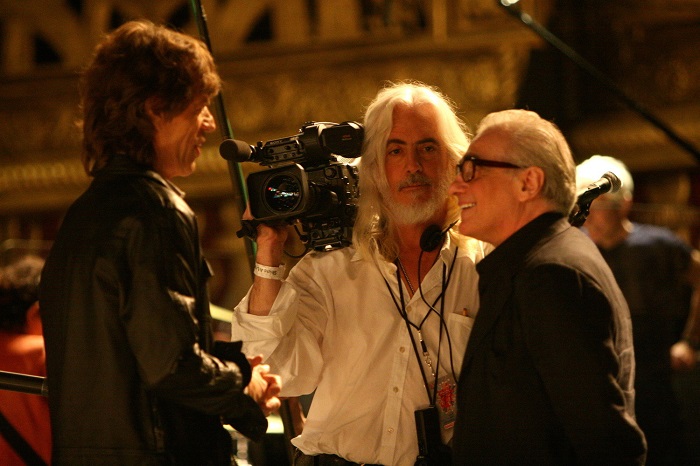
Mick Jagger – always one for grand gestures – had wanted the director to capture The Stones’ enormous, record-breaking outdoor show on Copacabana Beach in Rio de Janeiro, Brazil. Scorsese relented, wanting instead to do something more intimate, and also something that he could control. The gamble paid off. Bringing together an extraordinary group of cinematographers in their own right (Robert Elswit, Andrew Lesnie, Stuart Dryburgh, Ellen Kuras, John Toll, Declan Quinn and more) to operate the cameras for lead DOP Robert Richardson, Scorsese turns The Beacon Theatre into his own personal cinematic playground, lighting the group beautifully and allowing his amazingly talented shooters to swoop deliriously in and out of the action, perfectly capturing moments both big and small.
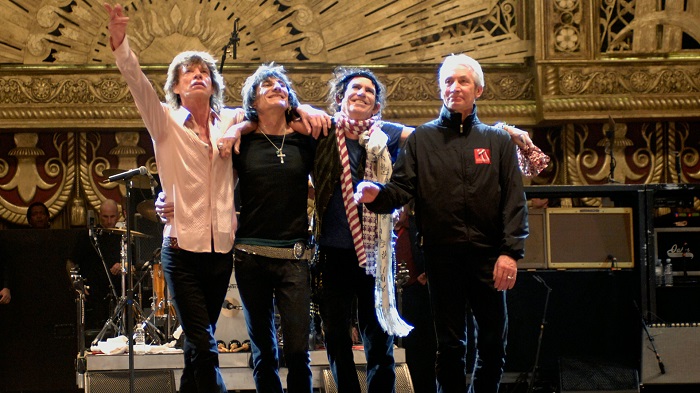
And in the middle are The Rolling Stones, crunching and cruising together like a well-oiled but slightly ramshackle machine. Mick Jagger prances and preens up front, while the less glittery Keith Richards, Ronnie Wood and Charlie Watts (and a gaggle of backup singers, horn players, keyboardists and the like) grind away effectively in the engine room, delivering big, sweeping versions of classics like “Start Me Up”, “Brown Sugar”, “Jumping Jack Flash” and “Sympathy For The Devil”, and kindly throwing in lesser known jewels like “Shattered” and “All Down The Line”.
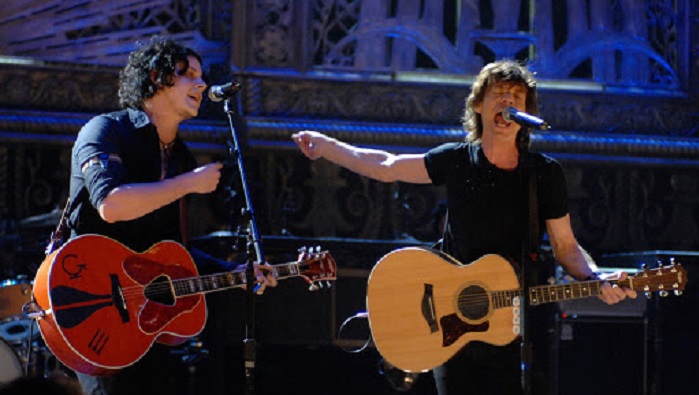
There are also three interestingly chosen guest stars. Cooler-than-thou Jack White III (of The White Stripes) straps on an acoustic guitar and puts his blinding falsetto to good use on “Loving Cup”. Pop diva Christina Aguilera, meanwhile, cuts a more stagey figure. Sensibly dressed-down in a white shirt and black pants, she shrieks and hollers her way through the appropriately dirty “Live With Me”. Jagger, however, can’t control himself, and when he bumps-and-grinds behind young Christina, he looks a bit like a hoary old PE teacher going the grope on one of his female students. It’s not quite call-the-cops stuff, but it is off putting. All is forgotten, however, when ornery old blues maestro Buddy Guy hits the stage, and teams with The Stones for an absolutely spellbinding version of “Champagne & Reefer”. Deep and nasty, the performance courses with vindictive and suitably sleazy grace. Long, bluesy and beautiful, it’s the film’s absolute, no-arguments standout moment.
The fact that The Stones are a great live band, however, doesn’t necessarily mean that making a great concert movie with them is a forgone conclusion. Hal Ashby’s Let’s Spend The Night Together (aka Time Is On Our Side) is a largely turgid affair, and even the late sixties-era The Stones In The Park occasionally lacks in energy. But Scorsese (who made one of the best music movies ever with The Last Waltz, featuring the final performance of The Band) is a master, and he captures fantastic little moments here (a crouched Keith Richards sucking in big, deep breaths after an exhausting number; Charlie Watts taking a big gulp of air and offering a cheeky smile to the camera after a demanding drum fill) that hit like fresh air, even for a band with such a well documented career. Archival footage and brief interview segments are used briefly to sharp, incisive effect, highlighting certain songs during the concert and pointing to particular elements of The Stones’ mythology. It might not have the benefit of the youthful beauty of 1968’s The Rolling Stones Rock And Roll Circus, nor the seething, eventful horror of the 1970 masterpiece Gimme Shelter, but Shine A Light remains pure rock’n’roll nirvana, and stands mightily as one of the truly great concert films.