



by James Mottram
“It was a story that really demanded to be told,” says the ever-socially engaged (enraged?) veteran British filmmaker, Ken Loach. “When Paul was doing the research for I, Daniel Blake [the heartbreaking story of a 59-year-old carpenter who has a heart attack and must fight the system to receive a living allowance], we went together to some of the food banks. We found that a lot of the people getting charity food were working, and still they couldn’t feed their family. So, the idea of the working poor, which led to this.”
This is Sorry We Missed You, which premiered to much acclaim at the Cannes Film Festival earlier this year.
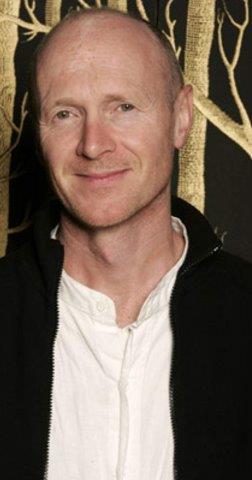
“There was also another thing that really struck our attention,” adds writer Paul Laverty. “This language of the new labour practices. It sounds very progressive. You don’t get hired. You get onboarded. You become like a warrior of the road, improvise, freedom, efficiency, master of your own destiny; all this type of language, and, of course, it’s like the conjuring trick that they used to play in the old fairs. What they’ve done is just transferring any responsibility onto the weight of the individual. It sounds like you get 200 pounds a day with your own van, but when people sit down and work it out, and then examine the contract, which has been very, very skilfully drawn up… Specific language to try and make sure that they’re not deemed to be an employee. No holidays, no sickness pay, fines if something happens. We came across a case of a man who was a diabetic. And because of the pressure, unable to get a new replacement driver, he started having fits at work. He actually had a diabetic fit just before Christmas and missed an appointment because he couldn’t get 150 pounds. He had a massive workload during the Christmas period, and on the fourth of January he died. There are cases of this where people seem to be incapable of extracting themselves from it.”
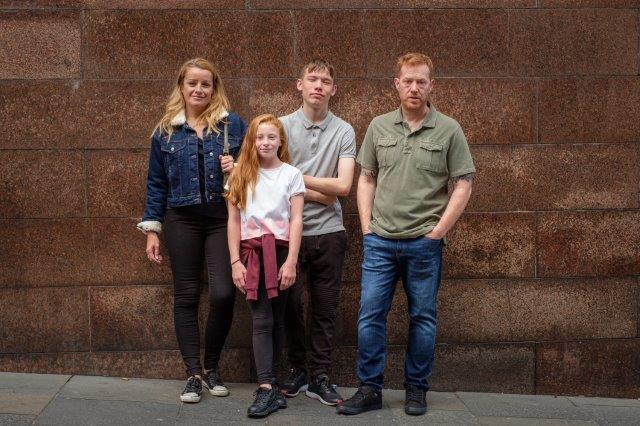
In Sorry We Missed You, we follow a family who think that they’ve found a solution to their financial woes through self-employed in the gig economy as delivery drivers, only to see their lives worsen through what Loach and Laverty call modern day labour exploitation.
Where does the fault lie, though? Is it really the government allowing this sort of stuff to happen, as much as these companies are obviously greedy and have no responsibility, but should it be the governments that are controlling them or changing working practices?
Ken: I think it’s within the structure of capitalism, because if the economy is run by corporations, the business will go to the cheapest, most efficient service. How do they get there? By reducing their labour costs to a minimum. If one company does that, the other one can’t compete paying trade union rates, and sickness pay, and health benefits. So, it’s in the nature of competition. The only way to change it is to have different economic structures. It’s not so many years ago since the [UK] post office was privatised, and this is the consequence. This is the consequence of privatisation, it’s within the nature of the system. I think trade unions get too weak…
What do you think of the power of film? You point out the injustices, and they’re very strong. But you think they can help change the situation?
Paul: The government has not changed one inch. In fact, it’s gotten even tougher. And one instance of that is the charity foods, the food banks where they give food to the poor people, that has increased 18 per cent in one year. But I think what we can do, along with other people, is embolden communication, to create an opposition. You can encourage the opposition. From the right wing perspective, they can’t change because it’s built into their politics – they drive people to work because work isn’t a shared contribution to make a society work. Work is allowing employers to exploit. Well, people aren’t going to do that voluntarily. So those who don’t work or get inadequate wages from their work, they have to be pushed. And the way they’re pushing is to show that if you’re not earning an income, you’re going to suffer. And that’s been Tory policy since the 18th century. A Tory, religious Vicker in the 18th century said that people will only work if they’re hungry. This was 250 years ago. It’s the same mentality. I think the film taps into something that I think is great and challenges not only of the environment just now, that even some of our richest and most influential economists are really, really scared about – the consequences of so much inequality.
Sir Angus Deaton, who’s a Princeton laureate, Nobel Prize winner, he spoke in London and he said, ‘Britain is now following the path of the United States on extreme differences between wealth and poverty. There are really, really dangerous consequences for that.’ And I think we’re seeing that now. And this is part of it, this is the other end of that extreme inequality. And what he pointed out, this is not some left activists saying this, he said, ‘over the last 50 years now, real wages for workers who haven’t got a University degree have been stagnant or going down.’ Life expectancy in the United States has gone down three years in a row, which is the first time in a century that’s happened.
It’s no surprise when you see all this anger, scapegoating going on, right taking advantage, let’s blame the Mexicans. Let’s build a wall.
Ironically, the only ones communicating with the working class today seem to be the far right.
Paul: This is a real failure. We need to speak with clarity, and we need to identify with their issues and problems and have a solution. And we’ve got to show how they can win. They’re complex problems but the right reduces it. The simple message is, ‘he’s to blame. He’s a different colour skin. He’s new here. His cooking smells different. Your town is being taken over. This is not the country it was. They’re to blame.’ And the left should be saying, ‘We have the same interests. We both need work. We need work at our homes.’ Because they shouldn’t have to travel to work. We should all have work where we live. We should have decent support for their health. You need a house to live in. You need a school for your children. And we need simple messages. And we’ve failed.
Ken, how did you find shooting this film? Just the physical endurance it takes to shoot any movie…
Ken: Oddly enough, it’s a very simple film. We thought that the situations are so strong that we wanted to be simple and economic and clear and allow the complexity to be through people’s reactions and how they are with each other and the human relationship; the shooting to be really clear and simple and economic. We shot it in five weeks, four days. Brilliant team as always. We shot on 16mm, and what’s incredible, the image is as big as your thumbnail. And you look at it on that screen and the detail is incredible. All the detail that’s been packed into that bit of celluloid. Next to Paul’s script the question is who is going to bring this to life? We did a lot of work finding people who will simply be the characters in the film. Once we found them, we did the usual thing of shooting in sequence, which again makes it very easy because it just follows the story. And it just unfolded.

The balance has to be in the writing. And casting people who will make you smile but then… it’s very important with Ricky, that he’s not a man who’s defeated from the start. He’s an optimist, and he makes you smile and he’s a football fan, he knows all the stories from the days’ past. There has to be that lightness about him. Because the stereotype is this boring dad who’s defeated; it needs to be a journey to get there. He’s got to start off really optimistic. We couldn’t cast someone who looked defeated.
Sorry We Missed You is in cinemas on December 26, 2019
