


By Erin Free
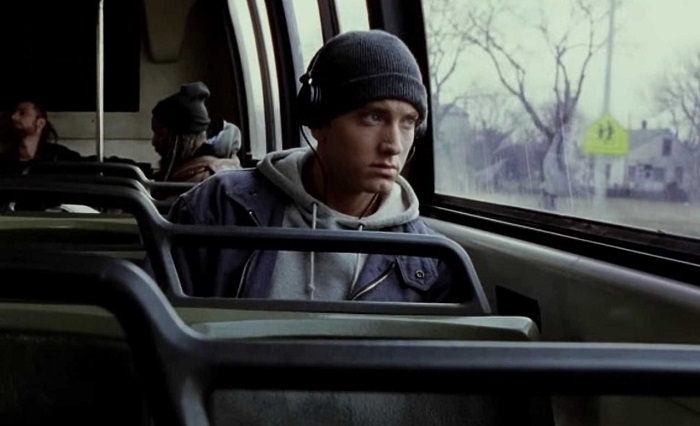
EMINEM IN 8 MILE (2002) While many hip hop stars now have successful side careers as actors, one of the potential best of the bunch disappointingly decided to retire from the big screen after only one substantial effort (he has also made a couple of minor cameos) as an actor. Though most hip hop stars exploit the fantasy of their lives on screen by playing it either tough (think Ice Cube) or uber-cool (Snoop Dogg), white rapper Eminem was one of the few (along with 50 Cent in Get Rich Or Die Tryin’) to bravely take on a gritty, emotionally driven drama demanding a real performance, as opposed to mere gangsta posing. Directed by veteran Curtis Hanson (LA Confidential, Wonder Boys), 8 Mile – which weaved elements of Eminem’s own life into its tattered fabric – was a powerful, classically structured piece of underdog cinema, with Eminem impressively mixing toughness and tenderness in equal measure. “He didn’t want to be in an ‘Eminem movie’, or a two-hour music video,” Curtis Hanson told FilmInk. “He actually said that he wanted to be a part of a really good movie.” For the hip hop star, however, 8 Mile’s emotional and physical demands were too much. “I was very blunt with him about how difficult this project was going to be, and he took it seriously,” Hanson explained. “But a few days into the project, he mentioned that he’d only half believed me. At the end of shooting on the last day, I said to him, ‘How do you feel?’ He said, ‘Never again!’ He meant it, and it didn’t surprise me that he said that. But my feeling is that if his performance is received as well as I hope it will be, that eventually he’ll be like a woman looking back on childbirth, and forget about the pain.” Eminem’s performance was indeed well received, but perhaps that pain really was just too much…
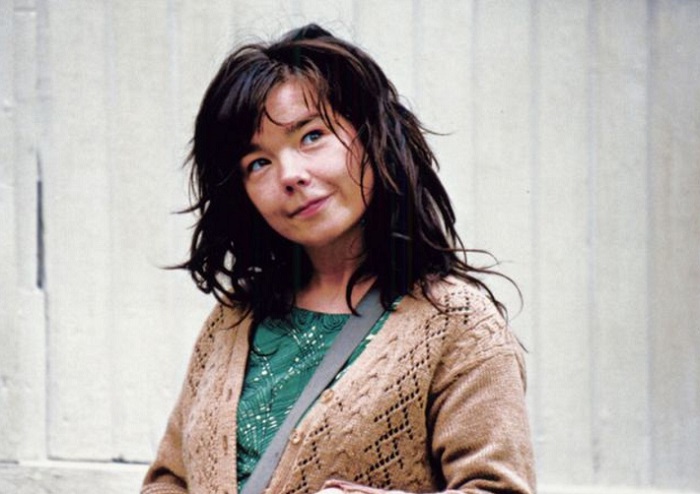
BJORK IN DANCER IN THE DARK (2000) As a musical performer, Icelandic superstar Bjork is a true original, brilliantly mixing a knowing hipness with an engaging sense of naiveté. When it was announced that she would be starring in Lars Von Trier’s musical drama Dancer In The Dark, a gargantuan meeting of the minds was predicted. That meeting, however, became a violent, aggressive struggle. Now famed for putting his actresses through emotional and physical hell to get the best out of them – Nicole Kidman (Dogville), Charlotte Gainsbourg (Antichrist) and Emily Watson (Breaking The Waves) have all attested to the director’s extreme methods – Von Trier’s approach was not anticipated by the sensitive but gutsy Bjork, who gives a stunning, Oscar nominated performance in Dancer In The Dark as the brutalised Selma, a heartbreaking heroine of the first order. Also providing the film’s evocative songs, Bjork’s brittle fragility anchors the big, unwieldy film beautifully. The singer, however, was far from impressed with her director’s on-set behaviour (“I wasn’t comfortable with the way that he worked with his group,” Bjork has said of Von Trier. “My father was a union leader, so I didn’t agree with this kind of hierarchy”), and by the end of production, they were no longer talking to each other. Though she appeared in the 1990 Icelandic film, The Juniper Tree, while still a child, and was part of the bizarre tableaux in her artist husband Matthew Barney’s 2005 experimental film, Drawing Restraint 9, Dancer In The Dark remains Bjork’s only genuine adult film role. “I knew when I said yes that this would be not only my first role, but also my last one,” she said upon winning the Best Actress award at The Cannes Film Festival. “I’m very happy that it’s to be this one. I have to do records now. I only have fifty years left, and I’ve got a lot of records to make.”
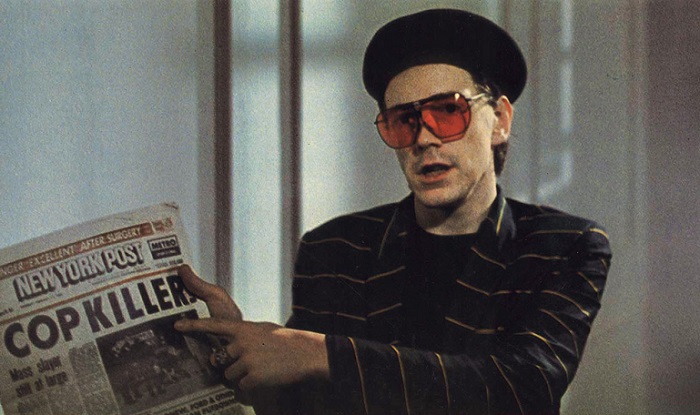
JOHN LYDON IN ORDER OF DEATH (1983) As the frontman of punk pioneers The Sex Pistols, Johnny Rotten – nee John Lydon – remains one of the most theatrical performers in rock history, distilling his inner turmoil into a voluble on-stage mess of madness and rage. In Julien Temple’s 1980 ersatz documentary on The Sex Pistols, The Great Rock’n’Roll Swindle, he was enjoyably acidic and larger than life. Lydon’s innate theatricality seemed to instantly qualify him for a cultish film career, but aside from a lightning-quick cameo in the little seen 2000 comedy The Independent (and some voice work), he has only featured in one role of any note. In 1983, Lydon was chosen by Italian filmmaker Roberto Faenza to star opposite Harvey Keitel in the brutal, Italian-financed crime drama Order Of Death (aka Cop Killer). “The casting agent rang me up and said that there was a part,” Lydon told The Face in 1983. “I thought that it would be a good laugh, but then I read the script and thought, ‘I’d better take this one seriously!’ They were convinced that I would destroy the whole thing. But they had faith enough, and they let me do it. I was actually much more professional than all of them put together! You know what Italians are like: fucking chaos! They just loved arguing, and I kept saying: ‘Work! Just work!’” Lydon is appropriately off-putting as the demented Leo Smith, who has been murdering the corrupt cops of the NYPD’s narcotics division. When Keitel’s relentless detective captures him, the pair engage in a twisted game of mental cat-and-mouse, and the raw, curiously sympathetic Lydon ably holds his own against the far more experienced Keitel. When asked by Interview Magazine in 1991 if he’d looked for more acting work since, Lydon was typically evasive. “No, but I wouldn’t mind,” he replied. “The only thing that I was interested in was playing Louis from Anne Rice’s The Vampire Chronicles.”
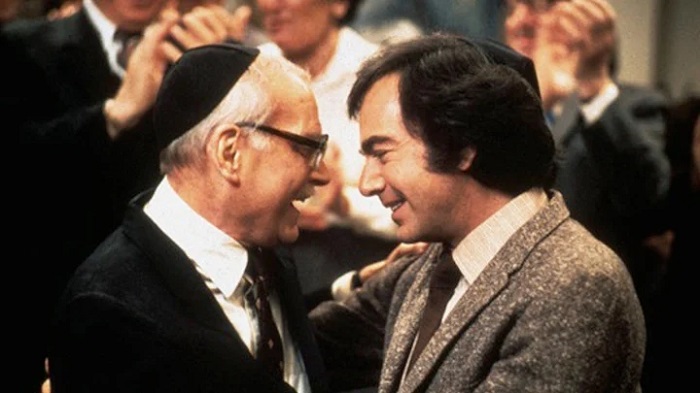
NEIL DIAMOND IN THE JAZZ SINGER (1980) In 1980, a move into acting probably seemed like a good move for soft-rock superstar Neil Diamond, a nice guy performer with on-stage charisma to burn whose wholesome persona would surely be a perfect match for the big screen. Unfortunately, his chosen vehicle – a big budget remake of the 1927 classic The Jazz Singer – seemed to be cursed from the start. The film’s initial director, Sidney J. Furie, was sacked two days into production, and the first scene (in a cockeyed “tribute” to the original film’s star, Al Jolson) has Diamond appearing in black-face. While the film’s story – Diamond’s Jewish cantor must defy his deeply religious father to follow his dream of becoming a pop singer – has promise, much of what transpires is tepid and overplayed, with Laurence Olivier delivering one of the hammiest performances in cinema history as the anguished father. Neil Diamond is engaging in the film, and his soundtrack is packed with rousing hits, but The Jazz Singer’s poor reviews and only fair box office results (it’s not quite the bomb that it’s often portrayed as) probably contributed to his decision to stick to the stage. On the whole though, acting just wasn’t something that resonated with Neil Diamond, whose subsequent film work has been limited to making an extended cameo as himself in the comedy Evil Woman, opposite Jack Black and Jason Biggs. “I wouldn’t say that I was unhappy, but I wasn’t happy,” Diamond told Larry King about working on The Jazz Singer. “I didn’t really understand the process. It was a little scary to me. I’d never done it before, and I didn’t have a sense of it. When I first performed in front of a live audience, I had a feeling about it. I liked it. It did something to me. I never got that feeling making movies. It was very trying.”
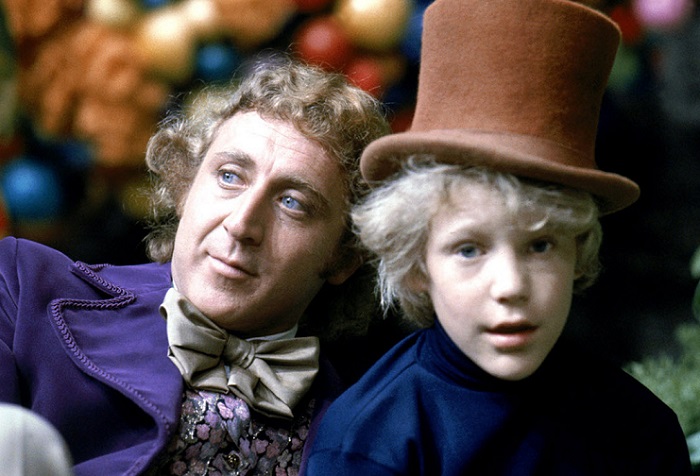
PETER OSTRUM IN WILLY WONKA & THE CHOCOLATE FACTORY (1971) When director Mel Stuart and producers David L. Wolper and Stan Margulies were casting their adaptation of Roald Dahl’s beloved novel Charlie & The Chocolate Factory – the story of a young boy whose big heart melts the far more hardened one of an eccentric confectionary magnate – they struck gold when a nationwide search yielded sweet-faced youngster Peter Ostrum to play the film’s youthful hero, Charlie Bucket, opposite big star Gene Wilder as candy man Willy Wonka. Discovered while performing at The Cleveland Playhouse, Ostrum beautifully essayed the inherently decent Charlie Bucket, whose natural charm anchors the hallucinatory weirdness of the film. Willy Wonka & The Chocolate Factory was a huge success, and it remains a seminal family classic. Its young leading actor, however, never made another film. Ostrum even turned down studio Warner’s offer of a three-picture deal because, well, he just wanted to do something else. At the time, Ostrum’s family had acquired a horse, and the young boy started working at the stable where the steed was kept. His interest in horses was keen and enthusiastic, but something else made a strong impression on him: the horse’s veterinarian. “He really enjoyed what he did for a living,” Ostrum told The American Veterinary Medical Association. “My father was a lawyer, and I didn’t have a clue what he did all day. But I knew exactly what the veterinarian did. Someone making a living from something that he enjoyed really sparked my interest.” Peter Ostrum simply followed his dream and became a vet. “Acting was fine,” he has said, “but I wanted something more steady, and the key is to find something that you love doing. That’s what my profession has given to me.”
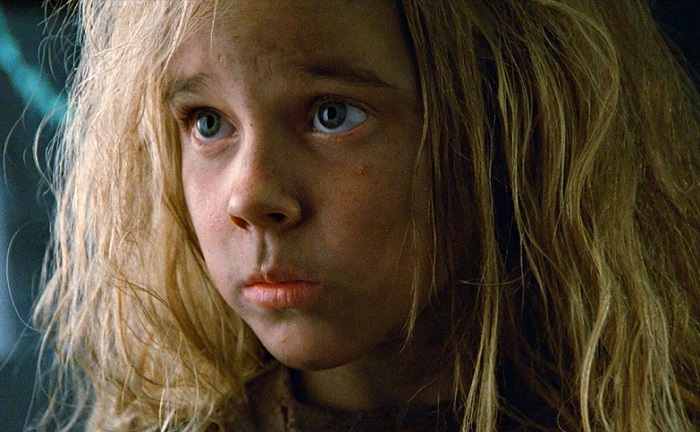
CARRIE HENN IN ALIENS (1986) Though Sigourney Weaver’s Ellen Ripley is obviously the most important female character in the superior sci-fi Alien franchise (and, indeed, in sci-fi in general), the damaged, terrified child, Newt, with whom the hardened Ripley forms a maternal bond in James Cameron’s brilliant sequel, Aliens, comes a close second. The actress who played young Newt was stone-cold unknown Carrie Henn. “I’d never done anything before,” she says on the Aliens DVD. “I’d never even been in a school play.” The nine-year-old daughter of an American father and English mother was discovered by the film’s casting directors during an extensive search through the UK and USA. Henn was spotted while eating lunch at school in Lakeheath, and was asked to audition for a role in the big budget, action-packed film. “I just happened to get picked for the role,” Henn has said. “My parents spoke to me about it, and we thought that it would just be an extras part…nothing too big.” They couldn’t have been more wrong. Little Newt – who has seen her family killed by the film’s vicious aliens – is actually the emotional centre of the film, humanising Weaver’s Ripley, and providing her with the impetus to become a true she-warrior. Henn’s wounded, haunted quality was perfect for the part, and represented nothing short of a casting coup. Most of the young girls that the producers had seen for the role had acted extensively in TV commercials, and their inherent sunniness was inappropriate for Newt, who was suffering from “post-traumatic stress,” said producer Gale Ann Hurd. “Carrie had none of that [sunniness]; she was perfect.” Though Carrie Henn enjoyed her time on the high-energy set (“I’d just grab my Cabbage Patch Doll and join in!”), she was not really bitten by the acting bug. Henn never appeared in another film, instead choosing a career as a schoolteacher.
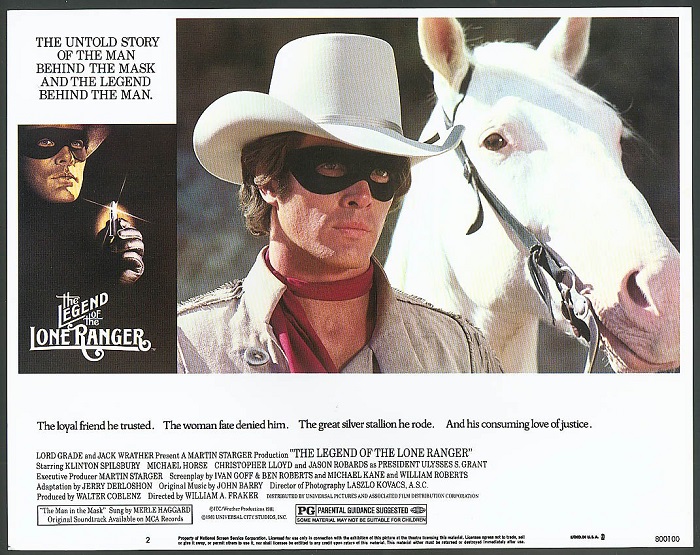
KLINTON SPILSBURY IN THE LEGEND OF THE LONE RANGER (1981) In 1981, the big screen western was well and truly dead. The Legend Of The Lone Ranger was big-shot producer Lord Lew Grade’s single handed attempt to revive it. In an effort to bring this reboot of one of the western’s most iconic fictional characters into a new era, Grade and director William A. Fraker chose to cast an unknown in the lead role. A much publicised nationwide search landed them with the strikingly handsome Klinton Spilsbury, the son of Max Spilsbury, former head coach of the Northern Arizona University football team. Though Spilsbury looked the part, he couldn’t come close to embodying the gallant, heroic nature of The Lone Ranger. Indeed, Spilsbury’s performance was considered so callow and underwhelming by Fraker and the film’s producers that his dialogue was actually overdubbed by the more authoritative James Keach, surely one of the greatest ignominies to befall a performer. Spilsbury, however, seemed a wrong fit from the start – he was uncooperative during production, and even got into a fight during the shoot. “A security guard called me at three in the morning to come and get him,” recalled actor Michael Horse, who played The Lone Ranger’s Indian sidekick, Tonto, in the film. “I said, ‘Whoa! That faithful companion stuff is only in the movie!’” Upon release, The Legend Of The Lone Ranger was a major critical and financial flop, with Spilsbury held in particular derision. “The guy who was supposed to be The Lone Ranger was…nothing,” said John Hart, TV’s 1952 Lone Ranger, who had a small part in the film. “He got into trouble and couldn’t do the part.” After the failure of the film, Spilsbury virtually disappeared, though an article in Parade Magazine in 1989 revealed that he had spent some time in Europe and had been working as a model.
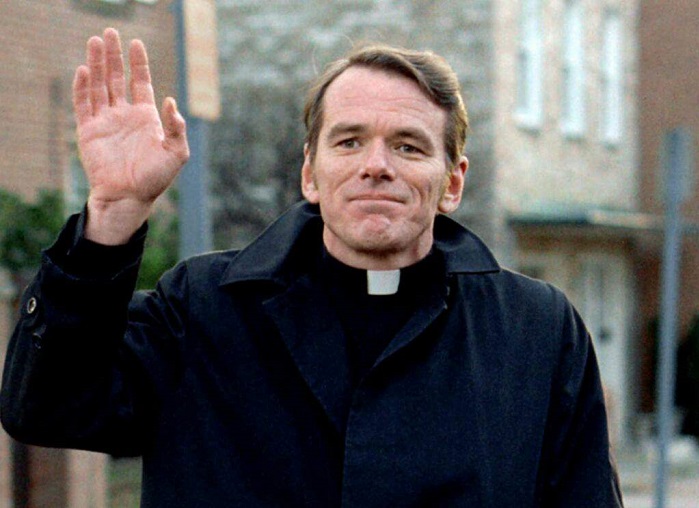
FATHER WILLIAM O’MALLEY IN THE EXORCIST (1973) Director William Friedkin is famous for his on-screen grit, which he has often achieved by utilising non-actors with a real life connection to his cinematic material. On the crime drama, The French Connection, Friedkin cast New York detectives Eddie Egan and Sonny Grosso in back-up parts, spurring them both onto continuing careers in film and television. When casting his horror masterpiece, The Exorcist, Friedkin once again shot for documentary realism, despite the film’s supernaturally driven story of a girl possessed by The Devil. It was the movie’s screenwriter – novelist and noted Catholic William Peter Blatty – who introduced Friedkin to the man who would eventually take on one of the film’s major roles. “I introduced Father Bill O’Malley to William, and he fell in love with him for the part of Father Dyer,” the writer says in Fear Of God, a documentary about The Exorcist. Father Dyer is the friend and confidante to Father Karras (Jason Miller), the priest charged with exorcising the young girl. “I had to ask permission from The Provincial [his superior], and he rolled his eyes toward heaven and said, ‘Well, why not?’ He knew that the film was trying to say something significant about religion,” says Father O’Malley in the documentary. “It wasn’t just a scary movie. It was talking about evil.” O’Malley gives a strong, moving performance in the film (“You can’t get that sense of genuine sanctity from an actor,” says Blatty), but Friedkin had to take now infamous action to get him there. At the end of the film, O’Malley has to weep over the body of his dead friend; after asking, “Do you trust me?”, Friedkin slapped the priest across the face in order to prompt the appropriate emotion. A committed priest, Father O’Malley never acted again, though he regularly gives talks about the veracity and production history of The Exorcist.
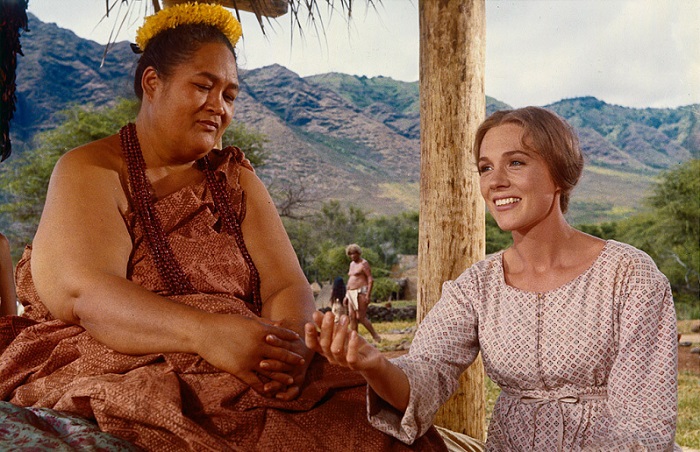
JOCELYNE LAGARDE IN HAWAII (1966) Cinema history is filled with striking examples of those plucked from obscurity to take on major film roles that often reflect their own experiences. Italian director Vittorio De Sica guided non-professional actor Lamberto Maggiorani to a stunning performance in Bicycle Thieves, while Werner Herzog used the damaged Bruno S. to devastating effect in The Enigma Of Kaspar Hauser. One of the finest examples of this casting strategy remains Jocelyne LaGarde, the only actor to be nominated for an Academy Award for their sole screen appearance. The 1966 adaptation of James Michener’s epic novel Hawaii was one of the biggest films of the year, and while this tale of missionaries in the eponymous locale was toplined by Julie Andrews and Max Von Sydow, the film’s most impressive figure was undeniably Jocelyne Lagarde. Possessing a formidable frame and a natural sense of authority, this Polynesian non-actor – a descendent of the last king of Tahiti – perfectly embodied Malama Kanakoa, the pure-hearted Hawaiian queen who gently but effectively questions the morality of the missionaries. Fluent in only Tahitian and French, it was rumoured that LaGarde was taught her lines phonetically, and didn’t even understand what she was saying. This has been denied, however, by the film’s casting director, Marion Dougherty, who searched the Pacific Islands for six months to cast the pivotal role. “Jocelyne didn’t speak English,” Dougherty has said. “I found someone to work with her, because Jocelyne had never been off the island, but after two months, she was able to speak enough English to do the film. It’s powerful to shoot on location, and to use people from the country that you are in.” In the case of Hawaii, it was a masterstroke.
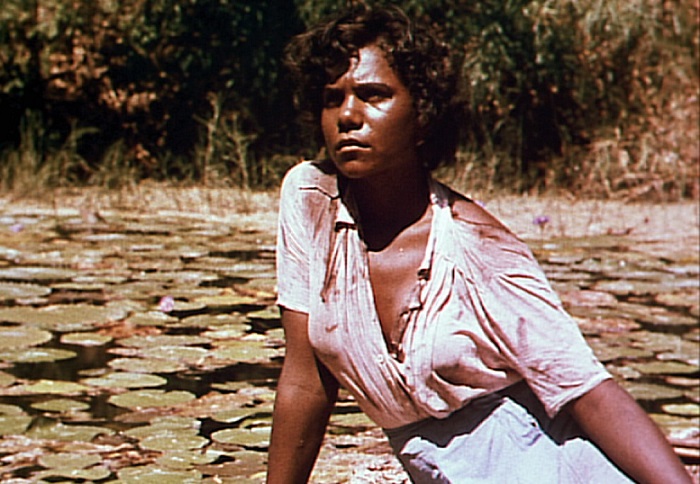
ROSALIE (NGARLA) KUNOTH IN JEDDA (1955) The mesmerising Jedda is one of Australia’s truly classic films from before the famed renaissance of the seventies, and stands as a major, seminal work from local filmmaking pioneers, Charles and Elsa Chauvel. The story of an orphaned Aboriginal girl adopted by a white family, and then dangerously pursued by an Aboriginal man from a different tribe, Jedda was the first Australian film to deal with indigenous characters in a serious manner and was, at the time, a highly contentious and controversial film. Chosen to play the title role was Rosalie Kunoth, who was discovered by the Chauvels while still a student at a Catholic school. Though delivering a graceful and memorable performance in the film, the experience was not a happy one for Kunoth. She was forced by Elsa Chauvel to take on the more exotic, but culturally inappropriate, name of Ngarla, and was emotionally battered by the demands of the shoot. “I was in a state of confusion, a state of trauma, and I really didn’t want to ask questions about what I was doing there or what they were going to do with me,” Kunoth told Australian Biography. “I was quite literally petrified that I wasn’t going to see my family, or my country, again.” Kunoth and her family were also shocked by the sensual nature of the film. “I was horrified, and so was my mother,” Kunoth has said. “Mum was horrified because in my life, I was actually promised [to a man.]” Harbouring no desire to continue acting, Kunoth ultimately spent ten years in a Catholic convent as a nun, before leaving to become involved in indigenous projects to improve education, health and housing in the Northern Territory. She stood for election to the Northern Territory Legislative Assembly in 1979, and though she failed to achieve office, Kunoth remains dedicated to Aboriginal activism.
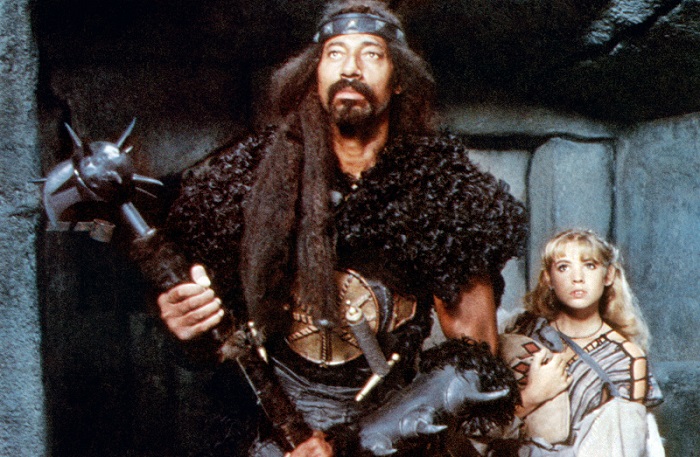
WILT CHAMBERLAIN IN CONAN THE DESTROYER (1984) Professional sport has sent a number of its biggest stars into the acting game, with the likes of Jim Brown, Kareem Abdul-Jabbar, Michael Jordan, Shaquille O’Neil and many more notching up a number of film roles. One of the biggest sports stars of the seventies was late basketball hero Wilt “The Stilt” Chamberlain, who towered over the game both literally and figuratively. The one time Harlem Globetrotter, Philadelphia 76er and Los Angeles Laker was enshrined in The Basketball Hall Of Fame, came second in basketball bible SLAM Magazine’s “Top 50 NBA Players Of All Time”, and is ranked at number thirteen in ESPN’s “Top North American Athletes Of The Century” list. The noted pants-man also claimed to have bedded over 20,000 women during his successful basketball career. “I was just doing what was natural,” he famously said in his defence. “I was chasing good looking ladies, whoever they were and wherever they were available.” Though seemingly a natural for a career in the movies, charismatic bad boy Chamberlain limited his big screen dalliances to just one affair, starring as the mace-wielding warrior Bombaata in 1984’s Conan The Destroyer, the sequel to the popular 1982 Arnold Schwarzenegger sword-and-sorcery adventure, Conan The Barbarian. Though he looked the part, and towered menacingly over the muscular but considerably more diminutive Schwarzenegger, Chamberlain was somewhat, ahem, stilted in his performance style. “I was nervous and apprehensive at how I would come at this particular character,” the basketballer told Entertainment Tonight in 1984. Chamberlain, however, never seemed too serious about his break into movies. “If I can stop laughing after seeing myself in this get-up, I may have a chance to enjoy the film,” he said of his amusingly costumed, ultimately one-off role in Conan The Destroyer.
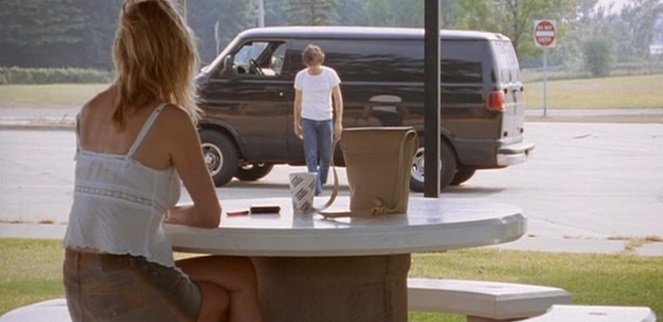
CHERYL TIEGS IN THE BROWN BUNNY (2003) In the seventies, American model Cheryl Tiegs was a superstar. The highest paid clothes-horse of her era, the wholesome-looking blonde was best known for her long-running affiliation with the iconic Sports Illustrated Swimsuit Issue, which featured her on the cover in 1970, 1975, and 1983. A 1978 poster of Tiegs in a pink bikini became an iconic seventies pop culture image, rivaled only by a similar wall-hanging of Farrah Fawcett in a red swimming costume. All of this only serves to make Tiegs’ sole major big screen appearance even more of an anomaly in her glitzy, glamorous career. The model-turned-one-time-actress features in a single, highly emotive scene in actor/writer/director Vincent Gallo’s deeply personal, highly controversial low budget drama, The Brown Bunny. Devoid of makeup, and with no dialogue, Tiegs nevertheless makes a powerful impact as Lilly, a woman at a roadside stopover who makes a brief but deep connection with Gallo’s haunted motorcycle racer. “I didn’t know Cheryl Tiegs, and she’d never been in a film,” Vincent Gallo says on The Brown Bunny’s audio commentary. “I just had it in my mind that I wanted her to do it. I was really desperate, and she stayed vague in her answer about whether she was going to do it for about a month. Just before we shot the scene, she agreed. I was so happy to know her. She turned out to be a beautiful, beautiful person. One of the happiest days of my life was shooting this scene. There’s a moment where I kiss her, and it was the best kiss…it felt like the sexiest, softest kiss that I’ve ever had. She was 54-years-old, so at least I know that some girls can actually stay nice for a long time. I can’t believe that some people said that she doesn’t look good. She looked so pretty…she looks great. She’s beautiful.”
