



by Gill Pringle
It’s such a splashy, gory, violent, fun movie, but there’s social commentary in it as well. What did you think when you read the script?
Suki Waterhouse: I tore through the script, I was super excited to meet Sam [Levinson]. It was one of those things where you’re like, “Okay, get me on tape right now. I want to be part of this.” And then it kind of just continued to take life. But, you know, you kind of go into it and you’re like, ‘there are a lot of things that could go wrong, you know?’ But we were really attracted to the way that Sam had really captured the way that teenage girls speak. And it’s like, ‘Who is this guy? I wanna meet him. How has he taken heart the way I talk in my room with my friends onto the page so excellently?”
Hari Nef: It … inspired me, but also … gave me some fear and trepidation and I thought if I went out for this and I got it, it could have the potential to launch my career if it was a good film, and then if it wasn’t executed as well, it could end my career because it’s such salacious content. I’m glad it turned out well.
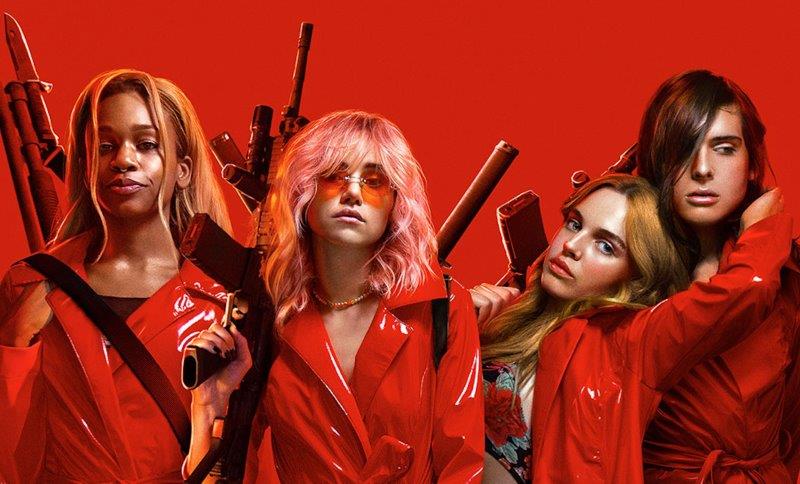
For anybody watching the film, it really makes you think about your social media and your texts, which we all think of as quite personal and disposable, but now we see politicians with their texts coming back at them from 10 years ago. Does it make you feel super aware of everything that you put out in the world?
Suki: I actually looked back at all my old tweets and everything like that with everything that’s been happening recently.
Hari: I did a comb.
Suki: I found some… it was nothing bad… it was just more kind of like free-flow thought about seeing a band and calling them a bunch of fannies or something. It’s just not something that I would do now. So, there’s definitely a change and you want be careful because we’re in a time where you say anything wrong and, I’m really aware that like the finger could be pointed and I can be deconstructed as like all sorts of things. In a heartbeat.
Hari: I feel like whatever’s on my phone is probably on everybody else’s phone, right? I don’t think any of us are pure in that sense.
Suki: You can’t really hope to capture your spirit or your essence online, but I think Hari’s Instagram, I can look at it and I can still feel like you come across. And you’re good at doing that to a wider audience, too.
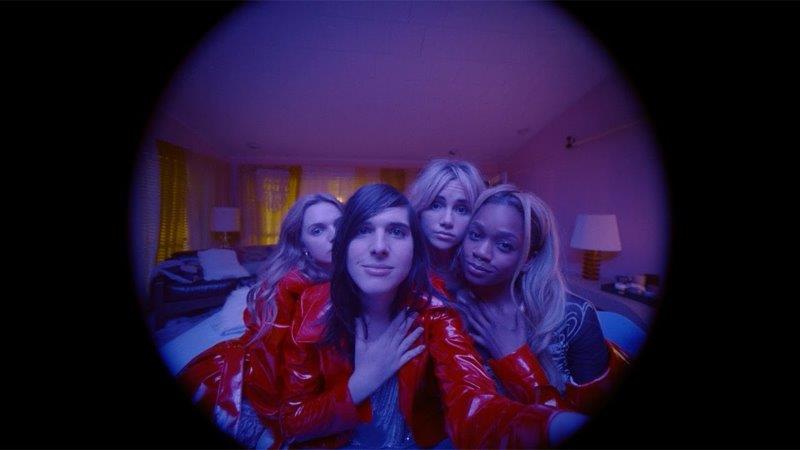
In this day and age people have two personalities, their own and the one they put out. Do you feel like you are split?
Hari: I mean, there are many ‘mes’. Some days I’m my best, some days I’m my worst, most days I’m something in between. What I bring to my phone or my computer when I’m inputting, I try not to engage with these devices unless I’m feeling positively about myself and about what I’m thinking. And if I am not feeling that way, that’s the time to step away from the input and just try to gather myself. I’m not trying to bring my issues and my processing and my trauma to social media because I need to deal with those things in my real life, among my friends and family.
Suki: Also, it changes so rapidly. Like, how I’m feeling throughout the day or week to week, the ups and downs…
Hari: You know how they say never go to bed angry? Never … never tweet angry, never post on Instagram angry. I think that’s a good rule.
This film of course takes you right back into teenage years. How were your teenage years?
Suki: I was a very angry teenager. I caused a lot of problems at home.
Hari: Yeah, I was the worst. I was unhappy. But I was able to also explore a lot of things that would come to make me happy in the future, which is my work. And I had a lot of support from my family in doing that. I just think I was somebody who needed to get out of her suburban environment and go out there and find her tribe. But I think I was happier when I am close with my family, but I also have a chosen family as well. And I hold them very near. But my biological family is just as important.
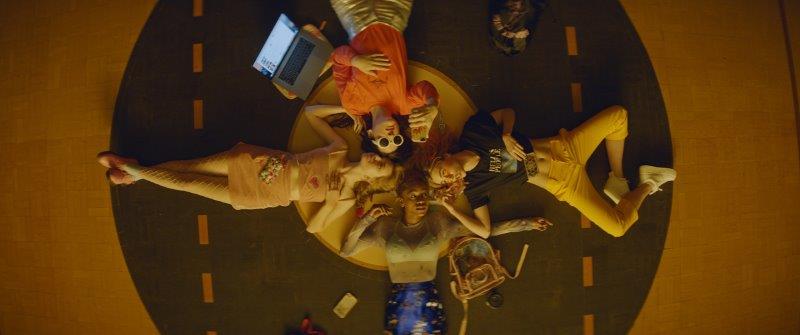
Is there any way to make those teenage years better? Easier? What advice would you both give?
Suki: It’s hard because I just thought of my parents as the enemies of the parental state. I just didn’t think there were any parents that were as awful as mine. And you just grow up and you’re like, ‘I had absolutely wonderful parents.’ You start to see them as people and realise what they were going through, talking to my dad about what it was like for him and having a very high pressure job and working 15 hours a day and coming home to four kids under the age of eight…I just start to see everything so much clearer. I don’t really think that they’re really responsible for the anger that I had.
Where did that come from?
Suki: I think growing up is a lot about rebelling against what’s going on in front of you. But it’s about discovery. I think it’s really healthy to reject your parents in your teenage years. I don’t think it should be something that is seen as a worrying thing.
Hari: They’re the original authority figures in all of our lives. There’s no advice I could give to myself as a teenager that I probably would’ve been ready to hear at that point. But I think that the positive aspects of my teenage years were … the most positive times of my teenage years were the times I spent preparing for adulthood, exploring my interests and exploring relationships and giving myself permission to fail.
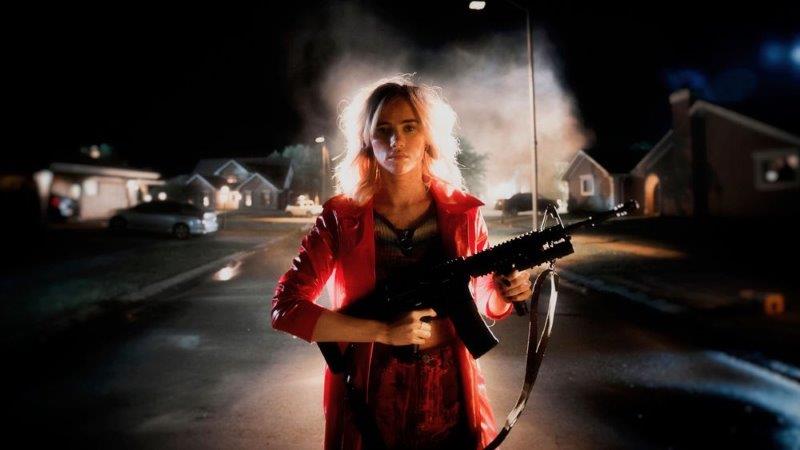
A group like we see in the film, did you have those close girlfriends you could count on for everything?
Suki: I did, but then it all sort of went wrong, and I ended up quite alone. The last few years of school, I had two close friends who both went off with the boy that I liked, so the last two years, I was very alone. But then I started seeking friends and relationships outside of school. And I just had a kind of really fiery ambition to not be in school, get out of there really quickly, and that’s what I did. I was 16. My parents were quite smart in the way that they were like, ‘Okay, well, you don’t have any money from us or anything like that. So go and see how that is.’ They were smart enough to know to not try and stop me, because I was so vile.
Hari: I connected more with individuals. I was more of a social floater. I had a couple of really great friends, some within my high school, some outside. But I didn’t really feel like I had found my group, my core collective until I moved to New York, and then my whole world exploded.
Suki: I wasn’t actually that interested at school in being friends with the kind of group that was like the main cool group. I tried so desperately for years to be accepted by them, and then I sort of gave up by the end.
Hari: I feel you 100%. Yeah, in college, I rushed this literary society sorority twice, and I got rejected twice. And then my career began to take off when I was in college and I think that they felt sort of stupid for rejecting me, because I got kind of cool.
What lessons do you think that high schoolers should learn from the movie?
Suki: It’s really not for us to give lessons, but I suppose to try and understand the full picture of something, take the time and really listen to other perspectives. Listening is really difficult, actually engaging. And any time that I don’t like somebody or I don’t like what they’re putting out, if I take the time to listen to them, then I usually feel a different way. I was working with a stunt person recently, and I didn’t like his vibe, and without warning, he slapped one of the stunt women to show me how hard I could hit her. And I really found it very uncomfortable and disturbing. And I took the time to kind of talk to him afterwards, and by the end, we kind of reached a different understanding of each other where I understood where he was coming from and who he was.
Hari: I would rather adults take a lesson away than teenagers… the righteousness and the judgment and the hypocrisy, it seems like in this film, the teenage girls are getting caught in the crosshairs of a set of stringent rules that they didn’t write. I would urge grown folk who are set in their ways to think critically in which ways they are set, and not to judge the young folks who are trying things in a new way. Maybe even listen to them.
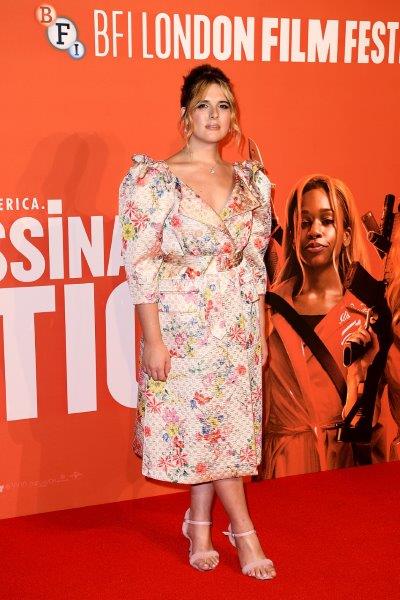
When Sam Levinson wrote this, it was before the MeToo movement, though there are shades of it in the film. Do you feel that MeToo has made the world a safer place to be a woman?
Suki: I think there’s definitely a change, I don’t know if it’s made it a safer place to be a woman, exactly. I think there’s been a fear instilled within certain areas, but I think there’s a lot more space for people. When I’m around, I think people are much more cautious and aware.
Hari: The aspects of MeToo that I take most comfort and pride in are the regulations on professional environments. But at the same time, I’m sceptical of any paradigm that places these heavy restrictions on person-to-person interaction and certain nuances get lost. In the name of protecting women and creating environments where there is consent, it can shift … accidentally, almost, into this sort of puritanical thing. And I think that we all need to be mindful about looking at each situation specifically. We can’t make these generalising statements about what consent is and what consent looks like. Again, MeToo is something that was rooted in the workplace, and strict boundaries and regulations need to exist there, there’s no question about that. We don’t show up to work to deal with those things. But person-to-person, I do think it comes back to empathy… I’m sceptical of anything that becomes a movement, that becomes a hashtag, that becomes and overgeneralisation, because as soon as you make an overgeneralisation about what this stuff is, you’re going to exclude and twist and misconstrue situations to which it doesn’t actually apply. One size can never fit all when it comes to sex and bodies and the way humans relate to each other.
Suki: I just think as soon as you enter into a relationship with someone, as soon as sex is on the table, it’s dark and dangerous and thrilling and wonderful, it has so many layers to it.
Assassination Nation is out now on DVD, Blu-ray and Digital.
