



By Rhiana Davies-Cotter
Ben Lawrence is an internationally awarded director and photographer. His debut feature documentary, Ghosthunter, won the Documentary Australia Foundation award at the 2018 Sydney Film Festival.
Ghosthunter explores the life of Jason King – a western Sydney security guard and part-time ghosthunter, who has spent two decades searching for his absent father. As a survivor of mental and physical trauma, Jason seeks to reconcile his fractured memories and piece together his past. When this journey coincides with a police investigation, a horrific family secret is exposed.
The film begins as a story about a man facing grief by helping the haunted lives of others – but it soon reveals itself as a tale of one man’s overwhelming desire to confront a past that threatens to destroy him.
When Ben Lawrence decided to make this documentary, he had absolutely no idea where the story would take him – or that it would take seven years to complete.
“In 2010, I read an article in my local paper, about a man who had seen his dead brother’s ghost,” Ben muses. “I was on the lookout for documentaries, and this article caught my attention. All it said was that Jason was a local security guard who had a hobby – ghosthunting – and that he began that hobby after seeing his brother’s ghost. This intrigued me enough to go and meet Jason, and as soon as Jason shared his hospital records with me, the whole film opened up.”
Originally, Ben’s main intention was to create a film about grief, set in the ghosthunting world – but this developed over time. “When the real story started to reveal itself, and as I found out more about Jason’s past, my responsibility as a filmmaker changed. I knew that Jason was very vulnerable, and that the story was going to have an ongoing impact on his life, so I was very careful to be as transparent as possible. I also tried to reassure everyone in the film that we were going to do the best we could by the story and them, and that in the end, hopefully, it would be a positive experience for them.”
As the documentary progressed, it became clear to Ben that his subjects were sharing information they had never discussed with anyone else. “I knew the film was going to be an outlet for this story that needed to be told. There’s no way I couldn’t become emotionally involved,” he states. “People were sharing all these stories with me – stories that they had covered up and kept totally secret for 20 or 30 years – and the emotional responsibility of that was enormous. I felt that I needed to honour their honesty and their generosity by connecting with them on an emotional, human level. Being part of this story has been an honour – it has been life-changing.”
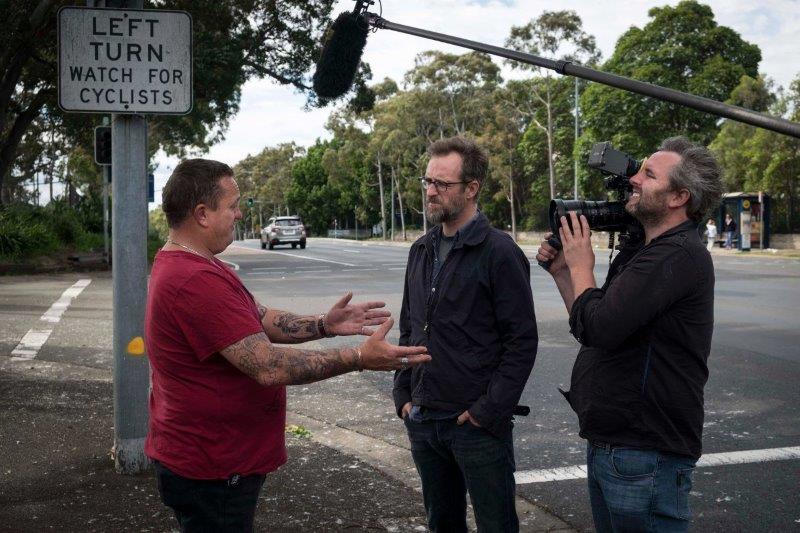
Like Ben, Jason was determined to explore his past and present with honesty. “I was very clear with Jason that I wanted to tell the full story, and I was encouraged by his determination to do that. Jason reassured me that no matter what we found out about his life, he was willing to share it.”
This was brave on Jason’s part, because the film doesn’t present him through rose-coloured glasses. Although Jason may appear calm and collected at first glance, viewers soon realise the extent to which his trauma has affected his life – and the lives of those around him.
Although making this film was confronting for everyone involved, Ben assures us that it was also a very positive experience, especially for Jason. “Jason and I still speak at least once a week, and we text each other. He’s married now, and I was actually the best man at his wedding. I think this film has a positive effect on his life – he’s in a really supportive environment now, and I think he’s got the support he needs for ongoing healing. We have become close, and it’s a unique relationship – I was turning up with a camera at some of the most challenging points in his adult life. I respect his bravery, and also everyone else who came forward within the film to share their story. Without these voices, there’s so much silence around all the issues this film explores.”
Throughout his career so far, Ben has made a point to tackle issues surrounding trauma and mental illness, particularly amongst men. “I’m fascinated with the ways men react to trauma and how that affects their friends and families. Boys and men aren’t necessarily taught how to handle or talk about their emotions, and this leads to so many troubles in society and so much damaging behaviour. I think it’s important that men feel they can engage with other men when they’re feeling vulnerable or needing help. I’m really interested in how we can encourage this in our society.”
If Ben has one main objective for Ghosthunter, it’s that the film helps others and does some good. “I don’t necessarily think that there’s enough support for adult survivors of childhood trauma in Australia,” Ben says. “I mean, there’s such a wide range of challenges that they’re facing, whether it’s just simple things like trying to be good parents, or hold down a job, or maintain a relationship. Very simple things become challenging. And I saw this first hand with a lot of people in the film – it was much easier for them to not look into the past and not look into the trauma they had suffered. I just think it’s so important that people who have suffered trauma have someone to speak to – that they have phone lines they can reach out to. Often, they don’t know where to turn, and I think there’s more we can do within our families and friends and professional circles to provide support. To just sit there and be with someone if you feel like they want to tell you something. Hopefully, the film is a big injection of empathy for those who have suffered childhood trauma. It’s really important to Jason that this film gets out there and helps others like him – that it encourages others to share their story.”
Ghosthunter screens in selected cinemas from September 20, 2018
Read our interview with Ghosthunter composer Rafael May
Ghosthunter has also been shortlisted for AACTA Best Documentary Award
