


James Mottram
It’s an old but still painfully true adage that the screenwriter rarely gets the credit they deserve for a film’s success (or failure for that matter). With very few exceptions – hello Aaron Sorkin – the originator is largely forgotten.
One of the most successful screenwriters working today is John Logan, responsible for the document which inspired the epic visions behind classics such as Any Given Sunday, Gladiator, The Last Samurai, The Aviator, Sweeney Todd, Rango, Hugo, Skyfall, Spectre and the next Bond outing, and the showrunner/creator of the highly acclaimed series Penny Dreadful, which speaks volumes to the importance of a writer in a film
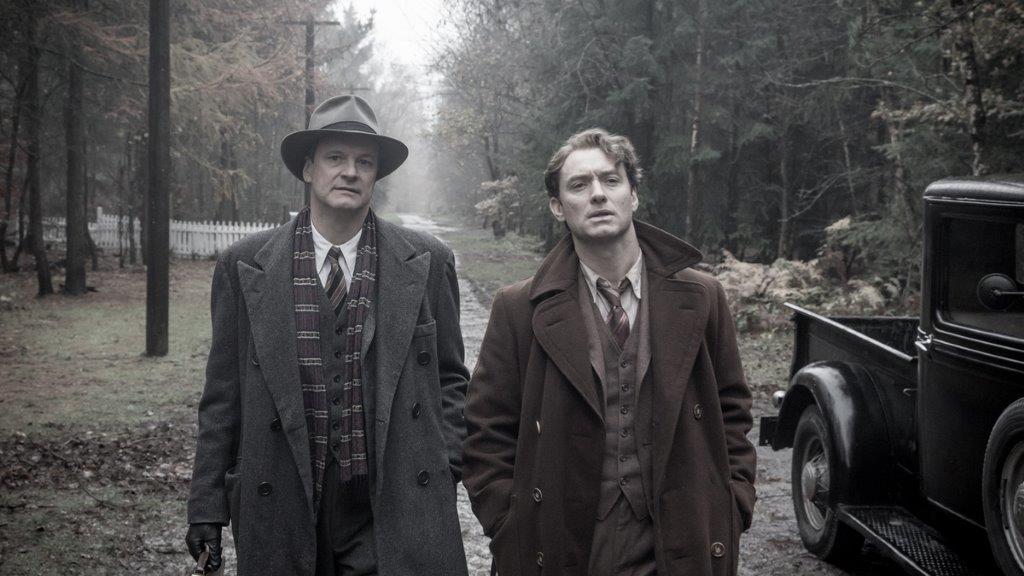
A screenplay very dear to John Logan’s heart is Genius, from exciting British theatre director Michael Grandage, and starring the best of British (and Australian) Colin Firth, Jude Law, Nicole Kidman, Laura Linney, Guy Pearce, Dominic West and Vanessa Kirby. Based on the biography of Max Perkins (Firth), a book editor who inspired the best work from the likes of Thomas Wolfe (Law), Ernest Hemingway (West) and F. Scott Fitzgerald (Pearce).
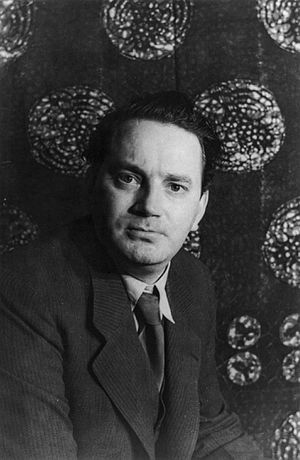
The film’s focus is on the relationship between Max Perkins and the prickly character of Thomas Wolfe (Look Homeward, Angel, Of Time and the River, You Can’t Go Home Again, The Web and the Rock), one of America’s great writers, who passed away in 1938 in his prime at the age of 37.
Despite its pedigree, Genius has gone straight to home entertainment in Australia, bypassing cinemas. That’s not such a bad thing as it offers audiences the chance of discovery, just like Logan with the source material.
“I read the biography right after college, so it was 1983,” Logan told us when promoting Genius last year.
“It’s a magisterial book,” Logan says of renowned biographer A. Scott Berg’s tome. “It’s just one of the great American biographies, and I couldn’t get it out of my head. It just stayed with me, and I found something provocative, and beautiful, and very personal in it, but I was a starving playwright in Chicago. Then I wrote my first movie, which was Any Given Sunday, and I had a little bit of money, for the first time in my life.”
Is that what you spent it on?
That’s what I spent it on! It wasn’t that easy! It wasn’t like I wrote a cheque! I went from Chicago, I went to L.A, I met A. Scott Berg, and we had this series of dinners, where I tried to convince him, and I said “Well Scott, I don’t want to op the rights. I want to buy the rights! Because I know this is going to be a very difficult movie to set up, because it’s the least sexy Hollywood pitch ever, it’s like period book editor! “Don’t you want to make this movie?” Finally, Scott agreed, and 15 years ago I bought the rights.
Then I’d be writing drafts, steadily, while my entire career has happened as a screenwriter… because, I just couldn’t get it out of my system. And then Michael [Grandage] and I did a couple of plays together, and I realised I had met my artistic brother! We just get along so well, and his vision excited me, and I knew he was into the movies, so one fateful night, I said “You know, I have a screenplay, that I hope you might like”, and there you have it!
What appealed to you about the book?
There were two things that emerged to me, that were the continued touchstones for all my work on Genius. One is… it is very arduous to create and people don’t understand it and judge it differently, especially if you’re a screenwriter. They tend to think “Well, you wake up, you swim in your pool and then you go to Apollo Lounge? And then maybe you dictate a couple of lines.” And that’s not true! Being a dramatist, or being a writer, or creating anything, is incredibly difficult, and it takes a toll on your life, out of your psyche, out of the lives of everyone unfortunate enough to love you. Scott’s book, of late, was the best presentation I’ve ever read of what it is to create anything. And being Irish, my parents are from Belfast, there’s something about sons and fathers grappling that is in my nature. It’s in my DNA to want to write about that. The book is about a lot of things, but the Wolfe/Max relationship, was to me a father/son relationship, and I said “Oh, that’s like me and my dad!” I get something about that, that’s very emotional and those were the two things I wanted to write about.
Do you not find it a bit depressing that it will take 15 years to get a movie like Genius made, and that’s not an unheard story, whereas other things will get a green light instantly, clearly because there is a commercial value?
You know, that’s the big change in the movie business since I’ve been doing it, since Any Given Sunday to now, is, when I started out, that mid-range movie, the mid-range $50 million Martin Scorsese movie… That was the bread and butter of Hollywood. That was the movie that won the Oscar with the serious movies, and it almost no longer exists. You can do small movies, like Genius, which you have to carefully structure, and make it a certain kind of way, or you can do $100 million plus larger movies with what one presumes is a guaranteed built in audience. While, what is essentially the human dramas, have fallen out of favour. They’ve also been taken over by television, by long form TV. By HBO, and Showtime, and Cinemax, and all those platforms. The way the BBC certainly did to a certain extent in Britain is now happening more in America, and more universally. I don’t find that depressing, I think in a way we live in a time now where there’s more outlets for dramatic writers than ever before, so I find that exciting! If I were an emerging writer rather than a veteran, I would be thrilled with the idea that if I have a story, I can write a play, or a large movie, or a small movie, or a webisode. Or if I wanted to do a pilot, or a webisode, I can go to all these places and have it seen. That’s terribly exciting. But it also means it’s harder for anything to break through and become truly significant as a work of art.
Do you need different muscles between theatre and cinema? Is that another thing altogether?
Completely another thing. The different forms require different disciplines. Television, film, theatre all require different muscles. Different synapses have to fire differently, different muscles have to work. At the end of the day, whether I’m writing a two person play that no one will ever see or the next James Bond movie, I’m doing the exact same job.
You’ve described Thomas Wolfe as a Keith Moon character. He’s a lot of things, that includes being bloody irritated and kind of dominating. He’s not particularly a nice guy, and he’s one half of a pair of characters who we’re asked to follow. So, when you were writing the script, and when Michael was directing it, was it one concern to pitch him so he is who he is, but he doesn’t alienate the audience?
Exactly right. It was always a lot of calibration, involving Thomas Wolfe’s character, if you tilt him too far, he becomes monstrous. And if you defang him, he’s not Thomas Wolfe and there’s no story. So, it was finding the balance, which Jude hits obviously perfectly. Everything he’s asked to play, he completely delivers, and the real Max Perkins, not my Max Perkins, said something very interesting about Thomas Wolfe, which is: “You have within you a thousand demons, and one archangel”. And I think that’s completely true of Thomas Wolfe. But that archangel, thank God, was truly gifted, and created something amazing.
At the family dinner when he’s charming the kids, is that, in a sense, the one scene where you wanted to really show just how charming he could be?
Yeah, and not even manipulatively charming, but genuinely charming, because he genuinely could be and was a charming person. One of the things he used to do to the Perkins’s kids is tell them bedtime stories. He was a remarkably complicated man, and had he lived, he would have been a great grown up. He would have been a great 50-year-old, a great 60-year-old. Because, with seasoning to him, his writing would have improved, and I think as a person he would have been truly exceptional.
He was hugely prolific, and that’s saying little. But did you manage to read everything he ever wrote?
Everything! I spent an entire summer just doing that. Honestly, it’s why I wear glasses now! I spent a summer in my house in Chicago in inadequate light reading Thomas Wolfe. And I read all 4 of the big novels, all the letters, all the short stories, and all the correspondence I could get. I hurt my eyes, but it was a very memorable summer!
But how much of him had you read before you made the biography?
Zero! None!
So, you just came to a biography straight?
Came to it, knew nothing about it. I knew nothing about Thomas Wolfe. I read a lot of Sinclair Lewis, so my brain was tuned to that time period of American writing, but no Thomas Wolfe, nothing. In fact, our first dinner with A. Scott Berg, he’s like, “Have you read any Thomas Wolfe?”, and I was like, “No.” So, I had to go away and read all that Thomas Wolfe.
Did you like it though?
I loved it! It was amazing! Oh, it was amazing! I thought it was brilliant! It’s like, there’s nothing quite like reading an entire oeuvre of a writer! …It’s like if anyone told me they completed Joe Orton. I’m like “Ok, that’s 3 plays!” I’m not that impressed! You read everything Thomas Wolfe wrote, then I’ll be impressed”
This movie means a lot more to you than Gladiator or Spectre?
Yeah, it’s very personal. It’s been a long process, and it’s a very unlikely movie. Not everyone’s going to see it and not everyone’s going to like it, not everyone’s going to get it. But I think those who do will be uniquely rewarded by it. The same way that I was uniquely rewarded by A. Scott Berg’s book.
Where do your sensibilities lie though? Clearly you are very passionate about this, you’ve been with it for 15 years or so, but as you just mentioned, you’ve done things like the Alien films, Bond. So, are you comfortable with both arenas?
I know writers, and I respect writers, who are very well known for their voice. They have a voice. I don’t have a voice. I don’t want a voice. I believe that what I need to be true to is the voice of my characters. It’s not my voice; John Logan’s voice is very uninteresting. Hopefully Max Perkins’s voice is very interesting, or James Bond’s voice is very interesting. Or Mark Rothko in Red [a play written by Logan] or Howard Hughes in The Aviator. Because I do different things, if you were to say to me “I think your James Bond sounds like your Thomas Wolfe”, I haven’t done my job. I would be insulted by that.
I know I’m not unique among writers in feeling that way, but I think I’m special embracing it to such a degree. You grow up thinking, well Tennessee Williams had a voice, and Harold Pinter clearly has a voice. If you read Pinter, there’s nothing else like Pinter. I love Pinter for that and I love (Anton) Chekhov for that. I love what Aaron Sorkin does. That’s not the kind of writer I am.
How do you approach different types of writing?
Well, it’s just like the existential dilemma. If the chain only goes 6 feet, how do I fill that 6 feet, with everything in the world? And we know that if you’re doing an Alien movie, and you’re telling the story of the Alien monster, you’re going to have, at some point, a Facehugger, and you’re going to have a Chestburster, because that’s the biology of the creation of the Xenomorph. So how do you do it? How do you do it in a really fascinating way? How do you do it in a way that’s fulfilling, and new? And that’s just as gratifying as writing into a completely open horizon. For me, it’s just different kind of muscles. But I don’t pull against the chain. I’m very comfortable. If I want to put myself on the chain, be it Bond, or Alien, I’m very happy to be there. That’s why I haven’t done any other franchise movies, only because I can’t imagine wanting to live in those worlds.
A lot more screenwriters would be a lot happier than they are if they had that attitude!
They would be, yeah! I sometimes think I should get a seminar, like “How to be a happy screenwriter” (Laughs). And it doesn’t have to do with success. It has to do with realising what a dramatist does, and being happy and proud being a dramatist. You’re not an actor, you’re not a director, you’re not a producer, you’re a dramatist. Take pride in that! Just like William Shakespeare. Just like Harold Pinter, or Chekhov, were dramatists. That’s what you can do.
Genius is available from July 5, 2017
