



By Jessica Mansfield
Almost five years ago now, documentary director, Robert L. Camina, delivered his first full length feature, Raid Of The Rainbow Lounge, which looked at the aftermath and lasting legacy of the eponymous 2009 outrage, in which a a newly opened gay bar in Fort Worth, Texas was raided by members of The Texas Alcoholic Beverage Commission (TABC) and The Fort Worth Police Department. Taking place on the 40th anniversary of the epochal Stonewall Riots in New York, the raid saw gay patrons roughed up and vilified, leading to a major protest.
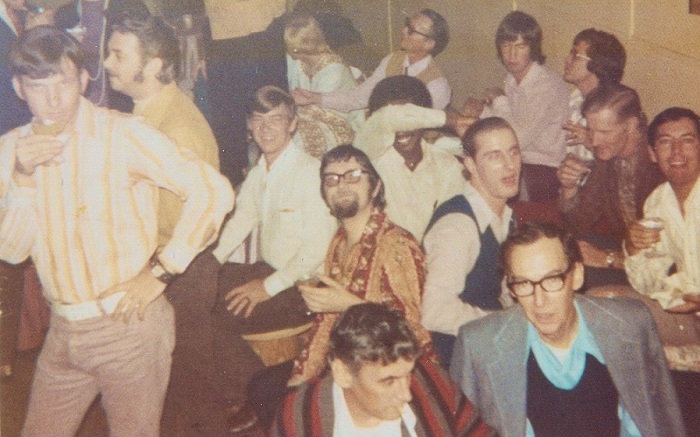
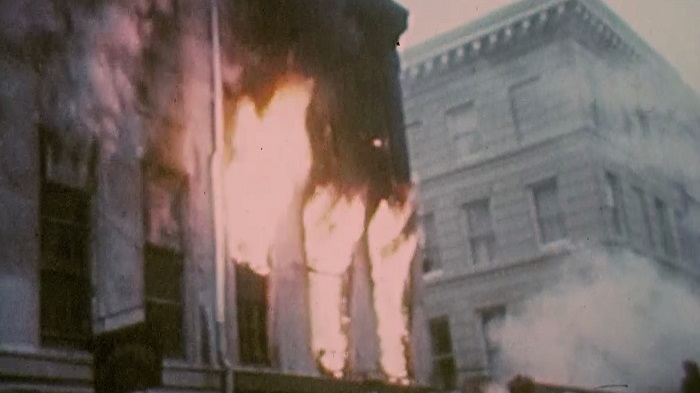
Forging a career as an evocative voice on LGBT issues, Camina’s next project, Upstairs Inferno, is an investigative and impassioned look into the largest LGBT mass murder in US history, which occurred at The Up Stairs Lounge in New Orleans, 1973. In this horrific incident, 32 people in a popular gay bar were killed by an arsonist who was never apprehended or charged with the crime.
An infamous crime with no sense of resolution or justice, it was the deadliest known attack on a gay club in US history until the 2016 Orlando nightclub shooting perpetrated by Omar Mateen. That said, the tragedy of The Up Stairs Lounge remains largely unknown. “I wanted to educate audiences about this little known event, and honour the victims and people affected by the deadly fire,” Camina tells FilmInk. “The arson was a benchmark moment in history, but it wasn’t part of the common LGBT history narrative. I felt that needed to change. The more that I learned about the fire, the more important this project became. It is crucial to acknowledge, preserve, and honour our history as LGBT people, no matter where you live. The LGBT dialogue has changed so much in the past few years. As popular attitudes shift around the world on LGBT issues, we risk losing the stories of the struggles that got us where we are today. It’s our responsibility to honour the memories of those who came before us, including those who died at The Up Stairs Lounge. The people who experienced this tragedy paved the way for the freedoms enjoyed by the New Orleans LGBT community of today, as well as the overall LGBT movement. I wanted to create a film that honoured their forgotten stories.”
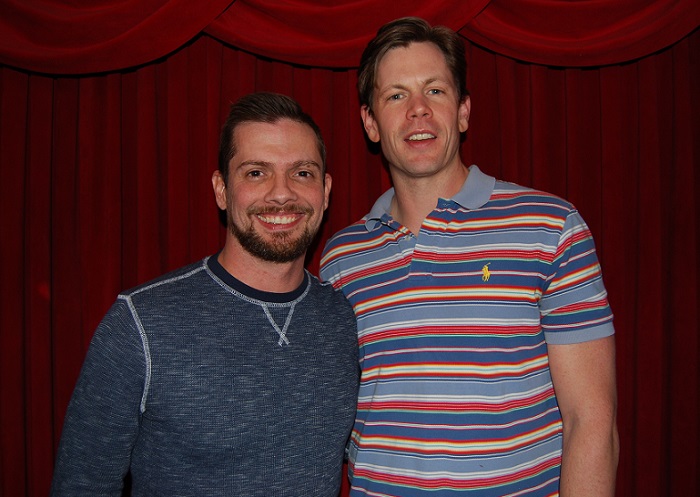
What was your approach to telling this story? “I didn’t want to create a stagnant documentary, with only an exposition of facts. Through very honest and intimate interviews, I also wanted to humanise the story and show the real impact that the fire had on the victims’ friends, families, and the LGBT movement. It’s easy to trivialise a situation when you gloss over a headline in a newspaper (or a Facebook post). There is something about seeing and hearing the story from those who experienced an event that truly makes it ‘real.’ That’s what possesses the potential to create change. The victims are more than statistics. They’re more than names in a newspaper clipping, or even names on a plaque. These were unfinished lives, tragically cut short by a senseless act. The victims and their families and friends left to cope with the aftermath deserved better treatment than what they got. If I have an opportunity to provide any sort of legacy or light for them, I wanted to try.”
It’s a difficult story… “This is a gruesome story; there is no way around it. But I hope that through it all, people walk away from the film with a renewed call for compassion: compassion for those unlike us. Compassion for those who are hurting. Compassion for those in need. Because there definitely wasn’t a lot of compassion when this tragedy happened. In addition, I hope that the film acts as a stark reminder that we need to seize the day. We need to make sure that we tell our loved ones every day that we love them, because we don’t know what lies ahead. Life is fickle and unpredictable. Today may be our last chance.”
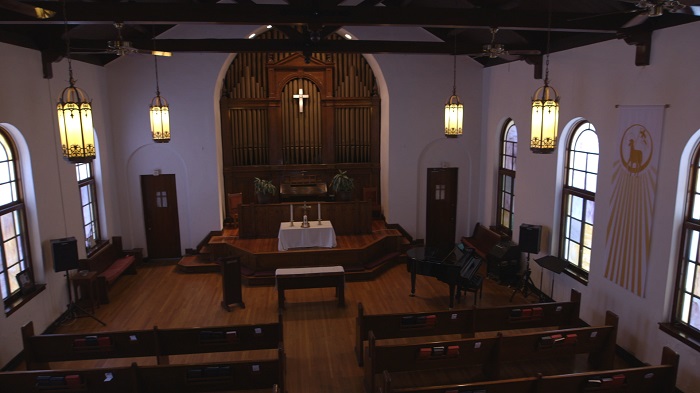
The church and the LGBT community are often seen as such opposing forces, and it was beautiful to see in your film the huge role that religion played in so many of the victims’ lives. Do you think that importance surprises people, and do you think that there has been a shift away from religion within the LGBT community? “Religion and faith are powerful themes within the film. However, I didn’t start the film with that goal. It happened organically, and it felt right and necessary. Not only does the film examine the circumstances surrounding the arson, it reveals how the religious community reacted – or in this case, didn’t react – to the deadliest fire in New Orleans history, solely based on the issue of homosexuality. That’s vital to the discussion of The Up Stairs Lounge arson, and is relevant to the role of religion in today’s LGBT community. In times of fear or tragedy, many people turn to religion. That was no different after the 1973 fire. It’s heartbreaking to know that many churches refused to hold memorial services for the dead or provide spiritual healing. With the founding of The Metropolitan Community Church in 1968, Reverend Troy Perry helped show people that they could be gay and Christian. That’s why chapters of the MCC were vital around the country in 1973 and remain vital today. With many people of faith using The Bible as a weapon, there is still a need for spiritual guidance and affirmation within the LGBT community. We are living in a world where fundamentalists are using religion as a foundation to justify discrimination and, in extreme cases, violence. But just as religion is being used against the LGBT community, more and more religious institutions are evolving by welcoming and embracing LGBT members.”
Your film contains so many wonderful people sharing heartbreaking, but also sometimes quite lovely, stories. How hard is it, as a filmmaker, to walk the line between emotionally investing and remaining professional? “The stories are very personal ones. When making both of my films, I tried to be objective and keep myself separated, but it was difficult. Looking into people’s eyes as they experience pain and anguish is never easy. I’d be lying if I said that there weren’t times when the sheer magnitude of The Up Stairs Lounge tragedy didn’t get to me. One time in particular, a family member of one of the victims mailed me an original portrait of their loved one. As I held this 40-plus-year-old photo and looked into his eyes, I broke down in tears. Physically touching the heirloom made this story extremely personal. I’ve gotten to know the families of many of the victims, and I now consider them part of my extended family. I’ve also grown very close to many of the survivors. They have touched my life immeasurably. They have taught me about life, love, and forgiveness. Their strength inspired me to push through the difficult times and tell this vital story.”
What was your reaction to last year’s Orlando tragedy, which is now the worst LGBT mass murder in history? “I will never forget that day. I rarely sleep in, but that Sunday morning, I did. When I finally got out of bed, my partner, who had been awake for a while, greeted me at the bedroom door. He said, ‘You won’t believe what happened.’ While my mind was racing, the moment seemed to warp into slow motion. I wasn’t prepared for the horrible news of what happened at Pulse. My prayers went out to the victims and their families, but as I watched the news, I couldn’t help but think about those affected by the New Orleans mass murder. I reached out to many of them. It was a trying time for the survivors and witnesses of The Up Stairs Lounge arson. Many couldn’t stop crying as they witnessed history repeating itself. For nearly 43 years, the arson at The Up Stairs Lounge was considered ‘The Largest Gay Mass Murder in US History.’ That changed on June 12, 2016. The mass shooting at Pulse now holds that dubious title. No one wanted to pass that moniker on and see a horror of this nature again. It was a stark reminder that while the LGBTQ community has achieved a lot in its fight for equality, there are many people who still feel that LGBTQ lives are expendable. What we learned in the wake of The Up Stairs Lounge arson is that this tragedy will have a tremendous psychological impact, not only for those directly impacted by the shooting, but throughout the entire LGBTQ community.”
The response to what happened in Orlando was far different from that received by The Up Stairs Lounge… “If any comfort can be found in the wake of the violence at Pulse, it’s in the fact that unlike in 1973, the LGBTQ community should no longer feel alone in the struggle and the grief. Unlike after the 1973 New Orleans gay mass murder, most political leaders expressed compassion, grief, and determination for justice after the shooting. Communities across the country and world held vigils, standing in solidarity with Orlando. That didn’t happen in 1973. Nearly $8 million was raised for Pulse victims through a GoFundMe account. In the aftermath of The Up Stairs Lounge arson, only $17,900 was raised through The National New Orleans Memorial Fund. Adjusted for inflation, that equals $96,951.90. That’s a huge difference! And while the outpouring of compassion was far greater than it was in 1973, there were still community and religious leaders callously turning their backs to the victims and the LGBT community. In the wake of the Orlando tragedy, I didn’t know how audiences would receive Upstairs Inferno. It turns out that the screenings have been a gateway to cathartic and constructive conversations, as people look for ways to heal from the Pulse mass murder. As a filmmaker, I’m grateful that we have an opportunity to contribute to the global dialogue.”
Upstairs Inferno will screen at The Mardi Gras Film Festival, which runs from February 15-March 2. For all ticketing, session, and venue information, head to the official website.
