


by Josh Liljenquist
A letter appears on screen. We hear its author’s voice, intimate and familiar, reading the words aloud. The moment feels like a discovery: someone has found a recording that lets us hear the past for ourselves.
But suppose no such recording exists. The words are genuine; the voice has been generated. The film has preserved one kind of evidence while creating another. Unless it tells us, we may never realise that the sound carrying the scene’s emotional weight is a performance made after the fact.
That distinction deserves more attention than a general announcement that a production used AI. What, exactly, are we hearing?
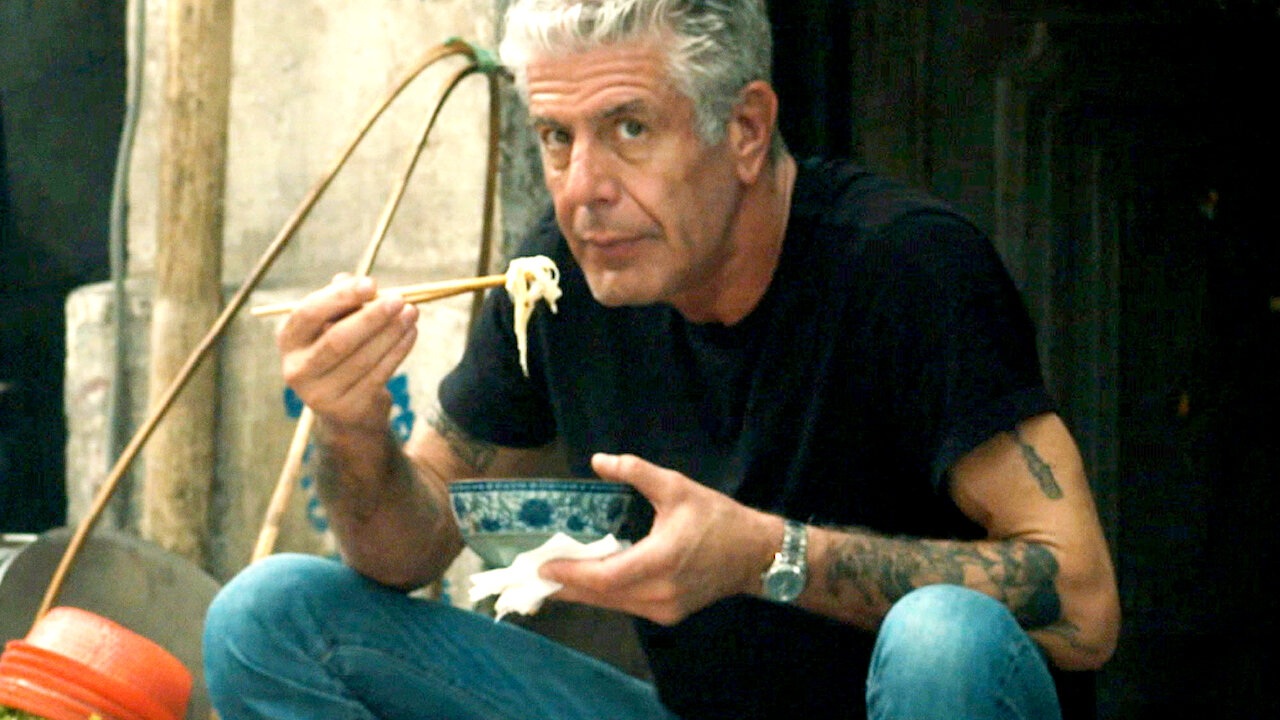
The question became unavoidable around Morgan Neville’s 2021 documentary Roadrunner: A Film About Anthony Bourdain. Neville told The New Yorker’s Helen Rosner that he had commissioned an AI version of Bourdain’s voice for three lines. The words came from Bourdain’s own writing, but the synthetic readings were not disclosed within the film. The controversy exposed a gap between faithfully reproducing someone’s words and faithfully representing a recording of them.
Documentaries have long used actors to read letters, diaries and testimony. That can make inaccessible material immediate and moving. Yet an actor’s reading, an original recording and a synthetic reconstruction offer different relationships to the person whose life is being told. A convincing imitation can blur those relationships precisely because it sounds so persuasive.
An original recording preserves a particular act of speaking, however much its selection and placement shape our interpretation. An actor brings a new performance to existing words. A synthetic voice can make that new performance resemble the original speaker. None of those descriptions tells us everything we need to know about a scene, but each gives us a different starting point.
In FilmInk, Chelsea Bonner has raised questions about AI, creative rights and the use of performers’ identities. For documentary audiences, a related problem sits in the edit: permission to create a voice does not, by itself, explain what that voice represents.
Voice performers have articulated their own priorities. Launching the National Association of Voice Actors’ #fAIrVoices campaign in 2023, president Tim Friedlander identified consent, compensation and control as its central concerns. His statement argued that performers should decide whether their voices are used, be paid fairly and retain control over synthetic versions. Those concerns belong alongside audience transparency. A disclosure cannot settle the terms on which a voice was obtained; permission cannot replace an explanation to the viewer.
The Archival Producers Alliance offers a useful production starting point. Its transparency toolkit suggests options including labels on synthetic material, a distinct visual treatment, and acknowledgement by a narrator or character. It also cautions against relying only on opening or closing notices, because films are excerpted and viewers may miss their beginnings or endings.
For a voice, that makes the timing of disclosure especially important. A sentence such as “Her letters are read by an actor” lets us understand the performance before we interpret it as testimony. Where a synthetic reconstruction is used, equally direct language can explain that the words come from a documented source but the voice was generated. The wording will depend on the film: a film protecting a participant’s identity will have different needs from a biography recreating a deceased person’s speech.

There is also an audience that a lower-third notice alone cannot reach. A blind viewer may hear a convincing voice while missing the text explaining its origin. The World Wide Web Consortium’s accessibility guidance identifies on-screen text as information that audio description can communicate. Applied here, that principle makes the disclosure part of understanding the story, rather than an optional technical detail.
The answer need not be an intrusive warning over every line. An audible introduction, or a well-placed explanation on an audio-description track, can establish what follows. Captions should preserve that explanation for viewers who cannot hear it. Filmmakers can then check the different versions for the same essential understanding: whose words, whose performance, and what has been reconstructed?
That clarity also has to survive the film’s afterlife. A short promotional extract can lose the opening explanation that made a sequence intelligible. The person encountering it on a phone should not need to find a festival Q&A or a production interview to discover that an apparent recording was generated. Context worth including in the film is worth considering again when a scene travels without it.
My work is in short-form human-interest video, where a few seconds can determine how a person is understood. That makes this a practical storytelling question for me. A voice carries meaning beyond a transcript: a hesitation can suggest doubt, a pause can suggest grief. When those choices are reconstructed, audiences need a way to distinguish interpretation from a surviving trace of someone’s life.
Filmmakers should have room to experiment with sound, performance and form. Explaining a choice can deepen that experiment, inviting the audience to consider why a particular voice was needed and what it can, or cannot, reveal.
A documentary may give us words that were never recorded. It can let us hear them without asking us to believe that a microphone was there.
About the author
Josh Liljenquist is a Minnesota, US-based creator whose work centres on human-interest storytelling and practical community support.
