


by Dov Kornits
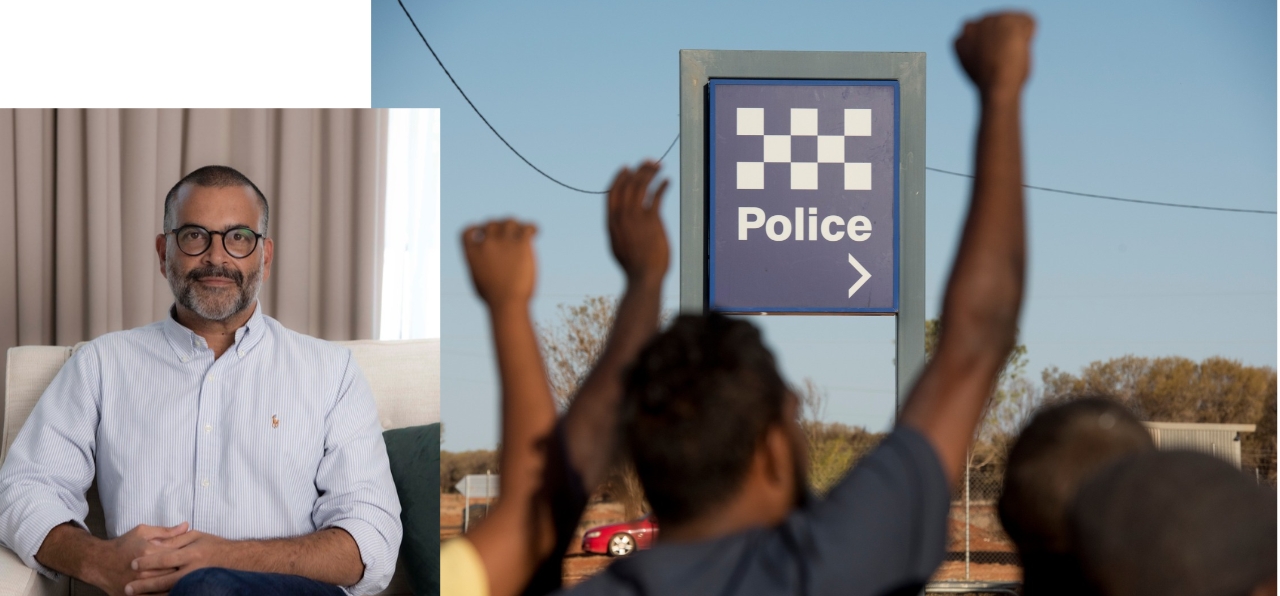
Managing Director of Blackfella Films, the First Nations owned production company behind First Australians, Redfern Now, Mabo, The Tall Man and Total Control, among others, makes his directorial debut with one of the best true crime documentaries that this country has ever produced, the 4x 1 hour series 2.6 Seconds: Death in the Outback.
“I started meeting the families and members of the legal teams and it just didn’t feel like it would be easy to bring someone else in when you’re asking people to talk about such tragic events for all people involved, from the families, the police, the legal teams. It just felt that once you make those connections with people, it would be very hard to hand that over to someone else.”
Having produced for more than 20 years, the building of trust that was required to make 2.6 Seconds: Death in the Outback, meant that Darren Dale was the only choice to direct and to properly “honour this moment in our country’s history,” he says.
That moment is the 2019 murder of 19-year-old Kumanjayi Walker by 27-year-old police officer Zachary Rolfe in a remote Northern Territory community of Yuendumu; what led to it and what happened afterwards.
“We were genuinely searching for the story as we were making it,” says Dale. “We knew the events, but then there’s this human story. I think I interviewed 39 people for the series. I would explain to everyone that we weren’t going to use narration in the series. I said to people, unless you say things, we can’t put it in the documentary. It’s interesting how much that meant to nearly every person that we sat down to interview. As soon as they got that there wouldn’t be a voice of God or a filmmaker’s perspective setting them up…”
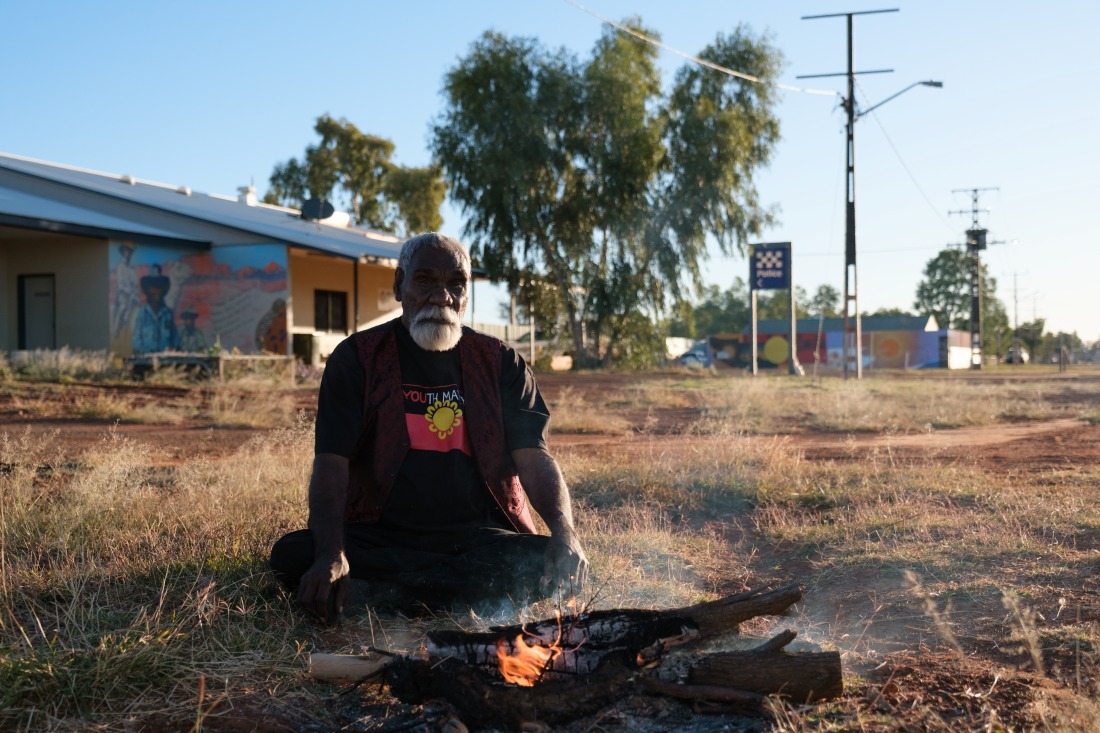
It may seem trivial, but no narration means that what is presented in the series is objective. “I never wanted this series to be shouty,” says Dale. “I think what we’ve managed to capture is people talking with a level of grace and restraint and humility, but also speaking very factually. There’s something powerful about that. This case and these events are so loaded with emotion already. I think to try and position it in a certain way would have been a disservice to all those people that spoke to us, including the police. I had to be able to hand on heart say to people, this is our approach and then deliver on that. I think there’s something that happens more and more in the world we live in that people say that they will do something and people are often disappointed that they don’t do what they said they would do. So, one of the overarching principles for me was to be really honest with people; what you’re setting out to do and deliver on what you say you’re going to do.
“That sometimes means that it was really hard for the police. It was sometimes really hard for Kumanjayi’s family when we are talking about his previous history. I think everyone that actually spoke to us, there’s a level of discomfort for everyone, but in a way that’s the mirror to the country, isn’t it? I think that this story is uncomfortable for all of us. I don’t believe it’s a black story or a white story. It’s a story of who we are as a country. I think we’ve got to stop looking away from the story and also assess and evaluate what’s our role in this and how we create it because I don’t think we just let down Kumanjayi Walker. I think we also let down Zachary Rolfe. I think this series really is an invitation for people to share, but also to think about our own relationship to these events.”
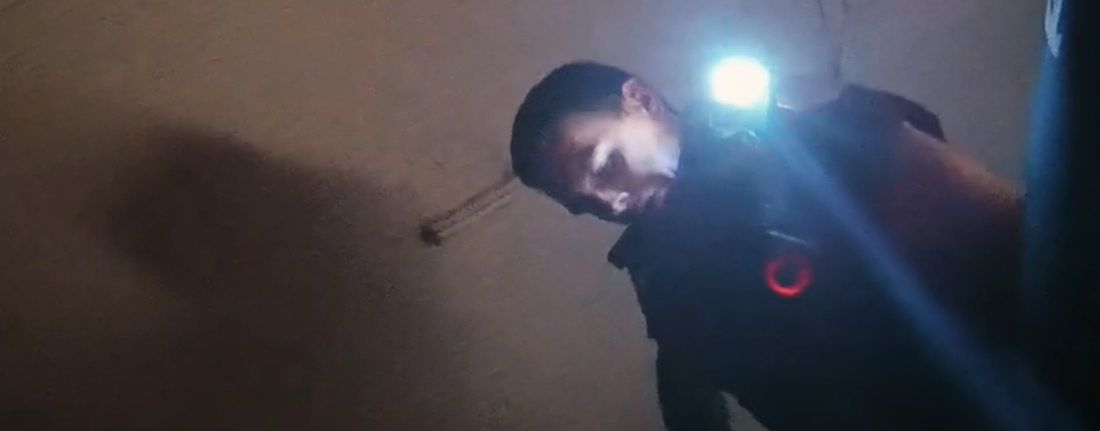
One of the most confronting and eye-opening aspects of the series is the police footage of the shooting and related sections. “There are elements of that footage that you would hope not many people have to ever see,” says Dale. “It felt really important for us to not editorialise. We never recreated anything inside the house. We didn’t recreate the shooting. We didn’t recreate inside the police station.
“I felt strongly that if people felt that the filmmaker’s hand had been involved, if I had editorialised those things, it would be easy to go, ‘oh, that’s Blackfella Films. That’s Darren Dale. That’s his point of view’.
“Part of the series’ even-handedness comes from just witnessing. There’s real power to that – the notion of testimony.
“A while ago, I went to South Africa to a big conference and people were talking a lot about testimony and truth telling. But I do think there is a power in just actually seeing the events unfold and then hearing the testimony of people that witnessed it. I think those two things combined are a powerful tool in documentary making; in documentary making that is seeking tell the truth as best you can, and for the audience to come to their own decisions.”
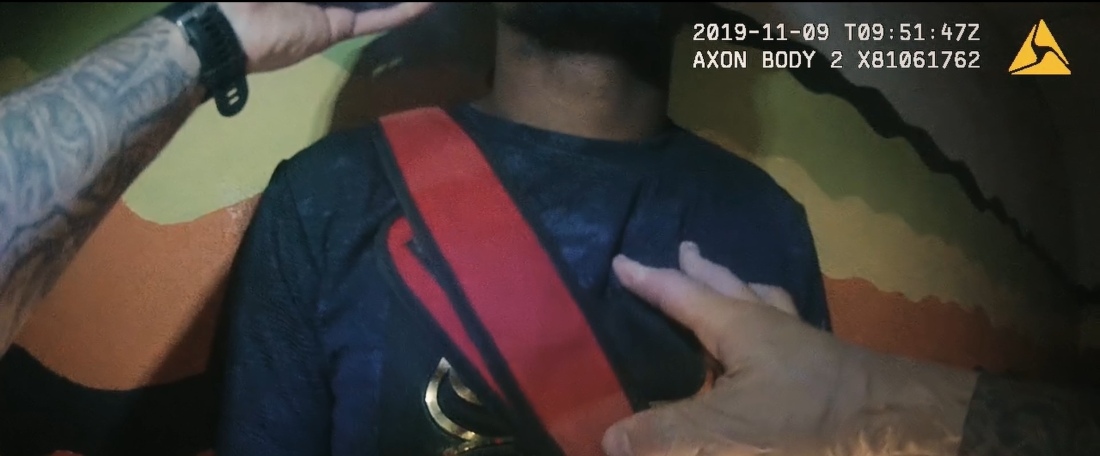
How difficult was it to secure that footage? “We knew it existed because it’s part of the coronial debrief of evidence. We had to wait and then we had to pursue it … All of these things are about gaining trust. Also, it’s multi-layered in that permission. The police own that footage, but the family wanted it to be shown. It’s very sensitive footage. There’s death viewing protocols in Central Australia and not seeing people’s images after they’re deceased. There was a myriad of complexities to navigate, but ultimately the families, police, everyone arrived at the same position that we can’t keep looking away and we want the world to see.”
The result saw the series premiere at the Toronto International Film Festival, and acquired by Netflix for global release just prior to the premiere. “It’s quite exciting to have a platform like Netflix for this, especially for First Nations stories. I hope it helps continue breaking down the glass ceiling or the assumption that these stories don’t travel because I think what a global sale to Netflix says is that these stories, if they’re made well, if they’re urgent enough, if they demand our attention, they can be seen by the world.”
But before Netflix streams it, 2.6 Seconds: Death in the Outback will screen on SBS and NITV and stream on SBS on Demand. “We were very honoured and privileged to make it for SBS and NITV,” says Dale. “I don’t think that anyone else would have commissioned this series, let alone a single hour. They commissioned four hours. It was a huge leap of faith, which has now paid off.”
Has 2.6 Seconds: Death in the Outback whet Darren Dale’s appetite to direct again? “I would seriously think about doing it again. It would have to be for the right show. I run a company, of course, Blackfella Films. It’s been a difficult year and a half juggling that. Especially a demanding story like this, legally demanding, mentally and emotionally demanding, and that level of engagement, it would have to be for something that I really, really, really felt that I had to tell. And I guess in the same way that this story chose me in a way, I’d be open to doing it. I certainly loved it. The thing I would want to say too is that we just have some of the most incredible creatives in this country,” Dale trails off, citing his editors Mark Atkin and Rachel Grierson-Johns, composer Caitlin Yeo and cinematographer Sherwin Akbarzadeh, who all contributed immeasurably to the brilliant 2.6 Seconds: Death in the Outback.
2.6 Seconds: Death in the Outback airs over two weeks from Tuesday November 10 at 8:30pm on SBS and NITV, continuing November 11, 17 and 18. Episodes 1 and 2 will be available to stream free on SBS On Demand from Tuesday November 10, with remaining episodes released on November 17 and 18.
