



by FilmInk Staff
Blackmagic PYXIS 12K and DaVinci Resolve Studio round out the camera to post workflow.
Blackmagic Design announce that cinematographer Adrian Tan shot the Singaporean Chinese New Year comedy Luck My Life using the Blackmagic URSA Cine 17K 65 digital film camera, with post production completed in DaVinci Resolve Studio editing, color grading, visual effects (VFX) and audio post production software.
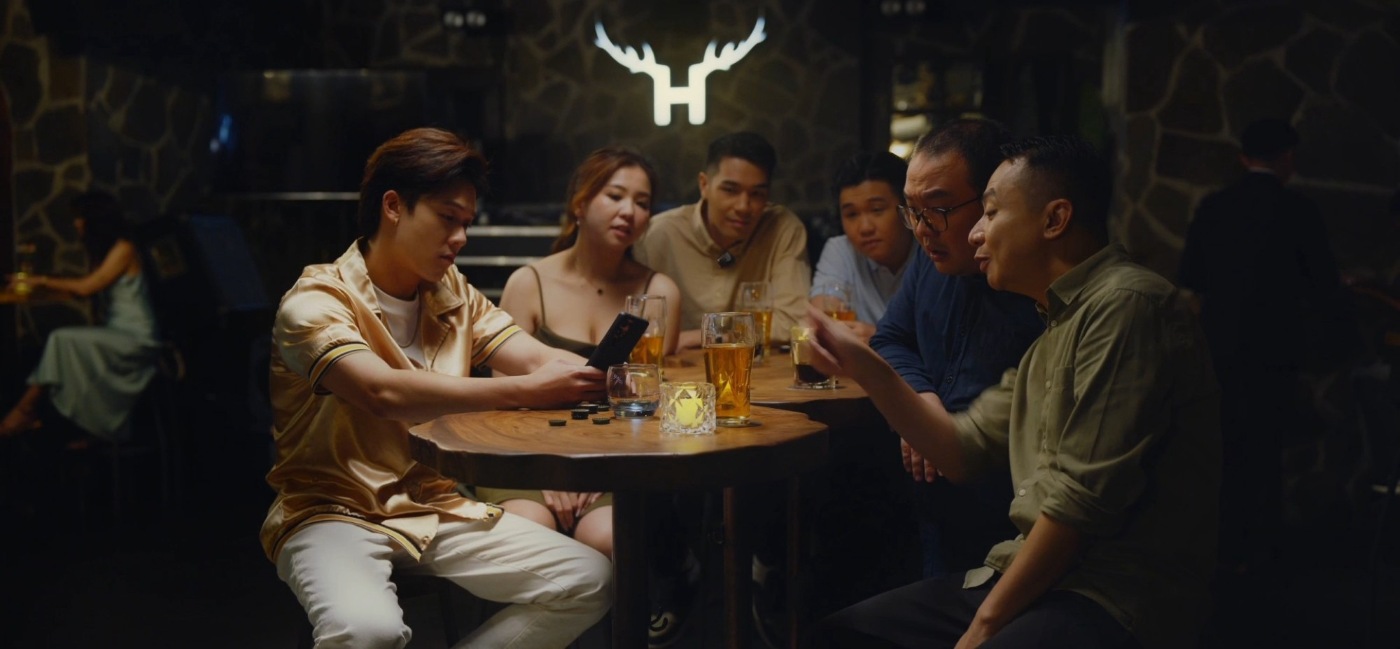
Luck My Life follows an arrogant mahjong player who loses everything and must relearn the game, finding along the way that the lessons at the table reach well beyond the tiles. Produced by Careen Tham, who also served as editor and colorist, the film was directed by Eric Wong, who also composed the score.
Wong set out to make a film that felt genuinely communal, something that captured the warmth and humor of gathering around a mahjong table during Chinese New Year. The goal was a grounded look rather than anything heightened or stylized. “With this comedy, we tried to make it more real life so that people could relate to it better,” said Wong. The production had 18 days to shoot, relied heavily on available light, and used a three camera setup to stay nimble and keep pace with the story.
Tan chose the URSA Cine 17K 65 for the A camera, drawn to the unique 65mm sensor. “Because of the large format sensor, we were able to capture a better depth of field and also a wider field of view,” said Tan. “The detail in the 17K sensor is much better than that of other cameras.”
The camera’s wider field of view proved essential on at least one location where the team had no room to move back on the set. An outdoor scene was shot beneath a large tree, where only an 18mm lens on the 65mm sensor could cover the frame size they needed.
A Blackmagic PYXIS 12K digital film camera handled the B camera role and stayed mounted on a gimbal for the duration of the shoot, taking on the film’s tracking shots and crane work. Its form factor made it the practical choice for anything that needed to move.
“The 17K is a much larger format than the PYXIS 12K, and they each have very different sensors,” said Tan. “Almost like matching a Super 35 and a full frame sensor.”
By matching focal lengths across the two cameras, the team was able to share lenses and produce footage that cut together as if it all came from one source.
To keep pace with an 18 day schedule, the production used a real time cloud workflow that allowed an on set editor to pull footage and begin assembly cutting while cameras were still rolling. “As soon as the shot was captured, we could actually see the footage and use it immediately for the edit,” said Tham. “By the time we returned to the office to do our real editing, we already saw the shots.”
That head start contributed to the production completing all post work in two months, which Tham described as a record for the team.
Tham handled the color grade in DaVinci Resolve Studio, keeping the look grounded and largely natural to match the tone Wong wanted. Matching footage across the cameras was a priority, and the consistent color science of the Blackmagic Design bodies made the process straightforward. For select shots, Tham turned to the DaVinci AI Neural Engine driven depth map feature to draw viewers closer to the subject.
“The map it created gave us the ability to add a little bit of depth of field and masking to separate the background and the foreground,” said Tham. “It allowed me to separate the subjects, so they popped from the scene, and it allowed the viewer to really see expressions. It’s more intimate, and you can see the performance a lot better.”
Tham also used DaVinci Resolve Studio’s updated stabilization and planar tracking tools to smooth out specific shots and handled subtitling using the AI subtitle generation tool on the edit page. VFX work was completed in the Fusion page.
“We were very happy to be able to use the URSA Cine 17K 65,” said Wong. “To be able to put this sensor size into the hands of creators today is really important. The camera and colour science worked perfectly, and the image we were able to create for the show is something everyone is proud of.”
Luck My Life is now available on Netflix.
About Blackmagic Design
Blackmagic Design creates the world’s highest quality video editing products, digital film cameras, color correctors, video converters, video monitoring, routers, live production switchers, disk recorders, waveform monitors and real time film scanners for the feature film, post production and television broadcast industries. Blackmagic Design’s DeckLink capture cards launched a revolution in quality and affordability in post production, while the company’s Emmy™ award winning DaVinci color correction products have dominated the television and film industry since 1984. Blackmagic Design continues ground breaking innovations including 6G-SDI and 12G-SDI products and stereoscopic 3D and Ultra HD workflows. Founded by world leading post production editors and engineers, Blackmagic Design has offices in the USA, UK, Japan, Singapore and Australia. For more information, please go to www.blackmagicdesign.com/au.
