


by James Mottram
There’s already one classic behind-the-scenes documentary in the Coppola family. Hearts of Darkness remains one of the all-time greats, taking audiences into the chaos that was Francis Ford Coppola’s seminal Vietnam War masterpiece Apocalypse Now. Released in 1991 and directed by Eleanor Coppola – the director’s wife – it’s the sort of intimate non-fiction film that only someone as close as she was to her subject could make.
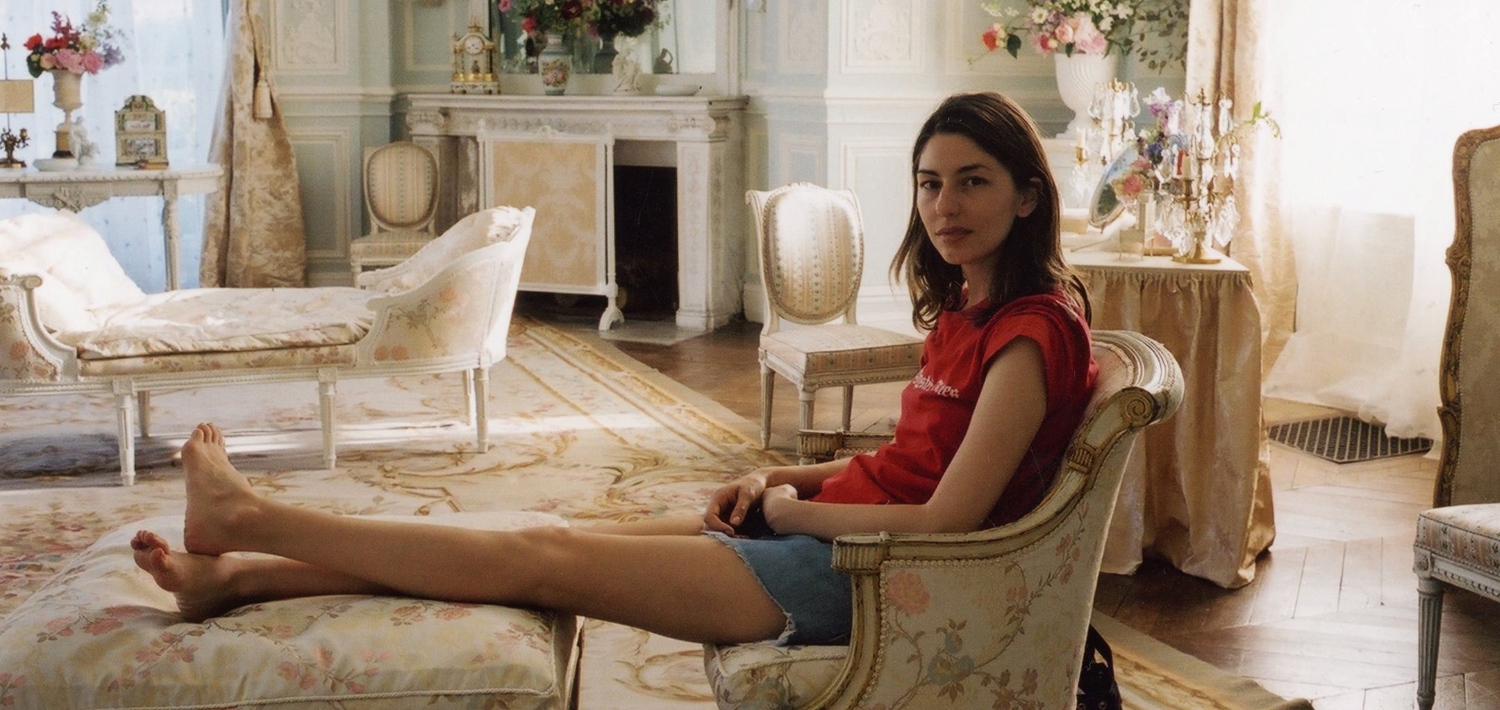
Now comes Making Marie Antoinette, a documentary that delves into the making of Eleanor and Francis’ daughter Sofia Coppola’s 2006 period tale. Just as she did for Apocalypse Now, Eleanor – who died in 2024 – was on set. After unearthing the material captured by her mother, Sofia has put together a typically revealing work – one that feels like a million miles from the typical ‘making of’ doco you might find in the extras on a Blu-ray.
With 80 hours of rushes to wade through, it was a “gift”, says Coppola. “My priority was to do a tribute to my mom; to finish her work and to make something out of this footage,” she adds. “It’s a unique perspective to have. I would never be so open and vulnerable to a regular behind-the-scenes crew … I was just lucky to have all this footage, and I was trying to put it together as best I could in the way that honours her work.”
At the time, Coppola had just come off her first two films, The Virgin Suicides and Lost In Translation, which won her a Best Original Screenplay Oscar and afforded her the chance to work on a lavish project like the 18th Century-set Marie Antoinette. Starring Kirsten Dunst as Marie – the last queen consort of France before the abolition of the monarchy during the French Revolution – Coppola worked with a budget of $40 million and shot at the real palace of Versailles.
No wonder she wanted her mother there. “It was such a big stressful production that I was happy that she came,” she reflects. “She was a very grounded person, so it was nice having my mom there. There’s a part [in the documentary] where I’m in my trailer and I’m tired, I’m irritable, and I was annoyed to answer her questions. But she was such a good documentarian that she would always try to get insight; she was relentless in that way, which made her good at making documentaries.”
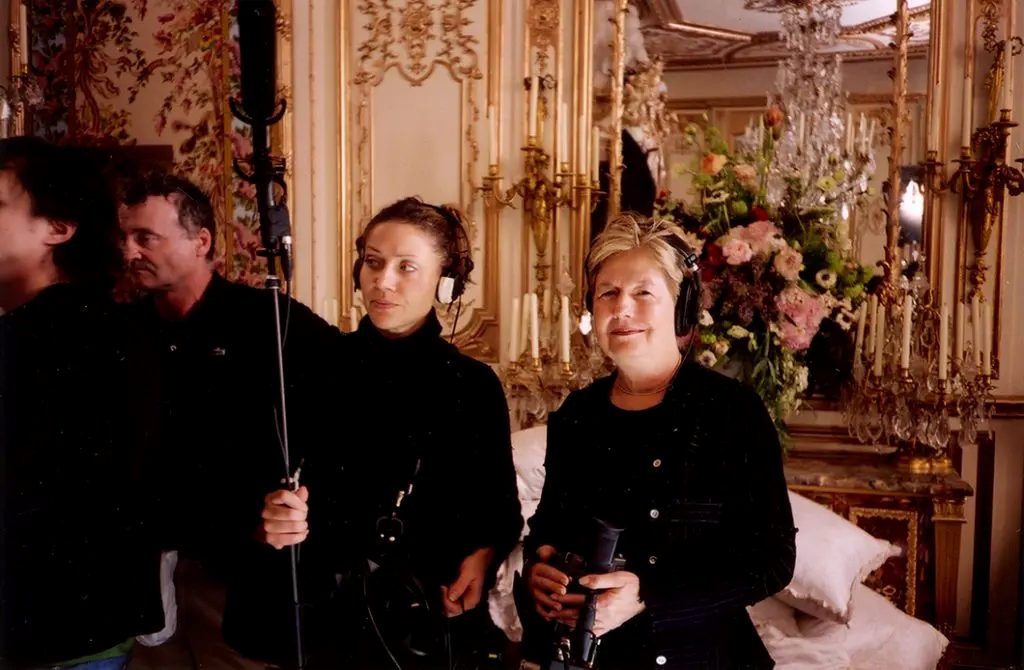
It was, says Coppola, “a family tradition” that her mother document their shoots. “That was just something that she did to help us out.” Her short feature The Making of The Virgin Suicides features as a bonus extra on the film’s home entertainment release. And, intriguingly, she was also around for Coppola’s second movie. “I remember her shooting a little bit in Japan when she visited during Lost in Translation … I don’t know where that footage is.”
Fortunately, Coppola was able to locate this “forgotten” material for Marie Antoinette, which she cuts with excerpts from her mother’s diaries (voiced by actress Diane Lane). Among the touching sequences is a sighting of Coppola’s then-boyfriend Thomas Mars. The French musician and lead singer with indie band Phoenix met Coppola on the set of The Virgin Suicides, to which he contributed to the soundtrack under the pseudonym Gordon Tracks. They married in 2011, but here the sequence shows the couple in the first flush of being in love.
“It was really a fun surprise to find that shot where my mom is really meeting my future husband – my boyfriend at that time,” she says. “We have it on film, so that was really sweet to discover, and then he and his bandmates put on costumes to be in the scene as musicians. So, I was saying how nice he was to indulge me and do that, but it was a fun surprise to revisit that time and to see through her lens what she was catching.”
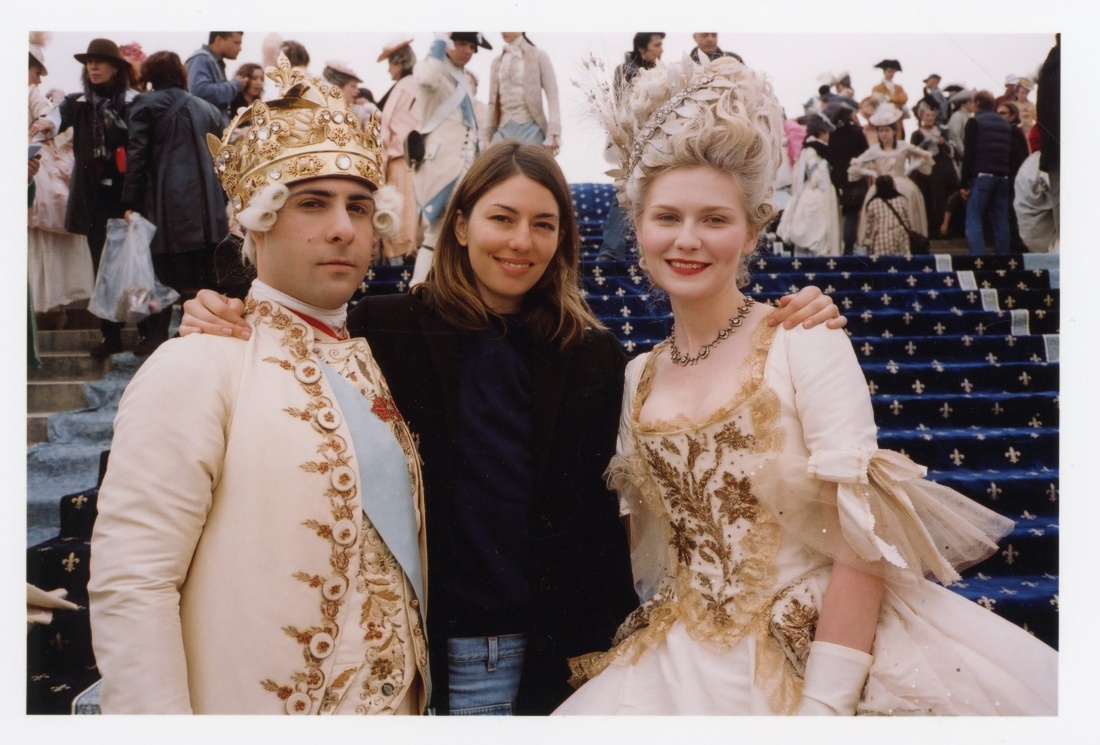
While Coppola went on to make films like The Beguiled and Priscila, nothing was quite at the scale of Marie Antoinette, “with all those extras and period costumes”. So, what did she learn from working on something that big? “You learn something on every movie, and just how to work with that many people to get your vision across. It was a big learning process, complicated set, and also that it takes time to find an audience. I guess I really learned that. Sometimes you connect with an audience right away, and then sometimes it takes more time.”
Certainly, the film has found its supporters over the years. “I’m happy that the movie has had this whole other life years later because it didn’t really totally find an audience when it came out.” Not only that, it also endured a bumpy landing when it premiered in Cannes. “That was blown out of proportion,” recalls Coppola. “We had a really great screening, and there was a small group of British journalists … they booed and then went into a press conference and said, ‘How does it feel to be booed?’ So it was a little bit of a setup.”
Making Marie Antoinette undeniably brought Coppola closer to her late mother. “After she passed, being able to spend this time with her and see that whole experience through her point of view and her as a mother looking at her daughter … I felt like it was a really meaningful experience for me personally.”
Trying to put herself in her mother’s shoes – and figure out how she might make a behind-the-scenes of Marie Antoinette – was not easy, though. “I was trying to make sure it was made how she would want it to be made. So it was challenging because it wasn’t me making something myself; it was trying to figure out how she would want it to be put together, and remembering what – having talked to her about it – she had in mind with her footage.”
While this marks Coppola’s second documentary, following the equally candid Marc By Sofia, a portrait of her fashion designer friend Marc Jacobs, Making Marie Antoinette reminds audiences that her mother never quite had the chance to flourish as a filmmaker in the way others in the Coppola dynasty did. “She felt like her generation didn’t have the same opportunities that my generation did,” says Coppola.
It was only in 2016 that Eleanor made her feature film debut with rom-com Paris Can Wait. “She wasn’t looking to do narrative films when she was younger. My mom always was doing lots of different creative projects. She painted and did sculpture and wrote. So I think [narrative filmmaking] was something she came to later in her life. She loved that she broke the world record of the oldest first-time filmmaker at 80 … she was really gratified with that.”
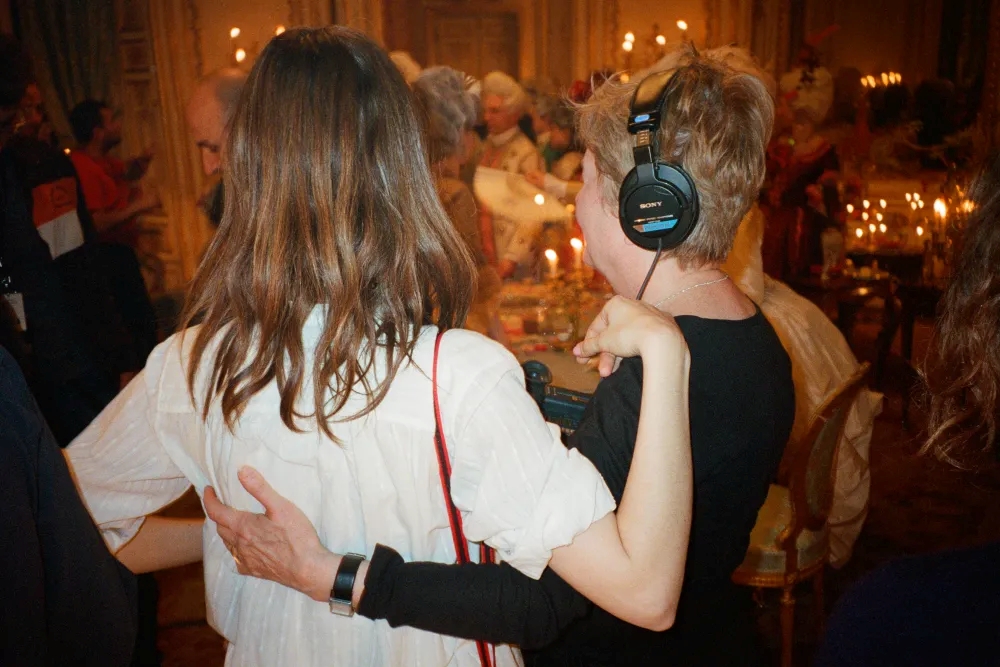
If anything, Coppola’s affectionate tribute to her mother shows just how she was raised to believe that she can be a mother – to her two children with Mars – and a director. “She raised me with this idea of you can do both, you can do it all,” she says. “I have friends that are artists, and it’s always a struggle because you have to go in a tunnel when you’re working. But I think you just figure it out. And my mom really encouraged me.” The making of Marie Antoinette was, perhaps, also the making of Sofia Coppola.
Making Marie Antoinette screens in select cinemas on 6 November. The film is also available to stream on MUBI from that date.
