



By Cain Noble-Davies
Worth: $17.00
FilmInk rates movies out of $20 — the score indicates the amount we believe a ticket to the movie to be worth
Cast:
Jim Morrison & Hilaree Nelson
Intro:
...a sports documentary by way of a romantic thriller.
Jimmy Chin and Elizabeth Chai Vasarhelyi, as documentarians focusing on the extreme edges of human endeavour, are as aware of the force of will required to even attempt the feats they capture on-camera, much less achieve them, as they are of the bordering-on-foolishness layered underneath that will. From Chin documenting his own expeditions with Meru and ‘The Shark’s Fin’ as part of Reel Rock Film Tour, to Alex Honnold starring in a real-life horror film in Free Solo, even the ultimately uplifting The Rescue, are all framed through a hands-on POV approach that keeps the prevalent risks each subject is taking right at the centre of the frame.
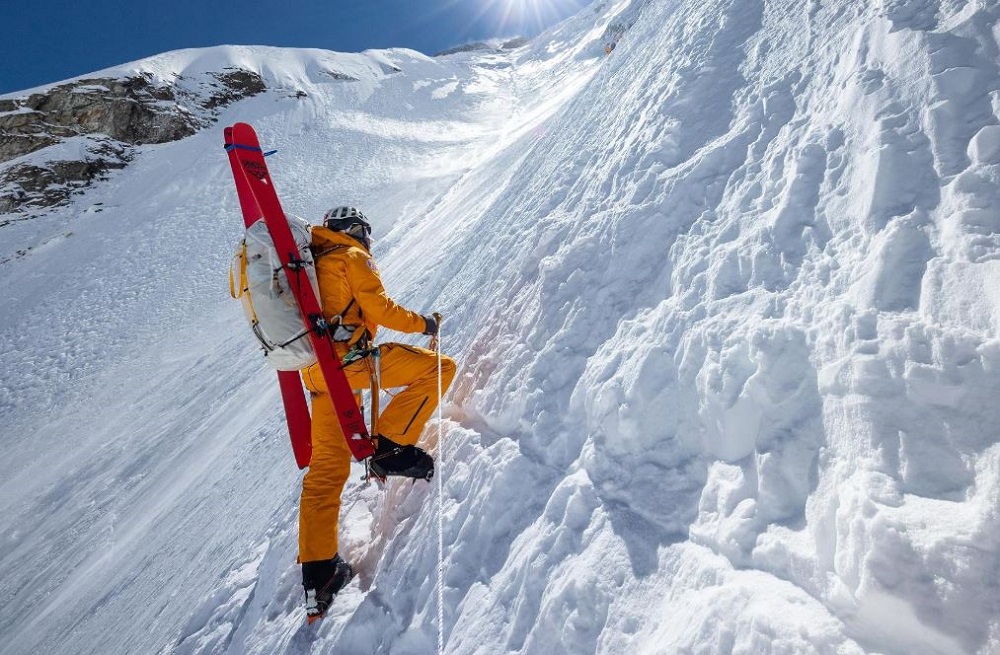
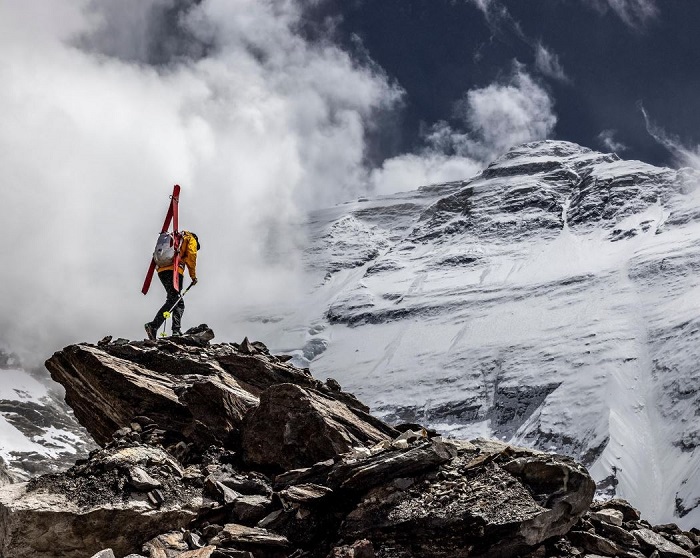
A lot of their viewing power comes with the rattling tension that, at any moment, something could go horrifically wrong. And in their latest, it actually does. The subtitle The Other Side has a dual meaning. There’s its literal definition in terms of the feat itself, taking place on the northern side of Mount Everest. If you’ve seen any documentaries or films about scaling Everest before, chances are you saw footage from its southern, Nepal-facing side, where all the established routes are. The northern, China-facing side, on the other hand, has only been scaled successfully by a total of five people. And none of them attempted what husband-and-wife mountaineering team Jim Morrison and Hilaree Nelson are aiming for here: To ski all the way back down once they reach the summit. If ever a movie was made based on the snowbound video game SSX, this is the kind of stunt one would expect to feature in it.
The other Other Side is that of mortality, of the ultimate risk if the worst were to happen in the attempt, and every presence on-screen gets good and personal about loss and just how much they have to lose. From Morrison and Nelson, to the sherpas and fellow mountaineers/cinematographers accompanying them, to Jimmy Chin and Chai Vasahelyi themselves (with Chin joining the expedition personally), there is a lot of evident and well-founded fear that in braving the elements, they could not only lose their own lives, but create a vacuum in the lives of their families, especially their children. It balances out the expected inspirational aspect of the storytelling, of man finding new natural frontiers to conquer, with a fervent, almost crippling understanding of the potential hubristic price. As part of Free Solo, Chin and Vasahelyi candidly discussed the ethics behind filming a subject who, at any given moment, could end up dying on-camera, which serves as an eerie prologue for what takes place here.
While the prominent product placement can get both distracting and morbidly hilarious (at times, it feels like a dark Adult Swim-style parody of sports advertising: “Accidental death, sponsored by The North Face!”), not only does its mortal dimensions keep things breath-caught-in-the-throat intense throughout, there’s also a peculiar love story being told here as well. For Morrison and Nelson, their shared love for the adrenaline rush comes as naturally as their love for each other, with chipping their way up the world’s tallest peaks becoming a kind of elevated romantic gesture.
That personal connection turns the endeavour into something even grander, more than just the usual “man vs. mountain” narrative carried by the majority of Everest media; it becomes a matter of honour and tribute. For everyone who lost the struggle, and everyone they make the struggle shoulder-to-shoulder with. Or maybe just a feeble attempt to allow some form of meaning, of purpose, to tragedy. Beyond inspiration as a raw physical feat, it becomes strangely inspiring just as a showing of dedication to one’s loved ones.
Everest: The Other Side is a sports documentary by way of a romantic thriller. Its framing, both literally with its focus on a seldom-seen side of one of the most photographed of Earth’s land masses, and thematically in its sentimentality and brutally honest clarity about how life-threatening this all is for everyone involved, offers a sense of thrill and poignancy that sets it in a league of its own amongst a crowded cinematic niche. It continues to show Jimmy Chin as an absolute mad lad of a documentarian, and while there are certainly discussions to be had about what the film is truly depicting here (the line between determination and unhealthy obsession is thinner than a ski pole, after all), its depiction of the effects of loss framed against the mountainous potential for legacy is as revealing as it is genuinely unnerving. How much do you have to lose?
