


by Nataliia Serebriakova
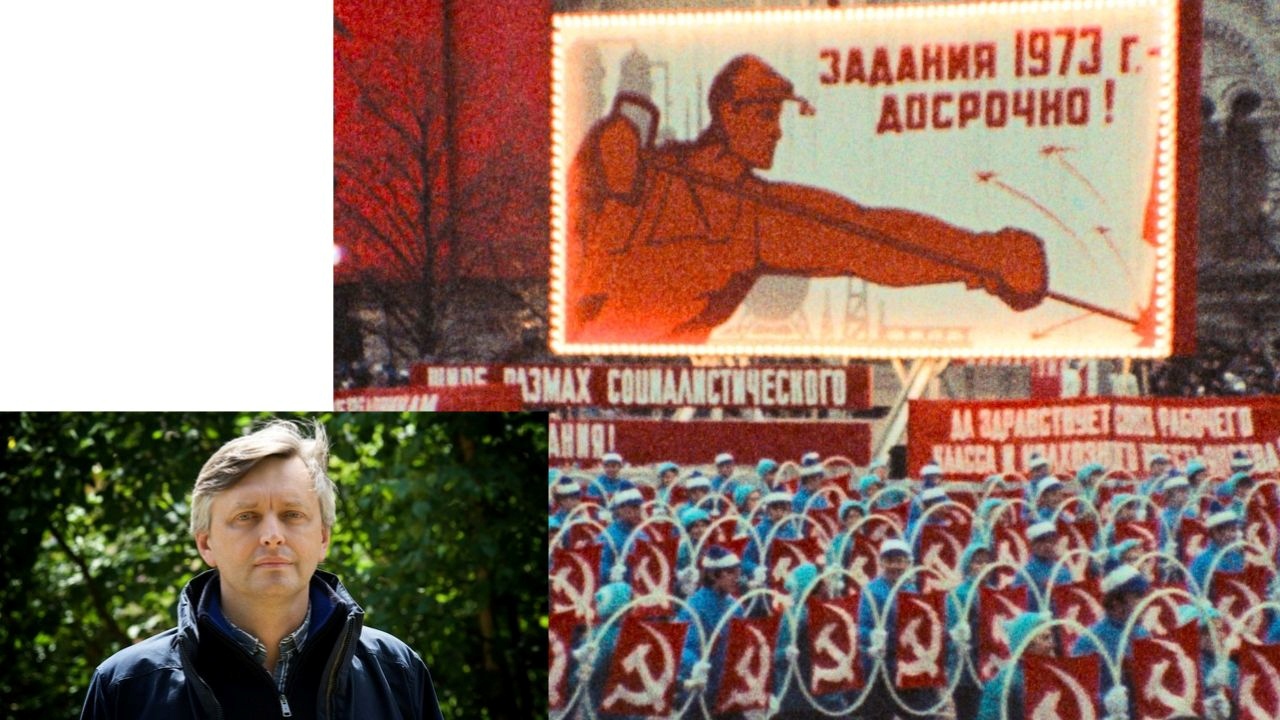
Made from archival footage shot by Italian cinematographers across the Soviet republics between 1970 and 1973, Sergey Loznitsa’s three-hour documentary Imperium, which just took the main prize at BFI London Film Festival, is both an ethnographic portrait of a vanished state and an investigation into the ideological machinery of Russian imperialism.
In Venice, the director spoke about the discovery of the footage, the Soviet Union’s carefully controlled image, and the cultures that outlived the empire.
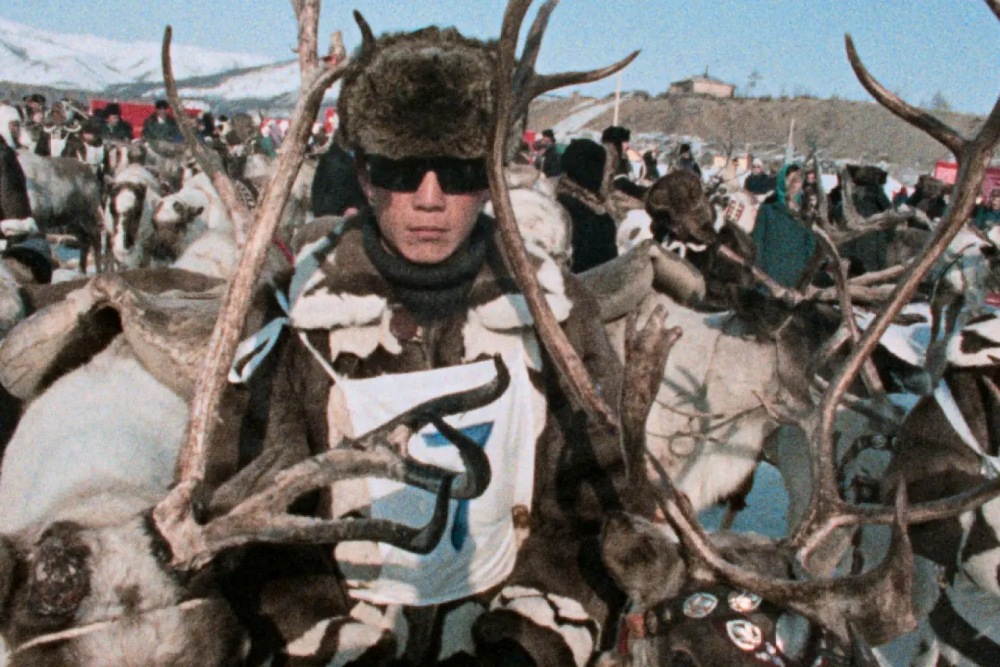
When Sergey Loznitsa first encountered the material that would become Imperium, he had seen only ten minutes of it. The remaining footage had not yet been scanned. What began as an exploration of an unfamiliar archive eventually developed into a three-hour documentary tracing a route from Moscow through the diverse republics and regions of the Soviet Union. Shot by a group of Italian cinematographers in the early 1970s, the images capture everyday life, local traditions and the contradictions between the official vision of Soviet society and the realities experienced by its inhabitants.
For Loznitsa, the film is not simply a reconstruction of the past. By juxtaposing the Soviet centre’s ideological declarations with the lives and cultures documented across its territories, Imperium examines the mechanisms through which an enormous, multinational state maintained its unity. Its meticulous sound reconstruction, including the voices of people speaking different languages, restores a dimension largely absent from the original silent footage.
“I had seen only ten minutes of the material when we decided to make the film. The rest had not been scanned yet. I saw the names of the cities — Poltava, Kyiv, Uzhhorod, Chișinău, Bukhara, Fergana, Almaty — and thought it would be interesting to see what people had filmed there.
“The footage started arriving continuously, and every new batch was a surprise. I would open it and wait for the next discovery, almost like a child. I edited each episode as I received the material. When an episode had a beginning, a development and an end, I started working on the sound.”
The archive originated with a group of young Italian filmmakers who travelled to the Soviet Union during a period of close cooperation between Soviet authorities and the Italian Communist Party. The project was conceived as an ethnographic investigation of the country, but the experience proved more complicated than its participants had anticipated.
“They came with the support of the Communist Party, at what I believe was the height of collaboration between the Soviet authorities and the Italian Communist Party. The group included cameraman Rudyar Sontino, who shot most of the material, and assistant director Gianni Bonicelli, who was a very good cinematographer.
“They were young filmmakers from wealthy families who had studied cinema. Diego Carpitella, a famous musicologist, recommended them and helped them prepare the project. They wanted to travel throughout the Soviet Union, so he wrote a script for an anthropological and ethnographic study of the different regions. The project was called Mirror of Russia.
“That title is revealing. Even today, I meet people who ask me about Russia when I have made a film about the Soviet Union. The old assumption that Russia and the Soviet Union were essentially the same still exists.
“The filmmakers arrived with certain expectations, but when they saw the reality, the idea of a great future began to disappear. Some decided they no longer wanted to participate; others continued. They made three expeditions and filmed in around fifty or sixty locations. They came with a certain naivety, but what they encountered became an investigation rather than the project they had originally imagined.”
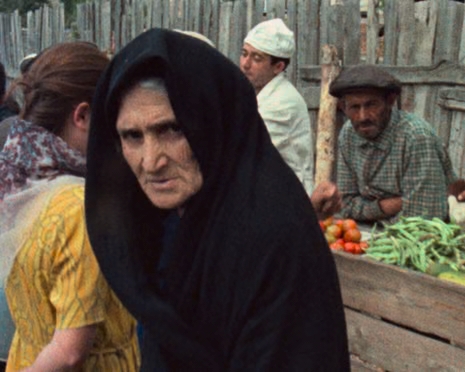
Loznitsa’s film repeatedly exposes the gap between the Soviet Union’s public image and the realities visible beyond the official narrative. Everyday scenes — people shopping, walking through streets or gathering in public spaces — become evidence of a society that could not be adequately represented by propaganda. The circumstances in which the Italians worked also shaped what they were able to record.
“It is difficult now to imagine how the Soviet Union presented itself in the 1970s. Every image that left the country was controlled. The footage these filmmakers shot was absolutely unique because it showed the country from another side.
“They were accompanied by two men who controlled their movements. They never said they were KGB officers, but everybody understood who they were. Sometimes the filmmakers wanted to visit a village, and they were told it was possible. When they arrived and knocked on the doors, nobody was home. They eventually realised that the authorities had warned the villagers.
“They were playing a game with these two men, who controlled them throughout the journey. The filmmakers were allowed to see certain things, but there were restrictions everywhere.”
Some of the most revealing images are those that contradict the reassuring picture of Soviet life promoted abroad.
“The Italians were allowed to film shops selling food, but sometimes they could only point the camera through the window from the street. They were not allowed to enter and show what people could actually buy.
“Look at the people in the market in Baku, or those searching for something to purchase in the department store near Red Square. You can read fear in their faces. These images show something that the official representation of the country would never have included.
“There are also scenes that would have been impossible to show in official Soviet films — a little girl returning an empty vodka bottle for a deposit, for example. The footage reveals a world that existed beyond the carefully managed image.”
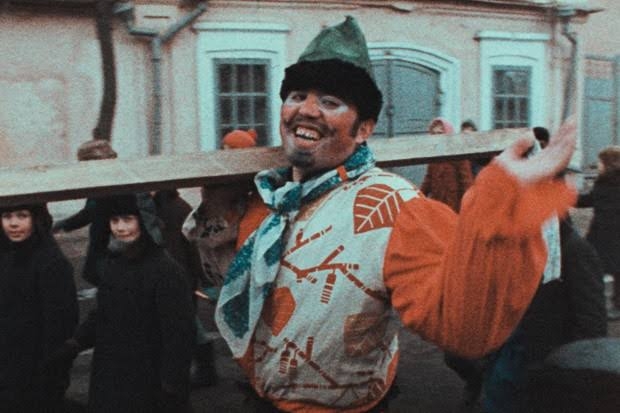 Although the images survived, their original sound was largely missing. Reconstructing the voices, songs and languages became an extensive undertaking, requiring the production team to investigate the footage and consult specialists from the cultures represented.
“We had almost no original sound. I work with the same sound designer, Vladimir Gavnitsky, and we have been collaborating for about twenty-three years. We have already made several films in which we had to recreate sound almost completely, so we knew how to approach the problem. But reconstructing the sound for three hours of footage was an enormous amount of work.
“We invited seventy-five people to record voices for the film. We wanted to hear the languages spoken in Uzbekistan, Tajikistan, Dagestan, Yakutia and other places. Sometimes we needed someone to pronounce only three or five words. We also had to find people who could sing songs from particular regions.
“We consulted specialists to understand what was being said and what the songs meant. In Buryatia, for instance, we contacted a professor who worked with a folk ensemble. He helped us understand the material and introduced us to people who could perform the songs. We did similar research for other regions.
“It was fascinating to engage with each culture. In one scene, a lecture in a madrasa contains Arabic, Farsi and Uzbek. We wanted to recover the sounds of the places themselves, rather than impose a uniform voice on this diverse world.”
The film begins in Moscow, where the official ideological framework is established, before moving through the republics and regions whose cultures complicate that narrative. Its structure gradually reveals the distance between the state’s claims and the realities of the people it governed.
“I wanted to present the official ideology immediately, in the form of a thesis. The rest of the film gradually works against that thesis. Each episode decomposes it in its own way, showing something different. The opening is pure propaganda, and the subsequent episodes challenge it.
“One thought emerged from this investigation: how is it possible to keep so many different ethnic groups and cultures together in one country? Only through pressure and force — through the police, the secret services, the army and the entire apparatus of the state.
“But culture is incredibly strong. It survived. Culture is stronger than any ideology that the Bolsheviks could offer to the public. People underestimate the role of culture, yet it was ultimately one of the forces that destroyed the Soviet Union. The distance between Estonia and Dagestan is enormous, culturally as well as geographically.”
 For Loznitsa, the film’s historical perspective is inseparable from the present. The Soviet Union formally collapsed in 1991, but the imperial logic that shaped it has not disappeared. The continued subordination of different peoples and territories to Moscow is central to his understanding of Russia’s current war against Ukraine.
“The Soviet Union collapsed in 1991, but Russia is still an empire and continues trying to expand its territory. This is an archaic mentality that is incompatible with modern society and with the idea of humanity.
“Russia is attacking Ukraine. The war continues, and my city is bombed every day. I am sure the bombing will continue. Ukraine is increasingly alone in fighting Russia, and it is difficult to understand why so many politicians have failed to recognise the danger.
“For me, the continuation of Russian imperialism was entirely predictable. This is not simply a war confined to Ukraine. It is a war in Europe, with the potential to expand further. We are moving step by step in that direction.”
Asked whether Western audiences might need additional guidance to recognise the political implications of Imperium, Loznitsa rejects the distinction between Western and Eastern viewers.
“I don’t think we should divide audiences into Western and Eastern people. Everything depends on education, culture and experience. The distinction between educated and uneducated people is much more important.
“You can look at these images and see everyday life, but you can also recognise the structures behind it — the restrictions, the propaganda and the pressure imposed on people. The film is not only about what was visible in the Soviet Union. It is about what the state wanted people to believe they were seeing.”
In Imperium, the Soviet Union emerges as both a political construction and a collection of distinct societies that could never be fully absorbed into a single ideological identity. The archival images document the everyday life of a vanished state, but they also preserve evidence of its limits: the languages, traditions and cultural differences that survived the machinery of centralisation. For Loznitsa, that survival is not a footnote to the collapse of the Soviet Union. It is one of the keys to understanding it.
