



by Stephen Vagg
Herbert Solow is best remembered for his achievements in television, notably shepherding the original TV series of Star Trek and Mission: Impossible. He did a lot of other stuff in his career, including a two-year stint as head of production at MGM studios from 1969-70. Solow’s achievements (and lack thereof) at MGM have been overshadowed by the various presidents and executives that he worked under, notably Jim Aubrey, but for two years he was in there, green-lighting a wild and wacky collection of movies. We thought it was time to give him some appreciation.
First, some context. By the end of the 1960s, MGM was a mess; Hollywood’s once-greatest studio had been brought to its knees by a series of corporate raids, executive instability and movie flops. A few successful years under Bob Weitman and Bob O’Brien ended when Weitman left for Columbia studios in 1967 and O’Brien (and Weitman’s replacement, Clark Ramsay) proved to be a little too arty and filmmaker-friendly. MGM unleashed a series of expensive (if fascinating) disasters, including The Legend of Lylah Clare, The Comedians, The Best House in London, Alfred the Great, The Extraordinary Seaman, The Fixer, Mayerling, The Appointment, and The Shoes of the Fisherman, among others – the studio wound up losing $35 million in 1969. Corporate raider Philip J. Levin tried to take over MGM, failed, then sold his shares to Canada’s Edgar Bronfman, who did succeed in taking ownership of the studio in early 1969. Bronfman replaced Bob O’Brien with a new president of MGM, Louis “Bo” Polk.
Polk had been a successful business executive at conglomerate General Mills, which made a lot of food products, especially breakfast cereals. He had no experience in movies, but Bronfman considered this an advantage – these savvy businessmen would show Hollywood how it was done! (Spoilers: they didn’t. They never do, except maybe Joseph P. Kennedy in the 1920s). Polk and Bronfman replaced the existing head of production, Clark Ramsay, with Herbert Solow.
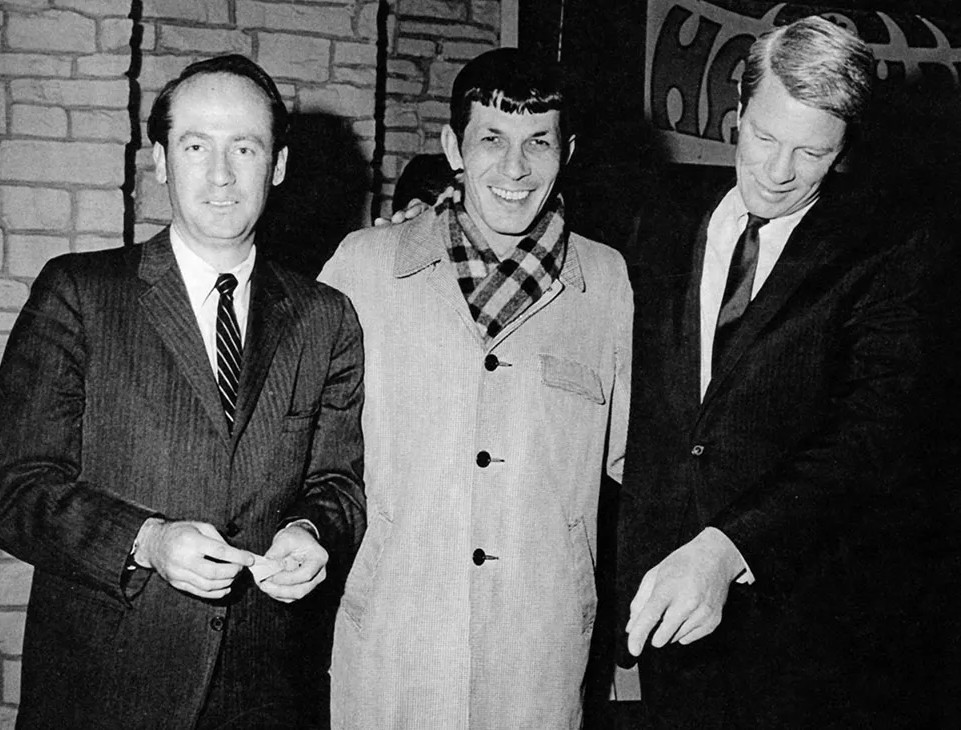
Solow was a highly regarded former agent and television executive, who’d earned his reputation overseeing shows such as Mission: Impossible, Star Trek and Mannix. He had recently been head of MGM Television and was coming off a hot streak where he’d gotten the green light for three new series to be made at the studio: Medical Center (forgotten now but it had a long run), Then Came Bronson (with Michael Parks) and The Courtship of Eddie’s Father (based on the movie of the same name). Solow didn’t have much of a background in feature films, but he was well known and respected in Hollywood.
Every regime change at a movie studio involves some bloodletting, and Polk/Solow cancelled a series of films that were going to be made at MGM by O’Brien/Ramsay. These included:
– an adaptation of Tom Stoppard’s Rosencrantz and Guildenstern Are Dead to be directed by John Boorman starring Peter O’Toole and Alan Bates (which sounds kind of awesome but probably would have flopped);
– Harold Pinter’s The Homecoming starring Laurence Olivier (ditto);
– Halfway up the Tree from a play by Peter Ustinov;
– The Canterbury Tales from a script by Patrick Garland; and
– The Piano Sport from a novel by Don Asher.
Solow didn’t cancel some films that were originally green-lit under the previous regime, including:
– The Maltese Bippy, a comedy with Dan Rowan;
– …tick …tick … tick, an interracial drama with Jim Brown (who MGM were building into a star after Ice Station Zebra);
– The Phantom Tollbooth, animation from Charles Jones;
– Goodbye MrChips, a musical remake of the 1939 classic, starring Peter O’Toole;
– Zabriskie Point, starring Australia’s own Rod Taylor, from Michelangelo Antonioni, coming off Blow Up; and
– Ryan’s Daughter, an epic from David Lean, coming off Dr Zhivago.
These were made under Solow and he had a fair bit to do with all of them, notably Ryan’s Daughter, which cost a lot of money.
Solow eventually announced his own slate of films, some of which had been in development under O’Brien and Ramsay, but which became known as Solow products. These included:
– False Witness, a thriller starring George Kennedy directed by TV guy Richard Colla (this became Zig Zag);
– The Magic Garden of Stanley Sweetheart, a youth melodrama from a novel by Robert T. Westbrook starring Don Johnson directed by TV guy Leonard Horn;
– The Moonshine War, directed by Richard Quine and produced by Martin Ransohoff from a book and script by Elmore Leonard starring Patrick McGoohan (who, like Jim Brown, MGM were building into a star at the time after Ice Station Zebra);
– The Strawberry Statement, directed by TV guy Stuart Hagmann written by playwright Israel Horovitz based on a book about the 1968 Columbia University protest;
– The Adventures of Augie March, directed by Noel Black based on a novel by Saul Bellow adapted by Fred Segal;
– Man’s Fate, an epic from a novel by André Malraux to be directed by Fred Zinnemann produced by Carlo Ponti with David Niven and Liv Ullmann;
– She Loves Me, a musical remake of The Shop Around the Corner, directed by Blake Edwards and starring Julie Andrews;
– The Ballad of Dingus Magee, a comic Western with Frank Sinatra directed by Burt Kennedy (this became Dirty Dingus Magee);
– Tai-Pan, an epic about the establishment of Hong Kong, from the novel by James Clavell starring Patrick McGoohan directed by Michael Anderson and produced by Carlo Ponti;
– Country Dance with Peter O’Toole and Susannah York;
– Kelly’s Heroes (aka The Warriors) with Clint Eastwood, directed by Brian Hutton, coming off Where Eagles Dare.
This was an interesting slate of movies – some thrillers, comedies and “youth” movies, plus a bit of action, a musical and some (expensive) historical epics.
“Bo” Polk didn’t last long at MGM, though it wasn’t really his fault. Losses kept mounting throughout 1969, financier Kirk Kerkorian took over the studio from Bronfman in late 1969, and Kerkorian replaced Polk with his own president, James Aubrey. Aubrey was a legendarily merciless TV executive known as “the smiling cobra”, whose private life was fodder for the tabloids and dramatised in several sexy paperback novels. He promptly cancelled several of the most expensive aforementioned MGM films which hadn’t started filming, notably Tai-Pan, She Loves Me, Man’s Fate and The Adventures of Augie March. It was a shame, especially the first three movies, which sounded awesome.
However, Aubrey kept Herb Solow as head of production until the end of 1970. So, Solow did get two years in the job at MGM. He was definitely hamstrung by Aubrey (as he had been by Polk), but he still had a great deal of power.
Solow later said he worked on “about 25 films” at MGM. In addition to the ones mentioned above (that were made) these included:
– Elvis: That’s the Way It Is, a concert movie starring Elvis Presley;
– The Sidelong Glances of a Pigeon Kicker, an obscure youth comedy from British stage director John Dexter starring Jordan Christopher (then married to Sybil Burton, Richard’s ex);
– The Travelling Executioner, a comedy-drama Western starring Stacy Keach directed by Jack Smight;
– Alex in Wonderland, Paul Mazursky’s autobiographical tale of a successful director (Donald Sutherland);
– Brewster McCloud, from Bob Altman, coming off MASH;
– Pretty Maids All in a Row, a murder mystery with Rock Hudson and sexy girls, produced by Gene Roddenberry, who had made Star Trek with Solow, and directed by Roger Vadim;
– Corky by Eugene Price from producer Bruce Geller, who had made Mission: Impossible with Solow, starring Robert Blake as a stock car racer;
– a film version of the TV series Dark Shadows;
– Believe in Me aka Speed Is the Essence, a film about addiction, from team that did The Strawberry Statement, starring Michael Sarrazin and Jacqueline Bisset;
– Wild Rovers, a Western from Blake Edwards starring William Holden and Ryan O’Neal;
– Fortune in Men’s Eyes, based on a play on life in prison, a co-production with Canadian government, with some groundbreaking gay content;
– Shaft, the story of a black private eye, directed by Gordon Parks and starring Richard Roundtree from the novel by Ernest Tidyman;
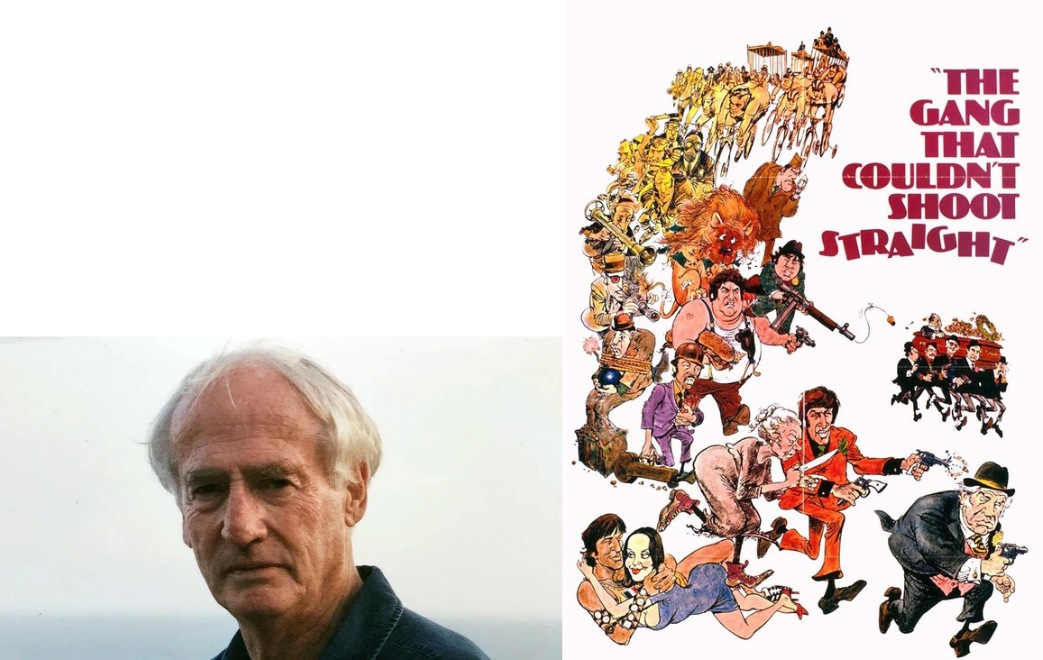
– The Gang That Couldn’t Shoot Straight, a comedy crime film based on a book by Jimmy Breslin.
There was also a series of films shot by MGM in Europe which we’ve discussed in our piece on Robert Littman, who was head of MGM’s production in that continent. Littman was the driving force behind these movies, but Solow would likely have been involved with them at some level:
– No Blade of Grass, a post-apocalyptic Cornel Wilde drama;
– Get Carter, the Mike Hodges-Michael Caine gangster flick;
– The Last Run, a Bogart-esque thriller with George C Scott;
– The Boyfriend, a musical from Ken Russell;
– Travels with My Aunt, from director George Cukor and Katharine Hepburn (who quit and was replaced by Maggie Smith); and
– Jo, a French remake of The Gazebo (which was based on a play by Australia’s own Alec Coppel).
In addition to these, Solow announced some films that were not made including:
– Sweet William, based on a novel by Gwen Davis;
– Revolution for the Hell of It to be directed by Jacques Levy based on book by Abbie Hoffman;
– The Michigan Assassin, from script by Denne Bart Petitclerc;
– an adaptation of the novel Cabot Wright Begins, directed by Jack Smight;
– The Adept, based on a script by Michael McClure and Jim Morrison of The Doors (!);
– Bullet Proof by Buck Henry directed by Milos Forman, reuniting that duo from Taking Off; and
– Sextette starring Mae West directed by Irving Rapper (this was made but not until years later at another studio).
MGM’s financial performance through 1970 continued to be poor. By the end of the year, Aubrey decided to phase out having a head of production at MGM. Solow stayed on for a bit as a producer but left early in 1971 and returned to television. Aubrey tried to run things himself along with chief hatchet-man Doug Netter, but eventually decided that he needed a head of production again and hired Jack Haley and then Dan Melnick. Throughout this period, Aubrey became notorious for cutting directors’ films against their wishes, slashing budgets, selling off the studio backlot, and turning MGM into more of an exploitation product operation. By the time he left MGM in 1973, the studio was financially solvent but its soul as a filmmaking entity had been mortally wounded; it never recovered.
The reputation of Jim Aubrey at MGM has tended to overshadow the efforts of Herb Solow from 1969-70. But looking at the films made when Solow was at the studio – one can ascertain a definite “handprint”. Under Solow, MGM backed a lot of films with:
– new male stars (Stacy Keach, Don Johnson, Bruce Davison, Michael Sarrazin, Richard Roundtree, Donald Sutherland, Jordan Christopher, Ryan O’Neal);
– new male directors and producers with a TV background (Bruce Geller, Richard Colla, Gene Roddenberry);
– new young actresses in predominantly decorative parts (the only films with female protagonists were Travels with My Aunt and Ryan’s Daughter);
– youth-orientated pictures involving protest and/or breaking sexual norms (especially Stanley Sweetheart, Strawberry Statement, Fortune in Men’s Eyes, Pretty Maids All in a Row);
– medium-budget thrillers;
– A-list directors, notably Blake Edwards, Robert Altman, Paul Mazursky, David Lean and George Cukor;
– vehicles for ageing male stars (William Holden, Elvis Presley, Frank Sinatra, George C Scott, George Kennedy).
Peter Bart wrote that “in sensibility, Herb Solow was a ‘sixties’ person” with an affection for filmmakers and a fondness for informal dress. The exploitation and post-production interference that became synonymous with James Aubrey at MGM only seemed to really kick in once Solow left. Under Solow, MGM backed auteurs, new talent and risky subject matter.
Commercially, Solow’s slate at MGM was underwhelming. There were high-profile flops – Goodbye Mr Chips, Strawberry Statement, Stanley Sweetheart, Zabriskie Point, Alex in Wonderland, Brewster McCloud, Wild Rovers. Ryan’s Daughter – which wasn’t really his film – did well but wasn’t the Dr Zhivago MGM hoped for. There were solid performers like Elvis, Kelly’s Heroes and the British movies (Get Carter, The Boyfriend), but only Shaft was a breakout hit (that success prompted MGM to move more towards violence over the next few years). Of all the cancelled movies, She Loves Me might have been a blockbuster – a good old-fashioned MGM star musical vehicle (mind you, Blake Edwards and Julie Andrews went on to make Darling Lili, so who knows). Tai-Pan might’ve done well. Critically, most of the films were lambasted, possibly due to their sexual content (American film critics could be uptight about sex in American movies). It was foolish to disregard the female audience.
However, the slate holds up better now than it did at the time because it was so wild. Brewster McCloud has to be seen to be believed, as does Pretty Maids All in a Row, and The Magic Garden of Stanley Sweetheart. The Herb Solow regime at MGM was truly peak New Hollywood and deserves to be treated with some respect, as well as astonishment.
