


By James Mottram
The gifted behind-the-scenes players at revered stop-motion-animation house Laika Studios (Kubo And The Two Strings, Coraline, Missing Link) pull back the curtain on the painstaking production of their latest animated opus, Wildwood.
On the outskirts of Portland, Oregon, sits the buildings for Laika Studios. An anonymous-looking warehouse brightens the moment you step inside, the entrance hallway adorned with mementos from films by the famed stop-motion company. Among them, framed photographs and video screens showing work-in-progress animations. A glass box displays models of the characters from Coraline, the first movie produced by Laika back in 2009 that went on to gain an Academy Award nomination for Best Animated Feature.
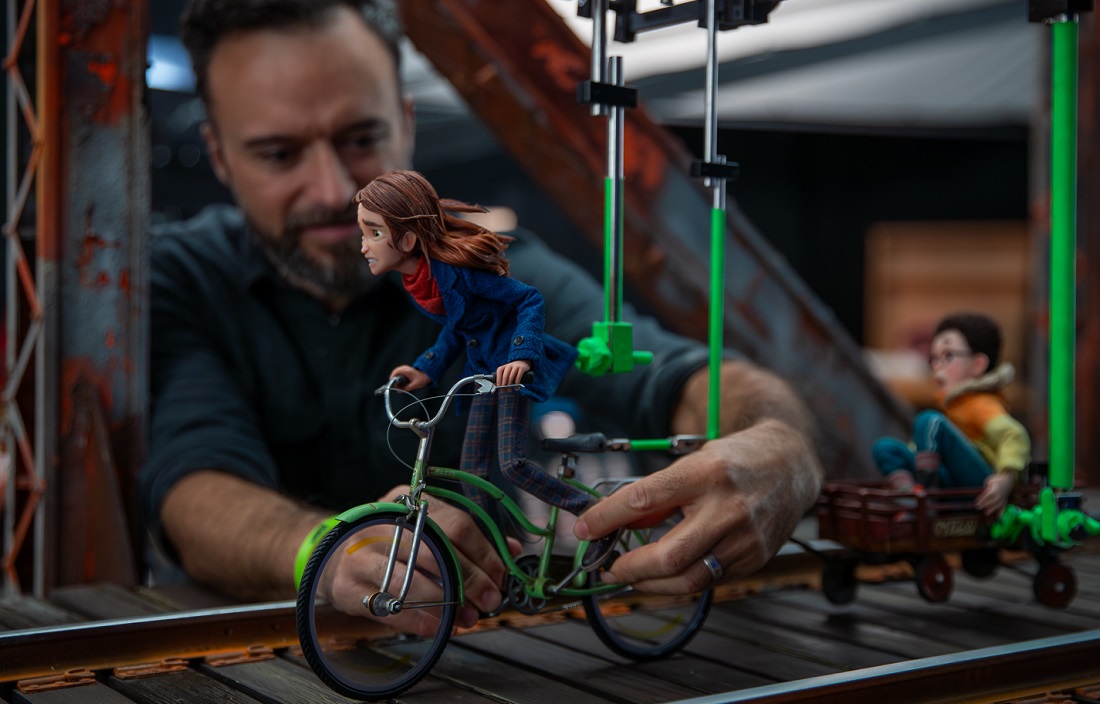
Since then, the company has produced five further movies, including its latest adventure, Wildwood – an adaptation of the 2011 novel by Colin Meloy. Directed by Laika CEO Travis Knight, who previously helmed the company’s acclaimed Kubo and the Two Strings, the film follows two Portland youngsters, Prue (voiced by Peyton Elizabeth Lee) and Curtis (Jacob Tremblay), who are drawn into a magical world in search of Prue’s missing younger brother. “It’s a modern-day adventure fantasy,” suggests Brad Schiff, Wildwood’s head of animation.
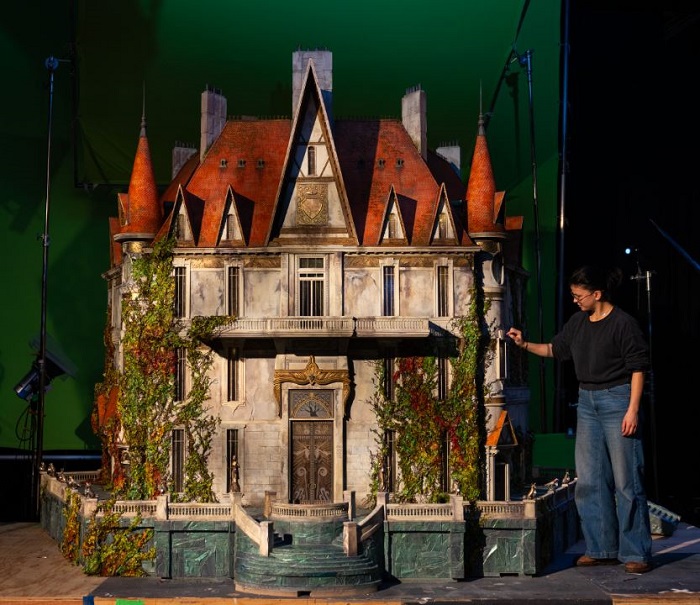
Even by animation standards, it’s epic. “The story itself is just larger than anything else we ever embarked on,” Schiff adds. So much so, Laika took on three extra buildings to house the elaborate handcrafted sets. Although filming has been completed by the time FilmInk takes a tour, these hugely detailed dioramas remain standing – from Prue’s family kitchen, the first set that was completed, to Pittock Mansion, a real-life Portland landmark reimagined for the film. Overseeing the sets is production designer Nelson Lowry, who took thousands of still photos in his prep period.
“The first set comes too fast and it’s scary because it sets the tone of the entire film,” he explains. “We can’t change the style or the quality of the rest of the film. The first few sets…things can’t be better than them, and the tendency is to get better as you go. So, we have to get better at the beginning, and it’s very challenging. But I was so happy with the kitchen…when I saw those first few shots I was like, ‘We got this.’ Even though I couldn’t figure out how we get through the whole show, I knew we’d nailed the spirit and heart of the film.”
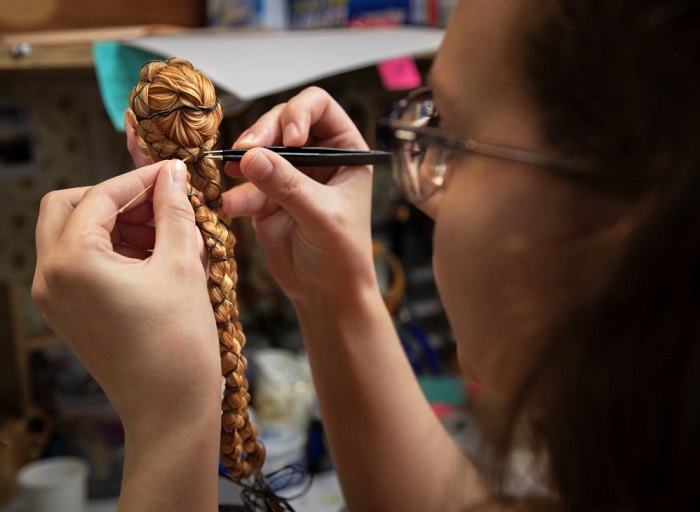
Nevertheless, the task at hand was overwhelming for the 500-plus crew. “It was like drinking from a fire hose. There were so many things: the size, the scope, the scale,” remarks Brian McLean, the director of rapid prototyping – which, as animation fans may know, is the process of 3D printing character faces. To demonstrate, he shows a box of miniature “faces” for Prue. The expressions of each are uniquely different, although barely visible to the human eye. Capable of being clipped onto the head of the puppet, this aids the painstaking process that each animator undergoes, subtly moving the action frame by frame.
For Laika’s last film, 2019’s Missing Link, said to be the most expensive stop-motion film of all time with a budget of $100 million, the company was placed in The Guinness Book Of World Records for the greatest number of 3D printed faces for a stop-motion movie. 106,000, to be precise. “I don’t think anyone else is competing in that category,” laughs McLean. Wildwood, however, is set to smash that record. “We have made 140,000 faces and counting,” he adds. “So as soon as we finish counting, we will send that off to The Guinness Book Of World Records.”
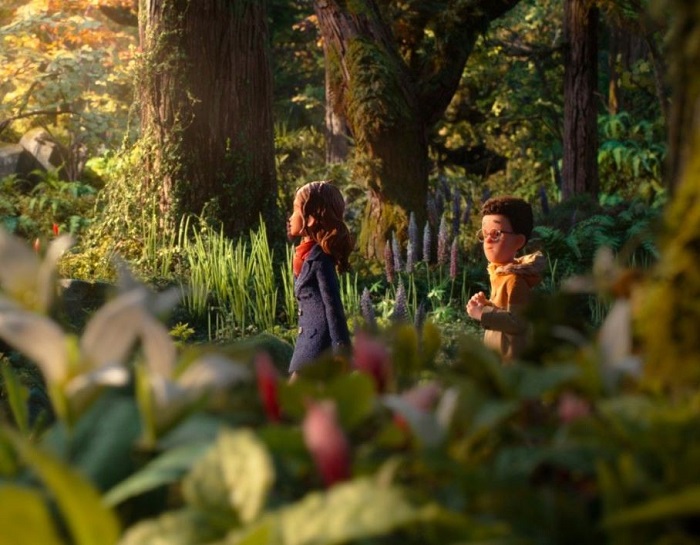
It’s not just the character faces, either. With 2,800 shots in the movie – twice as many as Missing Link – the two-hour-plus running time is also a record for a stop-motion movie, beating previous holder, Guillermo del Toro’s Pinocchio. It also features twice as many puppets as Missing Link. Human characters, like Prue and her family and her friend, Curtis, of course. “And then we have species,” says Oliver Jones, the British-born head of character and practical effects. “We’ve got rabbits, we’ve got rats, we’ve got eagles.”
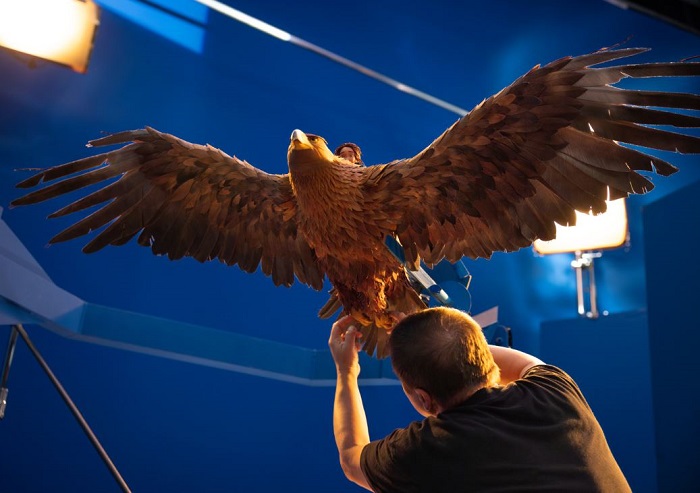
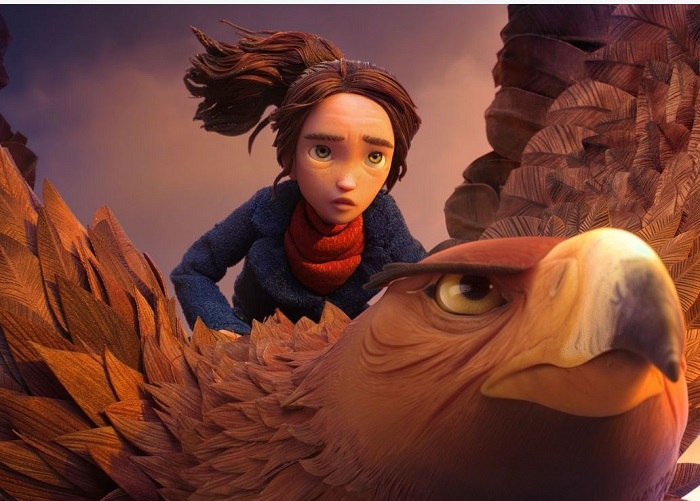
Creatures – and there are dozens in Wildwood – truly tested their skills. “We know how to build a human character,” Jones adds. “We know that there’s normally a neck, and you can have skin tone that’s going to match silicone. But the real challenge with this one was there were so many different types of fur, feathers, and skin colours.” One of the most complex creations was The General, a huge eagle that flies Prue into the skies. Making this shapeshifting creature lifelike marked “a beautiful coordination between the animation and camera team,” remarks Schiff.
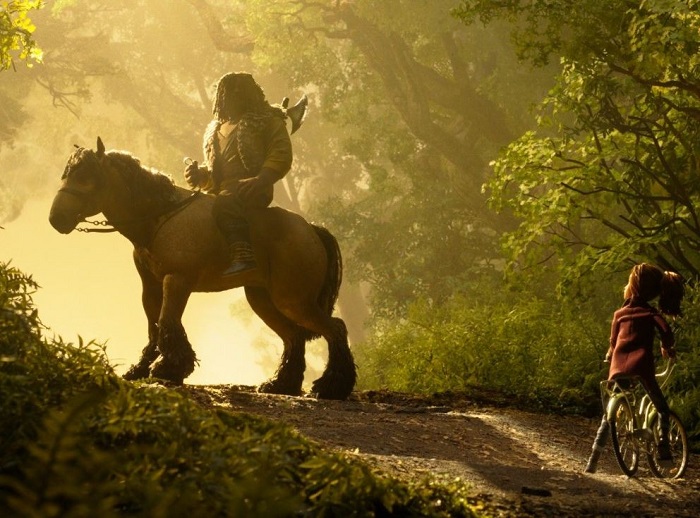
Costume designer Deborah Cook, who finished her work back in 2021, created over 300 doll house-like outfits for the characters – including some non-humans. “We haven’t really done that many animals before,” she remarks. “Animating emotion in animals in costume…it’s pretty tough. Designing costumes is difficult around animals that still need to retain animal movements and be believable as animals still, but they’re walking upright, or they’re walking differently because they’re wearing costumes, and they still show emotion.”
Partly due to COVID-19, the film has been seven years in active production, with the animation period taking a whopping five years. “Typically, they take two-and-a-half,” explains Schiff. “You’ve got a team who’s been working on it who’s never worked on a project for this long, and you have to be at your best every single day. It’s exhausting, and so you get to year three, three-and-a-half, and you can’t see where you came from. You can’t see where you’re going, so you’re just in the middle. It was really an exercise in trying to keep people motivated and inspired.”
The pandemic made things nightmarish. “I found out we were doing Wildwood maybe two weeks before the world shut down,” says Schiff. “Everything was remote after that. We were carrying 16 animators into COVID, all remote. I was the only one who had read the script, so I’m relaying things. We’re doing character development. Who is Prue? How is she going to act? How is she going to behave? It was going through films with lots of teenage girls, pulling reference, sending them to Travis – do you like this, do you like that? It was a lot of character development from the very beginning.”
With book and film set in an alt-reality version of Portland, Oregon, it’s also the most personal Laika film for so many of the animators, with many of the beautiful, handcrafted sets reflecting local landmarks. For anyone who has ever been to this laid-back city in America’s Pacific Northwest (with its “keep it weird” vibe), watching Wildwood will surely bring back memories, as Prue and Curtis pass by the likes of Powell’s Books, the world’s largest independent book store, the bright-pink Portland staple Voodoo Doughnuts, and the equally familiar coffee outfit, Dripster’s.
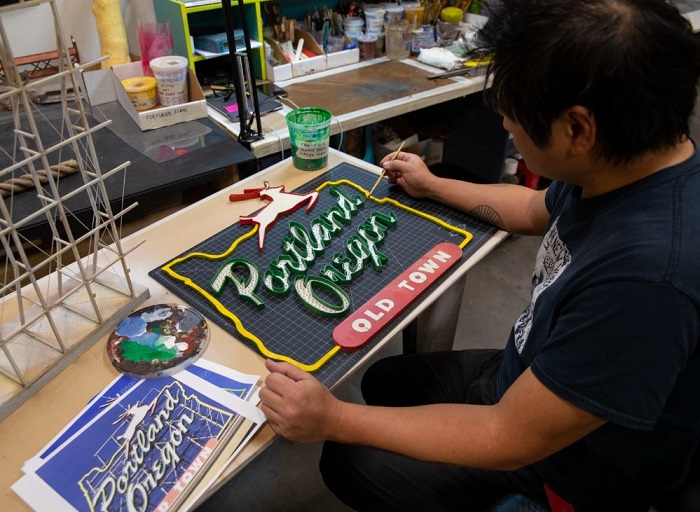
Typically, in-jokes are sewn into the very fabric of the film. One street set, running several metres in length and elevated to waist-high height to allow for the animators to work comfortably, features a camera shop, Caleb’s Cameras, a nod to the film’s six-time Academy Award-nominated cinematographer, Caleb Deschanel. On the same thoroughfare, a movie theatre features a poster for ParaNorman, Laika’s 2012 animated feature. There’s even The Adelina Hotel, a reference to the simian character from Missing Link.
In charge, of course, is Travis Knight, who completed work on the film whilst also helming this year’s live-action Masters of the Universe. “He understands the constraints of stop-motion better than anybody else in the world,” says Jones. “He’s an incredible animator. When we’re talking to him, there’s actually a great shorthand about what the possibilities of a puppet can actually do, and we get delighted when we can surprise him and show him something new, and we can go beyond his expectations of what a puppet can do, or what a set can do, or what we can do on the stages with practical effects.”
Like every Laika movie, making Wildwood has been a steep learning curve, one that comes inspired by the work done on earlier movies. “There are so many things that we discovered on previous projects that we shelved that we were then able to pull up and bring into practice on Wildwood,” says McLean. “So many things that we had learned didn’t work, and then we were able to improve upon for Wildwood. Wildwood really wouldn’t have been possible five years ago because it took Coraline and ParaNorman and [2014’s] The Boxtrolls and Kubo… and Missing Link to build that foundation.”
Given the frame-by-frame nature of making a stop-motion movie, even the team behind Wildwood were taken by surprise when it finally began to start taking shape. “The emotional part…I only really recognised seeing the whole film put together because I was so focused on the environments,” remarks Nelson Lowry. “I suddenly forgot about all that and I was just watching these characters perform. You’re going to get a little emotional in this film, guaranteed…very profoundly emotional.” Or as Brad Schiff puts it, “People are going to cry.”
Wildwood is released in cinemas on October 22.
