



by Amanda Webster
Worth: $19.00
FilmInk rates movies out of $20 — the score indicates the amount we believe a ticket to the movie to be worth
Cast:
Carney (Orpheus), Eva Noblezada (Eurydice), Amber Gray (Persephone), André De Shields (Hermes), Patrick Page (Hades), Bella Brown, Madeline Charlemagne, Allie Daniel (The Fates)
Intro:
... a timeless reimagining of two Greek tragedies, brought to life with vitality and imagination in a story that remains as relevant, moving and heartbreaking today as ever.
First conceived by singer-songwriter Anaïs Mitchell as a concept album, Hadestown evolved into a fully staged musical in collaboration with director Rachel Chavkin. Debuting on Broadway in 2019, it received critical acclaim, winning eight Tony Awards and a Grammy. Mitchell combines two Greek myths, the doomed love story of Orpheus and Eurydice and Hades’ abduction of Persephone, reimagining these epic love stories through the lens of Depression-era New Orleans. Set largely within a shadowy saloon bar, Hadestown connects Greek mythology with the oral storytelling and musical traditions of the American South, drawing on a city where music has long given voice to both hardship and hope; the show injects fresh vitality into timeless tales of love, greed, poverty and resilience.
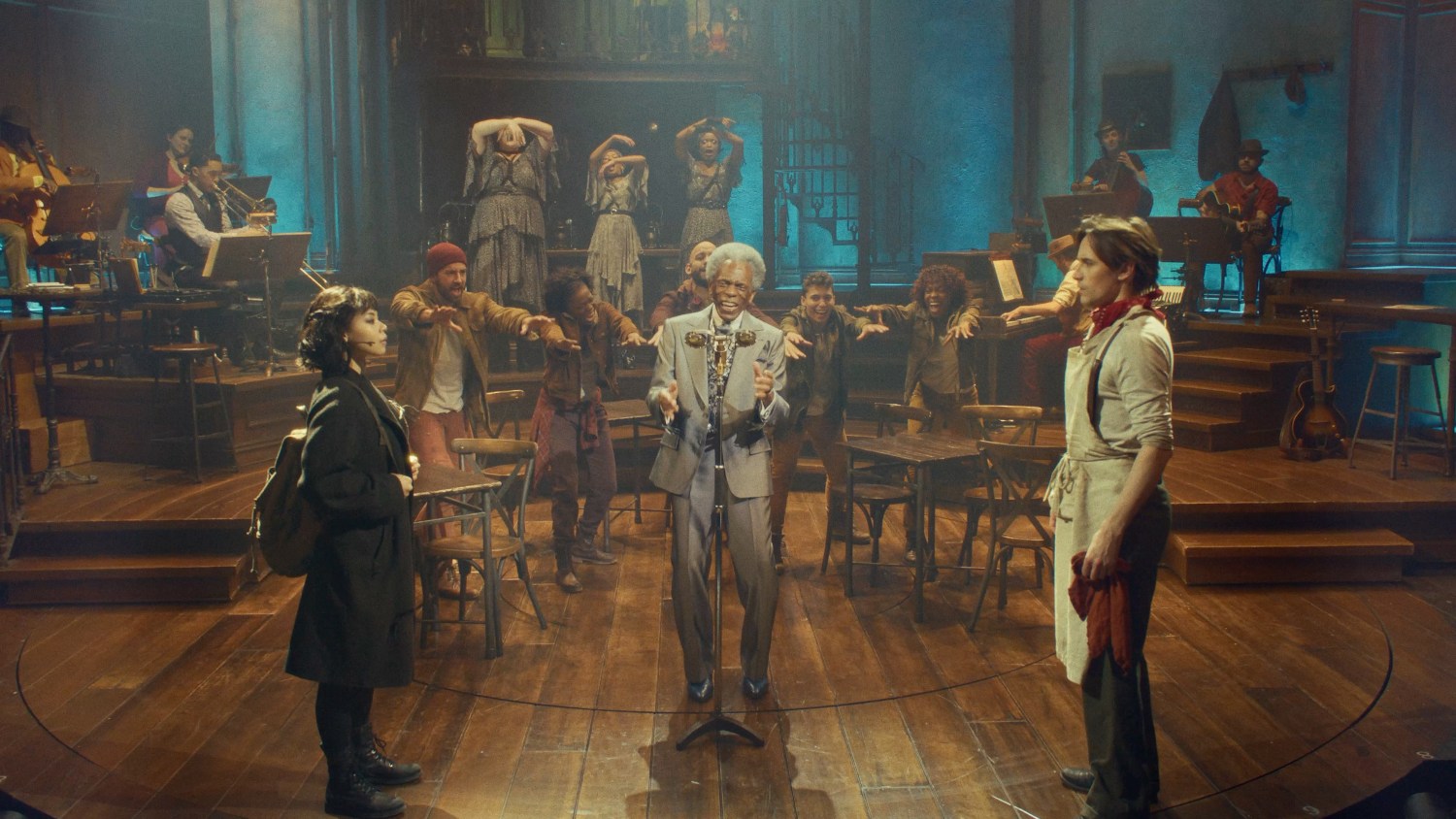
Narrated by the charismatic Hermes (André De Shields), messenger of the gods and guider of souls, Hadestown unfolds like a jazz funeral, drawing on an African American tradition that blends mourning, celebration and storytelling through music. Alongside him are the Fates, a chorus trio who subtly influence characters’ choices while guiding both audience and cast.
Initially, the narrative feels elusive, with little indication of the stakes other than a warning that the characters are travelling ‘The Road to Hell’. The opening number speaks of a railroad line to the underworld, while the recurring ‘hoot, hoot’ of a train departing is woven through the narration, symbolising destiny, the passage of time and lives moving along predefined tracks.
In Anaïs Mitchell’s reimagining of the mythology, Orpheus, god of music, becomes a penniless dreamer working in a bar, consumed by an unfinished love song. Naïve and romantic, he falls for Eurydice, who has been hardened by poverty and has learned to rely on no one but herself. She is drawn to the beauty of his music but is sceptical of his idealism. When Orpheus abruptly proposes marriage, Eurydice doubts whether love alone can sustain them through the hardship and famine of winter. Orpheus, however, is convinced that his song will lure back the spring.
Mitchell’s story also reshapes the myth of Persephone and Hades. In classical mythology, Persephone, goddess of spring, is abducted by Hades and taken to the underworld, while her grief-stricken mother Demeter, goddess of the harvest, plunges the world into famine until a compromise allows Persephone to divide her time between realms, creating the seasons. In Hadestown, Persephone has a deep and complicated love for Hades and chooses to stay with him, although she still feels trapped and restless within the gilded cage he has created for her.
The underworld itself is transformed into an industrialised ‘factory floor’, where workers exchange freedom and individuality for the promise of security. The steampunk-inspired costumes and David Neumann’s choreography, where the cast move as a whole, creating the sense of an inescapable machine, create a bleak world of smoke, steel and relentless labour.
As Hades, Patrick Page commands the stage. His deep voice, rumbling like the purr of a big cat, is both menacing and seductive as it draws Eurydice into his orbit. Eurydice, increasingly uncertain that Orpheus will ever finish his song, and lacking the strength to continue to endure the hardship, is tempted by the prospect of shelter and stability offered by Hades. Ultimately, she trades her soul for a place on the factory floor.
Determined to bring her back, Orpheus travels alone to the underworld. Moved by the power of his music, Hades agrees to release Eurydice on one condition: Orpheus must walk ahead of her and never look back until they reach the world above. It is a test of faith and ultimately, self-belief. As doubt creeps in, Orpheus begins to wonder whether he deserves Eurydice’s love and if she would really follow him. In the end, it is doubt that seals Eurydice’s fate.
While the score is rich and evocative, some musical numbers occasionally feel overextended, sacrificing narrative momentum for atmosphere. One of the production’s greatest strengths is its immersive atmosphere and talented cast. The audience’s clear enthusiasm becomes an extension of the performance itself. As musicians recede into the set’s shadows, the boundaries blur, the theatre begins to feel like the saloon in which the story unfolds, and the audience are swept up by its music, energy and tragedy.
Overall, Hadestown is a timeless reimagining of two Greek tragedies, brought to life with vitality and imagination in a story that remains as relevant, moving and heartbreaking today as ever.
