



by Cain Noble-Davies
Worth: $14.00
FilmInk rates movies out of $20 — the score indicates the amount we believe a ticket to the movie to be worth
Sydney Underground Film Festival
Cast:
Nicolas Angelosanto, Chris Slater, Madeline Armit
Intro:
… a monochromatic fever dream, tapping into two equally visceral tones of social horror to bolster its unifying truths about how far relationship dynamics can be twisted.
Meat Daddy, just from the title, sounds like a spin-off of the Meat Clown Cinematic Universe. And just as bloody weird to witness.
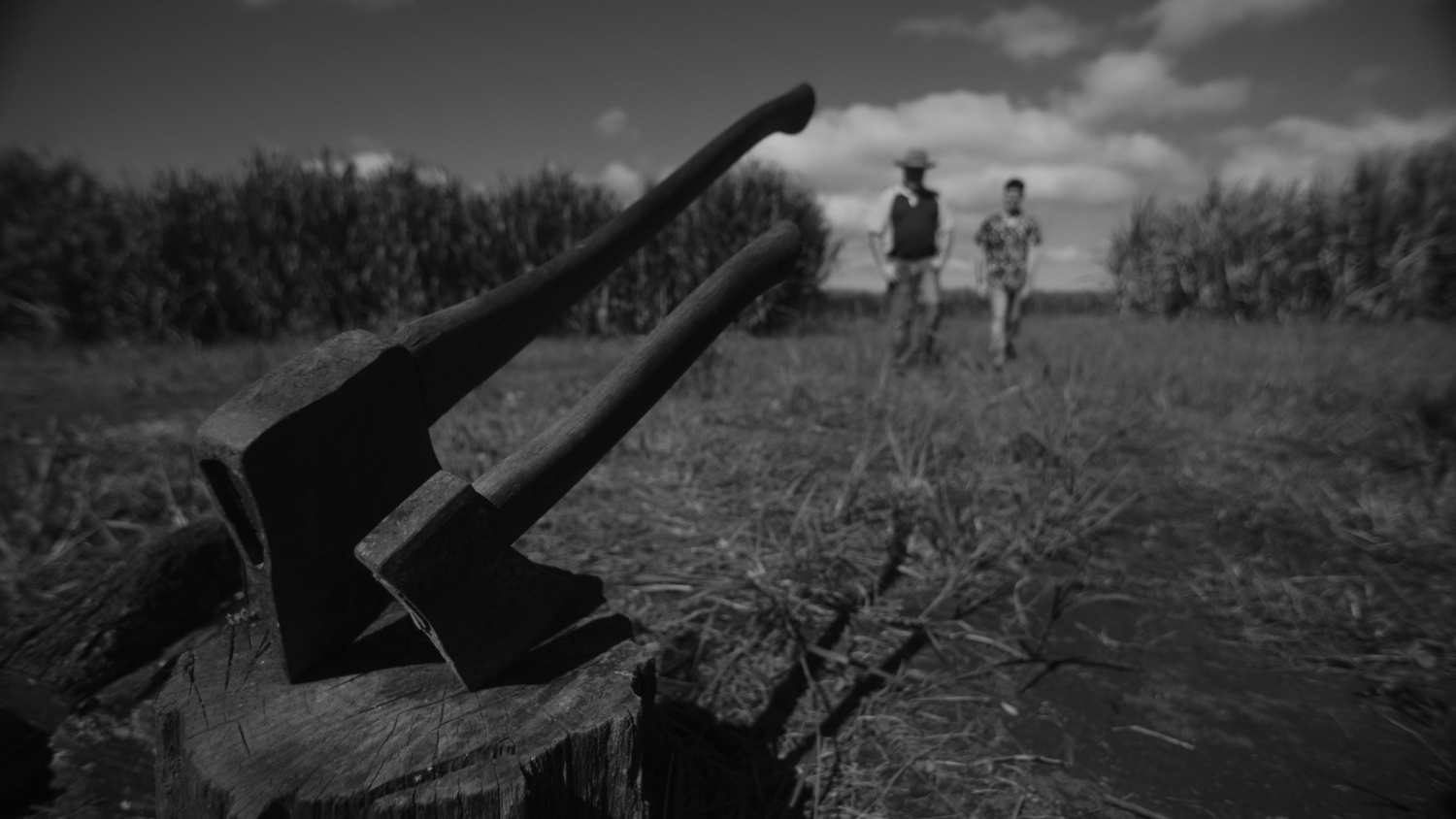
Framed by a first-time meeting between a prospective fiancé (Nicolas Angelosanto) and the father (Chris Slater) of his girlfriend (Madeline Armit), Meat Daddy is a filmic coin with two equally scarred sides, albeit by vastly different implements. Both halves follow the same general trajectory, showing the friction between the two men with Madeline in the centre of it all, and there’s a compelling mix of suburban domestic tension and bushland folk horror throughout. But across its demarcated plotting, hinging on a crucial perspective shift, the film is as unsettling as it is strangely revealing.
The first half, told from Nagelosanto’s perspective, is a more ambiguous thrill, evoking a Lynchian disconnect between reality and the reality standing at the edge of the frame next to it, along with plentifully uncomfortable Electra complex unease. Whereas the second, from Slater’s perspective, feels (relatively) more grounded, couched in enough sympathetic social cringe to make one recede into their own chest like a threatened turtle.
The threads connecting them both are reminiscent of I’m Thinking of Ending Things, in that Madeline in both of her roles is more of a sentient tether to the men in her life than her own person. But whether it’s being reduced to a childlike mental state, or just being under the thumb of a crypto bro, its depiction of contrasting forms of toxic masculinity still speak to the same danger of women existing as something to be claimed and/or hoarded.
However, it does feel like a trick is missed by the film not going full The Last Duel and having a segment told from the woman’s point of view as well. It still conveys the friction of patriarchal authority, both inside and outside of the family unit, along with the fear of losing connection with a loved one, but the way that the male perspective is emphasised and prioritised does cut into some of its firmer statements about the male ego.
For a feature debut, this missive can be set aside as simple growing pains, especially with film craft this sturdy. Branden Wittchen’s writing, direction, and editing do wonderfully at establishing the warped mirror plot progression, along with his and DP Guy Crofts’ cinematography making outside-your-window suburbia feel about as welcoming as it is in Hounds of Love or The Loved Ones. Analía Lentini’s soundtrack boosts an anxious sensation, with guttural synthwork and teeth-itching percussion that help further define the two halves while strengthening the whole.
Meat Daddy is a monochromatic fever dream, tapping into two equally visceral tones of social horror to bolster its unifying truths about how far relationship dynamics can be twisted. The performances are remarkable in the way they handle two very different characters within the same metanarrative, its shifting tones allow it to actively prevent the audience from getting too comfortable with its approach to disturbance, and while its focus has issues, its ultimate statements and character examinations give just enough material to make the endeavour meaningful, but without obscuring the core terror of being entirely out of your element, both for the characters and the observers.
