


by Julian Wood
Worth: $12.00
FilmInk rates movies out of $20 — the score indicates the amount we believe a ticket to the movie to be worth
Cast:
Claes Bang, Sidse Babett Knudsen, Xavier Dolan, Swann Arlaud, Michael Fau
Intro:
Whether the to-ings and fro-ings of the economic battles and the clashing egos is enough to sustain a fairly long film is a question that still hangs in the air as the credits roll.
For the French, the socialist politician Francois Mitterrand is an iconic figure and perhaps a divisive one. He was one of the longest serving presidents and his time at the helm in the 1980s was a time of national confidence. Not being above a bit of vainglory, he also wanted to be remembered, and he commissioned some big public buildings. This is where the narrative for this hard-to-categorise French-Danish film launches.
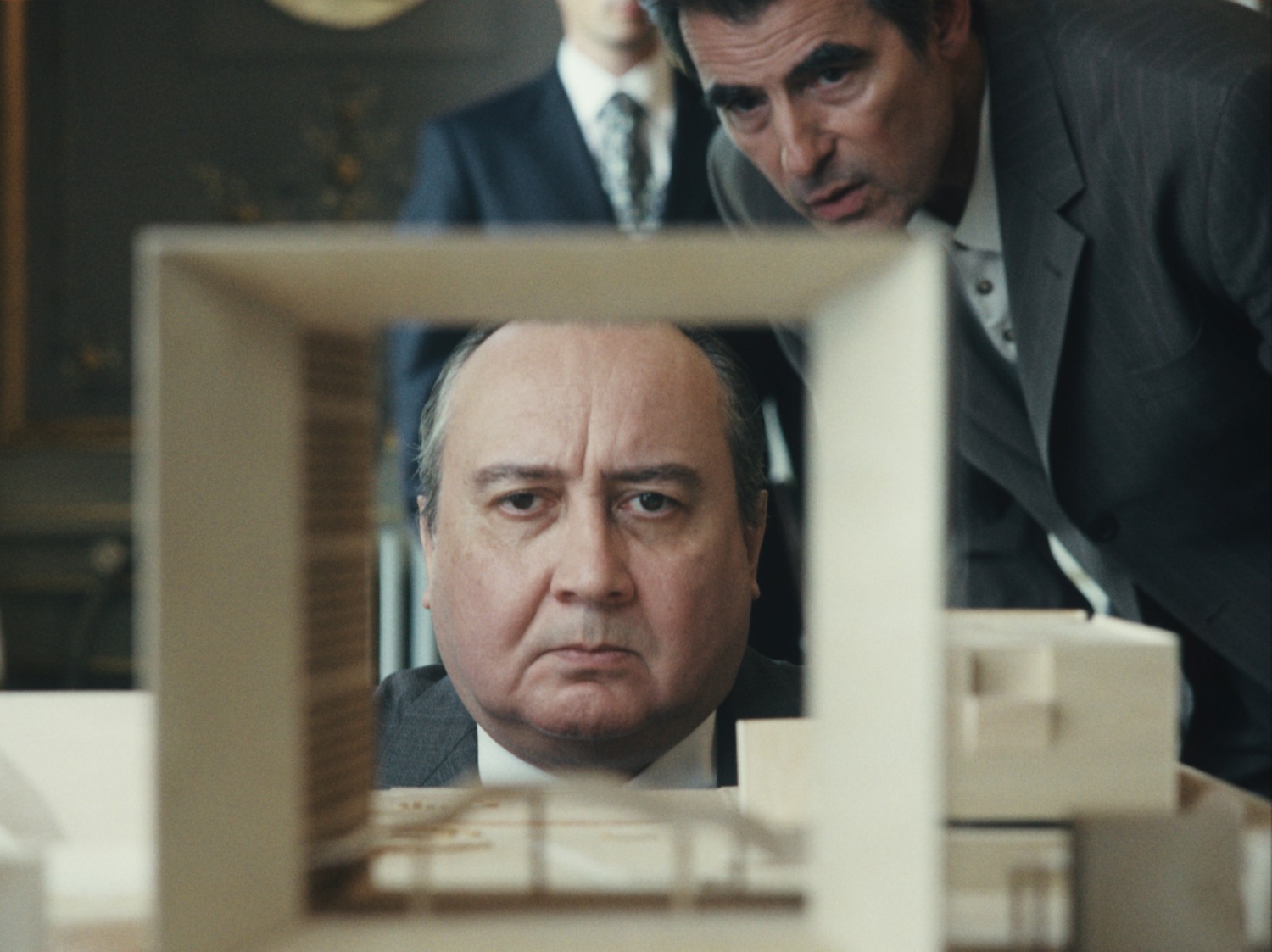
There are various architects entering an open competition to build a big work in the most iconic strip in Paris. When an unknown Danish architect and lecturer Otto von Spreckelsen (Claes Bang) wins with his bold idea for a huge cube, the ceremony glitches because none of the presidential aides knows who he is (in fact, the French title for the film is translated as The Unknown Man of the Great Arch).
From these nicely comic first scenes, we are soon pitched into the more fractious elements of the project as it grinds on. The artist’s vision and extravagance are constantly chafing against the bureaucrats and doubters. Otto plays up this image of the big ideas man weighed down by lilliputian nay-sayers to the hilt. He and his wife Liv (the wonderful Sidse Babett Knudsen in a slightly underwritten part), have clearly decided that the way to get respect (and to get their way) is to be bold and belligerent.
However, though Otto is overbearing and temperamental, he has some weaknesses that he is covering up through bluster. Sucking up to Mitterrand is definitely a key tactic too. This works and frustrates his would-be offsider Subilon (an unrecognisable Xavier Dolan), who can see the need for occasional pragmatism and compromise. This comes to a head when Jacques Chirac succeeds as president and brings with him a more neoliberal view about how the private sector should alleviate the strain on the public purse.
Whether the to-ings and fro-ings of the economic battles and the clashing egos is enough to sustain a fairly long film is a question that still hangs in the air as the credits roll. Quite a lot relies on the lead performance. Bang is well cast at least, if you want to suggest Otto’s charisma. His realisation of him as the overconfident alpha commands the film. He is not, of course, especially likable but then that may be the point. Lastly, though there are endless scenes on building sites during construction, it is all about the lead up. Necessarily therefore, we don’t get much sense of what the finished building feels like, or what it would be like to live or work in. That said, its quiet monumentality still dominates that part of Paris so that may be legacy enough.
