


by Stephen Vagg
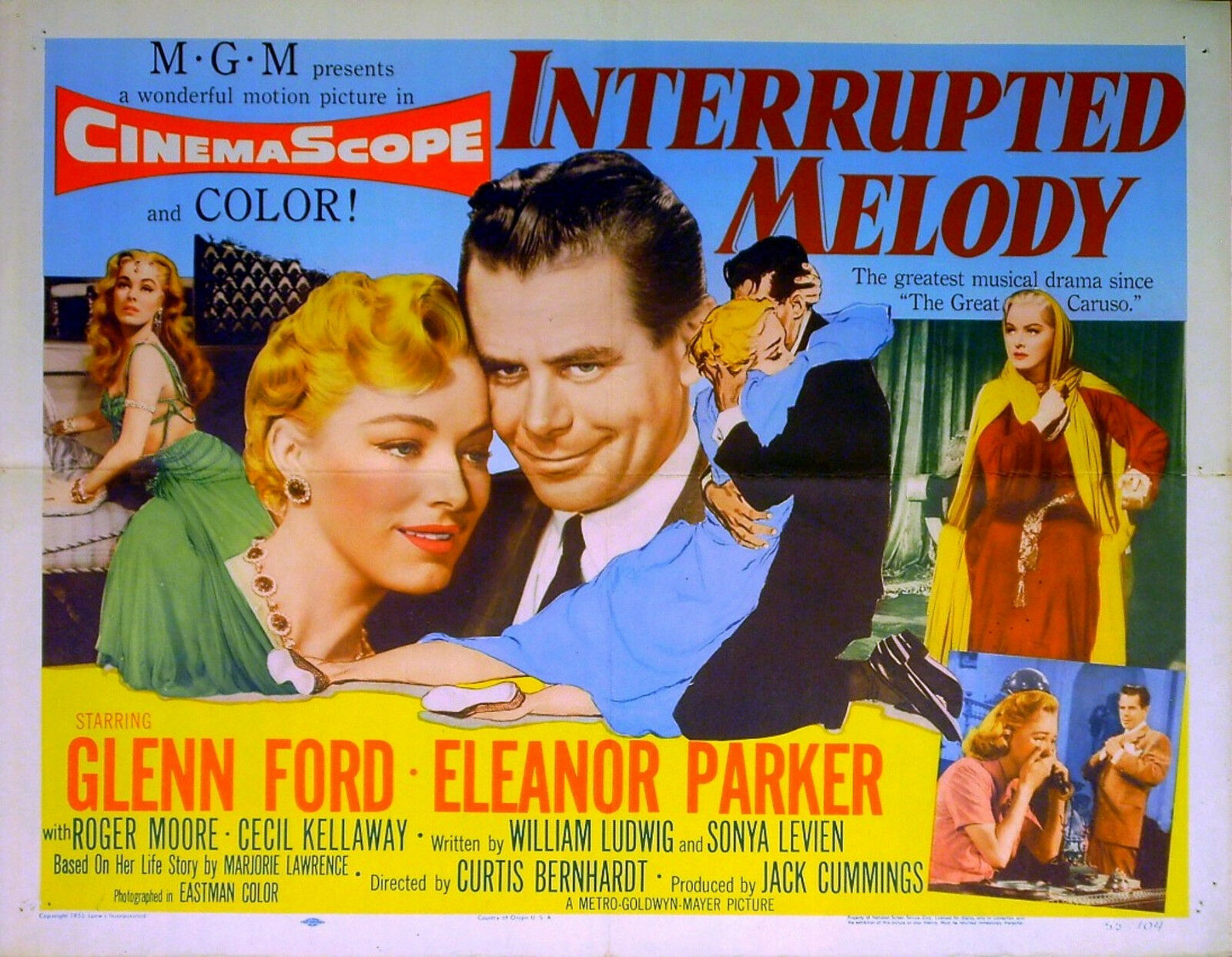
We’re not sure how famous Marjorie Lawrence is these days – maybe she’s still known amongst hardcore opera buffs, but her fame has never been up there with, say, Dame Nellie Melba or Joan Sutherland. But at one point, she was a Big Deal, such a big deal that in the mid-1950s, MGM made a movie based on her life – and it turned out really well.
Lawrence was a butcher’s daughter, born in 1907 and raised in rural Victoria. She wanted to sing opera and chased that dream, at first to Melbourne and then Paris and Mote Carlo, where she became a star, one of the most internationally famous Australians of the 1930s.
Lawrence returned to Australia for a tour in late 1939. During this tour, Cinesound Productions and director Ken G. Hall announced Lawrence would come back the following year to star in a biopic that they wanted to make of another Australian opera singer, Dame Nellie Melba. Cinesound’s 1938 drama The Broken Melody featured impressive opera sequences and films starring opera singers were popular at the time – Irene Dunne, Grace Moore, Jeanette MacDonald and Nelson Eddy were genuinely popular with cinema audiences, and Lawrence had received some film offers. However, war intervened and the project died on the vine. Hall considered re-activating the Melba project in the mid-1940s for Columbia, but decided opera sequences would be too expensive and made Smithy instead.
Then Lawrence was struck down with polio in 1941 and became paralysed in both legs. She married a doctor and fought back, regaining at least partial use of her legs; she sang for the troops and wrote a book of her life, Interrupted Melody, which was published in 1949.
Lawrence’s life story was a natural for screen adaptation because the dramatic arc was so clear – struggle, stardom, illness, romance with doctor, recovery, triumph. This made it far superior material to, say, the life of Melba, even though Melba was more famous, because Melba’s life wasn’t as easy to dramatise, at least not then because you couldn’t show the quite racy true story (as proved by the 1952 biopic Melba, and the 1988 mini-series Melba… the best way to do it was to fictionalise it, like the 1934 movie Evensong).
Film rights were bought by MGM who were partial to musical biopics – the studio had enjoyed a massive hit with The Great Caruso in 1951 and would go on to make Love Me or Leave Me (1955). It also would’ve been aware of the box-office success of another singer-who-triumphs-after-being-crippled story around this time, With a Song in My Heart (1952). MGM was furthermore partial to Australian material during the war/post-war years: it had Sydney actor Shirley Ann Richards under contract; made the Australian-set The Man from Down Under (1943); produced a popular biopic of the actor Annette Kellerman, Million Dollar Mermaid (1953); filmed Henry Handel Richardson’s novel Maurice Guest as Rhapsody (1954); used Errol Flynn on two movies; and for many years planned (though never filmed) a movie adaptation of Richardson’s The Fortunes of Richard Mahony, along with a proposed sequel to Mutiny on the Bounty that would focus on the Rum Rebellion. (We think this was more accidental than intentional, a result of the studio’s Anglophilia and desire to use British stars it had under contract, but you never know).
Interrupted Melody was originally envisioned as a possible vehicle for MGM’s leading British star, Greer Garson, who’d enjoyed a dream run during the war years but had found things tougher afterward, mostly because her material had been so bad. However, Garson dropped out (her contract with the studio expired in 1954 and her husband was a millionaire so she pretty much retired). Other MGM leading ladies were announced as possible stars including Deborah Kerr, and Lana Turner; eventually the role was taken by Eleanor Parker.
Parker was a very attractive performer who’d been playing leads since the early 1940s but never reached the top rank. Our theory is that she was a character actor trapped in the body of a movie star – she lacked a little X factor when just playing ‘herself’, but when she changed into period costume and was given something to chew on, she was sensational (eg Scaramouche). To top up the star power, MGM gave the male lead to Glenn Ford, one of its biggest male names.
Lawrence’s father was played by an actual Australian – well, a South African/Australian, Cecil Kellaway, who’d been in Hollywood since the late 1930s, after his success in Ken G. Hall’s It Isn’t Done. The role of her brother went to British actor Roger Moore, who was under contract to MGM. In late 1955, the studio would sign Australian actor Rod Taylor to a long-term contract but when Interrupted Melody was being filmed, Taylor was still in Australia; there were some young Australian actors in LA at the time (eg Ron Randell, Michael Pate), but not many, so it’s understandable why Moore was used. Incidentally, the movie only spends a few minutes in Australia, but there are decent outback-ish shots (filmed at a ranch outside Los Angeles).
Parker couldn’t sing, so was dubbed. MGM decided not to use Marjorie Lawrence’s voice in the film, feeling it lacked the strength it once had (she retired from performing in the early 1950s) and instead employed Eileen Farrell. The director was Curtis Bernhardt, a second-tier name who’d recently done an opera movie for the studio (1952’s The Merry Widow). The producer was Jack Cummings, Louis B. Mayer’s nephew and an excellent filmmaker in his own right; although by this stage, Mayer had left MGM to go and sulk – Interrupted Melody was very much in the style of Mayer’s MGM, with its stars, songs, glossy production values, and CinemaScope.
The shoot was generally smooth but not without some troubles – according to Roger Moore, Ford (who insisted on top billing) would deliberately wreck takes with Parker to make his own performance seem better. Bernhardt disliked original DOP Paul Vogel and had him replaced. Moore wrote in his memoirs that Parker was very kind and considerate and helped the young Britisher considerably.
MGM, in a genuinely classy move, decided to give Interrupted Melody its world premiere in Melbourne in April 1955, with Metro contract star Ann Miller appearing in-person, and the studio donating a cheque from the premiere’s proceeds to the Royal Women’s Hospital. The Age’s film critic Brian McArdle called it “the only American film based on an Australian background that can withstand the piercing beam of local criticism.”
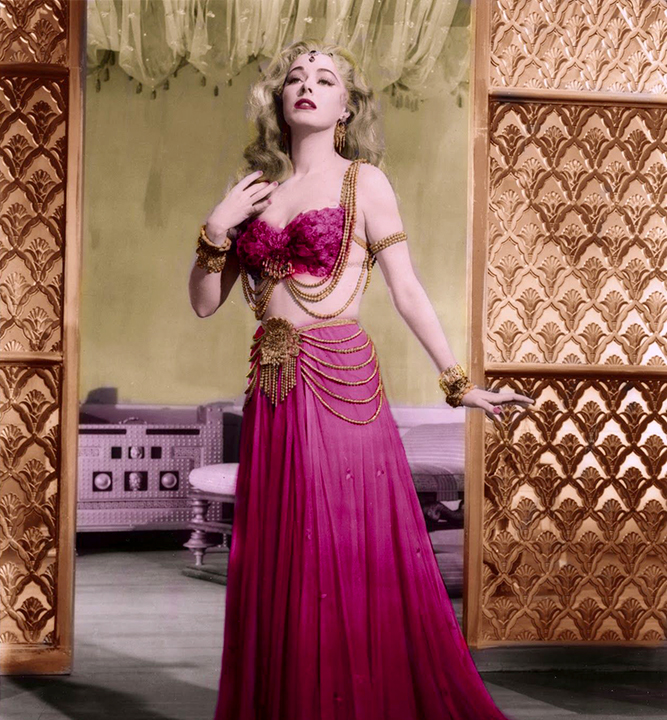 The movie was a solid hit, the script won an Oscar, and Parker was Oscar-nominated. This success encouraged MGM’s head Dore Schary to give Parker the leads in some movies which flopped (The Seventh Sin, Lizzie); she was an excellent actor, gorgeous, but seemed to need a strong male co star to be worth anything at the box office (The Naked Jungle, The Man with the Golden Arm).
Interrupted Melody is a strong, well-constructed movie which absolutely hits the beats you want from an opera biopic – plenty of songs, struggle, costumes, stars. Parker really comes alive in the opera sequences – we think that she was one of those performers not entirely comfortable playing herself, or a stock persona, but would energise in more character parts or doing things like try to commit suicide and rail against being in a wheelchair (as she does in Interrupted Melody).
The story benefits from genuine, grounded conflict – Lawrence and her doctor boyfriend are unsure if their relationship can survive her being a singer and him being a doctor; then you’ve got both of them struggling to deal with her polio. Yes, the treatment is at times hokey, and there is a black maid that the leads are terribly nice towards, but the two lead characters are very well rounded and it’s hard not to be moved when a doctor asks Lawrence to sing for “the boys” (soldiers) and she says that she’s in a wheelchair and the doctor says simply “So are some of the boys.” That would have meant a lot to audiences at the time – veterans and their families as well as those affected by polio. And Australians too – there’s a scene where Lawrence serenades the Anzacs with “Waltzing Matilda”.
Many Hollywood versions of Australian stories struggled to make an impact – not so much its depictions of Australia and Australians (you have to take them with a grain of salt) but more via miscasting and poor scripting (Kangaroo, The Man from Down Under). But it did well with Marjorie Lawrence.
