



by FilmInk Staff
Every production budget accounts for insurance, accommodation and equipment hire. Very few account properly for the actual logistics of getting a crew, its gear and its temporary base from one location to the next. On a Queensland shoot, that gap shows up fast.
Why Queensland creates problems other states do not
A production moving between Brisbane, the Gold Coast and Far North Queensland is not moving across a city, it is moving across a state the size of several European countries combined. Road transit between a Brisbane base and a Cairns location shoot can run well over a full day, and that has to be built into a schedule the same way a location permit or a weather day does.
Wet season is the other factor productions from further south consistently underestimate. Between roughly November and April, regional road access in the north can change with little warning, and a route that was fine on the recce is not guaranteed to be fine on the day the truck actually needs to move. Building a buffer day around any regional leg during that window is not caution for its own sake, it is what keeps a schedule from unravelling over something as ordinary as rain.
The road network itself is worth understanding before it becomes a scheduling problem. The corridor between Brisbane and the Gold Coast is fast, multi-lane highway the whole way, and crews based in the southeast tend to plan around that experience. Once a shoot moves further north or inland, the roads narrow, services thin out, and a delay is not a matter of sitting in traffic, it is a matter of the only viable route being temporarily closed with no quick alternative. A transport plan built around southeast Queensland driving conditions does not transfer cleanly to a location shoot near Cairns or further into Far North Queensland, and treating the two as equivalent is where schedules start slipping.
Moving high-value gear properly
Camera bodies, lighting rigs and grip equipment travel as cargo the moment they leave a hire house, and that changes what needs to be in place before a truck is loaded. A certificate of currency for goods in transit insurance needs to actually list the values being carried, not a generic policy summary, because a claim gets contested fast if the paperwork does not match what was on the truck. It is worth asking the transport provider directly what their goods in transit cover actually includes, rather than assuming standard freight insurance covers equipment at replacement value.
Where productions get caught out most often is at the handover point, gear coming off a truck at a new location with nobody from the production actually present to check it against the manifest. A five minute count against the gear list at both ends of a move is the difference between catching a problem immediately and discovering it three days into a new shoot block.
Packing matters more than it gets credit for, too. Camera cases and flight cases are built to protect their contents in transit, but only if they are actually closed and latched properly rather than left half secured because the truck is running behind schedule. The same applies to lighting stands and grip equipment loaded loose rather than cased, since loose gear moving against itself over a long regional transit does far more damage than a single hard knock during loading. None of this is complicated to get right, it just requires the load being treated as cargo rather than as an extension of the set being struck.
Storage between shoot blocks
Gaps between shoot blocks are where equipment quietly gets damaged, usually not from the move itself but from what happens to it while it sits. Camera and lighting gear does not tolerate Queensland humidity well over an extended stay, and a standard storage unit without climate control can genuinely affect sensitive optics and electronics over several weeks, not just months.
If a production is storing gear between blocks for more than a short gap, it is worth specifically asking whether a storage facility offers climate control, rather than assuming any secure unit will do. The cost difference is small against a production’s overall budget and it is considerably smaller than the cost of a damaged lens or a lighting console that has taken on moisture.
Crew relocations and interstate moves
Longer engagements bring crew relocating from interstate, and this is usually budgeted as a flight and a hotel rather than what it actually is, a full household move for however long the engagement runs. For anything beyond a few weeks, crew are generally better served by a proper interstate relocation quote covering their own belongings, rather than trying to manage it themselves around a shooting schedule.
This is a line item worth pricing early rather than late. Productions that leave it until a crew member is already scheduled to arrive tend to pay a premium for short notice, and the crew member tends to arrive with less sorted than they would with two or three weeks of lead time.
There is also a storage question that gets missed in the accommodation planning. A crew member relocating for a three or four month engagement is not necessarily bringing everything they own, but they are usually not giving up their lease at the other end either. Short-term storage of personal effects for the length of the engagement is a small, predictable cost when it is arranged in advance, and a stressful last-minute scramble when it is not.
A pre-move checklist
Before any leg of a Queensland production moves, it is worth running through a short list rather than assuming it has been covered informally:
Has the route been checked for current road conditions, not just the conditions at the time of the recce.
Does the goods in transit certificate list actual equipment values, not a generic policy limit.
Is there someone from the production physically present to check gear against the manifest at both the pickup and the drop-off.
If gear is going into storage between blocks, has climate control actually been confirmed rather than assumed.
Has crew relocation been priced and booked with real lead time, rather than left until the week someone is due to arrive.
None of this is complicated. It is the unglamorous, entirely avoidable part of a production budget that causes real delay when it is skipped, and none of it costs anything extra to get right if it is planned for early rather than discovered late.
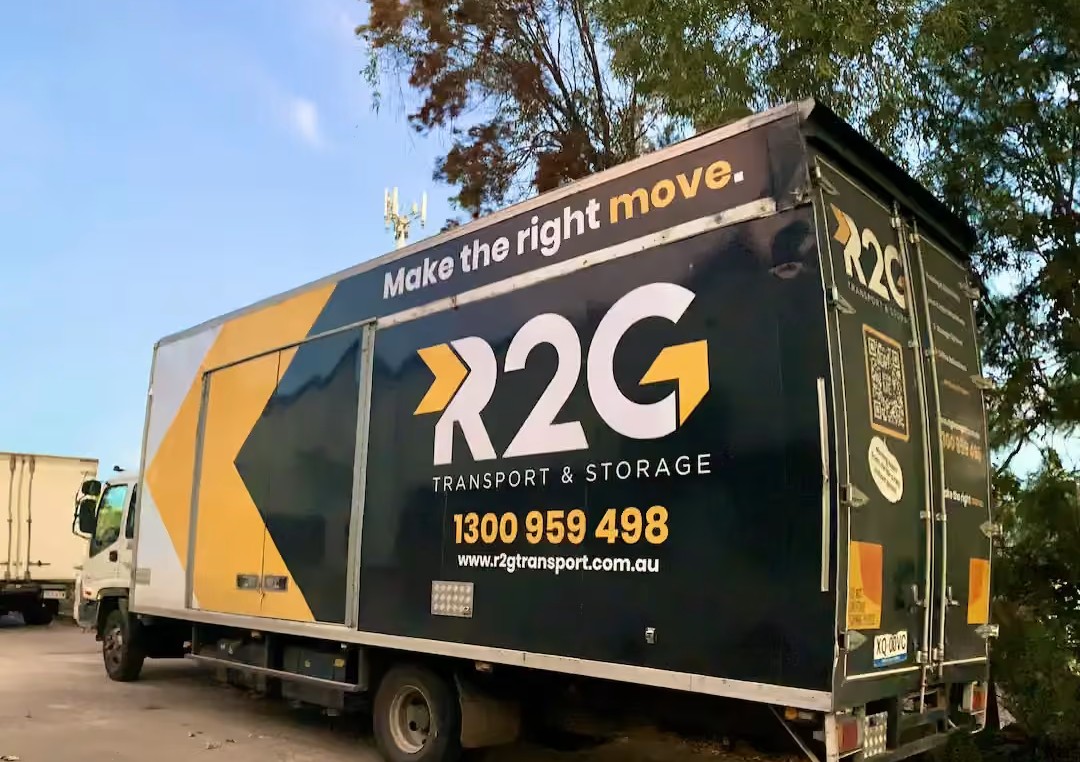
We have run this side of productions across Queensland for R2G Transport & Storage, including Brisbane-based crews and equipment moving to regional shoots, and the pattern above is consistent every time: the moves that go smoothly are the ones planned like any other line item in the budget, not the ones left until the truck is already booked.
