



by Cain Noble-Davies
Worth: $15.56
FilmInk rates movies out of $20 — the score indicates the amount we believe a ticket to the movie to be worth
Cast:
Jeremy Irons, Hiam Abbass, Kamel El Basha, Yasmine Al Massri, Robert Aramayo, Billy Howle, Karim Daoud Anaya
Intro:
it offers much to think about.
Palestine 36, the latest film by Bethlehem-born writer/director Annemarie Jacir (Wajib), has the filmmaker backdropping human drama against the turbulent history of her homeland. In this case, the revolt against British rule between 1936 and 1939. Following a collection of personas and their respective reactions and motives behind their involvement (or lack thereof) in the revolts themselves, the film’s intent on focusing on historic detail ends up holding back both its narrative and characters.
On the former, there’s enough material packed into these two hours that could comfortably fill several TV or streaming miniseries, and that compression gives the film a steady but relentless pace. As the wick burns its way closer and closer to open conflict, the events and even the specific timestamps blur together, making the individual building blocks difficult to parse out. This isn’t helped by the open-ended conclusion which, while fitting for the film’s declarations of perseverance, shows cracks in the structural foundations.
And characters… well, we don’t really get much. There are presences being acted out, from the radicalised fighter to the Oxford-educated journalist to the young innocent shoemaker, but outside of function within the larger picture, not much detail is given to them as individuals.
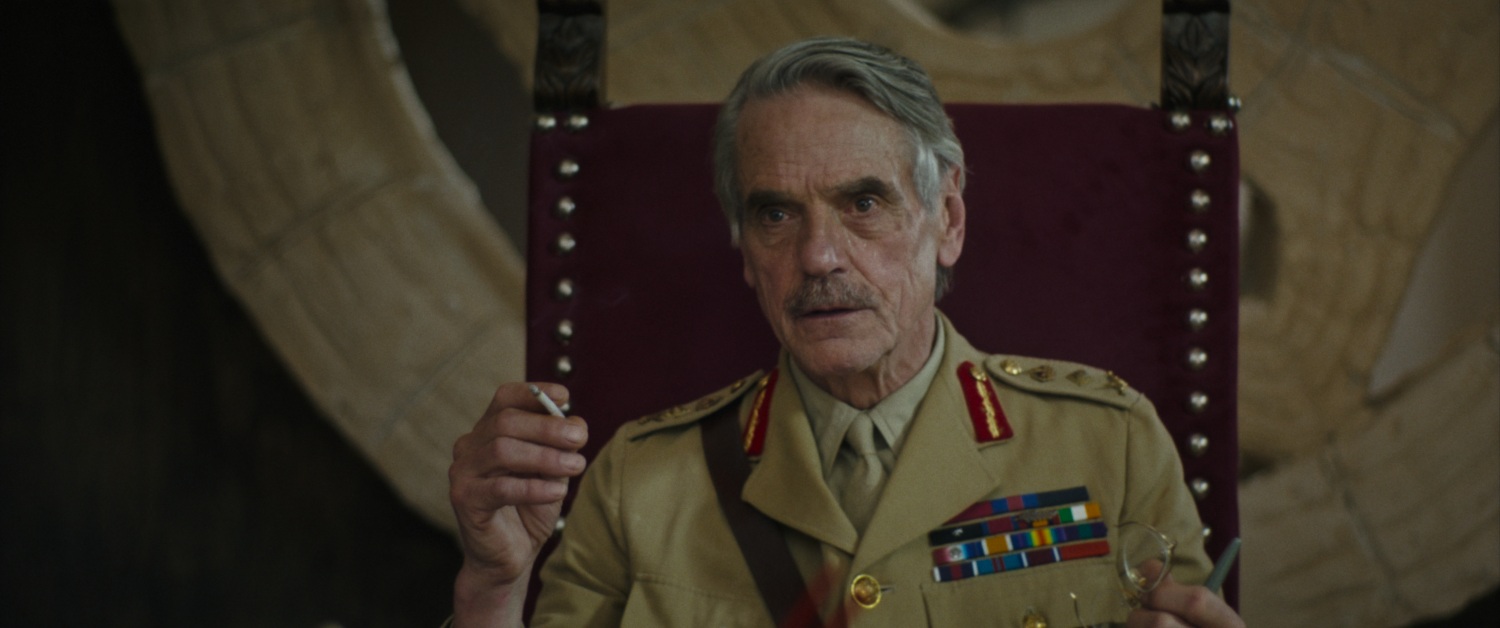
The only one who stands as properly etched out is Robert Aramayo as real-life British captain Orde Wingate, whose zealous proselytising about the worth of his colonial efforts makes for a burning centrepiece for the film’s perspective on the British Empire.
When taken as a whole, there remains a devastating power to the film’s depiction of this period in history. The use of colourised news footage gives a They Shall Not Grow Old-esque effect of living memory on a screen, along with bolstering the depiction of journalistic suppression in the narrative. All the different faces featured throughout galvanise into a collective depiction of the Palestinian people, not as a homogenous ‘they are of one mind’ blob but as various reflections and attitudes regarding their plight.
Palestine 36 is a flawed yet disquieting look at a key moment that dominoed into one of the modern day’s greatest crises. Its expansive scope sometimes exceeds its ability to completely fill in the blanks, but its exacting depiction of the mechanics of colonialism and regularly heartbreaking showings of its effects give its docudrama framing the suitable push needed to break through its shortcomings. There is room for debate and discussion regarding the finer details, and there is something to be said of the BBC co-producing a film this pointed about Britain’s own historic mishandlings, but as a cinematic primer on this event in Palestinian history, it offers much to think about.
