


by Natalie Apostolou
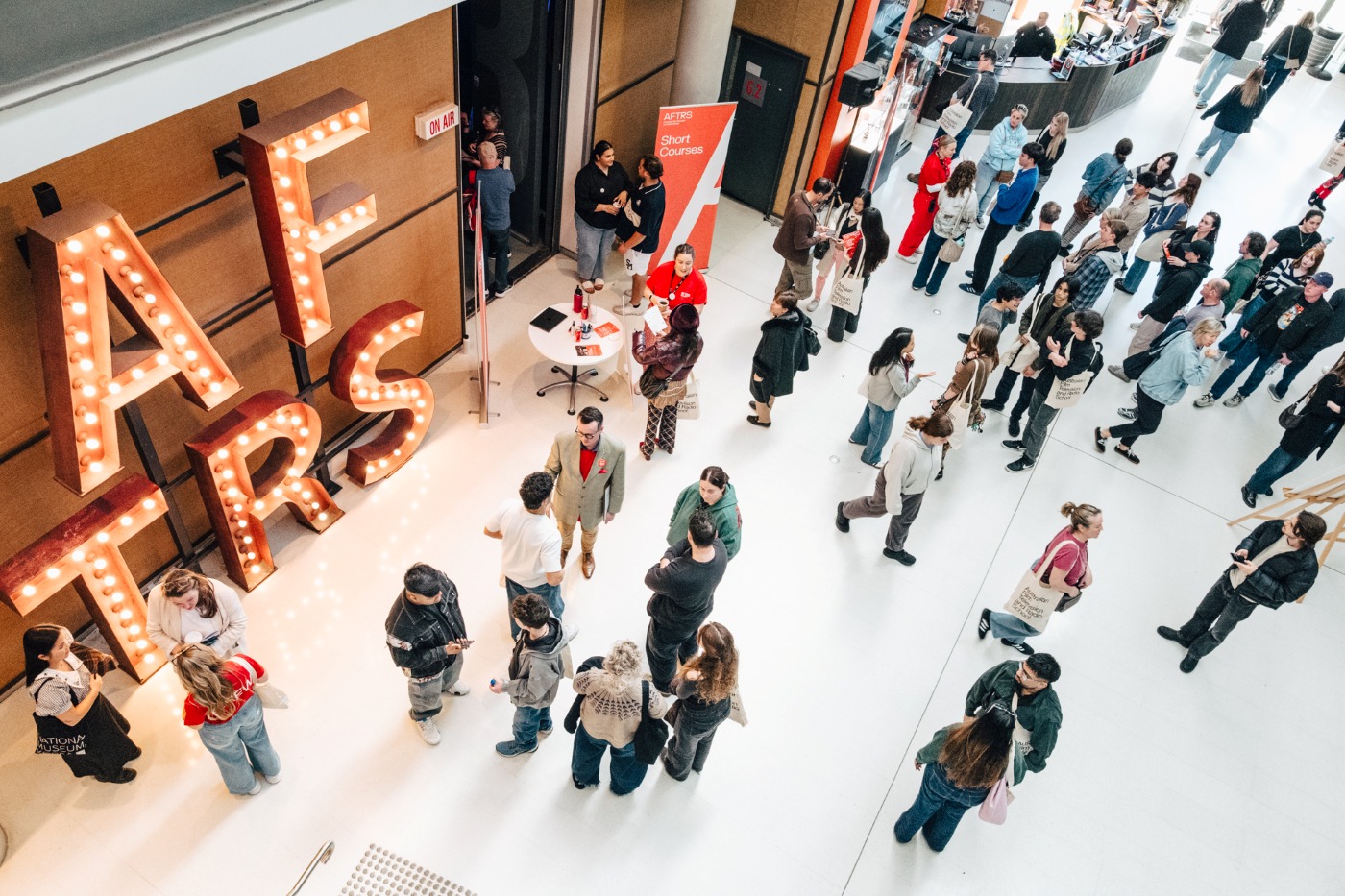
The Australian Film Television and Radio School (AFTRS) may boast impressive screen and broadcast facilities, but its Open Day message reached well beyond studios, sound stages and cutting-edge technology. For aspiring screen professionals, the day was about what happens inside those spaces: the journey into craft, the community that supports creative ambition, and the outcomes that connect students to an ever-changing industry.
FilmInk took a peek inside the creativity furnace on its annual Open Day.
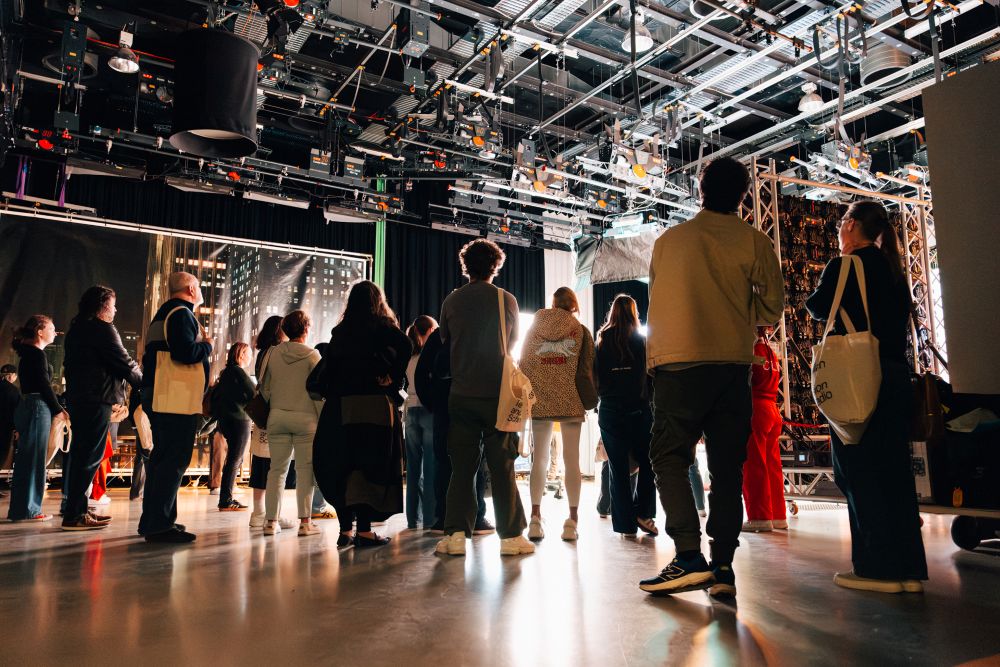
As the School embraces its fifth decade as the national backbone of screen creativity and education, AFTRS CEO Dr Nell Greenwood told aspiring filmmakers that despite changes to platforms, technologies and the ways we engage with content, the principles driving the craft of storytelling remain fundamentally the same.
“We still need exactly the same kind of stories – stories that engage us, compel us and that help us understand who we are, who we can be.”
Narrative and craft excellence remain the cornerstone of the AFTRS industry-driven and pioneering educational approach. Since its inception in 1973, it has evolved with the shifting demands of the screen sector and embraced a collaborative approach to engaging with industry on its course delivery. It’s an interdisciplinary ethos that allows room for students to explore their strengths and interrogate divergent paths.
“There is no single way to build a career in screen. There are many pathways, many roles, and many points of entry. The industry needs people who understand story, and it needs people who understand how sets function, how crews work, how production offices run, how problems are solved under pressure, and how the best creative work is made by people pulling together to realise a shared vision,” Dr Greenwood said.
“It’s a renaissance approach,” adds Bachelor of Arts Screen: Production Course Convenor Dr Marty Murphy. Addressing the Open Day’s Careers Panel, Dr Murphy said the comprehensive three-year degree takes a liberal arts approach, allowing students to engage in a broad range of core subjects in the first year and honing particular discipline areas across the next two years: “You will know your way around an office. You’ll know how to read call sheets, and you’ll be able to work with budgets within the department of whatever you’re doing.”
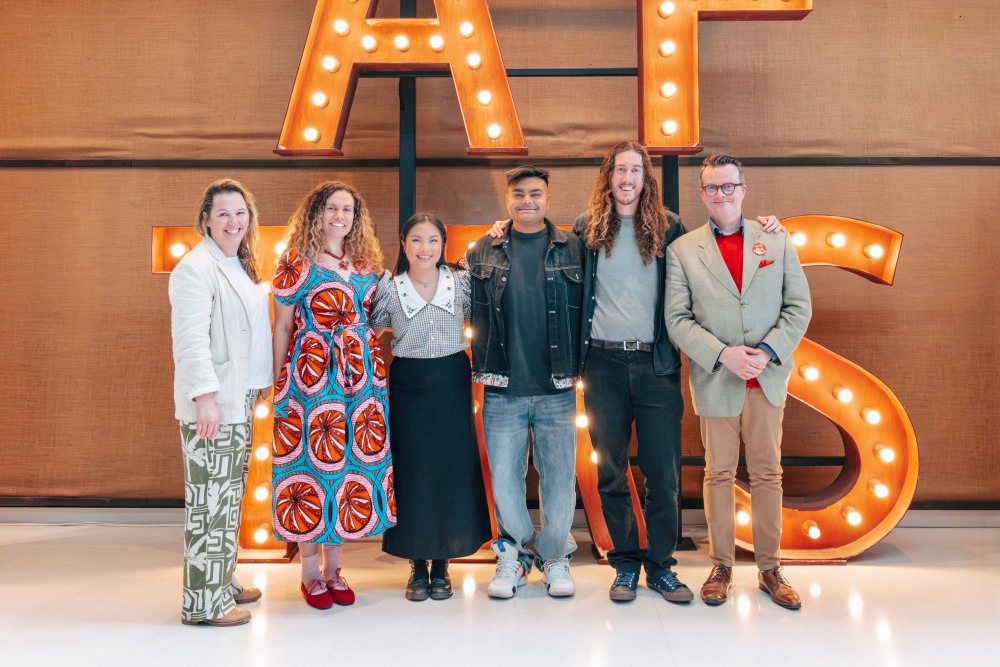
This interdisciplinary and immersive approach to learning has prepared graduates Ben Anderson, Beatrice Tekiko, Kumar Sambhav Gupta and Nicole Hutton-Lewis on a fast-tracked career trajectory. At a time when the screen sector wrestles with various challenges brought on by technology, this quartet have been busy and, in the handful of years since graduating, already have enviable IMBD credits and bursting CVs.
For Anderson, working as an editor, he is seeing heightened demand from the post-production sector, “driven by the enormous amount of social media content production that is demanded by reality TV productions”. Gupta, a DOP, is now a leading data wrangler and advised that this was a key area for growth. “There’s a huge demand for VFX data wranglers, on-set camera and lighting tracking,” Gupta said.
Anderson, who will also be joining AFTRS as a lecturer next year, added, “There’s definitely a hunger, especially in Australia, for independent voices.”
Noting the ascension of genre filmmaking over the last few years with films including Talk to Me, Anderson adds, “We’ve got a very particular voice in the international market, and I think there’s a lot of production companies popping up that are willing to support young filmmakers in all aspects and all creative fields to get their voices out there. A big reason why our films are able to exist is because we’ve got production companies who will jump at anything that is a unique bold vision.”
AFTRS graduates remain highly sought after with Screen Producers Australia recently reporting that 36% of hires made by its members had studied at AFTRS.

The school to studio pipeline for BA students includes the AFTRS Graduate Program which offers competitive 13-week paid internships with production companies and broadcasters which have included the ABC, BBC Studios, Endemol Shine Australia, Eureka Productions, SBS, Warner Bros and Wildbear Entertainment. In 2025, nine internships were awarded to graduate students and late 2026 will see new companies added to the program.
The program has led to full-time employment of many of the interns and for others it has provided a springboard into roles with other companies.
2023 Graduate Program alum Nicole Hutton-Lewis, leveraged her time at the ABC under the Children’s Development Internship to move to a role in the scripted development team at Blackfella Films. Speaking to students, Hutton-Lewis said the internship was invaluable in allowing her to see where she could derive the most benefits in developing her own craft or writing and directing within a production environment.
The demographic mix of AFTRS students is diverse and fluid with short courses, the Graduate Diploma of Radio and Podcasting and the Master of Arts Screen: Business attracting mid- and later-career professionals seeking upskilling or changes in career direction.
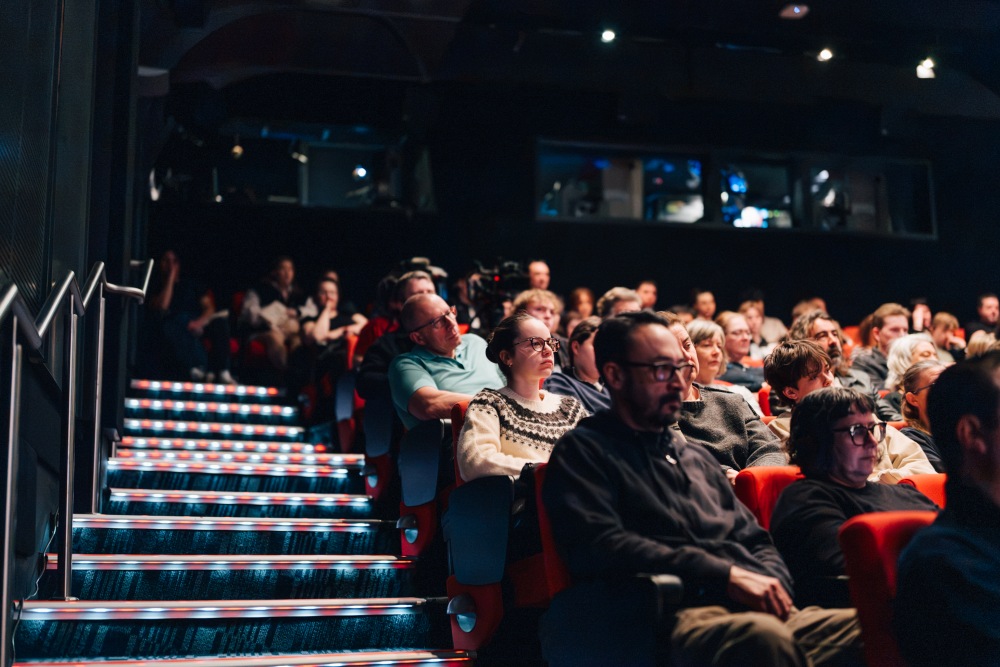
Master of Arts Screen: Business Course Convenor Peter Herbert told FilmInk the degree was transformational for screen professionals, whether they were already in the sector or in an adjacent field.
“The MASB is for people who are mid-career. sometimes earlier or later, who have a passion and an enthusiasm for the business and need to pivot. We provide that pivot,” Herbert said.
The one-year degree, with a bespoke intake of up to 20, is designed for the evolving industry and is founded on elevating financial, entrepreneurial and increasingly data driven skills.
“We deal basically in entrepreneurial finance, where we teach financing from that key, essentially entrepreneurial perspective. We teach a lot of technology and innovation, and we are teaching more and more of that because the world is dominated by it.”
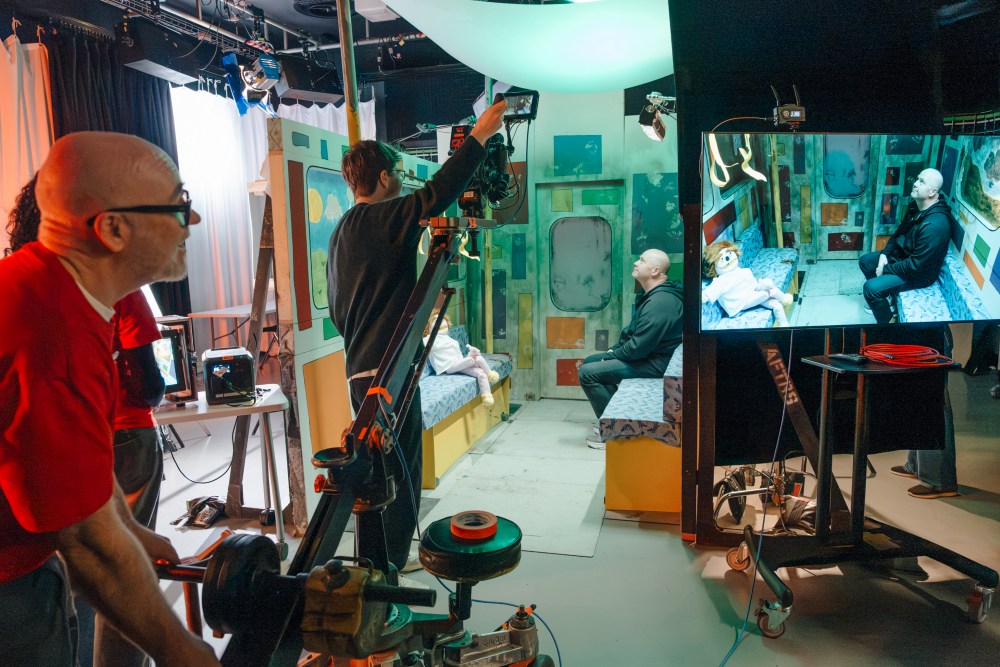
The MASB attracts a wide variety of practitioners ranging from lawyers, school teachers, marketers and casting agents, “some from areas that are allied to our business, and we provide almost a bespoke pathway to project outcomes, business outcomes that accelerate their careers,” Herbert explained.
A core intent of the course, Herbert said, was to globalise the vision of the student and future proof their approach. “We teach strategic thinking, how to deal with the multiple markets and multiple platforms that determine the future of your businesses, your projects, your outcomes. We are unique here in Australia, and if you really measure this up against the rest of the world, we’re pretty special, and we’ve been doing this for a couple of decades.”
Beyond the buzz of Open Day, the foyer filled with alumni awards, the impressive studios, equipment and facilities, AFTRS clearly shows how it offers something more enduring: a glimpse of how it is training creative practitioners who are ready to meet the needs of a changing industry while keeping the fundamental elements of story, craft and collaboration at its centre.
If you missed visiting AFTRS on Open Day, you can watch this Campus Tour video, or experience the facilities first-hand on an AFTRS campus tour. Tours generally run on Wednesdays and offer a behind-the-scenes look at the purpose-built spaces and industry-standard facilities. Make a booking now >>
Photos by Flore Vallery-Radot
