


by Bianca Jimenez
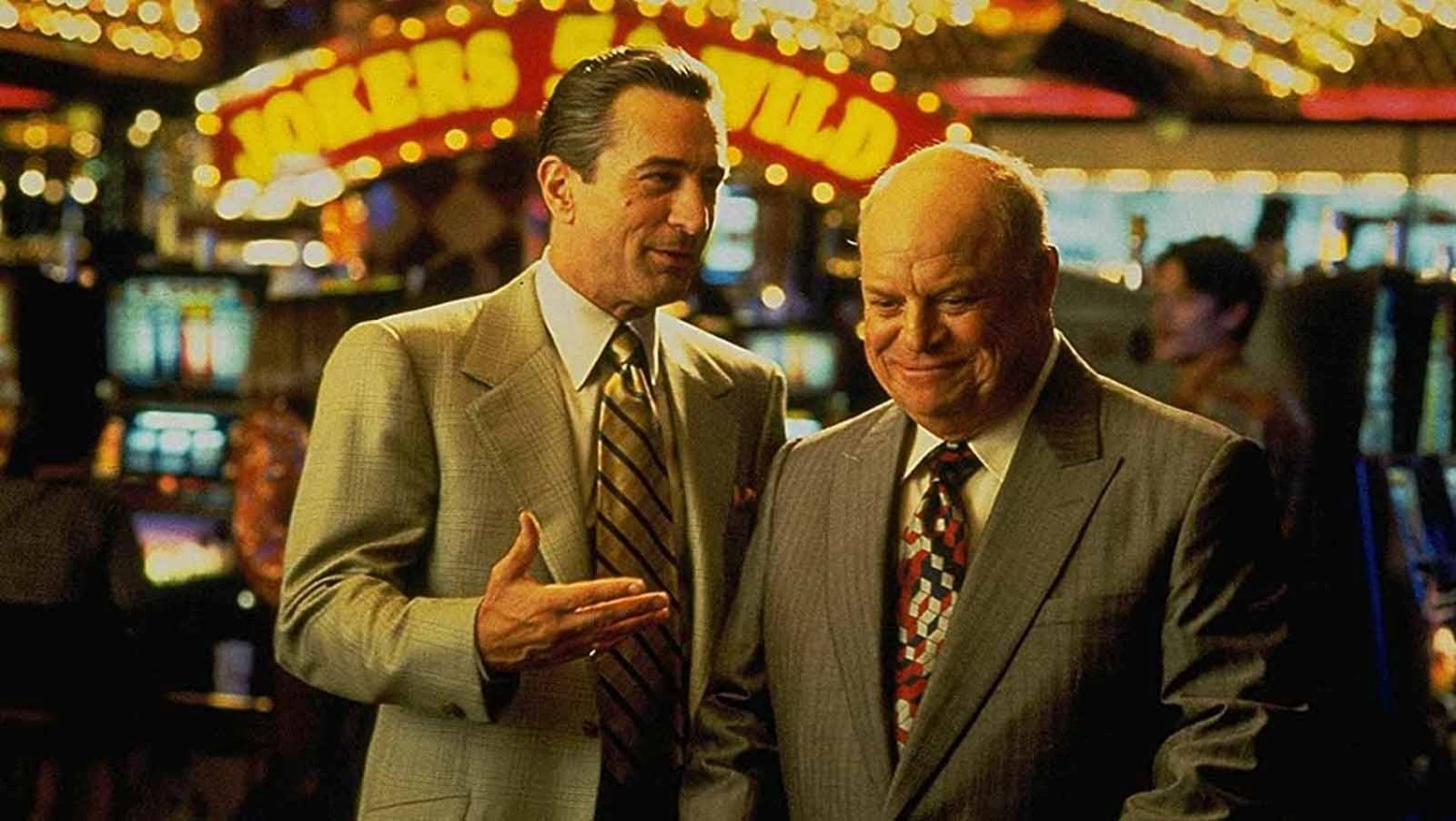
Nobody has ever filmed a poker machine the way Scorsese films a card table. Casino (1995) opens with Ace Rothstein rising over the Tangiers floor like a saint in a stained-glass window, and from that shot onward cinema has been running a quiet con of its own. The movie casino is a place governed by story logic rather than mathematics, and it is one of the most durable lies on screen. Also one of the most enjoyable. It helps to know exactly how the trick is done.
The comeback is an editing decision
Rounders, Casino Royale, half of the Ocean’s franchise: a hero down to the felt, one hand deciding everything. Real gambling is variance spread across hours, which is precisely why films cannot show it honestly. The montage does the maths for the protagonist. Cut from despair to the river card and the audience experiences a probability curve as a character arc. The rare film that refuses this shortcut is Uncut Gems, which builds its whole engine out of the sweat between placing a bet and learning its result. That interval, stretched until it hurts, is what gambling actually is. Time, not moments. Most directors compress the interval because the interval is where the house lives.
Why movies love blackjack and ignore the machines
Cinema shoots table games because tables photograph decisions. Poker is reading faces, so it is drama. Blackjack is counting, so it is genius, which is why Rain Man and 21 both reach for it. Roulette compresses fate into a single bouncing object, and Bond can lean on the baize while doing it. A slot machine offers a director nothing: no opponent, no visible skill, no reason for a close-up beyond the reels themselves.
Here is the joke, though. Slots are the actual economy of gambling, the revenue engine of the entire industry, produced in the thousands by studios most filmgoers have never heard of. People who catalogue this world for a living see the imbalance daily; the editorial team at Search-Casino maintains a demo library of more than 4,300 slot titles, and ten minutes of browsing it says more about what gambling looks like in 2026 than the whole Ocean’s franchise. For Australians, the gap is even stranger. This country holds roughly a fifth of the world’s poker machines, yet the pub pokie has no Hollywood mythology at all. The Tangiers gets the tracking shot. The TAB corner gets nothing.
The scenes every casino movie cuts
James Bond has never uploaded a utility bill. Nobody in The Hangover sets a deposit limit, and no montage has ever lingered on a self-exclusion form. The unphotogenic machinery of modern regulated gambling, identity checks, withdrawal verification, session reminders, is anti-cinematic by nature, so the movie casino stays frozen somewhere around 1978 regardless of when the film was shot. The consequence is subtle but real: audiences inherit a picture of gambling where the only risk is dramatic risk, the kind a jawline and nerve can beat, and none of the procedural friction that actually defines the experience now exists.
Television did what cinema would not
The one screen that ever showed gambling honestly was not a cinema screen. When the hole-card camera arrived and broadcasters began printing live win probabilities beside players’ names, televised poker turned into a maths lesson disguised as sport. Audiences watched Chris Moneymaker, an accountant who had qualified online for 86 dollars, grind through genuine variance to the 2003 world title, and the game exploded precisely because the numbers were visible. No feature film has ever dared to put an equity percentage on screen during a climactic hand. It would collapse the myth of the read, the stare, the destiny card. Television embraced the percentage and minted more real players than a century of movie cool ever managed, which tells you what the movie casino is actually for. It was never reportage. It is opera.
Why the lie keeps working
Casino stories are control fantasies. Gambling on screen is a metaphor for risk, nerve, and reading the world correctly, and the mathematics would break the metaphor in a single scene. What makes Casino great cinema is that Scorsese confesses the con while performing it. Ace’s voiceover explains the edge outright, the longer they play, the more they lose, and the film still seduces you with the lights for three hours. That tension between the stated truth and the gorgeous image is the whole genre, and it is why the genre survives every generation of viewers who technically know better.
Enjoy the movies. Just do not mistake them for a manual, because the house that always wins was never the one on screen.
If gambling stops being entertainment for you or someone close to you, Gambling Help Online offers free, confidential support around the clock, Australia-wide. 18+.
