


by Natalie Apostolou
The microdrama sector continues to spark global debate, as the experimental phase of the format courts a swathe of startups and spinoffs at the same time as many early production adopters are abandoning efforts.
Forecasts from UK research outfit, Omdia, anticipate the microdrama market to hit US$14b in global revenues by the close of 2026, while Media Partners Asia (MPA) claim that the ex-China microdrama market alone will reach US$4.2b this year.
As eyeballs and hype initially gravitated to the global microdrama phenomenon in the core markets of China, North America, India and Indonesia, it is clear that a key challenge to its longevity and commercial viability is not just about attracting audience but capturing long-term engagement with high quality production values.
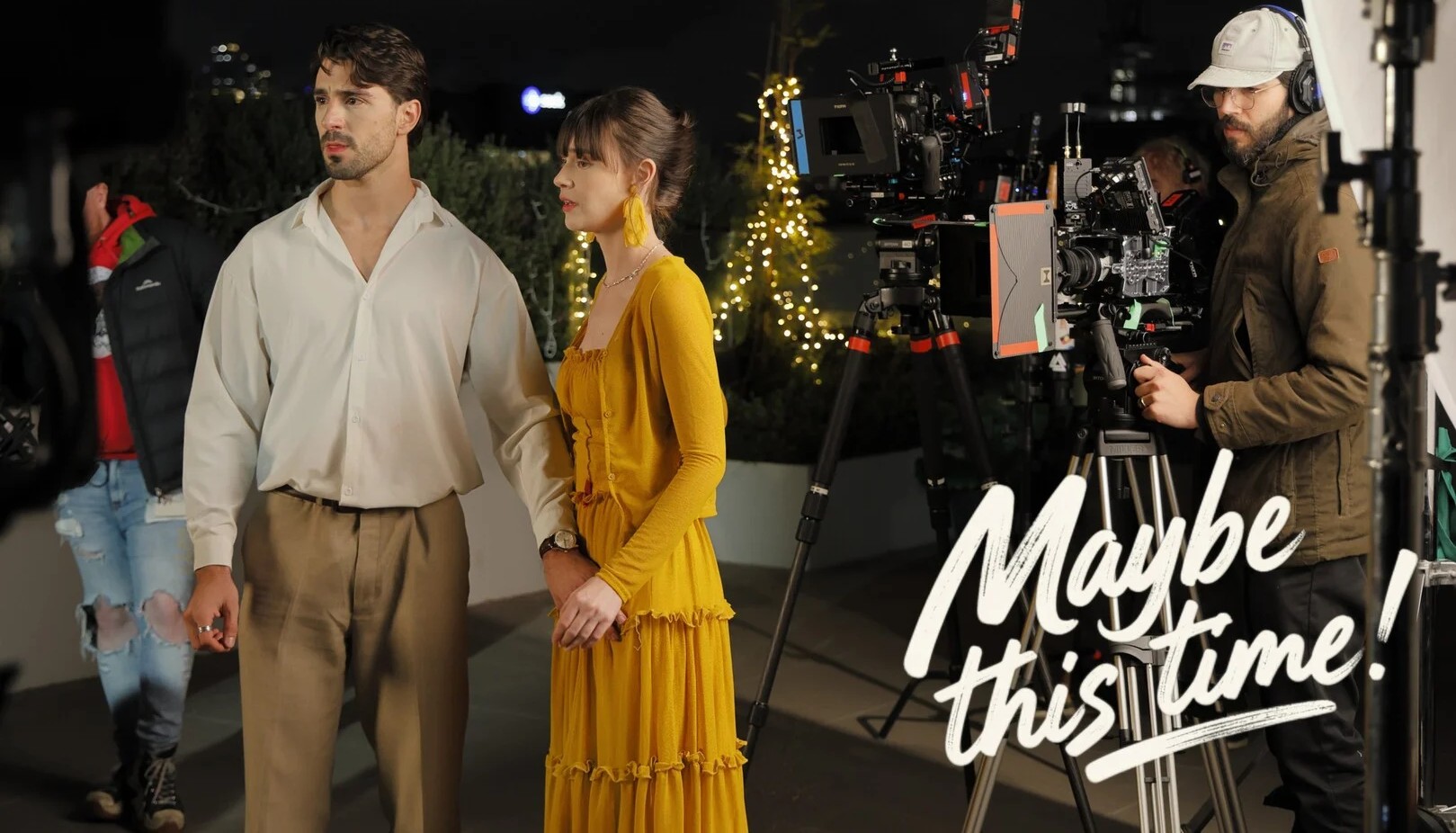
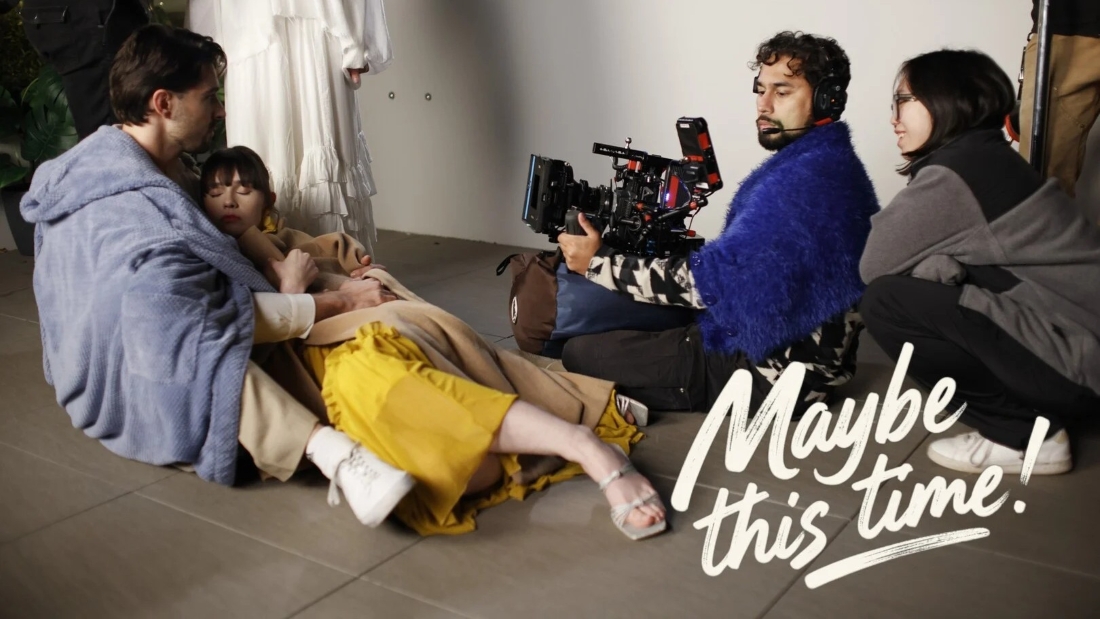
Australian commercial director and cinematographer, Hossein Khodabandehloo, is exploring the micro entertainment genre, shooting Maybe This Time, a 61 x 2 min romantic drama vertical series.
FilmInk explores Khodabandehloo’s creative approach and speaks with Blackmagic Design Director of Sales Operations Bob Caniglia, on the technical aspects of the evolving vertical sector.
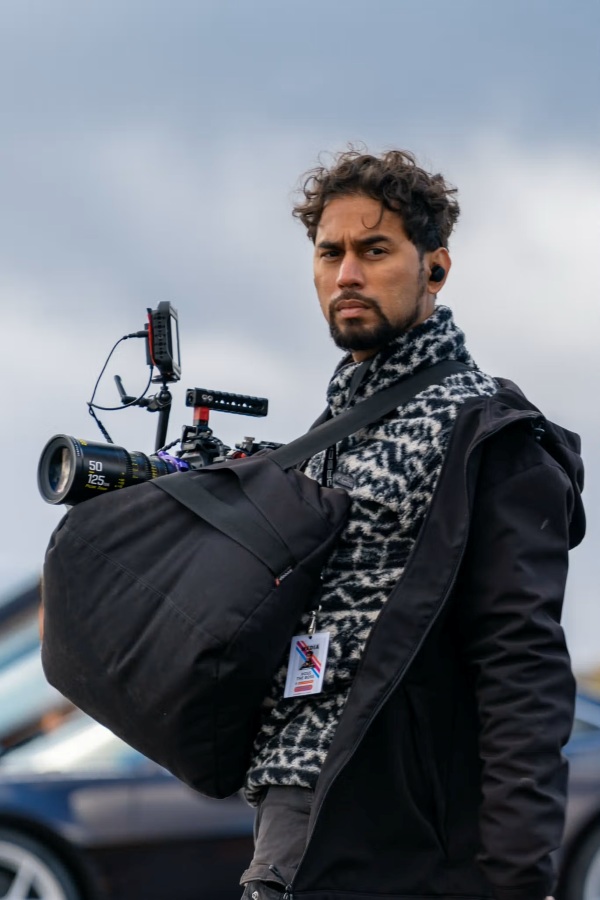 Hossein, you have been working across the commercial and creative narrative space. How has vertical drama changed your approach to production?
Hossein Khodabandehloo: “Vertical drama has made me a much faster and more decisive filmmaker. The compressed schedules force you to focus on what really matters creatively and make confident decisions without overthinking. Working under those constraints has sharpened my instincts, improved my communication with cast and crew, and ultimately made me a stronger director and cinematographer across all formats.”
Are there enough experienced production teams in the space in Australia? Where is the training coming from?
HK: “Not yet. Australia is still in the early stages of developing a dedicated vertical drama industry, largely because demand hasn’t reached the scale seen in North America or Asia. Most crews come from traditional film, television or commercial production. While those skills are highly transferable, vertical drama has its own language, pace and priorities. The best training currently comes through doing the work itself, as the production model is quite different from conventional scripted production.”
Talk us through the timeline ecosystem of creating a microdrama and what is saved in terms of production costs and time to delivery versus the traditional approach.
HK: “A microdrama can go from script to delivery in as little as two to three months, compared to the much longer timelines of traditional television. Production costs are significantly lower, while successful titles can generate strong returns because they’re designed for rapid audience engagement.”
What are the challenges of shooting and editing at a blitzkrieg pace?
HK: “The biggest challenge is post-production. Editorial, sound and finishing all happen at an incredibly fast pace, which is why many productions outsource post to countries that already have established vertical drama workflows. On set, the only way to succeed is through meticulous preparation. Every department needs to be aligned before the cameras roll because there’s very little room to solve problems later.”
 Bob, what are the changes in workflow and project timing that vertical-first production is facilitating?
Bob Caniglia: “Most vertical films, in particular vertical microdramas, have similar formats. Full length films that are broken down into one or two minute episodes. One of the hallmarks of microdramas are an immediate emotional shock at the start of each episode and then cliffhangers at the end. Each episode has to have some sort of overview of what has happened already. Basically, grab and keep the attention of the viewer but also know that the viewer may not get back to the film anytime soon or is starting in the middle.
“At a business level, there has never been a film industry that has been this competitive. There are dozens of vertical microdrama services around the world, tens of thousands of films already and hundreds of productions happening in the US on any given day. So, they need to be made fast but also stand out. Many of our customers are doing these productions in 2 to 4 weeks. A week or two of shooting, often 12-15 pages of script a day. Then, post production for a week or two at most. What this means for production and post professionals: first, you have to rethink your way of telling stories, and second, you have to be as efficient as possible. Anything that adds unnecessary time and tasks is unacceptable.”
Where are your productions being consumed (platforms and geographically)? Do you believe there is an Australian audience appetite for this format, or is the industry being developed with global audiences in mind?
HK: “Most of the audience for my work is currently in Asia and North America through dedicated vertical streaming platforms. That said, I’ve started seeing more Australians discovering and engaging with the format. I think the audience here is steadily growing, particularly as younger viewers become increasingly comfortable consuming premium scripted stories on their phones. While the industry has largely been built with global audiences in mind, I believe Australia has an opportunity to develop its own voice within the format.”
We have seen a backlash in Europe against the Asian-styled, melodramatic storylines, with many calling for microdrama to “grow up” with more sophisticated narratives and higher production values. Is Australia ready for this? Where do we sit on the sophistication scale?
HK: “I think Australia is well positioned for that evolution. Australian storytelling has always been grounded in strong character work and naturalistic performances, which could bring something genuinely fresh to the vertical format. The melodrama that initially defined microdramas helped establish the market, but as audiences mature, they’re looking for more nuanced storytelling without sacrificing pace or entertainment. Australia can contribute stories that feel authentic, cinematic and emotionally sophisticated while still embracing the format’s unique rhythm.”
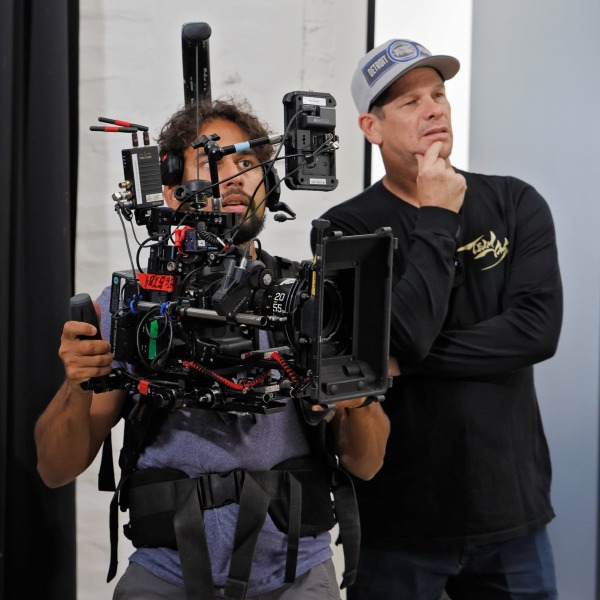 What genres are you excited about developing for this format?
HK: “While China is increasingly shifting its focus towards AI-led vertical dramas, I think there’s a real opportunity for the rest of the world to take the format in a different direction. I’m particularly excited by grounded dramas, thrillers and character-driven relationship stories that feel authentic and emotionally rich. I also think documentary-inspired scripted storytelling has huge potential, bringing realism and emotional authenticity into a format that’s traditionally been more heightened. As the medium evolves, I’d love to see more ambitious genre storytelling that combines cinematic craft with the accessibility and momentum that make vertical dramas so compelling.”
Bob, what is your advice for emerging or pivoting producers entering the vertical micro production space on the best approach to technology/equipment investment?
BC: “Keep an open mind and understand that the technology is easily available. This is one of the fastest growing film markets and these films are being made all around the world. It is a huge opportunity, and you do not have to choose to be either a vertical or a more traditional story teller. Go out and find the cameras and post workflows that let you create in whatever format you need.”
What are the technical challenges to this accelerated production process of vertical drama and how are Blackmagic tools solving these?
BC: “You use the same planning and creative processes vertically as you would with any type of filmmaking, and the technology to do that is available. Just because most cameras have been used primarily for horizontal work does not mean shooting vertically is some amazing new frontier.
“But there are challenges if you think every camera will easily shoot vertically. It is not just, turn your camera on its side and shoot. A camera’s on screen HUD needs to rotate with it so that the camera operator can see frame rate and shutter angle. And it needs to show frame guides, so you know what is going to stay in a shot at the different aspect ratios. Also, smaller sensor cameras can be limiting. Cameras with large full frame sensors let you work in a variety of formats and aspect ratios, which will let you pull a beautiful vertical image without cropping.
“Blackmagic URSA Cine and PYXIS large format camera lines are perfect for capturing vertical images. Using the full area of these camera’s sensors gives a unique open gate 3:2 image which also lets you reframe shots in post production. The images always maintain unprecedented resolution and quality for colour, keying, compositing, reframing, stabilisation and tracking in HD, 4K, 6K, 8K or even 12K. Also, Blackmagic URSA Cine, PYXIS and Pocket Cinema Camera models have the ability rotate the on screen HUD.
“With all Blackmagic Design cameras, you can easily import your files into DaVinci Resolve, where clips can be automatically tagged as vertical so they appear correctly in your timeline. Once you’ve finished your project, it’s easy to upload to your channel with direct exporting to sites like TikTok and YouTube.
“DaVinci Resolve is also one of the most used post production solutions in the vertical filmmaking world already. Having high end editing, colour correction, audio and VFX in a single solution greatly improves efficiency.”
