



by Nataliia Serebriakova
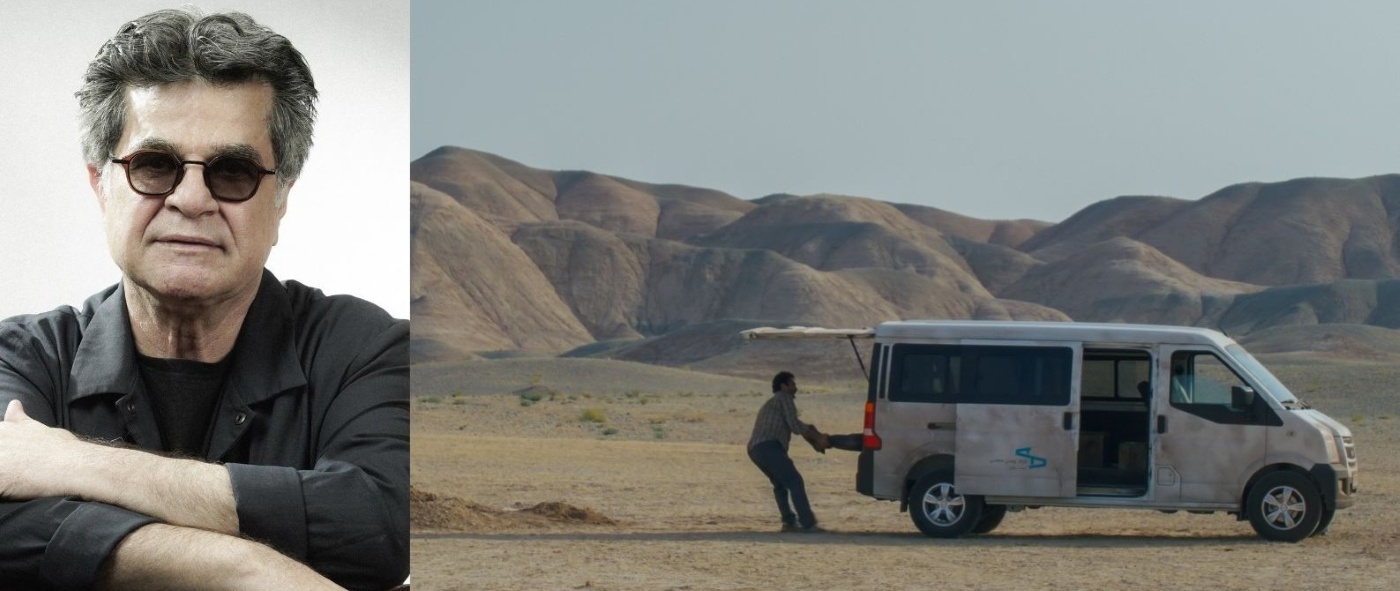
There is a particular kind of fatigue that settles over a filmmaker once his signature has been noticed too many times, and Jafar Panahi, joining a press conference for It Was Just an Accident alongside his interpreter Shayda, lets that fatigue speak for itself.
Asked once again about the moving vehicles that recur through his work, he answers almost impatiently: “I don’t know why I keep getting asked this question about my use of cars or vehicles. The truth is that I really couldn’t find another medium or another thing to put that big box in which the body was lying. And is there any film that you see these days in which you don’t see cars or moving vehicles? I think people have become a little too sensitive about my use of vehicles. And maybe people think that it must be a symbol or something, but it doesn’t represent it. Of course, anyone can have the interpretation they wish to have and it’s up to them.”
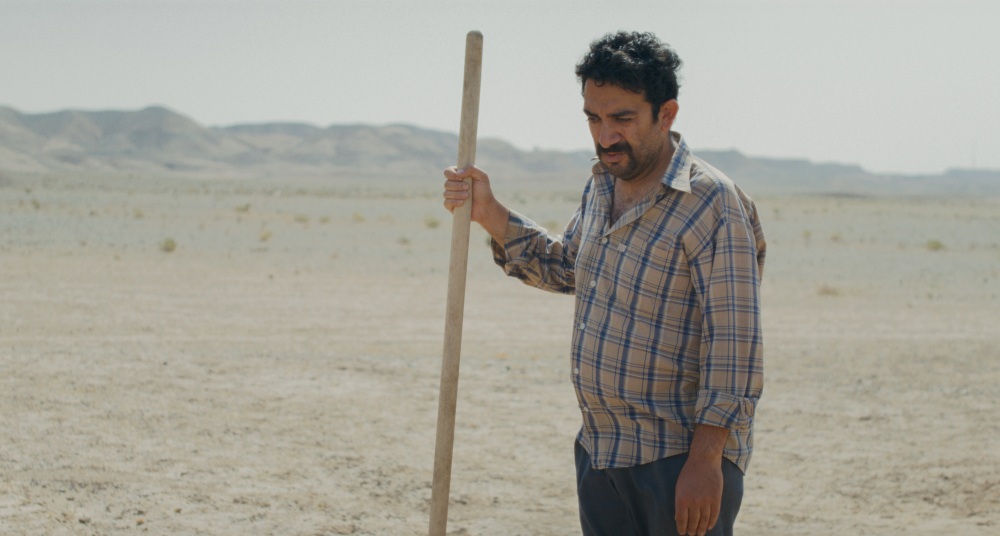
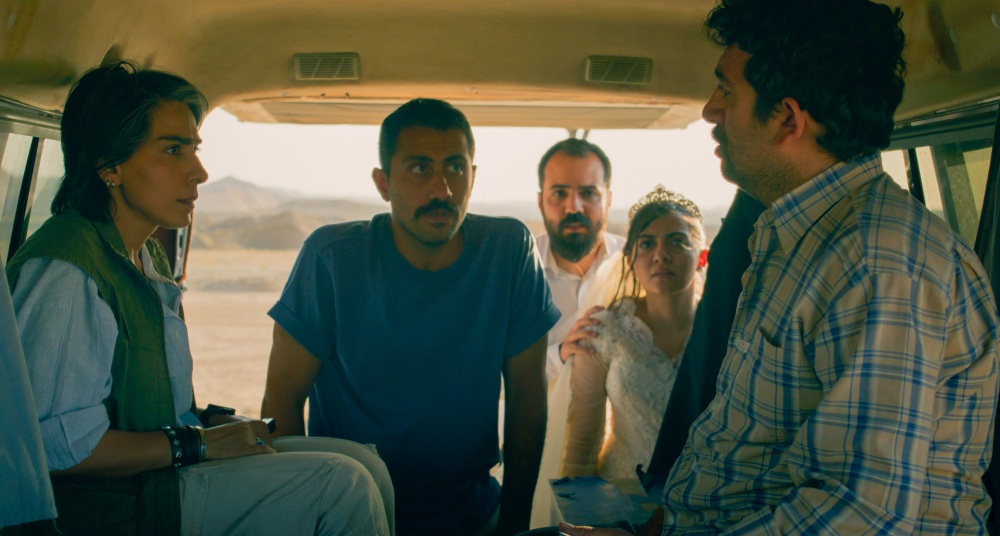
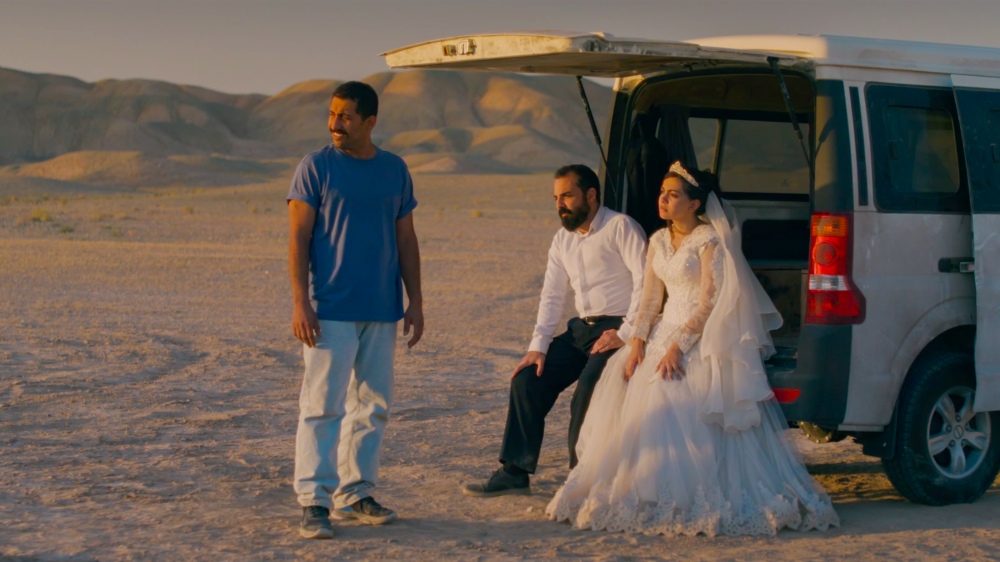
He adds, almost as evidence for the defence, that the film actually uses cars less than in his earlier work: “In this film, actually, it has not been used more than 30 or 40 percent. I only had to do that in a taxi, and it was because of the content.” And then, pointedly: “If you pay closer attention, you’ll see that there are scenes in which we’re not at all in the car. For example, the desert, the tree, the parking lot in which the two officers had come, the ATM, the hospital. There are many places in which we’re not in the car.”
On the film’s most punishing sequence — a static medium shot held for thirteen minutes on the face of an interrogator finally made visible after being discussed, but never seen, for the length of the film — Panahi describes not a triumph but a crisis of understanding his own character: “It turned out to be our most difficult shot, because the performance that the actor was giving in those thirteen minutes had to be so perfect that even if one or two seconds of it were missing, the entire shot would be ruined. I had a few takes of that shot one night until the morning, and I still did not have a good feeling about it. I kept wondering what the problem was. I was wondering if it is the acting, or if there is another issue, then I realised it’s actually — the problem is actually me, because I did not know that character well enough, because I had not dealt with interrogators enough to know them well.”
His solution was to bring in a friend from prison: “I asked him to come on the set and tell us, according to his experience, when an interrogator would act. In what way? When would an interrogator get angry? When would he get indifferent? When would he crumble down? When would he become furious? When would he manipulate? When these points were given to the actor, because his performance and his acting is so good and he’s such a capable actor, with two or three takes the shot came together that night.”
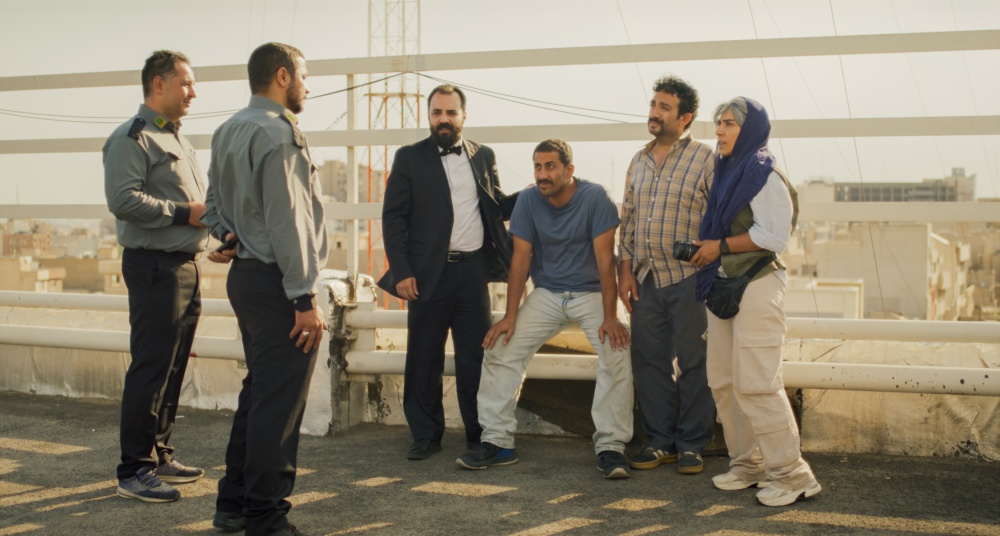
And on the temptation to hedge his bet with coverage? “The people who were on the set suggested that perhaps I should take some other shots of the other characters who were there. And I said I absolutely don’t want to do that because I don’t want to get tempted in the editing process to break the shot down into smaller shots. I just want it to be one shot long. Because the whole impact of this shot was in the fact that it was one take and it was long and it was all one shot. And thankfully we got it together.”
Panahi’s account of the film’s tonal architecture is just as precise. “I did want there to be a tone of humour up until the last 20 minutes of the film,” he explains, “because I wanted there to be a moment of silence in the last 20 minutes so that it would influence and impact the audience in ways that when it ends, they would still be thinking about the film. If the rest of the film acted as the last 20 minutes, you would feel somewhat of a monotonous sense in the film and you would not get shocked at the end.”
He does not pretend that the comedy lands the same way everywhere: “There are cultural differences between the film and the audience that make the film funnier in some parts of the world and not as funny in other parts. For example, in the US and Canada, people laughed more, and in East Asia, they laughed less.”
Pressed on whether the torture testimonies in the film are drawn from real accounts, Panahi answers without flinching, first clarifying the question and then answering it fully. “The topic of torture after the revolution became a lot more intensified. And it was always talked about. It’s not whether at this point the same thing is happening or not, but, of course, these atrocities have happened throughout the life of this regime. We have selected them and we have put them together here. These were mostly stories that I had heard in the prison myself, or my friends, who themselves were also prisoners, and they had heard these stories and they helped me write the script later.”
Asked whether he might someday make films outside Iran, Panahi resists the premise as much as the possibility. “Nothing is impossible. But creative work outside one’s country has to come with some sort of understanding and recognition, and it cannot be on the surface. The trips that I’ve had outside Iran, to festivals or to other work destinations, whether before or now, were never anything deep or extensive. I was always either in hotel rooms or in press conferences. And I’ve just done interviews and returned. So this did not give me any depth of understanding of these places. If I were to make a film outside, it would not be a bad film, but it perhaps would not be a film that I want it to be. My issue is not just to make films. My issue is to make films that I believe in and I want.”
He illustrates the principle with a story from film school, told at length. “When I was a student, I was commissioned to make a short film for the TV. Back then, I loved Hitchcock’s films and I had learned the alphabet of cinema and filmmaking based on Hitchcock’s films. I did make that film, that short film, based on what I had learned. But when I went into the editing process, I realised that even though in theory everything is correct, there is no soul in the film. No one really knew me back then, but I realised that this film cannot be in my filmography and my signature cannot go on it. I went to the lab and I created a situation in which I could steal the negatives of the film. I did steal them. I took them outside and I cut them up and destroyed them so that the film would never be anywhere. Back then, no one knew me, but I was following a standard and a sanctity of cinema that I absolutely believe in. And under no circumstances do I want to overstep that sanctity.”
That refusal has not spared him the disorientation of his current life. “Everything is messed up,” he says. “When I was banned from leaving the country, it was a lot more comfortable, because I could sit and think about my next film. These days, I’m either up in the air, on an airplane or in a room like this. And I can less often have a chance to think about my next film.”
He describes a long-buried project he has not abandoned. “I did have a project that had a script itself. And from 2006 to 2011, I tried very hard to make it and it didn’t happen. It’s a film about war. And I believe that it can be a very good film, because it needs a lot of resources. I could not make it in the same style as I’ve made my other films. I went as far as producing. I even secured a budget for it from within Iran. But in the end, the officials did not allow me to make it. Nowadays, the world is in a state in which anywhere you look there is the smell of war. I believe this is a film that has to be made because it is a humanistic film about war. I think this film might have the potential to be made outside Iran.”
He is, he says, still writing it. “I am working on the script. These days in any moment I get, maybe on the plane and here and there, and it’s near completion, but of course it’s a big production and it needs a lot of resources, a lot of actors, extras, and so it needs work.”
Palme d’Or winner It Was Just an Accident was representing France, not Iran, at the Academy Awards. This sits at the center of a paradox that Panahi has lived with for two decades, and on this subject, he does not mix his words. “It’s been a long time that we have been objecting to the rules of the Academy,” he says, “and we do say that the Academy does not recognise the issues and the problems that the dictatorships and regimes such as the Iranian regime have, the pressures that come from these regimes for filmmakers. It was always one of my wishes for my film to not just be sent to the Oscars from my own country, but to be screened in my own country. But unfortunately, the situation was not as such.”
He recalls, in detail, the mechanism that has blocked him before. “There was always the rule that in order for any film to be sent to the Oscars, the film has to be screened for at least a week in its country of origin, in at least one cinema. I remember this was an issue for my film The Circle, and later on for my film Offside, for which the Sony Pictures Classics wrote a letter to the Iranian officials and asked them to screen the film in Iran so that the film could be sent to the Oscars because they were sure that a lot of good things could happen. But the Iranian officials did not accept to screen Offside for even a week in Iran for it to be sent to the Oscars.”
His conclusion is close to a policy proposal. “This is how we know that the Academy rules may sometimes malfunction and sometimes need to be changed. And this is not just a problem for Iran. It happens in many other countries. For instance, Russia, China, even India sometimes. Either they need to find an actual solution, or they can perhaps dismantle the whole category of international films, because international films should be considered and compete in all the categories.”
By the end, the accounting of the film’s success arrives almost as an afterthought, but Panahi delivers it with the same unadorned candour as everything else. “Over 650,000 people have seen my film just in France. It’s also gaining momentum in other countries. And in the US they’ve told me that it has sold for over $1,150,000. This is all good news and I’m happy as a filmmaker.”
It is the closest thing to triumph that he allows himself in an hour otherwise defined by the discipline of refusing easy narratives, about cars, about exile, about torture, about the Academy, in favour of the harder, more particular truths underneath them.
It Was Just an Accident is streaming now on MUBI
