



by Seth French
Introduction
The entertainment industry has evolved to the point where fictional universes created on the internet can become feature films, television series, game franchises, and multimedia projects. The trend can be seen across horror, science fiction, and gaming communities. Even sports fans have not been left out of this broader entertainment ecosystem, with dedicated platforms covering everything from major sporting events to bookmaker promotions. Readers interested in free bet offers and current bonus opportunities can read more on Legalbet, where various promotional conditions and available bonuses are explained in detail.
Backrooms is one of the most unusual examples of this phenomenon. Unlike traditional franchises that begin as novels, films, or video games, Backrooms started with a single image posted online. Within a few years, that image evolved into a massive collaborative universe with thousands of pages of lore, countless fan projects, millions of views on YouTube, and eventually a theatrical film produced by A24.
The story of Backrooms is not just about horror. It is also a case study of how internet culture can create intellectual properties that rival traditional media franchises in popularity and influence.
Where the Backrooms Concept Originally Came From
The origins of Backrooms are surprisingly simple.
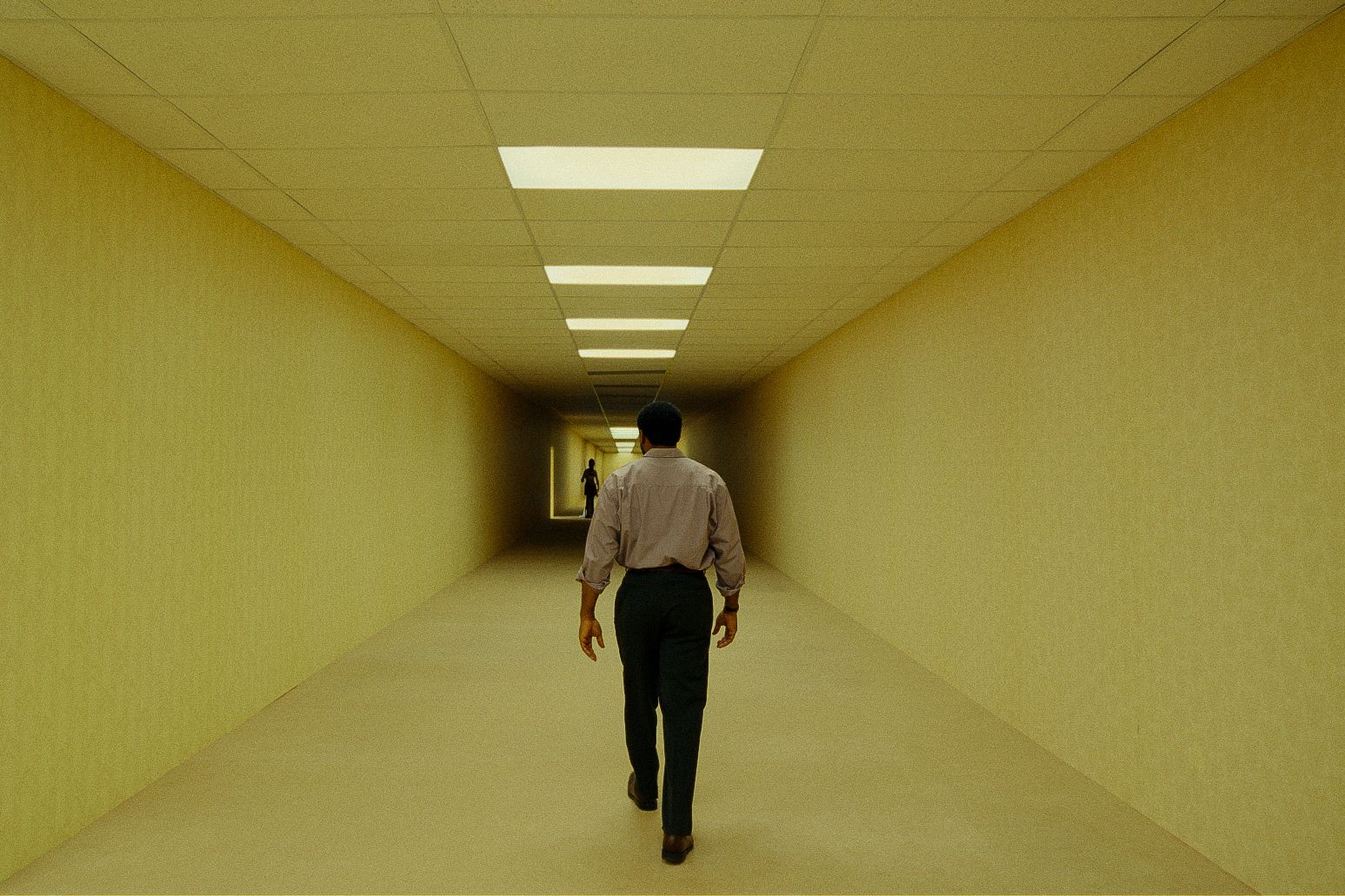
In May 2019, an anonymous user on 4chan posted a photograph showing an empty office-like space with yellow wallpaper, fluorescent lighting, and stained carpet. Alongside the image appeared a short text suggesting that if someone accidentally “noclipped” out of reality, they could end up trapped inside an endless maze of identical rooms.
The idea immediately attracted attention because it relied on atmosphere rather than complex storytelling.
Instead of monsters, weapons, or dramatic action, the original concept focused on isolation, repetition, and uncertainty.
Why the Original Image Became So Popular
Many horror concepts rely on showing a threat.
Backrooms worked differently.
The empty yellow rooms looked familiar but also wrong. People recognised the environment, yet nobody could identify exactly where it was. This feeling became known as a “liminal space,” a location that exists between two recognisable states.
That emotional reaction became the foundation of the entire Backrooms phenomenon.
The Early Community Expansion
The original concept contained only one location.
Soon after, internet users began creating additional levels, creatures, survival guides, and fictional organisations.
The universe expanded rapidly because there was no central authority controlling the lore.
Different communities developed different interpretations, and multiple versions of the Backrooms mythology emerged simultaneously.
How Backrooms Became a Massive Online Universe
By 2020 and 2021, Backrooms had evolved far beyond its original image.
Dedicated wiki projects appeared, documenting hundreds and later thousands of levels. Each level received descriptions, danger ratings, entities, entry methods, and escape routes.
The universe started developing its own internal logic.
Instead of simply wandering through yellow rooms, readers could explore industrial complexes, abandoned cities, endless oceans, frozen landscapes, office towers, and countless other environments.
The Creation of Levels
One of the most important additions to the mythology was the concept of levels.
Level 0 remained the classic yellow office maze.
After that came Level 1, Level 2, Level 3, and eventually thousands of additional locations.
This structure allowed writers to continuously expand the universe without contradicting previous entries.
The Rise of Entities and Organisations
As the lore grew, new creatures appeared.
Entities such as Smilers, Hounds, and Skin-Stealers became recurring parts of the mythology.
The community also introduced survivor groups and organisations. The most famous example is M.E.G. (Major Explorer Group), a fictional organisation dedicated to mapping and studying the Backrooms.
These additions transformed Backrooms from a single horror concept into a functioning fictional world.
Kane Pixels and the Reinvention of Backrooms
The biggest turning point arrived in 2022.
A young creator known as Kane Pixels, whose real name is Kane Parsons, uploaded a short film titled “The Backrooms (Found Footage)” on YouTube.
The video immediately stood out.
Unlike many fan projects, it looked remarkably professional despite being produced by a teenager using tools such as Blender and After Effects.
The Async Research Storyline
Parsons introduced a new interpretation of the mythology.
Instead of focusing on random people accidentally entering the Backrooms, his version centered on a research company called Async.
According to the story, Async developed technology capable of opening portals into another dimension.
This scientific approach gave the universe a more coherent narrative structure while preserving the mystery that made the original concept effective.
Why the YouTube Series Changed Everything
Many people discovered Backrooms through Kane Pixels rather than through the original creepypasta.
His videos accumulated millions of views and helped push the concept into mainstream culture.
By that point, Backrooms was no longer a niche internet story. It had become one of the most recognisable horror properties created online.
Comparing the Film with Established Backrooms Lore
When A24 announced a feature film adaptation directed by Kane Parsons, fans immediately questioned how closely it would follow existing lore.
The answer is somewhere in the middle.
The movie is based primarily on Parsons’ interpretation rather than the broader community-created mythology.
Elements That Match Existing Lore
Several key components remain faithful to established Backrooms concepts.
The film preserves:
- liminal environments;
- impossible architecture;
- feelings of isolation;
- distorted reality;
- unexplained spatial anomalies.
These elements have been central to Backrooms since 2019.
Where the Film Takes Its Own Direction
The movie focuses more heavily on character-driven storytelling.
Rather than attempting to include thousands of community-created levels and entities, the narrative follows a relatively straightforward structure built around mystery and exploration.
This approach makes the film more accessible to audiences unfamiliar with years of online lore.
At the same time, longtime fans can still recognise references to concepts developed throughout the web series.
Critical Reception and Audience Response
One of the most interesting aspects of the Backrooms film is that it avoided becoming a simple internet novelty.
Many online properties struggle when adapted for mainstream audiences. Backrooms achieved a much stronger reception than many observers expected.
What Critics Said
Several major publications praised the film’s atmosphere, visual design, and originality.
The Guardian described it as a “genuinely disturbing conceptual horror film” and highlighted Kane Parsons’ direction.
Other critics emphasized the movie’s ability to create tension through environment rather than relying on conventional jump scares.
According to reports published after release, the film achieved a Metacritic score of 77 and generated broadly positive critical reactions.
Audience Reaction
Audience response was generally strong, although not universally positive.
Many viewers praised the atmosphere and visual execution. Others felt the deliberate pacing was slower than expected.
That divide is not particularly surprising.
Backrooms has always been based on psychological discomfort and environmental horror rather than constant action sequences.
Commercial Success
The commercial results were difficult to ignore.
The film became one of A24’s most successful theatrical releases and opened at the top of the North American box office. Reports indicate opening-weekend revenues far exceeded early industry expectations.
For a project that began as an internet creepypasta, that achievement is remarkable.
What Backrooms Means for the Future of Internet-Created Franchises
Backrooms demonstrates that online communities can produce concepts capable of competing with traditional studio-developed properties.
The franchise began with a single photograph and a few lines of text. It then expanded through community creativity, YouTube storytelling, and eventually major film production.
Kane Parsons deserves significant credit for helping bridge the gap between internet horror and mainstream cinema. His version of the universe gave producers a clear framework that could be adapted into a theatrical experience without losing the unsettling atmosphere that made Backrooms popular in the first place.
For viewers interested in the film, it is worth exploring the earlier stages of the mythology as well. The original creepypasta, the community-created lore, and the Kane Pixels web series all offer slightly different interpretations of the same idea. Together they explain why a simple image of an empty yellow hallway eventually became one of the most successful horror stories born on the internet.
