


by Andrea Baker
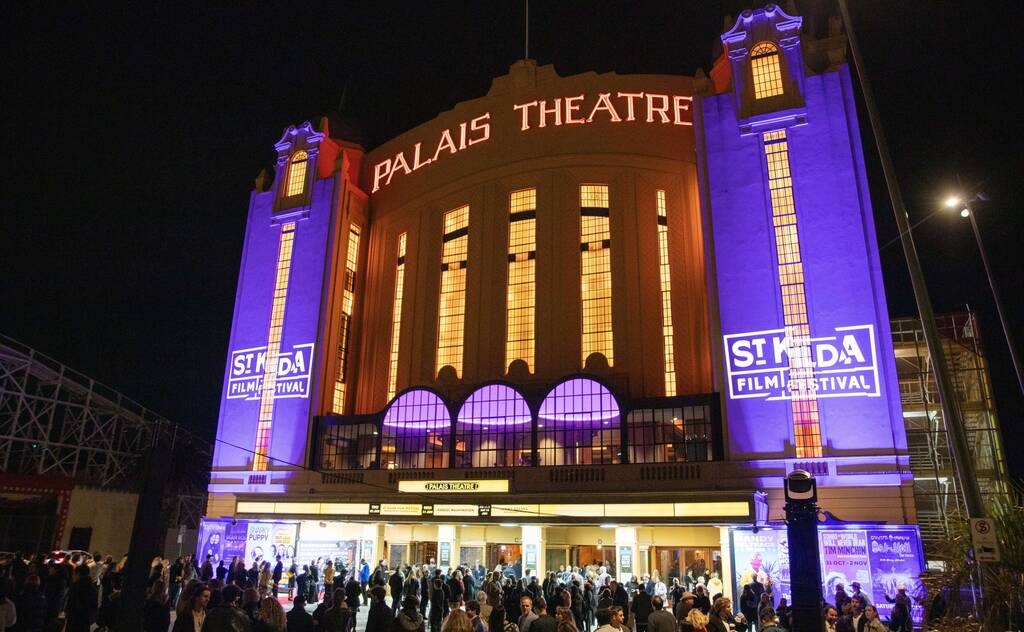
The opening night gala of the 42nd St Kilda Film Festival at the iconic Palais Theatre on Thursday, 4 June, rolled out the red carpet for Australian emerging talent and film fans.
Founded in 1984 by St Kilda councillor Mary Lou Jelbart, the festival has evolved into being a nationally significant cultural event, the largest short film festival in the southern hemisphere, and in recent years, a showcase for Oscar potential.
Accredited by the Academy of Motion Picture Arts and Sciences, “the St Kilda Film Festival is an Academy Awards qualifying event. Award-winning films from the festival are eligible for consideration in the Short Film Awards and Documentary Short sections of the Oscars”.
Of the 960 entries this year, the 11-day program (4-14 June) comprises of 180 short films, the festival director, Richard Sowada, said on opening night. Dubbed the “Saint of Short Film” by FilmInk a few years ago, Sowada is known in Australia’s screen industry as a film curator, writer, and broadcaster for over three decades.
Kicking off the festival, the ten short films showcased at Thursday’s opening gala ranged from comedy, romance, drama, crime/horror, and documentaries.
An audience favourite was a 9-minute First Nations animation, The Fix-It-Man and the Fix-It-Wooman by Nelson Armstrong and Cornelius Ebatarinja. Set in Central Australia’s Alice Springs, it’s a comedic, colourful tale about a man and a ‘wooman’, who are accidentally brought together through their love of dance and “a shared talent for fixing things”.
Romantic horror at its best
Three films on opening night explored the drama of dating. Writers in Love (11mins) by Sarah Joan Wischusen Giles is a cinematically rich, mise-en-scène-driven narrative about two writers caught in a romantic twist, and conflicting ethical views about fact and fiction.
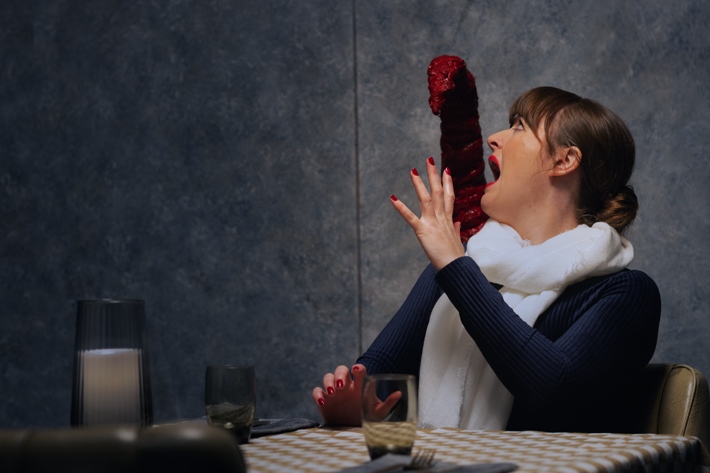 For those weary of the dating grind, look no further than The Fling (4mins) by Jemma Cotter, about two women with huge appetites at a posh restaurant on the prowl for love. Hilariously imaginative and grotesque, this stop-motion queer horror rom-com pays homage to John Carpenter’s The Thing. Like that cult classic, The Fling is an entertaining horror film that is fast, cleverly colourful and exciting from start to finish.
Even your recent hook-up on the Hinge dating app can do you in, as seen in The Intervention (7mins) by Jessica Sofarnos and T.K Williams, a cleverly scripted and well-acted film about a woman who is blindsided by a surprise intervention from her new romantic interest, family and friends.
Generational themes at their rawest
For crime buffs and lovers of social realism, four fiction and two nonfiction films examined the impact of generational trauma. A Stable for Horses (7mins) by Davie Paterson is a vivid, violent look at the Smith Street Sharps, with a bitter-sweet twist.
Hindsight (6mins) by Mikey Hamer deals with spiralling mental health as a socially anxious boy’s chaotic imagination makes buying a video game a difficult process. Parasomina (7mins) by Charlton Lansley, a homage to the days of grainy VHS tapes, is about a reclusive ‘90s data analyst “wandering empty spaces night after night as footsteps trail just behind him”.
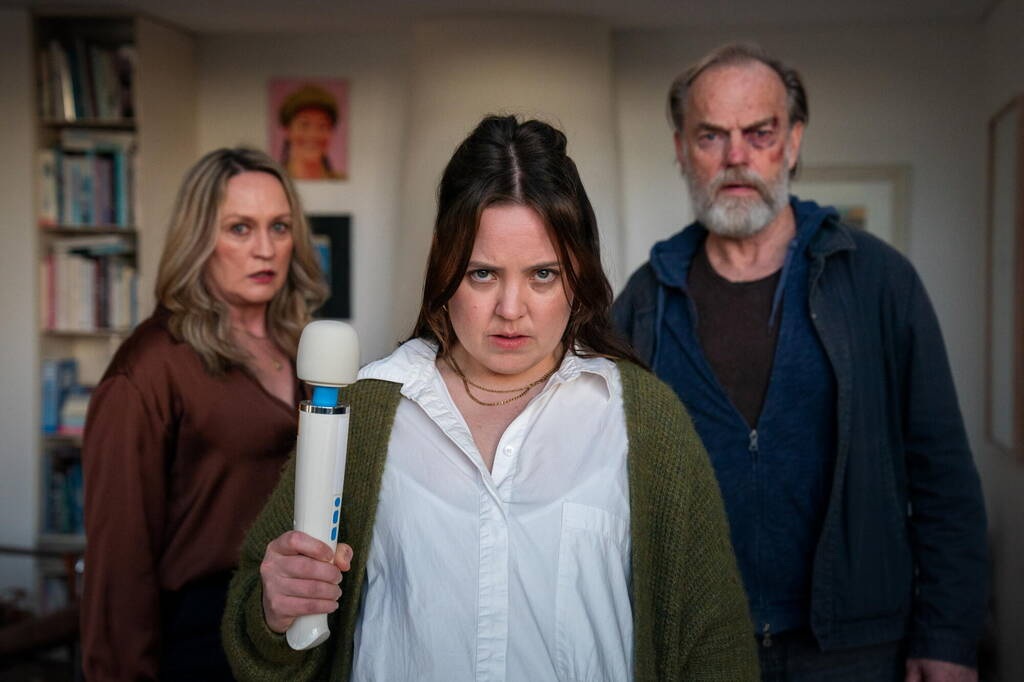
Prominent Australian actors (Heather Mitchell, Helen Thomson, Hugh Weaving, Nikki Shiels, Contessa Treffone) collaborated with their peer, writer/director Matt Day for Baby Shower, which at 13 minutes, was the longest film on opening night. Produced by Mitchell, the story focuses on Heidi’s (Treffone) baby shower, which is attended by friends (e.g. Shiels), but soon descends into chaos when her troubled, estranged father (Weaving) crashes the party.
Documentaries such as Paper Angles (8mins) by director/producer Sebastian Hill-Esbrand is a well-executed story about Mikey Mendoza, who rose from the ashes of generational trauma to become a pro skateboarder and sustainable fashion designer. Ayana (3mins) by Saskia Faniis deals with the grief and guilt tied to a single, first-generation immigrant mother.
Melbourne’s and Australia’s key film industry event
A grassroots cultural event, St Kilda Film Festival attracts filmmakers, actors, critics, and Melbourne’s arts community. Internationally acclaimed filmmakers, including Oscar winners Adam Elliot and Jane Campion, and Australian film heavyweights Matt Saville, Kriv Stenders, Cate Shortland and Richard Lowenstein have had early work showcased through the festival. This year, the festival showcases the voices of more than ten cutting-edge First Peoples filmmakers.
In his speech at Thursday’s opening gala, Sowada highlighted the St Kilda Film Festival’s expansion across multiple St Kilda venues, including the Palais Theatre, Astor Theatre, Victorian Pride Centre, and St Kilda Town Hall. The festival also offers networking opportunities for filmmakers and audiences, and film workshops, concluding with the awards night on 14 June at St Kilda Town Hall.
