



by Jo Stubbings
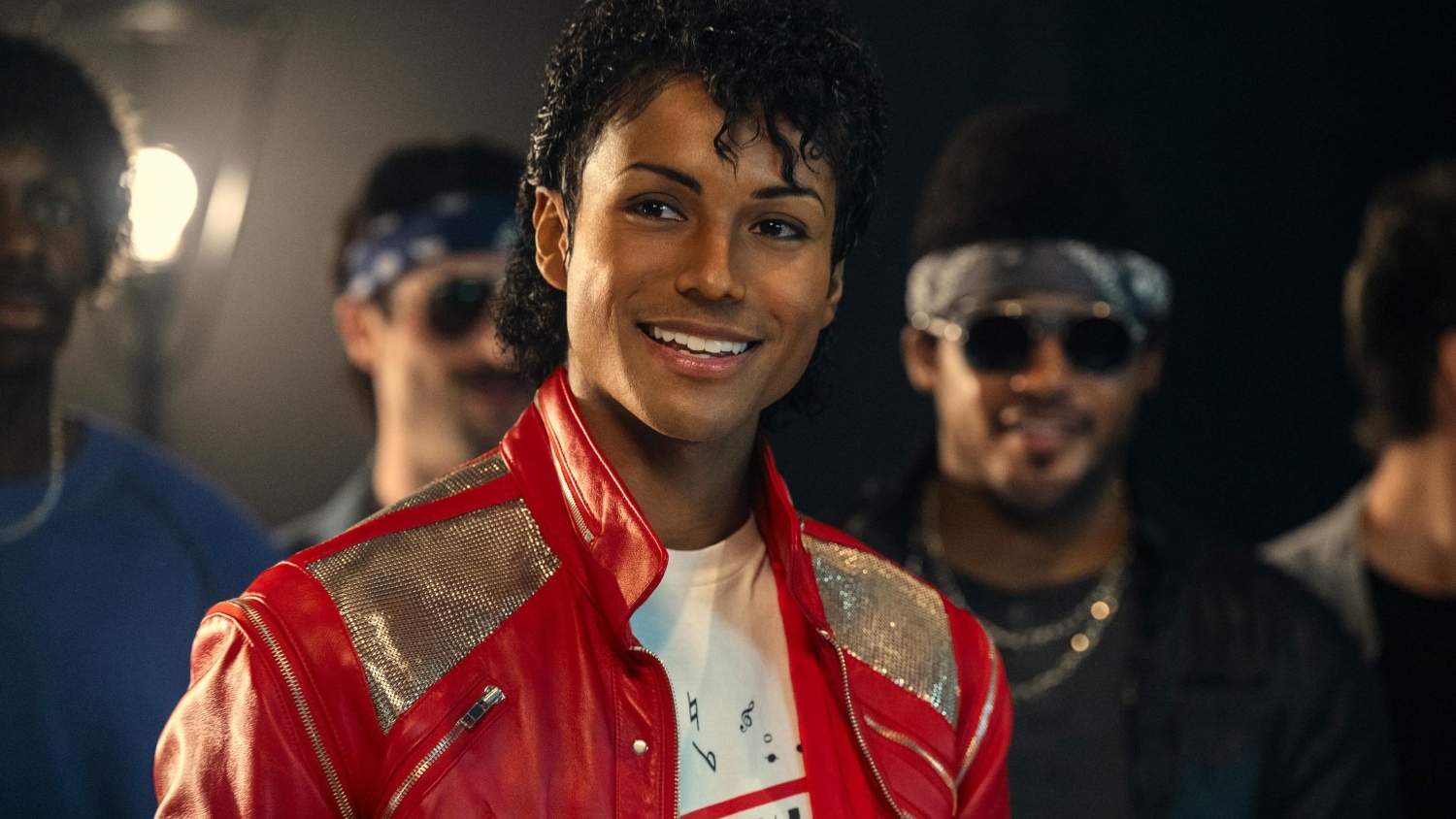
I never thought it would happen, this Michael Jackson juggernaut. According to Hollywood stats, the Michael film is the biggest, fastest, pick-your-own-superlative, of musical biopics. If only Bohemian Rhapsody would move aside. Hits like “Thriller” and “Billie Jean” are back in the charts and whistling north as a consequence. All this despite a shellacking from most film critics and a thumbs-up from Jim Schembri.
I’m remembering the King of Pop’s freefall in 2019. If there were doubts about the dark side, the documentary Leaving Neverland pretty much sealed the deal. Following accusations of Jackson abusing children in the eighties and nineties – the world did a mighty heave. Radio stations in Australia, Canada and New Zealand stopped playing his music. Album sales plummeted. Jackson was, as he so presciently proclaimed, HisTORY. (He always denied the charges.)
So why the 180 now? It can’t be word of mouth; films don’t post record opening weekend numbers on the back of that. It can’t be that audiences don’t know about the abuse accusations – it’s the first thing you think of, isn’t it? – or the reported payouts to young boys over time. It can’t be that fans en masse have forgiven and forgotten.
Until recently, I assumed it was time that had dulled the concern. It’s been seven years since the Neverland documentary. But fresh allegations against Jackson – including a lawsuit filed recently by four members of the Cascio family – remind us of the unthinkable.
There can only be one explanation for the current MJ craze.
The music. Pure and simple. We’re hopelessly drawn to it – as in some twisted Pied Piper trope. (I remember where I was when I first heard “Billie Jean”. In a clothing store cubicle at Chadstone squeezing into a pair of too-tight jeans. The famous 29-second drumbeat came over the speakers. I looked in the mirror. What is this song?!)
Nostalgia for Jackson’s work – not an appetite but a craving – obviously outweighs any doubts or outrage over his alleged actions. Otherwise, people would simply shun the movie or protest outside the cinema.
And the generations who never saw his concerts or heard his music? They’re getting to learn what all the fuss was about. Now, they love the music too.
A side note. The opposite is true of convicted paedophile, Rolf Harris, whose fan base dropped him like a hot potato, forever and amen. With songs like “Tie Me Kangaroo Down, Sport” and albums like Didgereely Do All That, his music – though entertaining at the time – was never going to be enough to save him. (The ABC documentary, Rolf Harris: Primetime Predator is set to air early June.)
According to Dan Reed, director of Leaving Neverland, “I think most people who will go and see the movie [Michael] just literally don’t care”. Nor do they worry about boosting the coffers of the Jackson estate. Nor do they want to be reminded of something that might scupper their fix. Compartmentalising is a beautiful thing. Which raises the question.
Is this okay?
Pleasure versus the pariah is nothing new, of course. John Lennon, creator of “Imagine”, admitted to domestic violence yet remains an icon. “I love humanity; it’s just people I can’t stand,” he once declared.
A few weeks ago, I found a stack of old LPs in the garage and flicked through their info-laden, dog-eared covers. T-Rex, Earth Wind and Fire, Santana, Santana, Santana, and then my finger stopped at … Gary Glitter, or rather, Glitter. It’s the one with the big purple star on the front against a glittery blue background. I loved that album.
Paul Gadd, his real name, was sentenced in 2015 to 15 years in prison for the sexual abuse of three young people between 1975 and 1980.
I shuck the vinyl onto the turntable and drop the needle onto “Rock and Roll Part 2”.
The familiar drumbeat explodes from the top, then the electric guitar kicks in. Simple. Primal. And suddenly I’m transported back to my 16-year-old self (simple, primal). And dating my first love who’s five years older than me, drives a panel van, has an afro and gives my mother a heart attack every time she thinks of him.
Gary Glitter was the purest sonic symbol of my youth.
But back to the question that haunts me. Is it okay to love the music of a pariah?
Well, the music doesn’t change, does it? It’s still the gem it always was. And if the pariah’s no longer alive, you might even treasure it more. The older I get, the more I appreciate Glitter’s music simply because it presses my good-time buttons – the glam-rock chick I was, the freedom I felt, the dancing like no one’s watching.
And I know that this music is finite and therefore precious.
Dismissing something that once made me happy won’t change the status quo. Nor will it stop my pariah’s crimes. Nor should I carry them on my back like a toxic load.
And so, like millions of MJ followers, I’ll continue to move when I hear the beat that made me a fan of this thumping music.
But one thing’s for sure. I’ll always feel gutted when I think about the man.
