


by Annette Basile
Worth: $17.00
FilmInk rates movies out of $20 — the score indicates the amount we believe a ticket to the movie to be worth
Intro:
… hauntingly beautiful.
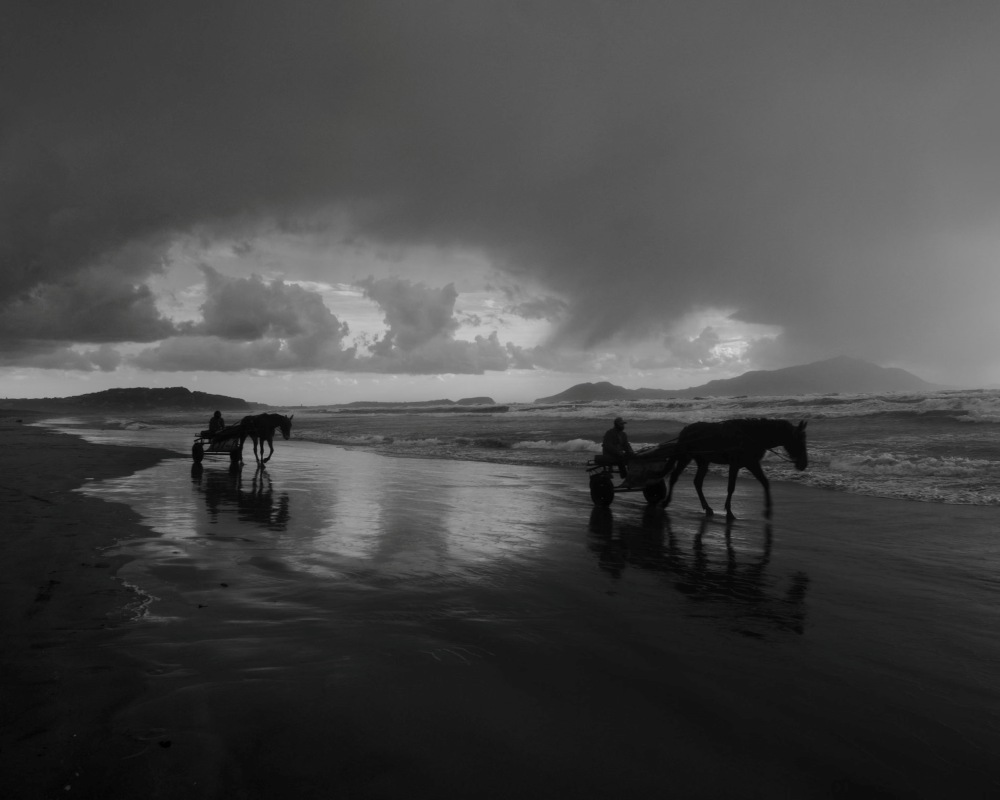
This is so beautifully and artistically composed that you could pluck just about any frame out of this black and white film and it would make a stunning photograph. It has the look of an arthouse European film from the 1960s – maybe even something Fellini might have made – except, it’s a documentary.
Following on from 2013’s Sacro GRA and 2016’s Fire at Sea, this is the third in a series of documentaries about Italy by writer/director/cinematographer Gianfranco Rosi, Pompeii: Below the Clouds offers a unique view of Naples. It’s a city with a population of roughly 900,000, but it seems almost deserted here. There are no bustling street scenes – and there is no narration.
Rosi has various story strands that he returns to throughout the film: like the curator in the vaults of a museum; the desperate calls to the fire department call centre; a docked cargo ship where the Syrian crew fear going back to the bombs of Ukraine; the near-empty trains that criss-cross the city, and – of course, Vesuvius…
Mount Vesuvius is the active volcano that dominates the Naples skyline – it’s everywhere here. Rosi even sees it in a pile of grain that looks like a mountain. In 79AD, Vesuvius famously destroyed the city of Pompeii – just a stone’s throw from Naples – covering its inhabitants in ash and effectively turning them into statues, their last moments frozen for future generations to marvel at.
Pompeii: Below the Clouds takes you to an archaeological dig undertaken by the University of Tokyo, and underground, where officials examine the tunnels dug by thieves and the ruins of a temple that has its frescos stolen.
Meanwhile, the curator – we don’t know her name – examines broken relics in a basement storeroom. It’s like being “suspended in time”, she says – words that could describe the experience of watching this film. Elsewhere, Rosi takes his camera into a dilapidated theatre, where Rossellini’s Journey to Italy flickers on the screen, George Sanders and Ingrid Bergman saying their lines to an empty cinema.
The past doesn’t collide with the present in Pompeii: Below the Clouds – it co-exists with it. Rosi is an impartial observer and his truly gorgeous black and white is not so much surreal as hyper-real.
Sometimes, you wish there was just a little more context, it would have been good to know more about that crowd of crying, emotional people – some dragging themselves across the floor – during an apparent religious ritual.
Three years in the making and winner of the Special Jury prize at last year’s Venice Film Festival, Rosi saves his most evocative, mysterious and beautiful images for the final moments of the film. It would be a spoiler to say too much about these underwater images, but they are hauntingly beautiful.
It’s rare to find a documentary that doubles as an art film. Like good and proper art, each viewer will find something different to take away, but many may see that Rosi has delivered a film that is not so much about the city of Naples but the mystery and fragility of life.
