




by Anthony Frajman
One of the buzzy films at this year’s Tropfest was Silent Night, from Melbourne filmmaker Nicky Tyndale-Biscoe.
Touching on important topics including family violence and bystander action, the film won two awards at the festival, the 3rd place prize and the Pandora Women’s Brilliance Award.
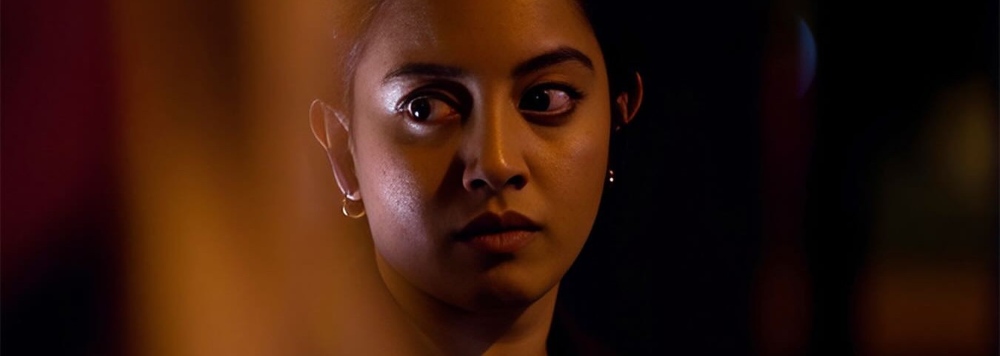
Impressively made with limited resources, Silent Night follows a woman who assists a mother and daughter on Christmas Eve.
On the back of the film’s screening, Tyndale-Biscoe chatted to us about how the film came together.
 What made you want to make this film in particular?
“I wanted to make something really simple that was actor-based. I come from a documentary background, but I’ve also come from drama, as an actor. I made my living in documentary mainly with SBS. So, I’m used to working pretty fast and not using a lot of lights, very nimble crew.
“I’m interested in the concept of connections between strangers. My films are about people who are different but find some common ground somehow. Most of my documentaries are about refugee stories, very much focusing on interesting, weird, unexpected, funny kind of friendships between Aussies, often who are having their minds changed after being connected with refugees.
“There was a lot of press about domestic violence at Christmas time, how it triples. And, I just thought, ‘there’s something in the whole Christmas kind of narrative, it’s everywhere. You can’t escape it’. I was catching a lot of public transport during the Christmas period, seeing really stressed-out families with bags and bags of Kmart crap and screaming kids and domestics on the train. And, I was just going, ‘oh my gosh, there’s a story here. I’m just not quite sure where it is’. I did eavesdrop on a conversation where I could tell the person next to me was lying. Basically saying, ‘yeah, I’m home. I’ve been home for ages. What are you talking about?’ And I was like, ‘oh, shit, they’re gonna hear the bloody train announcement any minute’. And I started stressing out. So, I took that one step further into, ‘okay, what if this person she’s lying to, trying to cover tracks, she’s just finally got the courage to leave an abusive relationship’, and it just went from there.”
Can you talk about how you approached depicting family violence on screen?
“I’ve seen a few films like that focus on the screaming fights and the bashing and everything, and I’m like, ‘look, these are middle class filmmakers who’ve never actually been in this situation. It often doesn’t ring true. And it’s like, ‘let’s go for the most dramatic scenario’. Whereas from talking to my friends that work in that sector, it’s often really mundane and kind of boring, what leads up to a fight. It is often just ‘you said you were gonna put the bins out’. ‘No, I didn’t. What do you mean? Are you saying I lied?’”
Obviously, the film was made with limited resources. How did this impact your approach?
“Yeah, I didn’t wanna put too much money into it. I heard that they were expecting five to 600 entries. I’ve never, ever entered a film competition before. I’ve always just made what I wanna make and then put it out there to festivals. I’ve watched a few of the Tropfest winners. A lot of them look really big-budget, with massive credits with gaffer trucks and like 20 people in post-production.
“I’m like, ‘that’s not what I’m prepared to spend’. And I’m not in advertising, I’m not a commercials director. A lot of people I went through film school with, they went down that road. They have a big circle of mates who put their hand up to shoot and do VFX if you need it. I’m not like that. I come from community doco, I had to make something smaller and simpler.”
What would you say was the biggest challenge of making Silent Night?
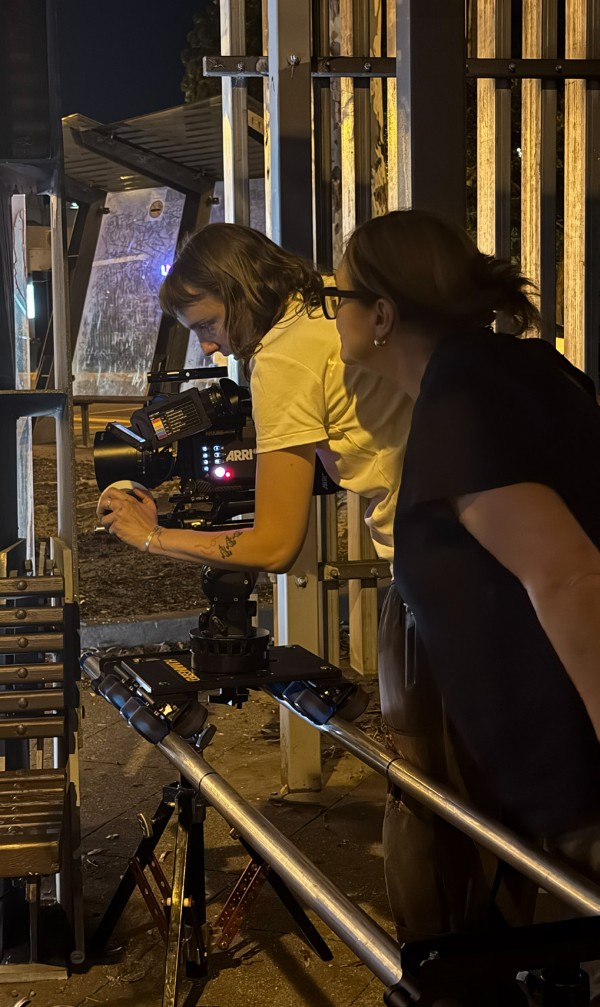
“Shooting at a really busy bus stop with a teenager and a dog at night. The teenager has to be in bed by 11. So did Nisha (Selvaraj), who played the bystander character. She was working full time. Continuity was the hardest thing because the teenager would leave by 11, and then we’d do all the reverses at like midnight with Rudie (Chapman), and it’s pitch black. So, the grade was pretty tricky, trying to match shots. Recording dialogue was hard because we’d often have to stop. We were shooting at a real bus stop and there’d suddenly be a huge crowd of drunken partygoers there.”
Have you been happy with the response to the film so far?
“Yeah, really happy. We are getting masses of feedback, people sharing the film with their circles and then sending me people’s comments. At Tropfest, it was an amazing experience being in the crowd to watch 35,000 people breaking into spontaneous applause and cheering when she hit block call. I didn’t expect that.”
