


By Erin Free
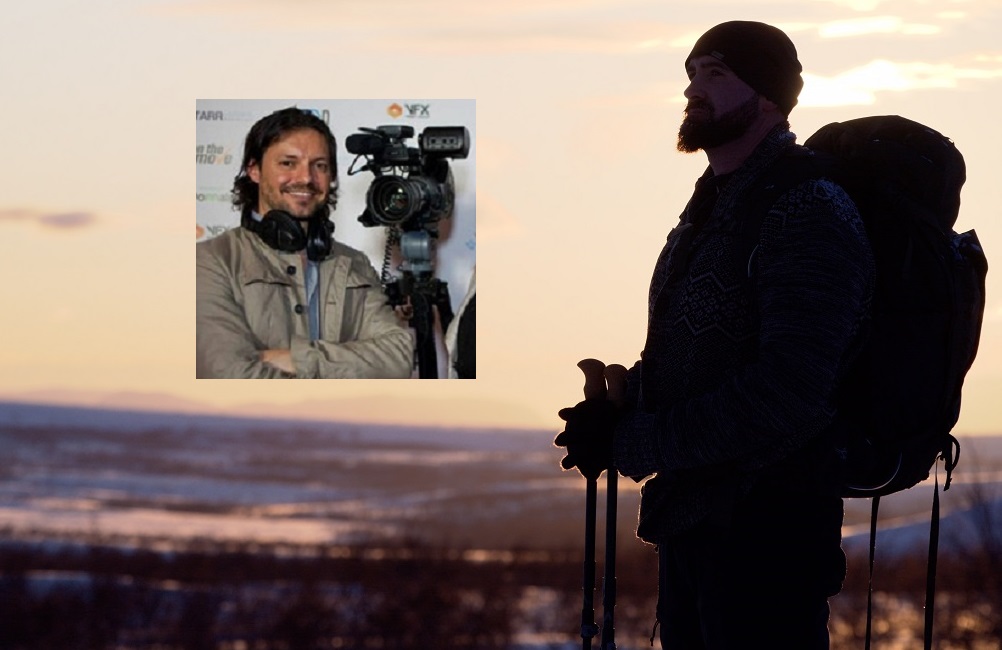
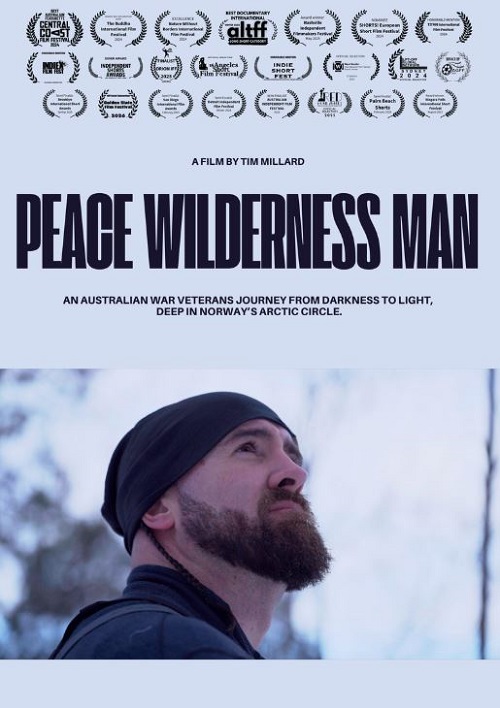
With the powerful short documentary Peace Wilderness Man (which is set to screen at The Red Poppy Film Festival) Australian director Tim Millard crafts a poetic and often confronting portrait of a war veteran who heals his emotional wounds by immersing himself in nature.
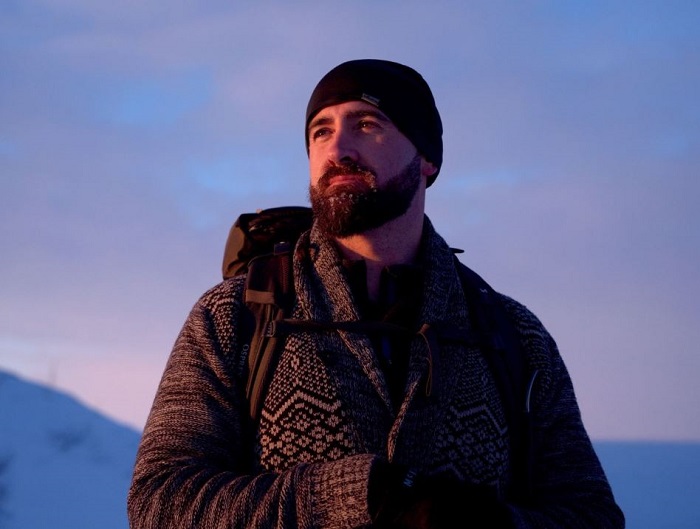
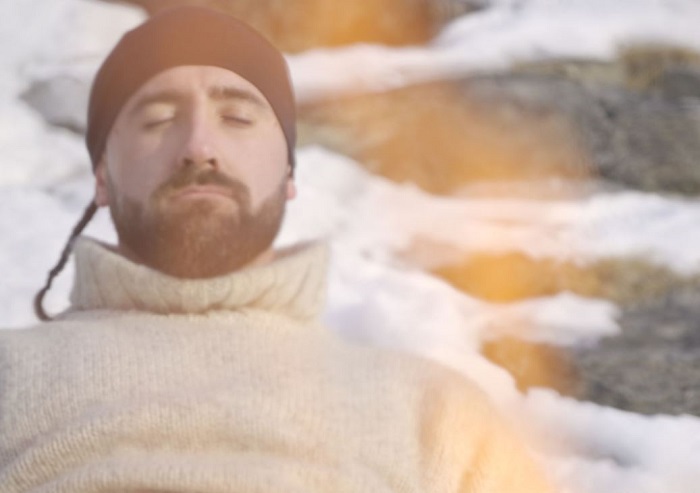
The 35-minute documentary Peace Wilderness Man opens with an extraordinary scene of a lone man immersed in a pool of icy water in the middle of an expanse of Norwegian snow. Initially meditating and then screaming violently into the white silence that surrounds him, we soon learn that this strong, imposing figure is Australian man Lex Reilly, whose ferocious personal demons have chased him across the world. Via what is basically an intense on-screen confessional, we learn that Lex is a military veteran with a background of childhood trauma whose horrific experiences on the arid, ambiguous battlefields of Afghanistan saw him return home to his family in Australia a deeply changed man. After his frustration and anger boiled over into overt violence, Lex retreated from society, and then slowly, surely rebuilt himself piece by piece in the various wilds, eventually finding a new calling off the grid. Director Tim Millard captures Lex Reilly’s painful and confronting story with quiet grace…
How did you first connect with Lex?
“My wife and I met Lex a few years ago on a wilderness expedition in the Snowy Mountains. It was a Wim Hof-style trip – a few days trekking around Mt. Koscuiszko doing breathwork and cold exposure. Lex was one of the guides. He had a calm, measured way about him but we both felt there was probably more going on beneath the surface. We connected on Facebook and about six months later I noticed he was posting from the Arctic Circle. Seeing him up there in that vast Arctic landscape immediately felt cinematic — the scale, the isolation, the silence of the place. It felt like the perfect backdrop to explore his story, so, after several months or so when it became clear he wasn’t just there as a tourist, I reached out to see if he’d be open to filming something together.”
Lex is a very compelling and engaging figure…was that a major factor in your decision to structure the film around your face-to-face sit-down with him?
“Yes, definitely. Lex is a very natural communicator, an honest, open talker, so I had a strong feeling he could carry a film largely on his own. From a practical point of view, this was also a very small, independent production, essentially just me, so I knew I needed something contained. A single conversation in one environment made far more sense than trying to build a bigger story with multiple characters and locations. At that stage I also didn’t know the full details of the story, only a sense that mental health, and possibly PTSD, were going to be elements. Sitting down with Lex and letting the conversation unfold felt like the most honest way to discover it.”
It’s always a bold move to stay so singularly on one subject without any outside commentary…was that a big decision for you to make?
“Yes, it was definitely a conscious choice. There’s maybe a temptation with stories like this to build them out with lots of voices and context, but I felt that might dilute the intimacy of the experience. By keeping the focus solely on Lex, the audience can sit with him directly and form their own opinions and understanding of what he’s been through. Trusting the viewer to engage with his story without being guided by too many external angles was important to me — it’s his story, told by him.”
Logistically, was it tricky to get over to Norway and catch that incredible imagery?
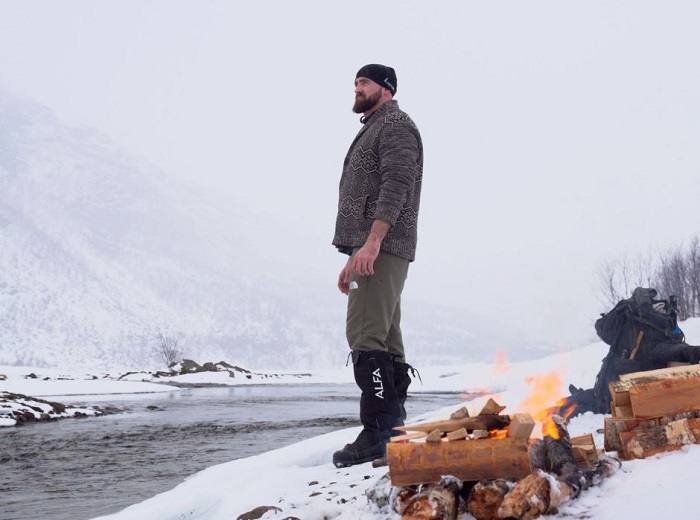
“There were definitely a few hurdles. I first reached out to Lex in August 2023 with Northern Norway just about to head into deep winter. On a small independent production, it simply wasn’t practical to film outdoors in those conditions, so we waited until the following spring. I’m a keen traveller and there was definitely an element of adventure to the whole thing. The idea of heading up to the Arctic Circle with a camera and seeing what we could capture and uncover felt too good to pass up. I travelled up to Alta in April 2024 and spent eight days filming there. Temperatures were still sitting between about -4°C and -14°C, which was challenging, but the payoff was those vast Arctic landscapes that became such an important backdrop to the film.”
Can you talk a little about some of the tech used during the shoot? Was it a small crew?
“Creatively and logistically, it was essentially just me. I did have some invaluable technical support from local chap called Burak, who helped supply gear, wrangle data and navigate the region. When we filmed out in the wilderness, he was even hauling equipment on a sled allowing me to shoot and work the drone, which gives you some idea of the conditions we were working in. We shot the film on Nikon Z9 cameras and I used a DJI Mavic Pro 2 drone for the aerial footage. Because of the environment and the travel involved, keeping the setup lightweight was really important. A small footprint meant I could stay mobile and adapt to whatever the Arctic conditions threw at us. It really was just the three of us out there on the Arctic tundra. The overall aim was to keep the filmmaking process as unobtrusive as possible so Lex felt comfortable and could just be himself throughout the shoot.”
Lex’s story seems quite emblematic of the experiences of many veterans. Have you had feedback from others who have served?
“I have mainly been focusing on the film’s festival run so far with organisers and judges providing the majority of the feedback. Those, and attendees at those festivals, have really been the only audience for the film to this point. Lex actually used the film as part of some talks he gave to veteran groups on a speaking tour to Montana, USA in late 2025. I hear the response there was very positive — both to his story, and to the film.”
The film is quite uplifting too…do you hope it encourages a sense of optimism in the viewer?
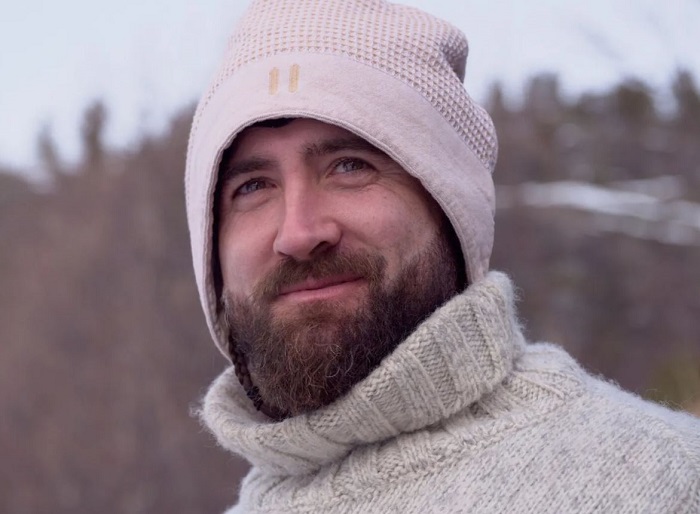
“I’m pleased to hear you felt that way. Lex has been through some extremely difficult experiences and is very open about the darker chapters of his life. One of the things that stayed with me during the filming was his determination to prove to himself that he’s no longer the person he once was. If the film leaves viewers with a sense that change and growth are still possible, even after very difficult times, then that would be a really positive outcome.”
How do you feel about screening as part of The Red Poppy Film Festival? It’s obviously a great fit…
“It’s a real honour. The Red Poppy Film Festival has a strong connection to veteran stories and the broader military community, so it feels like a natural home for the film. Festivals like this also create space for conversations that might not otherwise happen, and that feels particularly important for a story like Lex’s. Mental health is a huge issue and hearing Lex speak about the moment things perhaps started to turn for him, when he saw a small ray of light to cling to on his journey and heard a voice telling him to ‘keep going’, is quite powerful and hopefully inspiring. To be able to create something that has the chance to resonate with veterans, or anyone in the wider community, who might recognise or relate to parts of Lex’s story, is really rewarding.”
This is such a quietly powerful and affecting film…what is next for you?
“Thanks for those words. First, I want to give this film the space to run its course and find its audience through the festival circuit, and hopefully connect with the right partners who might help bring the film to a wider audience through broadcast or distribution. At the same time, I’m already working on ideas for the next project. The ambition is to keep building on this work and collaborate with experienced partners so that the next film is either commissioned, or has a clear route to acquisition, distribution or broadcast in place before filming begins.”
The Red Poppy Film Festival screens from Friday 6 March till Sunday 8 March 2026 at The Art Gallery of New South Wales in Sydney. For all ticketing and session information, head to the official website.
