


by Gill Pringle in LA
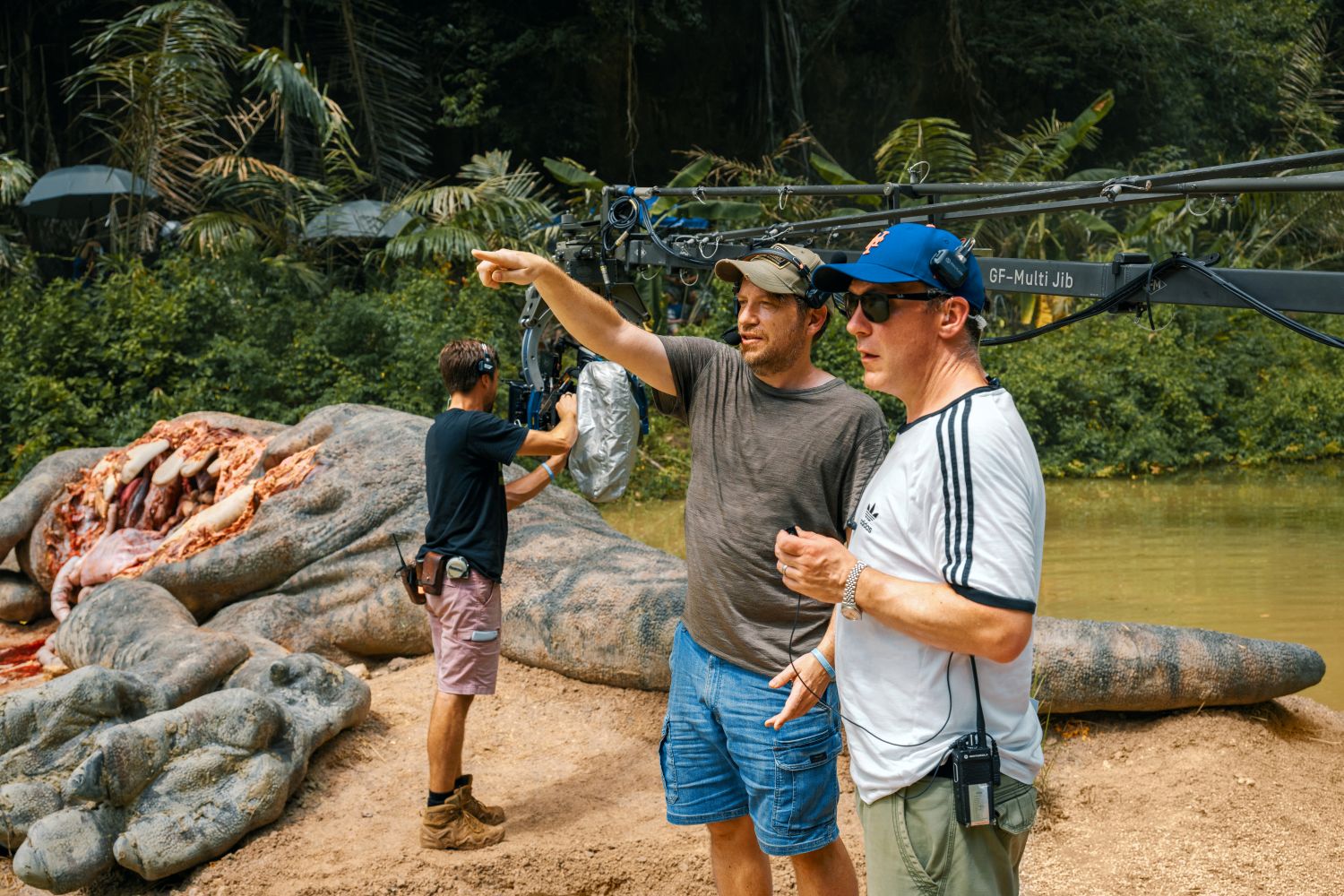
After directing Rogue One: A Star Wars Story, Godzilla and, most recently, The Creator, director Gareth Edwards really didn’t want to take on the seventh Jurassic film, Jurassic World Rebirth. Big shoes to fill.
He really didn’t want to do it – especially having grown up as a huge Steven Spielberg fan, whose iconic films inspired the British director to become a filmmaker in his own right.
Exhausted after finishing The Creator, he even hoped that David Koepp’s script might give him an excuse to walk away from the opportunity.
Instead, he found himself riveted by Koepp’s script for Jurassic World Rebirth – from its thrilling story to its implicit love letter nostalgia for Spielberg’s films.
“I wanted to not like it,” recalls Edwards.
“I wanted to be able to say, ‘thank you very much, but I’m going to take a break.’ But when I got to the end and closed the script, I went, ‘Oh, fuck.’ I knew I had to do it.”
When we ask him what exactly scared him about the challenge, he sighs, “it sometimes feels like with a movie like this that you can only go wrong. You can only be the person that screwed it up.
“It’s like taking a penalty in the World Cup final. I would never volunteer if someone put a football down. And some people are like, ‘I could be a hero. This is my chance!’ But you’ll just be hated by everyone if you miss it; they’ll hate you forever. It’s not worth the risk. Don’t take the penalty!
“And a movie like this, it felt like that. It felt like, ‘Don’t be the guy to screw this up.’ You’ll never live it down. It’d be horrible. And so, you approach it really carefully,” says the 49-year-old director.
However, the universe had other plans.
“But the script was really solid, and it had all the ingredients that I want to see in a Jurassic film. And then you could see that Spielberg was really invested in it, and it was very ‘Spielbergian’.
“And then, each little section of the movie was like its own little mini film, and a chance for this to be a perfect playground for a director,” he says of Koepp’s Rebirth script, conceived almost immediately after 2022’s Jurassic World Dominion brought the second trilogy to a close, retiring the cast of characters of both series.
Koepp had written the screenplays for the original Jurassic Park and The Lost World: Jurassic Park, so Edwards knew that Spielberg and Koepp were going to authentically return to Michael Crichton’s original source material.
One scene, especially, thrilled him: “There’s a scene in the movie that was in the original Jurassic Park screenplay, but it was taken out because they couldn’t figure out how to do it with the budget back in the day,” says the director, alluding to a particularly juicy scene where a sleepy T-Rex awakens from a nap only to find some tasty human morsels within its grasp.
“And it was put into this film. It was a bit like if someone told you that Steven Spielberg had taken out a scene because they couldn’t quite figure out how to do it; they’d have any money, whatever – and he’s gonna give it to you one day and say: you do it. That blows my mind!
“There’s just no version where you say no to that, and then you’re trapped. And so, you have a year of like a nightmare, where you just feel so much pressure to make this thing as good as possible at every turn.
“I think, because we didn’t have very long… we had a year and a quarter – because the release date was about half the time you have on a giant blockbuster – it focuses the mind, and I managed to convince myself that this was a small film that we were just making with friends,” he says shaking his head at his own naïveté.
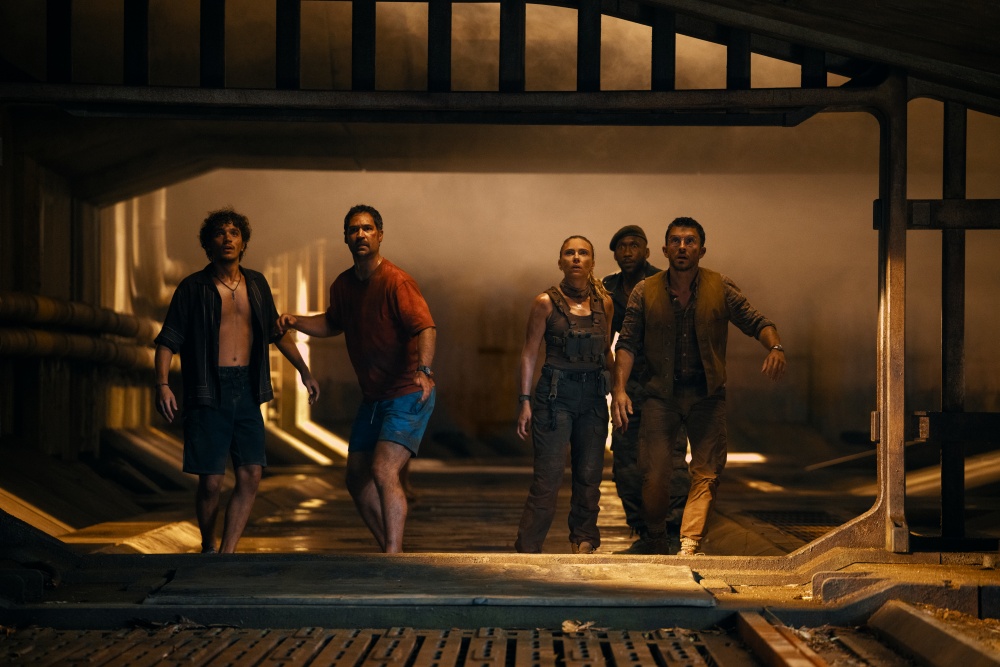
Those friends would turn out to be Scarlett Johansson in the role of covert operations expert Zora Bennett, contracted to lead a skilled team on a top-secret mission to secure genetic dinosaur material, enlisting her old cohort Duncan Kincaid, portrayed by two-time Oscar winner Mahershala Ali.
Tasked by Rupert Friend’s Big Pharma representative Martin Krebs, Zora is joined by Jonathan Bailey’s palaeontologist Dr. Henry Loomis in this action-packed new chapter which sees the extraction team race to the most dangerous place on Earth – an island research facility for the original Jurassic Park, inhabited by the worst of the worst that were left behind.
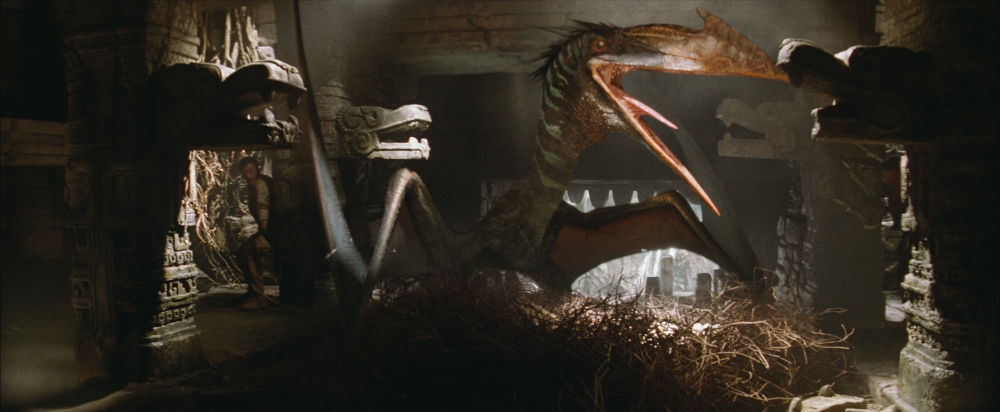
Five years after the events of Jurassic World Dominion, the planet’s ecology has proven largely inhospitable to dinosaurs. Those remaining exist in isolated equatorial environments with climates resembling the one in which they once thrived. The three most colossal creatures across land, sea and air within that tropical biosphere hold, in their DNA, the key to a drug that will bring miraculous life-saving benefits to humankind.
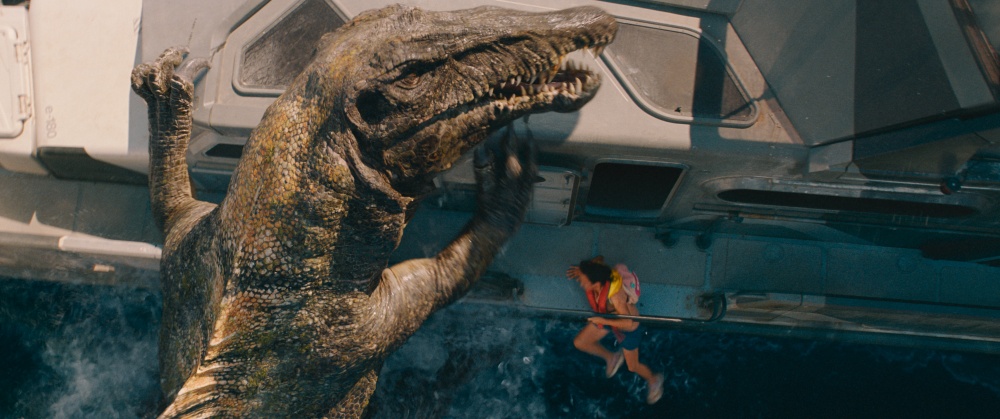
When Zora’s operation intersects with a civilian family whose boating expedition was capsized by marauding aquatic dinos, they all find themselves stranded on this forbidden island where the research facility’s mutant dinosaurs now roam free.
Populated by dinosaurs of vastly different species, they come face-to-face with a sinister, shocking discovery that has been hidden from the world for decades.
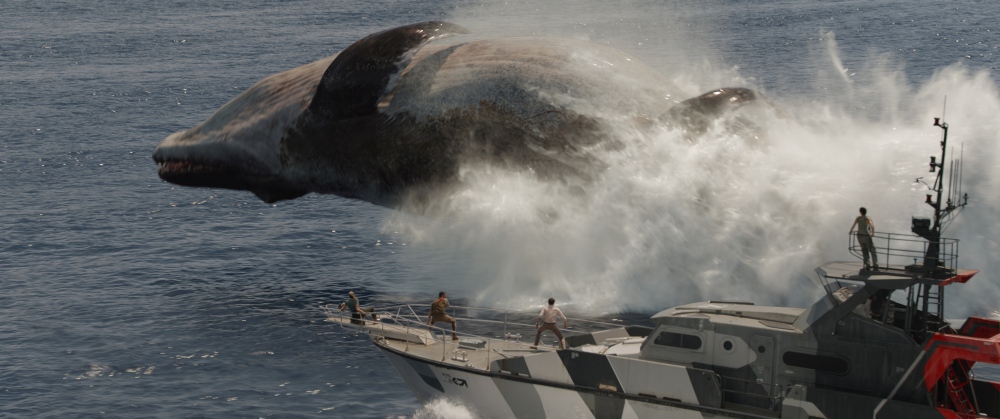
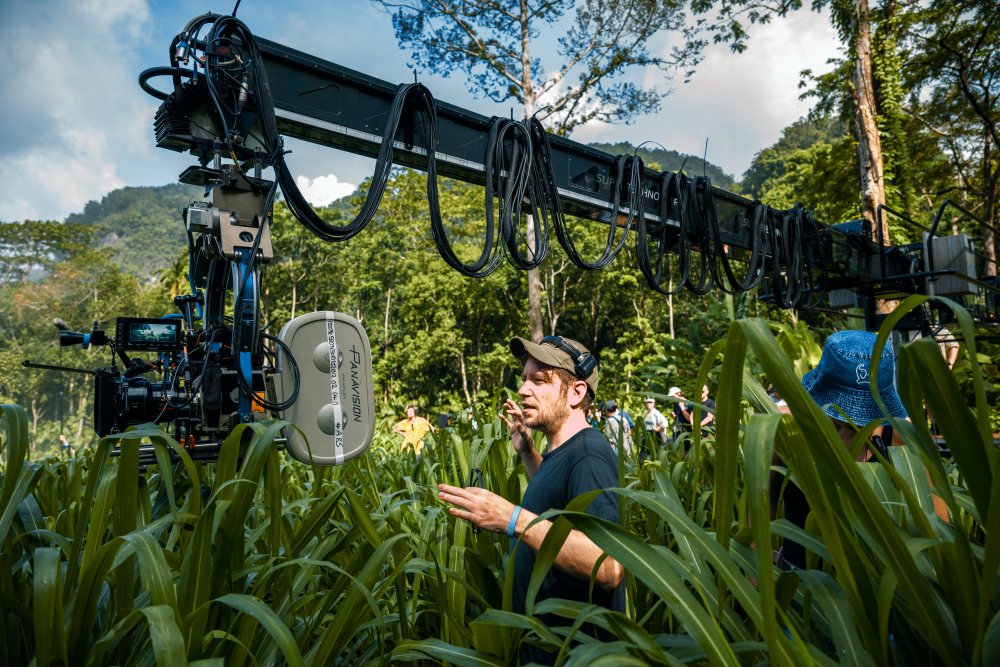
During a five month shoot on locations around Thailand and Malta, Edwards would frequently experience pinch-me moments as he found himself helming one of Hollywood’s most iconic franchises.
“It was probably like, Week Two in Thailand, on a nighttime shoot. And Frank Marshall, who’s the producer of films like Raiders of the Lost Ark and this, is on set, and he hands me his phone,” he recalls.
“He’s a little bit older than me. And when an older person hands you a phone, you think, ‘Oh, they want to help with the settings or something.’ I grabbed the phone, and I’m like, ‘What is it? You can’t get Wi-Fi?’ I’m thinking something like that. And then I look, and the wallpaper is a photo of Steven Spielberg. I’m like, that’s strange that Frank has a picture of Spielberg on his phone, but whatever. And then, suddenly the wallpaper moves, and goes, ‘Hi Gareth . . .’ And it’s Steven talking. You go, ‘oh my god, this is a FaceTime! Oh shit!’ And I’m just thrown by that, because this is like God, my hero, and I don’t know what to do! Because you’re not expecting . . . like, it takes you days to build up to chatting to Steven, right?” he asks us.
“Then suddenly, it’s happening in your hand. Then I’m grabbing the other cast and going, ‘Hey, this is Steven, everybody!’ And so, then what happens? He says something really nice to you about some of the footage he saw from the day before. And it’s like, taking drugs or something. It just like, gives you such a boost, where you feel invincible. It was worth its weight in gold.
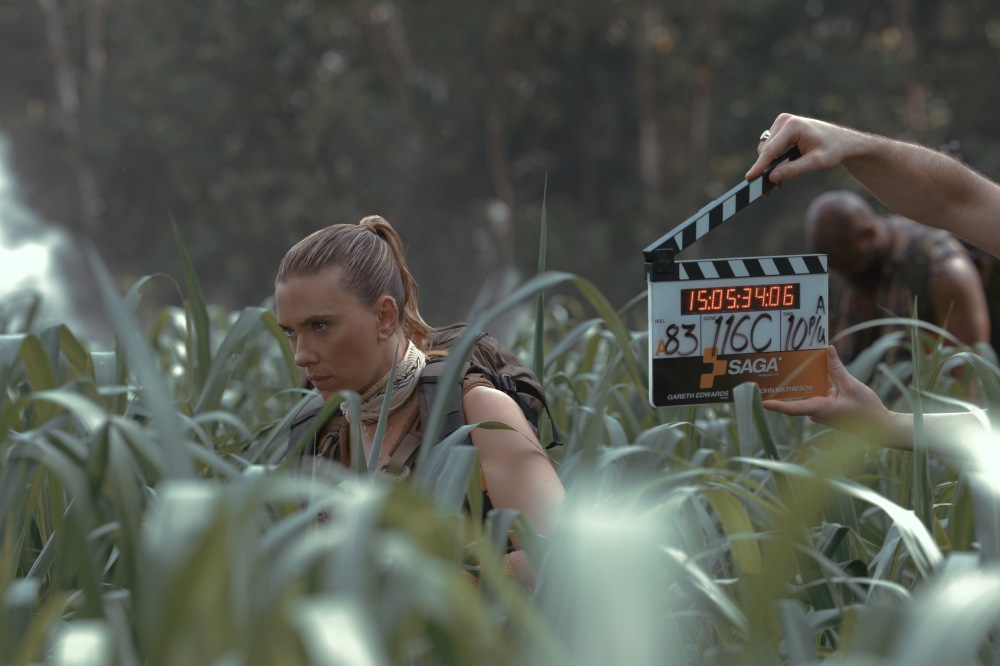
“I still can’t get used to it … I find myself saying sentences when I’m talking about the film where I say, like: ‘yeah, when I was chatting to Steven Spielberg. . .’ and that sentence never gets old. It’s like you’re a Christian and you got to meet Jesus!”
For Johansson too, it was a dream come true, having pitched Spielberg the second she heard whispers of Rebirth, telling him how she had dreamed of being in a Jurassic film since she saw the first film in 1993.
If she didn’t get to actually be directed by Spielberg himself, then she was equally dazzled by Edwards’ vision and leadership. “Gareth has an incredible visual vocabulary,” says the two-time Oscar nominee, no stranger to action stunts following her Avenger years as Marvel’s Black Widow.
“Gareth can see the whole film in his mind; he has a beautifully organised imagination and he’s able to tell you how a scene is going to look and how a scene will play out,” she enthuses.
“It’s a very rare thing. I’ve only worked with a few directors in my career that had that kind of visual vocabulary. And it’s not derivative, either; he finds his own way, and so, he’s a unique storyteller in that way. He has a great attitude about work; he’s not precious about things, and he’s so collaborative and helpful. I loved working with him on what was really a dream job for both of us.”
Jurassic Park Rebirth is in cinemas 3 July 2025
