


by Stephen Vagg
A 1960 interracial romance.
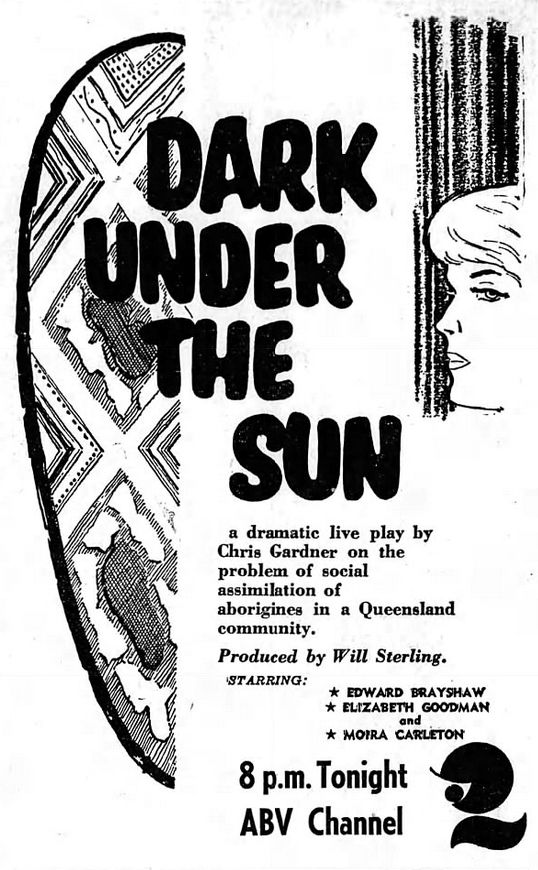 Many early Australian television dramas don’t survive except in script form, while others live on in rude physical health and can be easily downloaded. Dark Under the Sun is kind of a halfway case because you can access of a copy of the original script at the National Archives of Australia and the original ABC production via the National Film and Sound Archive – but the latter has no surviving soundtrack. So, watching it is kind of like seeing a silent movie not devised to be a silent movie, where you have to read the script to fill in the blanks (this is similar to the first ever Australian television play, The Twelve Pound Look.
Still, I wanted to review it because in its own way, Dark Under the Sun was a landmark – to my knowledge, the first Australian television drama to feature a modern day Aboriginal character in the lead. Unfortunately, yes, he’s played by a white actor, Edward Brayshaw, in dark make-up – though not super dark (sorry to go into the specifics of this, but blackface was prevalent at the time). But he is the romantic lead of the story, depicted as a hugely attractive and sympathetic character, not an exotic “other” or horse-riding sidekick, which were the most common type of Aboriginal characters in drama at the time.
The play was an original work by Chris Gardner, a Queensland author who had moved from England to Australia in the early 1950s and was living in Woody Point (near Redcliffe). Gardner started writing when briefly bed-ridden due to a slipped disc, then became more serious about it when she joined a Brisbane radio group in 1956. Her stage play The Pub at Pelican Creek was commended in the 1958 General Motors play competition won by Slaughter of St Teresa’s Day. Dark Under the Sun was her first television play; she submitted it on “spec” to the ABC who decided to film it in Melbourne under the direction of William Sterling.
Sterling said the play was written in the style of Paddy Chayefsky (Marty) or Ted Willis (Woman in a Dressing Gown) – to wit, “a familiar social situation being shown in a simple, believable story with recognisable characters appearing in realistic situations and arguing their point of view forcefully without being mere mouthpieces for a particular opinion” (Sterling). This style of writing was hugely popular on British and American television and inevitably made its way to Australia.
Interracial romance was in vogue at the time. You had films like The World of Suzie Wong, Sayonara and Island in the Sun. Willis had recently made waves with his stage and television play Hot Summer Night (later turned in the feature film Flame in the Streets), which featured arguably the first interracial kiss on British television. There was also Joseph Schull’s British radio drama The Concert, about a blind white woman who falls for a black man, that was filmed several times – including once for Australian commercial television in 1961 (I think that the ABC had originally planned to do it).
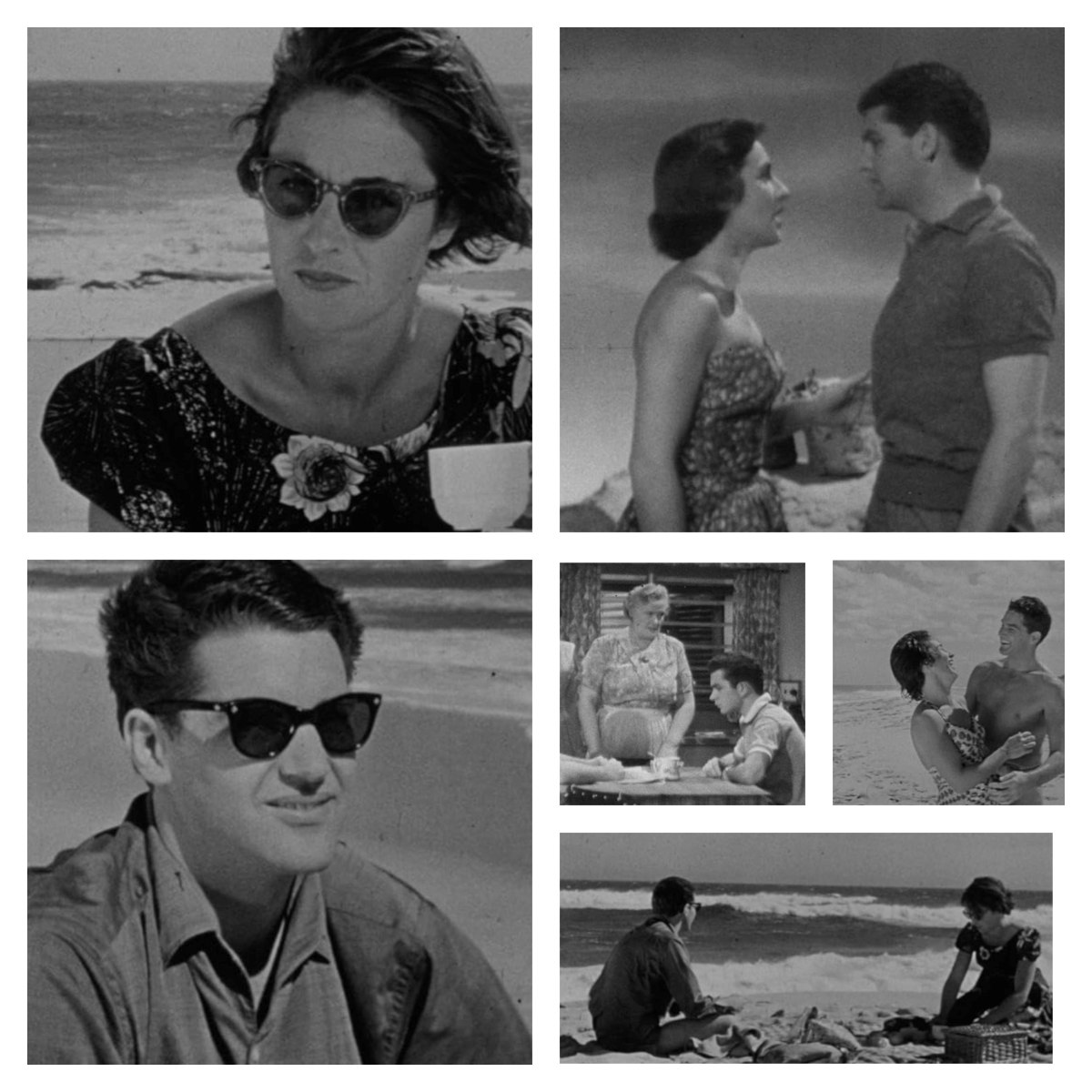
Dark Under the Sun is a simple, understated piece about “ordinary people” falling in love, the gimmick being one of the people here is Aboriginal, Jim. He is specified as “half caste”, allowing Brayshaw’s casting, though characters frequently refer to him in terms of racial slurs. In the story, Jim’s back in the country town where he was born after a stint in Brisbane and he begins romancing a white childhood friend, Julie. They’re both adult, sensible and hot for each other – pawing each other something strong on a trip to the beach. Jim is smart, hardworking and polite, a sort of Aboriginal Gregory Peck, so the only issue is his race. Sidney Poitier was often criticised for playing perfect black men in the sixties; Jim is a little like that too, but I think he has to be perfect because, as legendary film critic Danny Peary pointed out in a review of Guess Who’s Coming to Dinner?, it makes it clear what the objection to him is.
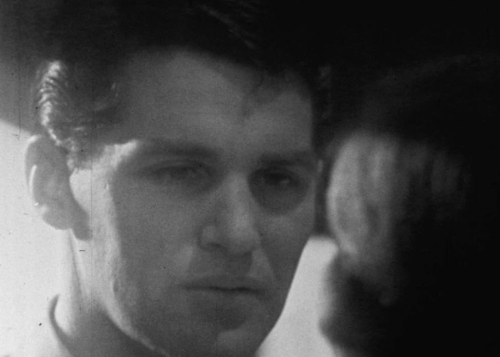
Julie’s family like Jim as a person but not as a potential son-in-law. A key subplot involves town tramp Beryl, a character type familiar to those who have read their William Inge; she’s from a Bad Family (who actually sound like a lot of fun – Queensland poor white trash) and inspires Julie’s brother Dave to steal some horse-doping drugs to win a horse race. Which seems to veer Dark Under the Sun off the topic of race relations but does provide a terrific character dilemma in the third act: Dave gets busted, Julie wants Jim to lie about what happened to cover up for her brother, but Jim refuses; each has a go at the other’s morals. It’s excellent drama, a worthy climax to the story – is Jim being overly self-righteous because of his racial background or is Julie secretly looking for an out to the relationship, are the family worth defending, etc, etc. We do miss seeing Jim’s homelife – even just one scene between Jim and another Aboriginal, a family member or friend, would have elevated the piece tremendously. But it is written with sensitivity, skill and empathy.
Based on the silent version of the play that I’ve seen, the script received splendid handling from William Sterling. I’ve watched a lot of Sterling-directed television drama over the past few years, and he could be overly fond of wacky camera angles and mid-shots. But he was fully focused on Dark Under the Sun. The acting, as far as I can tell with no sound, seemed to be very fine, with Elizabeth Goodman (a performer I was unfamiliar with) particularly superb as Julie, and Brayshaw solid as Jim. It makes the poor job that Sterling and Brayshaw later did on Burst of Summer – another Aboriginal themed drama I wrote about here – even harder to understand.
Gardner was a very good writer. I’ve read two other scripts of hers that were filmed for the ABC – a New Australian drama, The House of Mancello (a reunion with Goodman and Sterling), and a comedy, A Private Island – and both were first-rate. She also authored stage and radio plays then kind of vanished off the scene. If anyone knows what happened to her, please let me know. Because she had a gift – as demonstrated by Dark Under the Sun.
The author would like to thank Simon Drake and the staff at the National Film and Sound Archive for their assistance with this article. All opinions are those of the authors