



By Christine Westwood
Berlin Syndrome is about a passionate holiday romance that turns bad, when Clare (Teresa Palmer), a young Australian traveller, wakes up in the Berlin apartment of Andi (Max Riemelt), a young German man, and discovers that she can’t leave.
Snowtown writer, Shaun Grant, adapted the screenplay from Melanie Joosten’s 2011 novel, bringing his facility for suspense and complex psychology to the interpretation. Backed by Screen Australia and Film Victoria, the movie has already been picked up for distribution in Australia and the UK by eOne, and was picked up at The Sundance Film Festival by Vertical Entertainment for a theatrical US release and by Netflix for streaming.
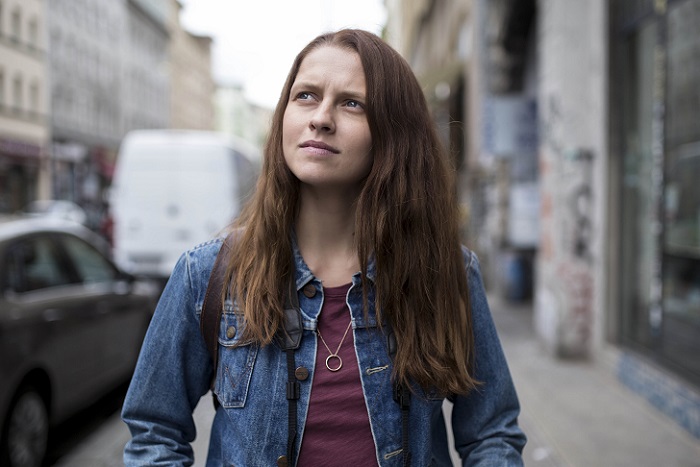
Director, Cate Shortland (Somersault, Lore), producer, Polly Staniford of Aquarius Films, and actors, Teresa Palmer (Hacksaw Ridge), and Max Riemelt (Sense8), were at Sundance to promote the film. “It’s been a great journey taking the story from book to screen,” says Staniford. “I watched it as an audience member for the first time here, and I couldn’t be happier with it. From the moment that I read the book, I fell in love with the characters. Then I gave the book to Cate. She sees the world in a really special way, and she works so well with the actors. She makes them feel so included.”
Despite the dark, intense subject matter, Shortland says that “we laughed on set all the time. We needed it. Teresa is always making jokes anyway, but she’s also a very spiritual person. We talked about how her character might transcend this terrible situation that she finds herself in. And we discussed the shift in her character, from who she is at the beginning – where she’s got a huge inferiority complex about being Australian, she’s unsure of herself – to who she becomes as the film progresses. She finds confidence and grows. Teresa’s a real trooper. She’ll try absolutely everything, and she’s very down to earth. We were working on the script right up to filming, and some of the stuff that we really love came out of rehearsals. So did the dialogue. It’s been a really open and fluid way of working, which is always the best.”
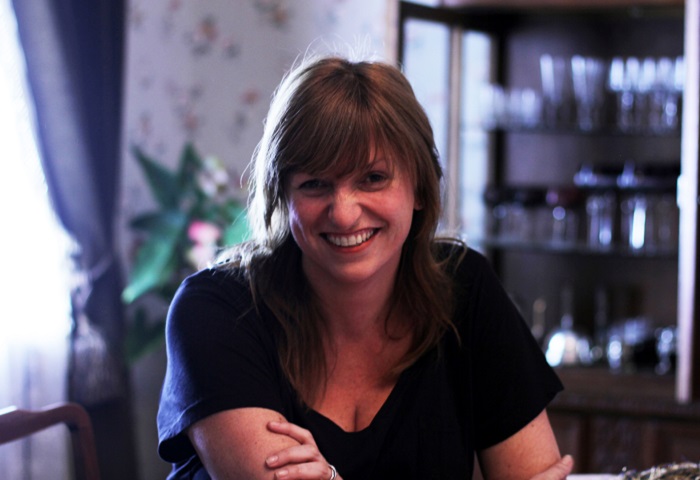
Riemelt recalls how the filming and rehearsals were “pretty intense. We talked about the characters, and we found similarities in our own lives. It was like therapy! It brought us closer to each other. We had a choreographer for staging some stuff, but also for exercises where we had to use our senses to feel and listen to each other.”
“It was really hard,” explains Palmer. “It wasn’t easy staying in that state of vulnerability, and in the psyche of someone who sees the world in a different shade and colour than what I do. Cate does that female coming of age story so well, but I also liked exploring the character’s sexuality. She’s a lot freer and more vibrant in that area. She’s more comfortable, and this man fills a void for her which is why it’s such a complex story. He’s not just a bad guy.”
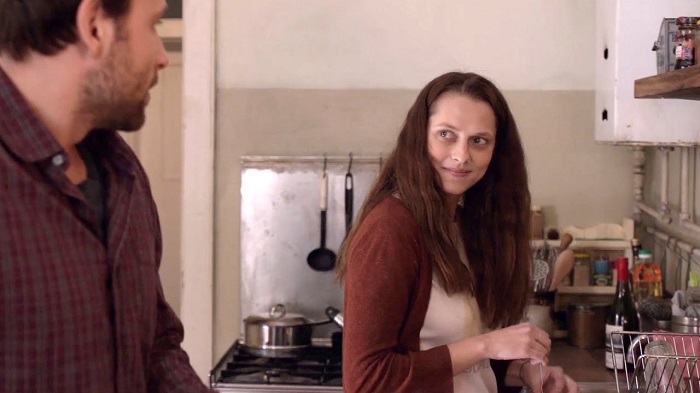
One of the strengths of the film, and there are many, not least its suspenseful through-line, is that Andi is never just a cliched male persecutor. This is partly achieved by the film letting us into his point of view, but also by the depth and authenticity of Riemelt’s performance. The actor deftly leads us to understand his character’s suffering and complex motivation. “It’s a very intelligent movie, and it’s really subtle,” Riemelt explains. “My character has soft points, and he struggles too. We learn the story of his mother leaving him, which is also one reason why he would hate women, but it’s not simple. And we see him having real relationships in the world besides taking this girl hostage. There’s another layer with the story of Berlin; it’s a city so divided, and so many families were torn apart. That’s when you really find out people’s true nature, like the motivation of those who defected to simply survive.”
Regarding his own performance, Riemelt, who has been a screen actor since he was thirteen, says that he’s “very critical when I’m watching, but I was very impressed with how this one worked out. But I’m wondering, ‘How will people see me now?’ I’ve never done a role like this before…I’ve never played the bad guy.”
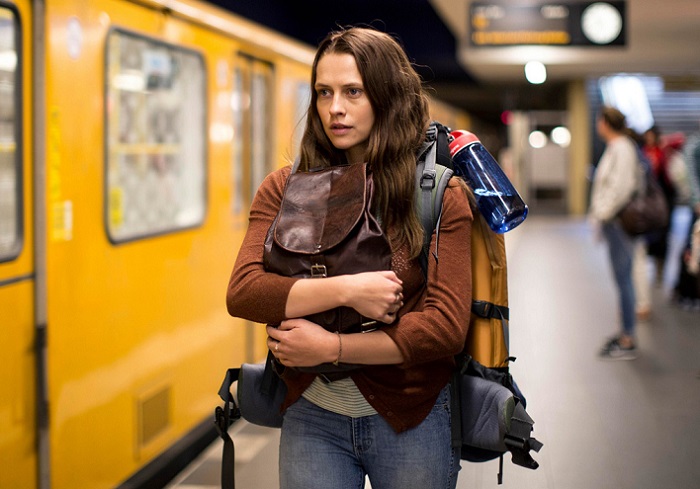
Happily playing with her new baby, Palmer is a long way from the desperation and torment that her character of Clare goes through. Her performance is grave and compelling, and a reminder of why she is scoring plenty of film roles. “I began filming Hacksaw Ridge just two days after Berlin Syndrome wrapped, and the year before there were three films, so after Hacksaw I was burnt out,” the actress explains. “I took a full year off, so this year is the year that I decided to get back to work. The experience of filming Berlin has set the bar so high. It was great working with Cate and Max and the crew, and I just want that again. But mostly, I want to play real characters.”
Apart from her skill and empathy with actors and story, Shortland describes how the style of the film supported her vision. “For the aesthetic of the film, I wanted it to be fresh and not fake,” the director offers. “Our DP, Germain McMicking [Partisan, Holding The Man] has done a lot of documentary [All This Mayhem, Bastardy, The Tall Man]. He doesn’t like to discuss much before filming, but when he gets on set, he notices things and so do I. But always the question was, what is the emotion of the scene? That’s what we went for, and it’s why you see details like the characters’ mouths or hands. We really wanted the audience to get close to the characters and to feel like you’re in the apartment, and on the journey, with them.”
Berlin Syndrome will be released in cinemas on April 27.
