



By James Mottram

So the obvious question, of course, is did you change your attitude to aliens after the experience of Arrival? “That’s always the obvious answer! No! To your obvious question.”
Were there people that [director] Denis Villeneuve asked you to meet? Government people, or anything like that? “He had two aliens that he wanted me to meet before we started the movie. Just to get a vibe…you know, to see if I wanted to vibe with them. [Laughs] No, we had physicists and mathematicians to help me, and the writers talked about how we could take this information, and make it palatable to people…to me, first and foremost! [Laughs] I have to speak it, and say it! So, how do we say this and explain it to you? We need to make it powerful, so we worked with those guys a bit.”
Do you watch your own films? “Well, not usually. Maybe once. Once so I can do press, or just because I was curious to see how it turned out. Usually, I’ll watch something once. There was only one movie that I did that I didn’t see at least once. And that was Dahmer. I only saw half of that movie, and that’s it. Usually I see it once, and then I let it go.”
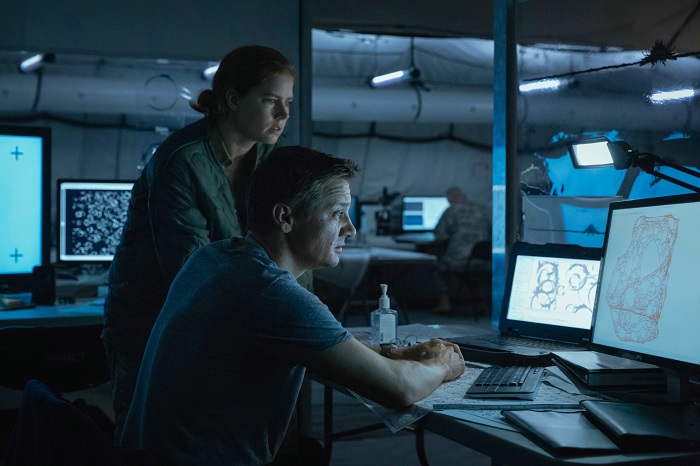
You must have been very curious with Arrival though, because you’d often be acting against green screens, and with visual effects? “Yes, movies with lots of visual effects become a whole other experience. I really like watching the Avengers movies, because there is a whole other aspect of filmmaking that is contributed to those movies, and it makes the spectacle fun. Arrival has a big form of spectacle to it too. But on the day, there’s no spectacle. It’s me and Amy Adams in a Hazmat suit standing against a white screen. There’s a guy with a stick and a fuzzy ball at the end of it. So we had to take the sexiness out of filmmaking, but filmmaking usually isn’t very sexy. So yeah, there’s a giant spectacle to this film that I couldn’t really grab on to, without actually seeing it. And I still haven’t seen it with all of it all done. But what I did see was enough to grab on to, like, ‘Whoa, this is a big movie!’ And it emotionally wrecked me. I don’t know if I’ll watch it again, because I was pretty wrecked watching it.”
Were you impressed with your director, Denis Villeneuve? “It’s very easy for me to talk Denis. He’s…wow…I mean, how do I explain? I’m just going to explain him how I explain him all day long. I’ve seen all of his stuff, and I almost did one of his other films. But when I saw this movie, as soon as the credits rolled, I was like, ‘Wow! God damn, now that’s a director!’ And I ran out of the theatre! That doesn’t happen a lot of times. I saw certainly Kathryn Bigelow’s hand on The Hurt Locker, for instance. I feel like Denis has the best of Steven Spielberg and Stanley Kubrick rolled into one. He’s just the real deal! He has a great balance of visual sense and emotional intelligence. He understands where the story comes from, and then he has the wherewithal and the vision to see something bigger, and something different. He’s also very patient, like Kubrick, but he has the intelligence to understand commercial viability. That’s where Steven Spielberg comes into play. Denis is the real deal, and if he’s directing the film, I’m in. I’ll do it.”
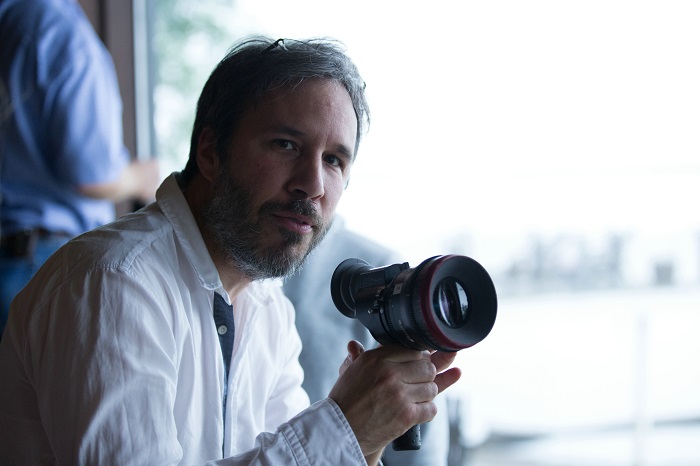
What do you need from a director? “Nothing…because he’s a director! [Laughs]”
What does a director have to have to be good in your eyes? “It depends on the material. I like to give directors problems. With most directors – I think almost all of them that I’ve worked with – it’s like, ‘Either say it in a sentence, or don’t say it at all. If you’ve got something to say, tell me after the third take. Directors should have a great understanding of the story and the script, and all the characters involved, and who the audiences are…then it’s just the application of it. So on the day, it’s just about like, ‘Yeah, try that one thing. Maybe give me a different temperature of being funny or not.’ Directors don’t want to hire someone that they have to manage. They want their actors to be great at what they do, and they don’t want to have to direct them all the time…they just tweak things. I like directors who think like that. I always want to give directors problems. [Laughs] But they’re good problems. I want to give them lots of choices in my takes. That’s my challenge. I want to give them lots and lots of different shades to look at in the editing room. I want them to think, ‘Oh wait, thanks Renner! Fuck you, Renner! Why did you give me so many choices?’ That’s how I do things.”
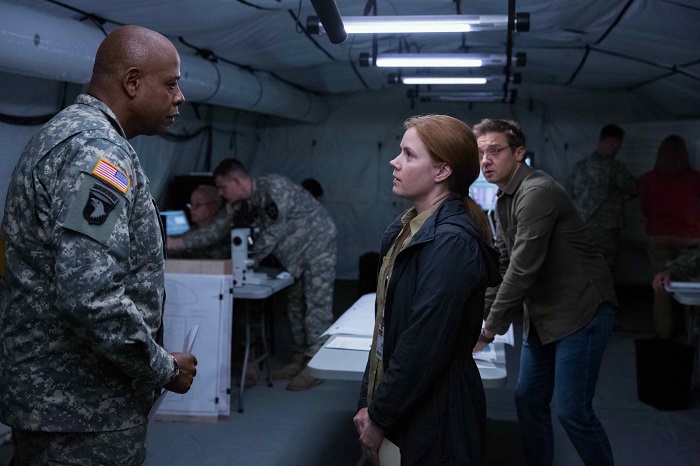
When did you realise that were good at that? Giving directors problems? “I think it’s because I’m the oldest of seven kids…I just give a lot of people problems, because of my job. It’s my birth right. [Laughs] It’s my birth right to give people problems. [Laughs] And not always bad problems…problems can be good! Right? [Laughs] It’s just in my bones.”
Do you like the genre of science fiction? “Ah, I like to call it ‘science non-fiction.’ There’s a certain reality and plausibility to stuff like this, so that makes sense to me. I love that. Yeah, I like the genre, sure. It’s based on human emotion, and the themes of it are great. It’s something that I can connect to, and then still play a human being. That’s all that matters to me, but yeah, I do like science fiction.”
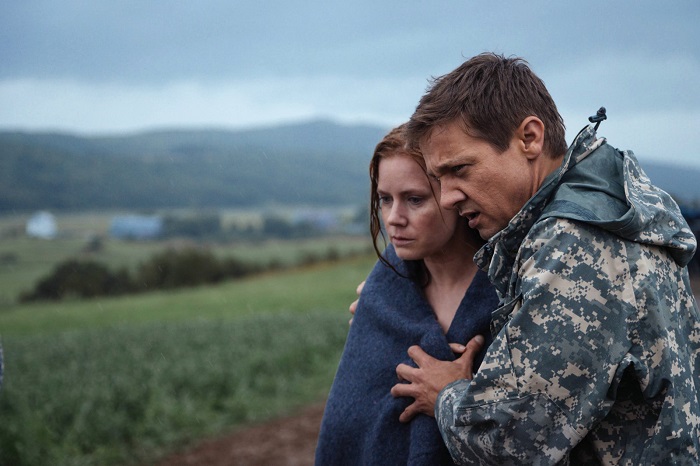
How was it working with Amy Adams? Your characters have a very different approach to the alien situation in Arrival… “That was the importance of those two characters, to strike that balance, you could call it, of a feminine and masculine sort of approach, or you could talk about it being a left brain/right brain approach. And it’s great to have an emotional, intelligent, smart, kickass, badass woman like Amy Adams doing that. She’s a good friend of mine, on and off camera, so it made it very easy, and it made it very fun. And there was no drama. The only drama that we created was in character. And the best thing about this press tour is being with Amy Adams, and her husband, and daughter, and that’s what makes it great. We end up talking about different things, and I get to hang out with people that I love and care about. We have such respect for each other, on and off camera.”
Arrival is released in cinemas on November 10.
