


By Andrew Blackie
2016 wasn’t a great year for Chinese cinema. After much breathless anticipation that China was on the verge of overtaking the US as the world’s largest movie market, this was the year in which Chinese cinema drifted inexorably back to earth.
It’s not only that the box office fell short of expectations; artistically, the drawbacks of a commercial strategy that prioritises output over quality became increasingly apparent in 2016. Trawling through the extensive list of Chinese films released this year, it’s staggering just how mediocre and forgettable the vast majority of them are: a graveyard of pop product with no cultural resonance beyond their week in the multiplex.
So, 2016 may be remembered as a year of growing pains for the Chinese movie industry. But it was also a year in which a growing diversity of stories flourished under the nose of the mainstream. Rather than chasing Hollywood style and pizzazz – two fronts on which Chinese cinema is likely to remain behind for another decade at least – savvy filmmakers were seeking new ways to express the depth and dislocation of China’s social and cultural experience onscreen.
Movies became less monochromatic: while the sappy rom-com, tiresome historical epic, and “anti-fascist” (read: anti-Japanese) war film remain stubborn mainstays, the best films of the year took place on the edges, blending genres with unusual locations and unconventional approaches to challenge audiences. The increasing use of Chinese dialects onscreen (differing from standard Mandarin, the country’s official language) reflects this. It’s also significant that every one of the films in the top five below takes place outside of Beijing and Shanghai.
THE TOP FIVE CHINESE FILMS OF 2016
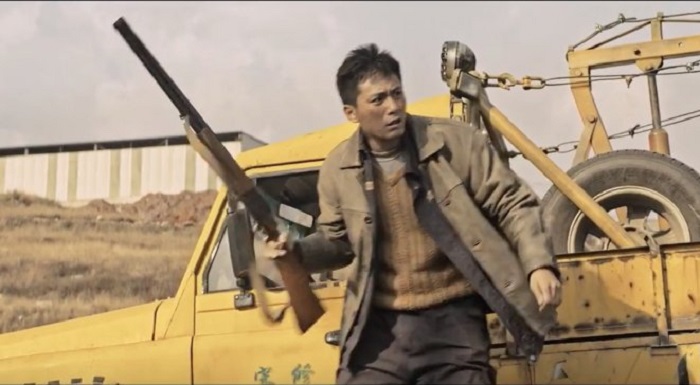
COCK AND BULL Director Cao Baoping mines a simple setup – a small-town murder – to toy inventively with chronology, framing and editing, while the ruggedly beautiful landscapes of remote Yunnan add zest and colour. Cock And Bull excels thanks to its director’s strengths as a storyteller: through a series of twists and reversals, the significance of each narrative incident is only revealed much later, while each encounter between the main character triggers an eruption of rage, frustration and misunderstanding, with a healthy dose of black humour injected for good measure.

HOOLIGAN SPARROW It goes without saying that this guerrilla documentary didn’t get a release inside China. In the aftermath of an infamous 2013 case on the southern island of Hainan, in which a principal raped five schoolgirls in his care, the film follows activist, Ye Haiyan, and several others in their efforts to get justice for the victims. Those hoping for a forensic investigation of the crime and its aftermath will be disappointed; this is more of a loose odyssey tracking the individuals involved as they decamp from one city to another attempting to remain ahead of the authorities. As a snapshot from the frontlines of activism in China, however, it’s insightful, and it’s chilling to witness the lawyer, Wang Yu, detained without trial since July 2015, predicting her own disappearance.
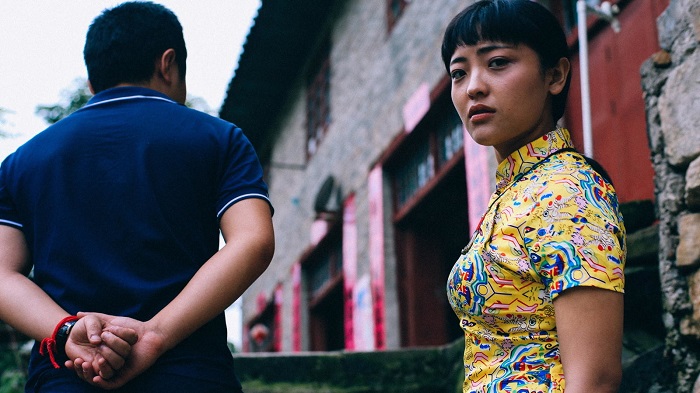
KAILI BLUES The tone poem of Chinese cinema in 2016, the debut film by poet-turned-director, Bi Gan, is filmed deep within the minority region of Guizhou, an area of China known for its cultural eclecticism and poverty. Almost impossibly languid, the film unfolds like a sleepy hallucination, digressing often from its fragmentary plot to muse on abstruse Buddhist scripture and take in everyday moments that border on the surreal. The film won’t be to everyone’s taste, but Bi’s assurance and command of the camera are undeniable, and its mood and images linger with you.

PATHS OF THE SOUL An unexpected left turn from director, Zhang Yang, whose previous output has been more conventional, Paths Of The Soul documents the back-breaking religious rite known in Chinese as wu bu yi gui – a prostration to Buddha every five steps – which can be seen at many Buddhist sites around China. The difference in this docudrama is that it follows a Tibetan extended family as they make a pilgrimage, on foot, across the harsh country to the sacred Mount Kailash. Zhang elects not to provide any commentary – the film even lacks a soundtrack – focusing only on observing the journey across the wilderness, with hypnotic effect.

THARLO The first film to gain a cinematic release in China by Pema Tseden, probably the most well-known Tibetan filmmaker, Tharlo is a stark, black-and-white allegory of a herdsman searching for his identity, symbolised by his abortive attempts to apply for an ID card in the nearest county. Tseden frames his small-scale story against the stillness and vastness of Qinghai, in the country’s far west, and the political subtext, though implicit, is present if one looks for it. Several scenes of droll humour leaven the film’s eventual bleakness.
FIVE CHINESE FILMS THAT BROKE NEW GROUND IN 2016
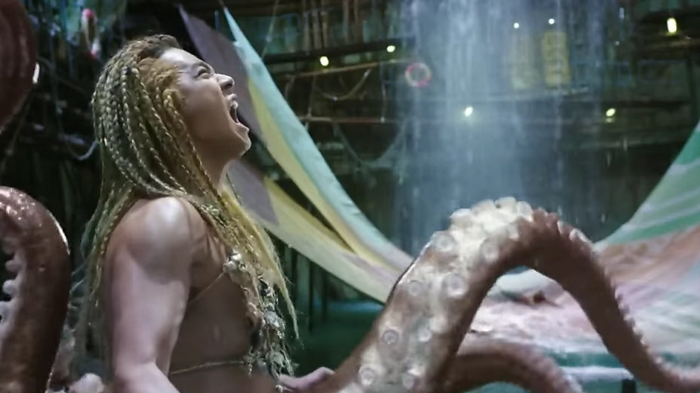
The film that established Chinese box office as a force to be reckoned with: The Mermaid The commercial juggernaut of Chinese cinema in 2016, Stephen Chow’s The Mermaid has made over half a billion US dollars, almost solely generated from its domestic box office run. The film itself is pretty dreadful, but by virtue of its success, it has become the yardstick by which all future Chinese blockbusters will be measured.
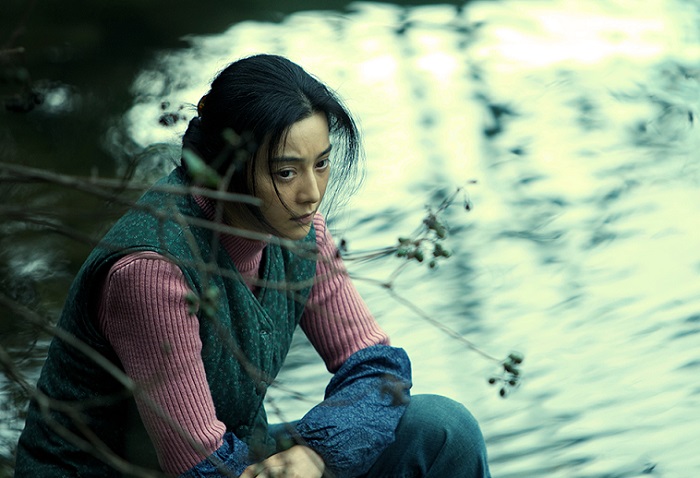
The film in which a big-name director clawed at artistic respectability: I Am Not Madame Bovary Feng Xiaogang, perhaps the most reliably successful Chinese director working today, branched out with I Am Not Madame Bovary, using his clout to craft a parable of one woman’s quest for justice. Superstar, Fan Bingbing, plays against type as the protagonist, and while not entirely successful, the film hopefully paves the way for established directors to take artistic risks.

The film that shows China can churn out Hollywood-style action carnage: Operation Mekong This action flick, based on the real Mekong Massacre from 2011 in which thirteen Chinese were murdered by drug traffickers, was a runaway hit in China, even though it is a compendium of Rambo-style protagonists, explosions, and spectacularly unsubtle flag-waving moments at the expense of China’s South-East Asian neighbours. The nonstop gung-ho tone becomes absurd over 120-plus minutes, but in fairness, no more so than the average Michael Bay movie.

The film that announced the arrival of gorgeous Chinese animation: Big Fish & Begonia China has nurtured its homegrown animation industry for years, but the average product on TV is so jerky and amateurish as to be vaguely nauseating. All of that changed with the summer release of Big Fish & Begonia, a folktale fantasy with moments of arresting beauty. Unfortunately, it’s a little too indebted to Studio Ghibli, both in story and style, but this at least suggests that Chinese animation may finally be getting off the ground.
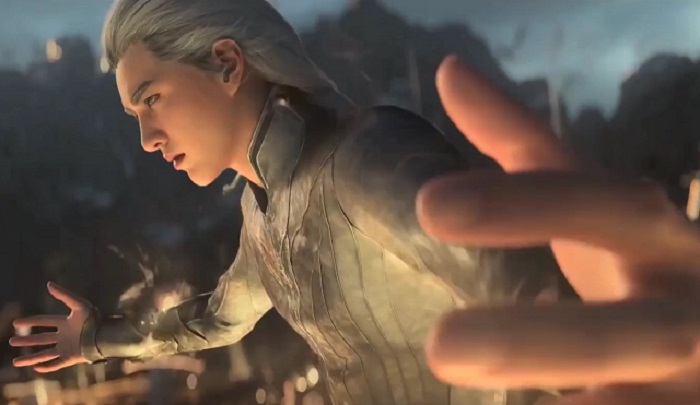
The film that proves that Chinese special effects still need some work: L.O.R.D.: Legend Of Ravaging Dynasties The release of this all-star action fantasy, which makes extensive use of motion capture, was accompanied by an ad campaign that was all but ubiquitous in China. This writer has not seen the movie, and it is by all accounts terrible – still, give it points for trying, given the paucity of effects-driven cinema in the country.
THE BEST INTERNATIONAL FILMS OF 2016, ACCORDING TO CHINESE AUDIENCES
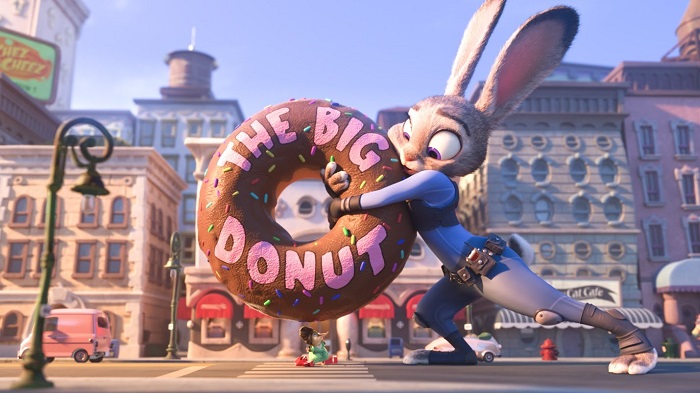
Only 34 foreign films are granted release into the Chinese market every year. This provides something of a distorted mirror into the year’s best cinema. Below are the top five rated movies (out of 10) of 2016 according to Douban users, a Chinese IMDb equivalent.
ZOOTOPIA (9.2) Zootopia’s huge success in the Chinese market contributed significantly to the film’s billion-plus worldwide gross, and the rapturously high rating from Chinese viewers is unprecedented.
HACKSAW RIDGE (8.8) A late entry into the year’s crop of approved foreign movies, Mel Gibson’s anti-war film was the second highest-rated movie of 2016 released in Chinese cinemas.
SONG OF THE SEA (8.7) This Irish animation film from 2014 somehow managed to score a theatrical release in China in 2016, where it outperformed its US box office run and was warmly received.
YOUR NAME (8.6) The third animated film in the top five, this Japanese anime demonstrates the craving on the part of Chinese audiences for strong stories in the medium.
BILLY LYNN’S LONG HALFTIME WALK (8.6) Unlike in the US, where Ang Lee’s latest was greeted with the cold shoulder, Chinese viewers embraced the film and its technological daring.
