


by Gill Pringle at San Sebastian Film Festival
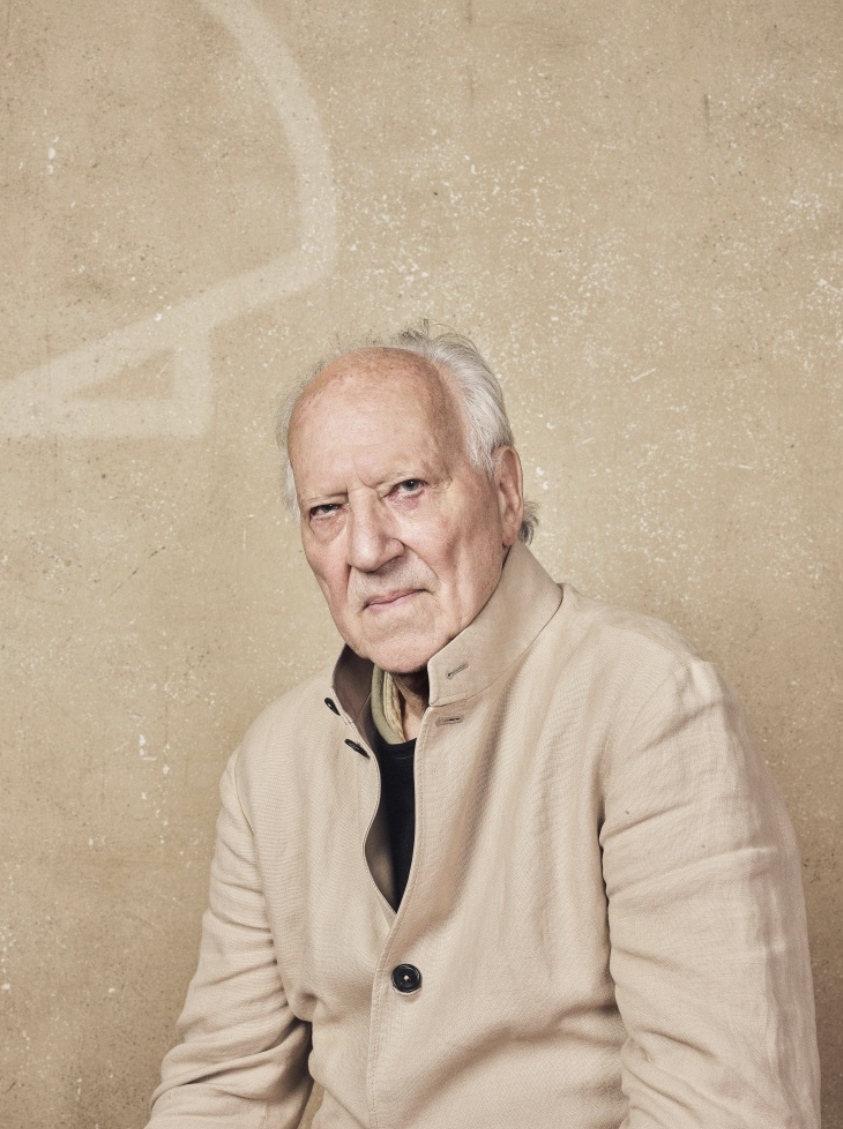
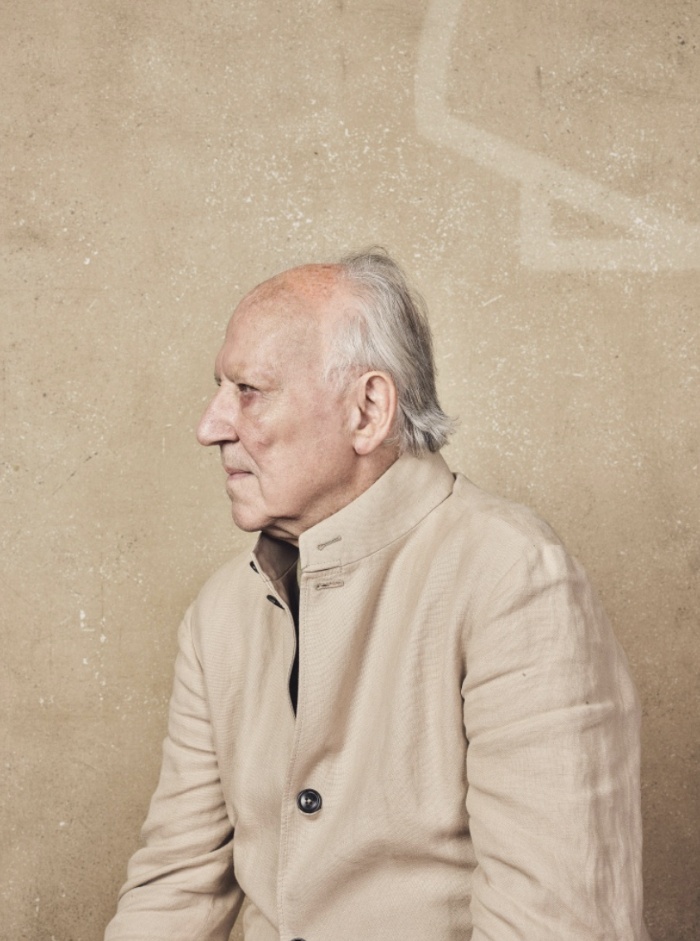
Werner Herzog is one of those filmmakers who seems impossible to separate from his movies. Even at 83, the German director, actor, writer and documentarian has built a career that feels less like a conventional Hollywood journey and more like one long, extraordinary adventure.
“Born in Munich in 1942, he grew up in a remote valley in the Bavarian mountains. Until age 11, he did not even know of the existence of cinema. He started to develop film projects from age 15, and since no one was willing to finance them, he worked the night shift as a welder in a steel factory during high school. He also started to travel on foot. He made his first phone call at age 17 and his first film at 19 . . .” reads his official biography.
Put in such a manner, one concludes that it’s that early distance from Hollywood that shaped this remarkably individual voice that would make him famous for more than half a century.
Today, his extraordinary career leads to his recognition at the 74th edition of the San Sebastián Film Festival, awarded with the prestigious Donostia award which he shares this year with Naomi Watts.
“She’s a formidable actress, and I’m very proud that she also receives it,” says Herzog, revealing how he seriously considered Watts for the part of Gertrude Bell in his 2015 epic biographical drama Queen of the Desert – a role which later went to Watts’ friend, Nicole Kidman.
“I spoke to Naomi about it, but she could not do it because of her children, and there was serious family business that she had to do, so it was okay. But I have considered her seriously for roles because she’s so good.”
An equal opportunity filmmaker, Herzog is as happy making films with unknown actors as he is with superstars, although his latest film Bucking Fastard, features a bonanza of A-listers including Kate and Rooney Mara as sisters who speak in unison and do everything together – including falling in love with the same man.
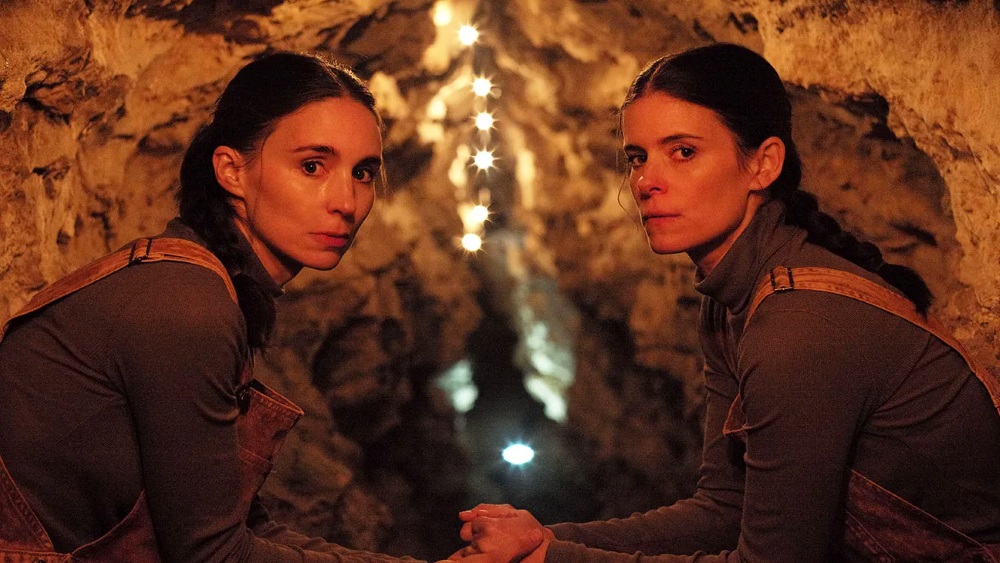
Inspired by British twins Freda and Greta Chaplin, they received widespread global attention in the early 1980s when they appeared in York magistrates court charged with harassing a local truck driver. Their bizarre appearance – dressed in identical clothes and speaking together to protest their innocence – immediately caught Herzog’s attention, although the project was indefinitely shelved due to the impossibility of finding the right actresses to portray the twins.
While the twins have both passed away – Greta died in 2007 and Freda in 2020 – Herzog’s meeting with the pair more than 40 years ago is still etched on his mind. “They understood that I was deeply fascinated about things that were beyond the practical daily life, and I had very unique encounters with them. For example, I’m in the film in a way. My role is written into the film as a social worker who helps them open a sardine can because I was the one who taught them how to do that!” he says, referring to the character played by Domhnall Gleeson.
Having long since given up on making a film about the twins, he says that “it felt dormant, and was completely out of consideration – because I understood it would be difficult to find twins who could speak in unison – until I wrote my memoirs and I thought, ‘Oh, I should do this’, and it was only when I went away from them being twins to sisters, then it became obvious.
“And there’s no one like the Mara sisters when you look at the parts they do. They are both wonderful actresses, and they were ready to take on this very difficult task.
“What would be misleading would be to speak too much about the twins, because the story that I have told is a completely different invented story, and it has elements of more like a poem, where it doesn’t have the narrative structure you normally would see in Hollywood films. So, it’s a unique film and a unique place, and I’m proud to be here,” adds Herzog who is attending the festival with Orlando Bloom who stars as the eponymous “Bucking Fastard”, a malapropism derided from the original court proceedings.
Largely associated with the New German Cinema movement, Herzog was never interested in fitting comfortably into anyone else’s definition of what a filmmaker should be. His movies, instead, have frequently focused on people living at the edge of society – dreamers, explorers, obsessives and outsiders who refuse to accept ordinary limitations.
Perhaps the most famous example is his turbulent creative relationship with the late actor Klaus Kinski. The two made five films together, Nosferatu the Vampyre, Woyzeck, Aguirre, the Wrath of God, Fitzcarraldo and Cobra Verde. Their partnership was legendary, and sometimes frighteningly volatile.
The pair would clash spectacularly, yet Herzog understood that Kinski’s extraordinary intensity could produce performances almost impossible to manufacture.
Their relationship was explored decades later in Herzog’s documentary My Best Friend. It revealed something important about Herzog himself: beneath the eccentric stories and outrageous filmmaking adventures was a man fascinated by human nature, particularly by what happens when people become consumed by an idea.
That fascination has followed him throughout his career. His documentaries, including Grizzly Man, Encounters at the End of the World, Cave of Forgotten Dreams and Into the Inferno, all feel very different from conventional documentaries.
Uninterested in simply recording reality, he wants to find what he calls an “ecstatic truth” – something deeper and more emotional than straightforward facts alone.
His distinctive voice has become almost as recognisable as his face. That unmistakable German-accented narration, delivered in his calm, deliberate style, has made Herzog an unlikely pop-culture personality, even appearing as an actor in films and TV, including The Mandalorian, Jack Reacher and Rick and Morty.
For younger audiences, who may never have seen one of his classic films, his wonderfully po-faced presence has sometimes been their introduction to him.
Herzog has also staged a dozen operas around the world – notably in Bayreuth and Milan’s La Scala – and has published poetry and books of prose including Walking in Ice, Conquest of the Useless and The Twilight World.
Thrice married – his current wife is photographer and filmmaker Lena Herzog, whom he wed in 1999 – Herzog has three children.
And while he has never appeared particularly interested in celebrity for its own sake, Herzog’s life seems to revolve around curiosity: traveling to remote places, meeting unusual people, climbing mountains, sleeping in jungles, confronting dangerous environments and asking questions that most of us would never think to ask.
At his core, is a man bent on trying to understand the world – and, occasionally, to challenge it.
His films can be strange, funny, disturbing and beautiful, sometimes all at once. And after more than half a century behind and in front of the camera, Herzog remains unmistakably himself: an artist who has always preferred the road less traveled.
And he’s not about to get off that track anytime soon.
“I still have many a good story in me, and I have a list of what I should do, but I try not to look at it,” he says.
“I can give you a metaphor of how I feel. I would wake up at four in the morning because there’s some noise in my kitchen, and I switch on the light, and there are four burglars, uninvited guests, four robbers are in my kitchen, and one of them comes swinging with an axe at me. So, that’s the one with whom I deal first, the one who comes with the greatest vehemence. So that’s what I deal, and with the films, it’s the same. Whatever comes with real vehemence at me, that’s what I’m dealing with, and I’m never afraid, as wild as it may be.”
Herzog is so prolific – and also such a fast worker – we cannot help but enquire as to his secret. Perhaps, like Nosferatu, he requires little sleep? “Oh no. I prefer to get at least eight hours sleep a night – nine hours if possible,” he insists.
“And strangely enough, my days of shooting are very short and quiet. You see, it’s like open heart surgery. Never a loud word. Very professional. Completely focused. I’m only operating on your heart, and when I do the heart operation, I’m not interested in giving you a haircut as well.
“I’m only interested in open heart surgery, and because of that, I only film what I need for the screen and my shoots are short and quite often we are done for the day by 3.30pm and then I can come home and cook dinner. I never go into overtime,” he concludes.
Main Image: Werner Herzog, director of Bucking Fastard, Jorge Fuembuena, 20th September 2026 / San Sebastian Festival Archive / CC BY-NC
