



by Gill Pringle in LA
There are monster movies, and then there is Godzilla.
For more than 70 years, the enormous creature has stomped its way through movie history, terrifying audiences while serving as a surprisingly powerful symbol of humanity’s own capacity for destruction.
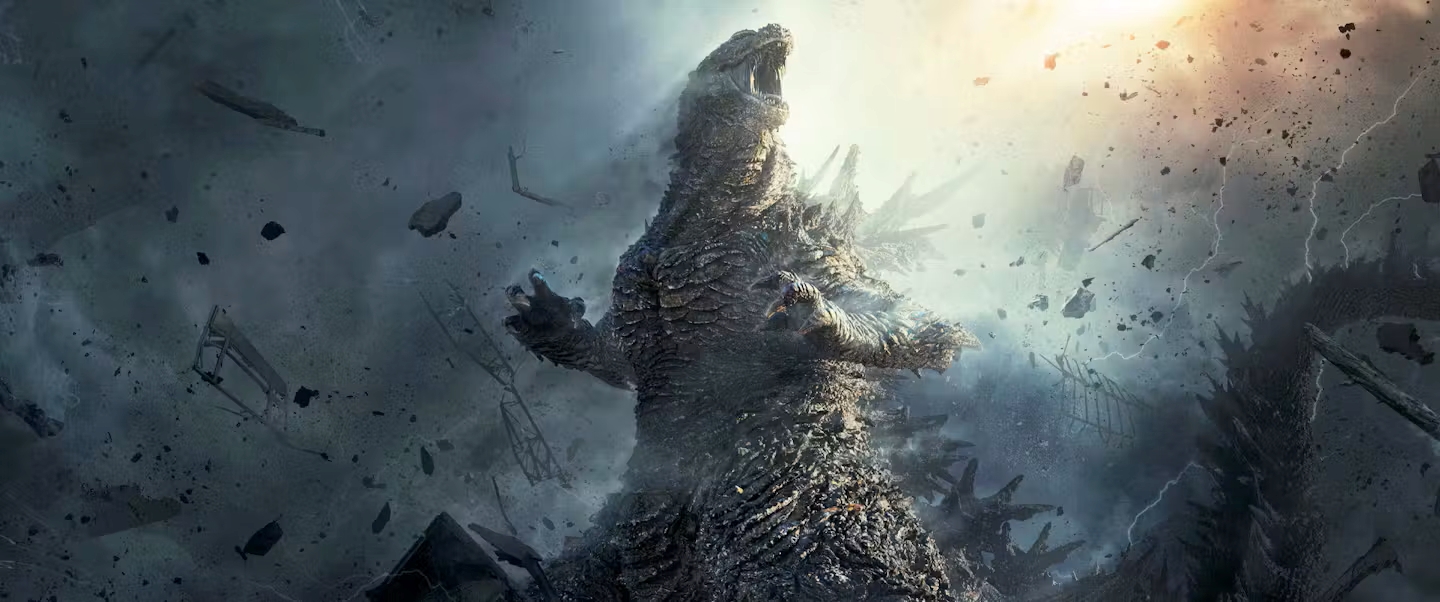
With Godzilla Minus Zero, director Takashi Yamazaki returns to the world he so memorably reinvented with the Oscar-winning Godzilla Minus One, delivering another spectacular adventure that combines breathtaking visual effects, emotional storytelling and the kind of monster mayhem that demands to be seen on the biggest screen possible.
Set in 1949, two years after the events of the previous film, Godzilla Minus Zero finds Japan still struggling to recover from the devastation of World War II and Godzilla’s catastrophic attack. The country has barely begun rebuilding its cities and restoring some sense of normal life when their fragile peace is shattered once more – with the arrival of a new terrifying monster in town, King Ghidorah.
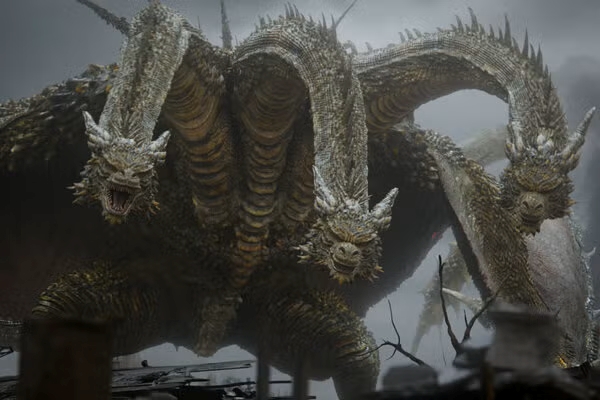 “With King Ghidorah, of course we reference the sort of basic shape of King Ghidorah that’s existed over the decades,” explains Yamazaki when FilmInk talks to him.
“But I wanted Ghidorah to feel like this very divine creature. So, I looked at this phoenix bird from Japanese mythology, and it has a very widespread tail. So that’s where that tail design comes from. And I added a membrane between the two tails, connecting them, so it almost has this peacock-like tail as it kind of feathers it out.
“The physical design, the shape of King Ghidorah is very important. But for me, the movement and action was equally as important. There was a Japanese artist named Ito Jakuchu, who did a lot of illustrations of chickens with this very unique design where it almost feels like it’s spiraling or twisting.
“So, we drew inspiration from that artist’s work, so whenever King Ghidorah jumps or moves or attacks, it has this very spiral-like movement – so, there’s a lot of Eastern inspiration there,” says the Japanese filmmaker.
At the centre of this new story is Koichi Shikishima, played once again by Ryunosuke Kamiki. Having survived the horrors of the previous film, Koichi is still dealing with the emotional scars of war and the terrible consequences of his encounter with Godzilla.
His relationship with Noriko, played by Minami Hamabe, remains an important emotional foundation of the story. Their struggle to build a normal life in a country that has experienced so much suffering gives the film something more substantial than simply another battle between a giant monster and mankind.
That human element is precisely what made Godzilla Minus One so effective, and the director understands that the secret to a successful Godzilla movie isn’t simply making the creature bigger or the destruction more spectacular. It is making audiences care about the people caught in the middle.
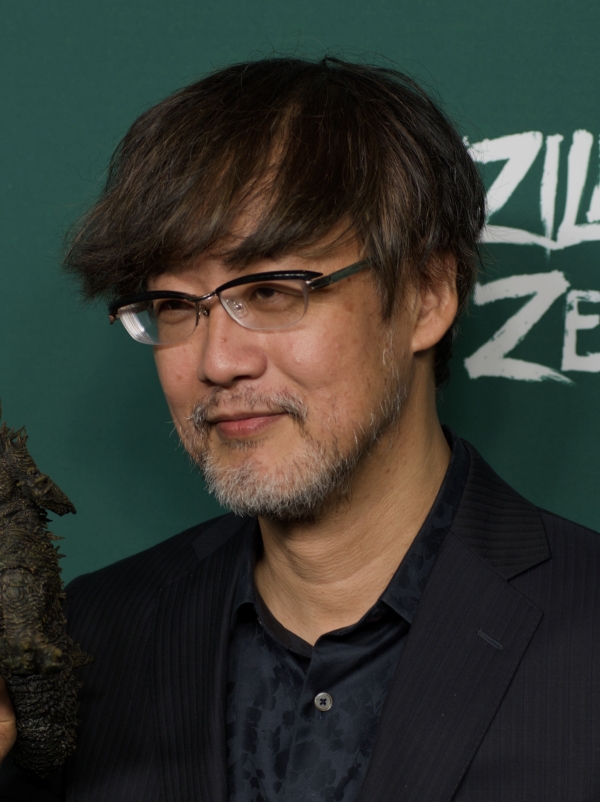
Ask Yamazaki whether he had always planned to make another film while working on 2023’s Godzilla Minus One or whether it was a cash grab following that film’s enormous success, he’s honest: “It’s actually a bit in between. While we were in production for Godzilla Minus One, a lot of the cast and crew, we would have some conversations on set, and ask, ‘Well, what if the story continued? What is going to happen to these characters in the future?’
“And we were kind of excited, but this was all very casual, and nothing was set in stone at the time. And sequels don’t happen unless you have a hit on the first film, so before even knowing the box office results, we had a cast and crew screening of the film, and that’s when I began to hear whispers among people at Toho that maybe we should do a sequel, so even before the movie even rolled out, we had a good feeling it was going to be well received,” he says referencing Toho, the storied Japanese film studio whose most famous creation is Godzilla, responsible for some 36 of the company’s films.
Taken together – Godzilla, Rodan, Mother, King Ghidorah and Mechagodzilla are considered Toho’s “Big Five”.
“But before we even got to see any results, Toho came back to us and said they’d like to pursue a sequel and develop it together. So, I actually thought that was almost a healthy way to decide to make a sequel because we didn’t see the box office numbers, which means we’re not making a sequel because the first movie made a ton of money and we’re going for another cash grab. But because the film was good and everyone wanted to see what happens to these characters next. So based on that alone, Toho wanted to make a sequel,” says Yamazaki.
The returning cast also includes Hidetaka Yoshioka, Sakura Ando, Yuki Yamada and Kuranosuke Sasaki, while Min Tanaka joins the story as Kanji Murakami, a biologist whose own wartime experiences have left him deeply scarred. Masami Nagasawa also appears as Makoto Aoyama, a gifted weather forecaster assigned to the Disaster Response Bureau.
Behind the camera, Yamazaki again wears several hats, serving as writer, director and visual effects supervisor. His achievement with Godzilla Minus One earned him an Oscar for Best Visual Effects, while this new film gives him a real opportunity to expand that vision.
And if you think Godzilla is all about monster effects, then Yamazaki also pays close attention to his country’s World War II legacy.
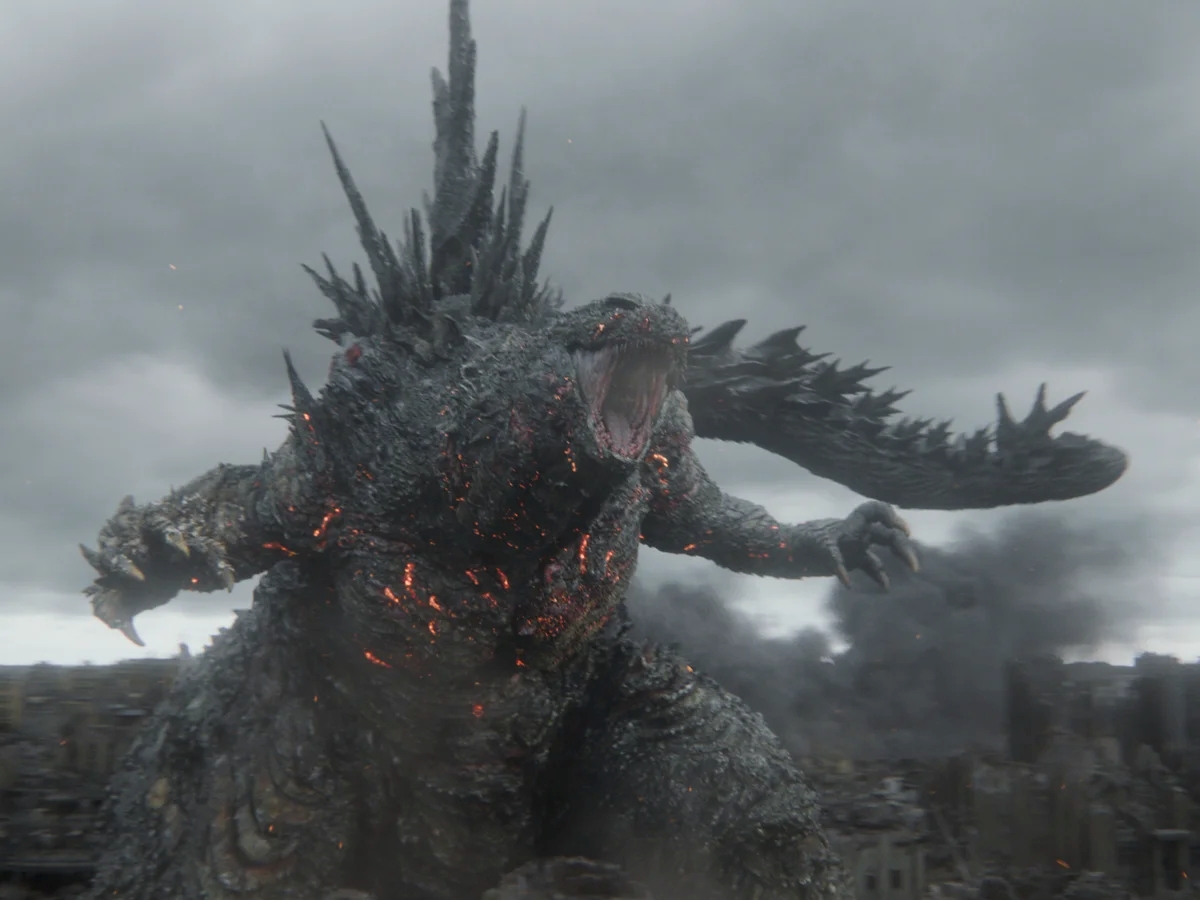
“I’ve worked on many films before that take place in a certain period in Japan. So, there’s a lot of accumulated knowledge there, and it’s a fascinating time in a lot of ways in Japan as it’s trying to recover from the scars of war, and with that backdrop, a new kaiju, a new challenge, a new obstacle appears,” he says.
“In addition to the research we’ve done for our past films, we did a deep dive into a lot of references, documentation, pictures, etc., and were able to interview some experts as well as people who’ve seen it firsthand – Hiroshima survivors – and, of course, there’s not a lot of time to interview firsthand accounts anymore. So, it was a very rare opportunity,” he says referring to August 6 1945 when the US dropped an atomic bomb on Hiroshima with devastating effect.
“We also got a lot of inspiration from high school students who did a research project where they interviewed many people with firsthand accounts of Hiroshima, creating this gallery of the students’ interviews – we rewrote multiple times the accounts of how the atom bomb affected the people and its surrounding areas.
“There’s a lot of imagery and, for me, it was a very shocking moment to listen and see and be exposed, or as close as I could possibly get, to these firsthand accounts of what it was like. So, I tried to process that and recreate what I imagined they were experiencing in live action format,” he says.
Godzilla Minus Zero is in cinemas now
