



by James Fletcher
While films like the Oscar nominated Minari and Netflix’s YA adventure Love and Monsters might not seem to share much in common with the likes of Spider-Man: Far From Home or Godzilla: King of Monsters, much in the same way Marvel’s WandaVision and HBO’s Game of Thrones don’t exactly gel with The Goldbergs or NCIS, all of these productions do share DNA thanks to an Australian company, Blackmagic Design, which has quietly dominated behind the scenes of the Hollywood production machine for the past three decades.

And now, what has been a fairly underrated success story, is finally seeing recognition thanks to its hard-earned inclusion on the 2021 Australian Financial Review Rich List.
Founded in the mid-1980s, tech company Blackmagic Design has quietly forged some of the most innovative and proactive software and devices currently used in production. With an estimated 90% of Hollywood films and television series currently using their tech in one form or another, including 20 of the 30 highest grossing films of all time, Blackmagic Design has recently been valued at a comfortable $800 million, placing it alongside AFR Rich List entrants from more predictable industries such as property, mining and finance.
“It was quite a surprise,” reveals Blackmagic Design founder Grant Petty when asked about his response to this year’s list. “We spend all of our time so focused on customers and thinking about how to make our products better, that when you see it valued this way… it’s quite surprising how big it’s become.”
In fact, speaking with Petty, it quickly becomes apparent that his success has been years in the making, and while the dividends have paid off significantly, it’s the creative spirit, underscored with a slight rebellious motivation of his early days in the entertainment industry that have fuelled the core principles of Blackmagic Design.
“I worked in post-production as an engineer in Melbourne and Singapore,” explains Petty. “Building and maintaining the equipment used in their post-production facilities, including telecine.
“It was frustrating as the product cost so much, yet the quality did not reflect the price. And because back then sales people in television were on commissions, they would tell the customer anything just to make a sale.
“But as a customer of these products myself, it was really frustrating. So, I decided to make the products myself, so that we could build the kinds of tools that we actually needed.”
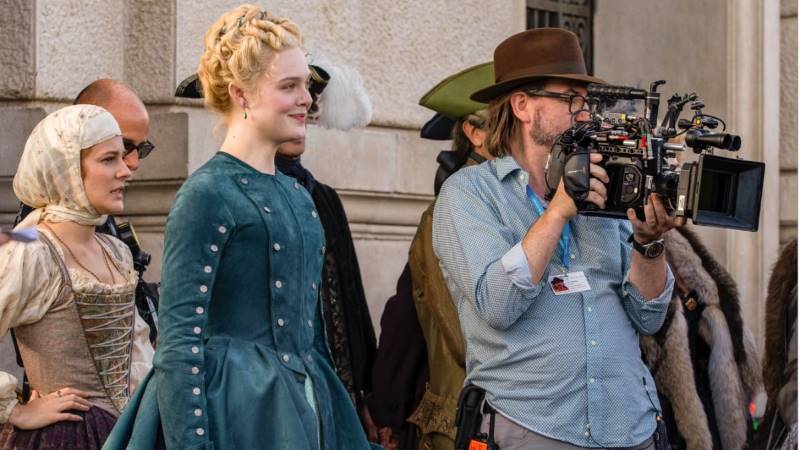
Today, Blackmagic Design holds offices in Australia, the US, UK, Japan and Singapore, crafting some of the world’s most advanced video editing products, video converters, routers, film restoration software and waveform monitors for the feature film, post-production and broadcast industries. Not to mention their Emmy Award winning DaVinci Resolve colour-correcting software which continues to lead the market with innovations in stereoscopic 3D and 4K workflows.
However, while DaVinci Resolve has gained the coveted market loyalty, Petty is quick to point out that among his company’s breakthrough tech, he still holds a fondness for one of the first products he produced, one that helped break Blackmagic Design into the open.
“I think the original capture card [DeckLink] would be the most exciting product. It’s what gave us life, but it also allowed the whole power of a computer to be used for creative work,” he explains, “Plus, we saw the dramatic effect it had on the cable television industry as the quality of the graphics instantly improved. It was a very exciting time.
“There have been lots of moments like that since, but because it was our first product and it had such a dramatic effect, it was the most exciting!”
But while Blackmagic Design enjoys its current success, like most quantum shifts in any industry, it hasn’t come without its fair share of push-back, especially, as Petty explains, when you’re not only reshaping the mindset of how things are done, but building new tools to implement those changes.
“Realising how hard it is to design and build a product was the most frustrating part of this experience. But another aspect was how nasty manufacturers in the television industry were.
“It was a constant stream of negativity and made-up stories that were being told about one manufacturer by another.
“As a customer myself, I would work closely with our post-production clients to make sure the job was great. However, on the manufacturing side it was a whole different game. The manufacturers were just horrible to each other, and of course horrible to us.
“It was very strange, but we knew we had a job to do and so we just got on and did it.
“I don’t think people in the television industry understand how much we have been criticised by the business community over the years, as people have said we are doing things wrong.”
Petty elaborated about the company’s evolution: “But being recognised in the AFR for what we do shows that putting customers first works and is what really matters. It’s how everything starts.”
