


By Dov Kornits
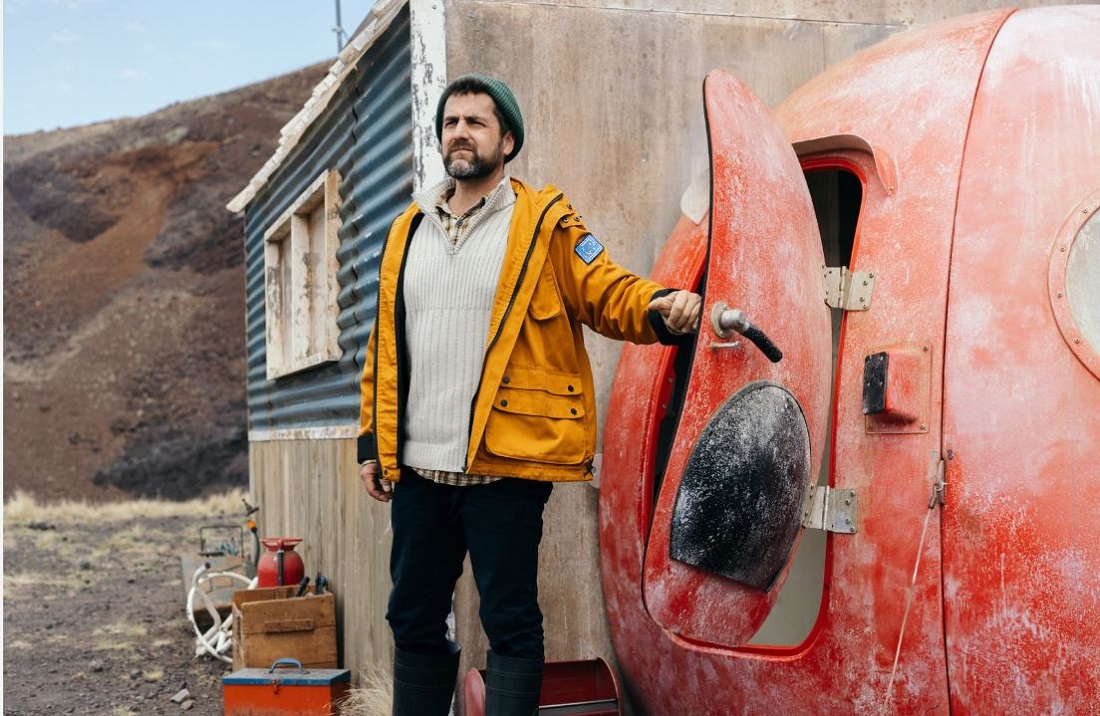
Writer/director Sam Voutas and producer Melanie Ansley (also husband and wife) welcome us onto Yesterday Island, their wonderfully droll time-loop comedy starring Venezuelan comedian Ivan Aristeguieta.
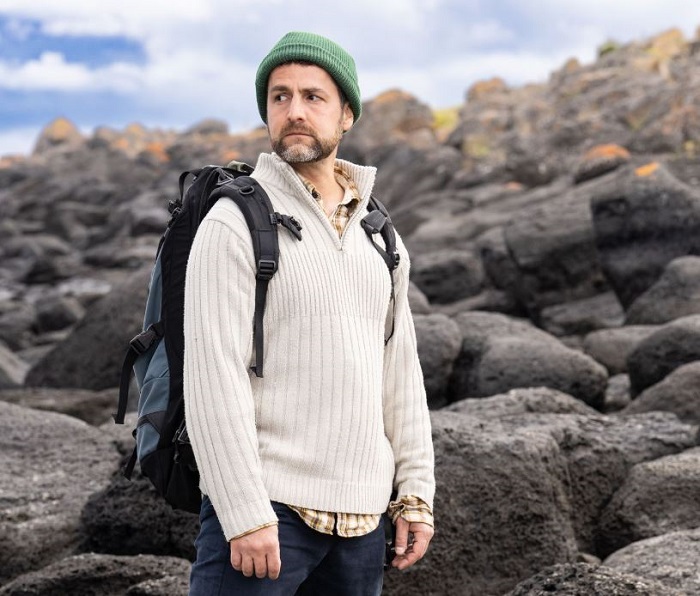
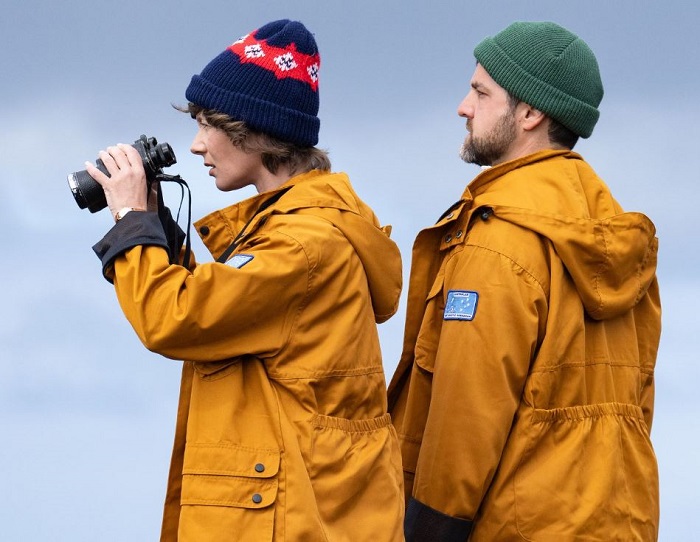
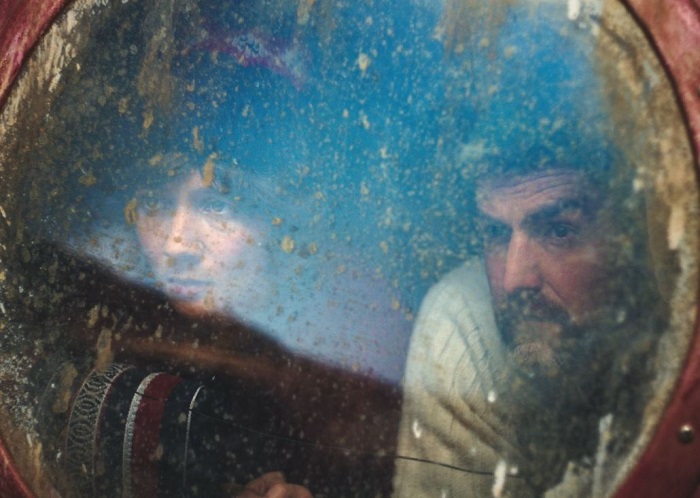
Shot in Tasmania on the striking King Island, with a great cast led by popular comedian and TV regular Ivan Aristeguieta, along with top-notch players Florence Noble, Francis Greenslade and David Fane, and written and directed by Sam Voutas (King of Peking), Yesterday Island is a bone-dry, borderline surreal comedy that gleefully defies expectations at every turn. When failed novelist Amos (Ivan Aristeguieta) agrees to mind his friend’s research station on a remote island for just one day, he expects solitude and a chance to break his writer’s block. He soon realises, however, that he is not only stuck on the island, but seemingly doomed to live the same day again and again and again…with only one hilariously wicked way off.
A quirky dark comedy about twisted relationships, petty revenge, and the inherently human desperation to stay alive, Yesterday Island is a strikingly original and refreshing work from the talented husband and wife team of writer/director Sam Voutas and producer Melanie Ansley, who has directed a couple of features herself in Walking The Dead and Watch Me. With a history in documentary and ultra-low-budget filmmaking, the duo goes large with Yesterday Island, a true breath of cinematic fresh air, and by far their most ambitious project to date…
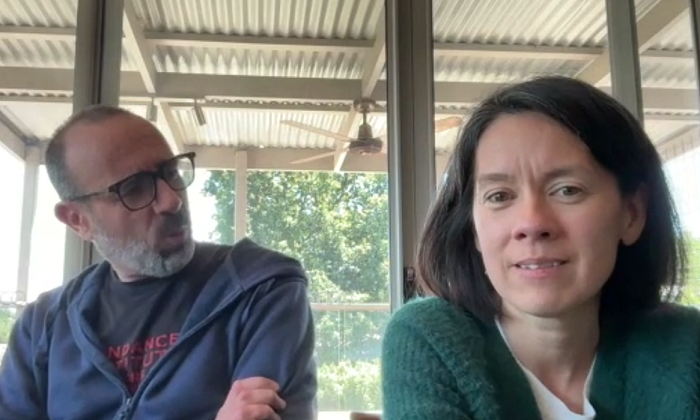
How did you arrive at this point as filmmakers? You’ve directed films too, Melanie?
Mel: “My first interest was acting, but when I got into the real world of acting, I quickly discovered that it wasn’t as proactive as I would’ve liked. There’s a lot of auditioning and waiting for the phone to ring, which didn’t really click with my personality. I wanted to be the one to pick up the phone and make things happen. That’s how I got into producing really. Sam did some films and I ended up producing on those. That suited me much better.”
Did you really direct some slasher films?
Mel: “I did. You’ve done your homework! I was very much into horror films and I was doing genre studies at school. I actually directed a horror film in China for E1. It was actually in English…it was for a Canadian company, but the film was set in China.”
How are her chops, Sam?
Sam: “I’m trying to convince her to do another horror film.”
What’s your journey been like, Sam?
Sam: “At uni, I had my sights set on a major in theatre and then decided to take a side course in film. I was introduced to the films of the American independent movement of the ’90s, like El Mariachi and Clerks and Go Fish. It was so exciting because DV was brand new in those days, and you could just get a camera and make a film. That sent me in a completely new direction: I made theatre my minor and film my major. I graduated in that.”
Would you just grab a camera and do things?
Sam: “Yeah, and that led to doing corporate videos with that DV camera. And then the corporate videos led to TV documentaries with different TV stations around the world. And then eventually I found documentaries got frustrating because you’re at the whim of who you’re filming. Sometimes their lives don’t go in the way that you wish they would. I thought, ‘Wouldn’t this be great if I could just go and turn it into a screenplay?’ So that led me down the fiction road.”
Mel: “There might be a common theme of wanting control here…”
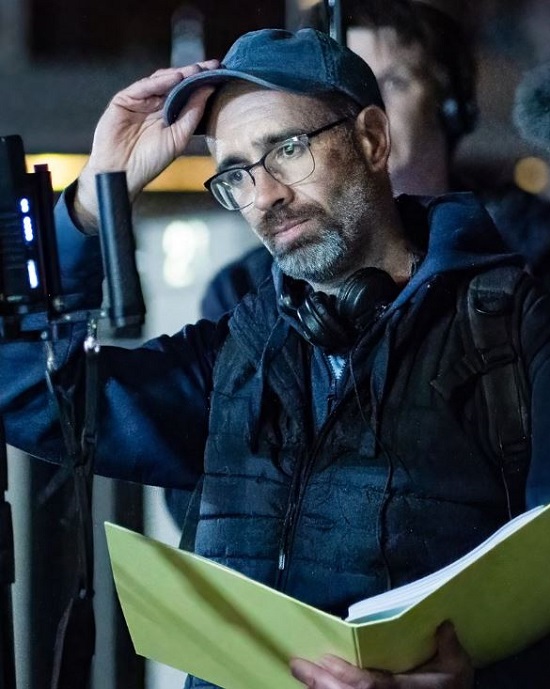
Do you see Yesterday Island as a genre piece?
Sam: “Hopefully, it’s elevated sci-fi. I didn’t want the film to end up in what I consider the bin of a place like Walmart or similar where you’re just in the bargain basement bin. When you go too hard to genre, sometimes that’s where you can end up. I was always trying to subvert the material. Audiences expect it to go this way, so let’s go the other way in a more unique and refreshing way, you know? That was a very conscious decision even from the script writing stage. The Walmart basement DVD bin is now an online bin, and you’re just trying to avoid that.”
Mel: “You don’t approach it as a genre film, but then you find out that you’re in a genre film, or at least a film with genre elements. That’s kind of fun rather than having an approach where you say, ‘Oh, I’m here to see a genre film’ and you go in and you’re waiting for the genre to happen. There’s something really enjoyable about that discovery and that freshness of going in thinking you’re in for one thing or having no expectations and then realising that you’re in a film that has a touch of genre.”
Do you have a philosophy around taking the unexpected approach?
Sam: “With genre, you have rules that are almost like a ladder or a structure. In a way, it becomes easier for you as a storyteller to go the other way because you know what the expectations are. As you’re writing or filming, you know in the back of your head that the audience is expecting this next because these are the rules of the genre, and this is what will happen next. So with that in mind, let’s do something else. By setting a story under that umbrella of a genre, you’re allowing yourself that structure to head in the opposite direction from because there are those signposts.”
How do you write? Do you have a whiteboard or something? How do you create?
Sam: “I used to do a lot of note cards that I would put on the floor and move around. Now I do exactly the same thing, but just in a Word document. I’ll just move this paragraph or even just this one line, or this log line…I’ll move it around. There’s a lot of pasting and moving about. So, it’s less in an A to B to C and more of a matter of moving these pieces around a little bit like a jigsaw.”
How do you collaborate, being a real-life couple? Melanie, you read the script from its early stages?
Mel: “I did, yes. I knew Sam was writing the script, and I had a vague idea that it was set on a remote island with an igloo, but that was pretty much all I knew. And I knew there was a couple of characters, but I didn’t know how many. I didn’t know what the relationships were or what the conflict was or anything like that. I don’t think you told me until you…”
Sam: “Mel’s always the first person that I’ll share that work with when I feel it’s ready to be seen by anybody else. Mel’s the first one who reads it. I trust her opinion immediately on whether it’s got the potential to go into production.”
What’s the approach then?
Mel: “It’s such a collaborative effort. It’s great working with Sam because he has such a producer’s head. He knows almost exactly what I’m going to want to flesh out or what I’m going to be worried about the same time as I do. There’s a certain shorthand as well, but he understands that I don’t have to, for lack of a better term, explain things. He knows exactly what I’m concerned about and why. And half the time he’s actually taken care of it in the beginning from the script stages because we talk about it at that point. ‘How are we going to do all of these exteriors? How are we going to get all of these actors out on this boat? How will we deal with the weather?’ You’ve got to think about those things. It’s a constant back and forth. Some people have joked that it’s good we’re a couple because nobody else would put up with their partner constantly thinking, breathing, and living a film all the time.”
Are you a creative producer then, Mel?
Mel: “Yeah, I will definitely be drawn to a project because of its story. Story, marketability…but story first and producibility obviously. We want to make things that make us feel and make us have certain emotions and make us think differently. I will always look at something and say, ‘How do we make this stronger? Is this landing? How does this work? What are we saying and is it unique?’”
Sam: “It takes so many years out of our lives to make these movies.”
When was this script written?
Sam: “I’ve been thinking about the idea for a long time, so I had a rough structure in my head, but from actually sitting down and putting the outline together to us being out to cast was less than a year. That’s really fast for me. Each script is different. Some scripts just take longer to develop, but this one was faster.”
What was the starting point for Yesterday Island?
Sam: “I wanted to tell a story in Australia that was in a unique world that I hadn’t seen in cinema much before. I started trying to explore parts of Australia I hadn’t seen on screen. I came across Macquarie Island and the Australian sub-Antarctic research stations. It was very, very particular and quite mysterious to me because I didn’t know anything about it. I found the history really interesting, so I started going down a research rabbit hole. I had this world, and then I thought, ‘Well, what kind of story structure can we put there?’ And then that’s where these other kernels start to come in. We’d just come out of COVID and we were all living in time loop lives. So that’s where the personal starts to infuse the location world of the story. I was just frustrated about wanting to get back into production, and feeling like my own life is sometimes in a time loop.”
Had you made anything here in Australia before this?
Sam: “When I had the DV camera, I was making underground thousand-dollar movies, which had no budget and essentially were just straight to the Walmart DVD bin or back then the VHS bin. So no, I’d never made any feature that was with an actual cinematographer and with an actual crew in Australia before. All the other projects that I’d done had been overseas. So, a big part of this really was trying to finally make a feature film in Australia after being in the film industry for twenty odd years.”
Mel: “There was a no-budget horror that I directed here. We made films in China. I worked on some productions in the States as well. This was our first go at doing what we would call a fully-fledged Australian film…a real film with a real budget.”
Sam: “This was written in Australia, and filmed in Australia, with post-production in Australia too. It’s Australian through and through.”
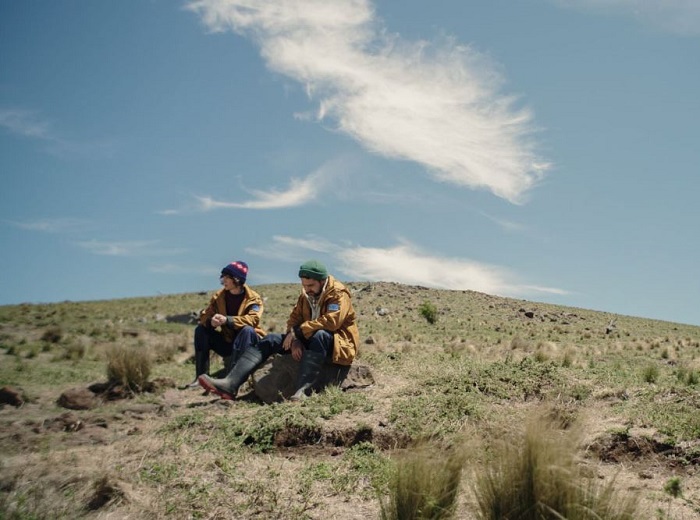
How was that experience? Compared to other countries, how was the experience?
Mel: “There are certain things that are different, and certain things that are the same. There are certain cultural etiquettes that are completely different. In China, we all stayed in a hotel during production and we all travelled to set together. It’s extremely communal. And obviously, it’s not like that here. It’s much more like a regular workplace, and that’s just one of many examples of the differences. But it’s great to learn those differences and learn to work a different way because it keeps you flexible and it keeps you open to other ideas and how other people work.”
Sam: “There’s so much creative talent here. Everyone brings their own unique perspectives and talents. We’re very lucky in Australia. There’s a great and very deep resource of talent.”
What about investment in the arts? Is that healthy here?
Mel: “Healthy is such an interesting word. We were just coming out of COVID, so I hesitate to put any sort of labels on that because it’s just such an odd blip in the whole financing timeline of things. It’s a different system. When we were in China, there was no subsidy, and no tax offset for films. That’s a big draw here. Investment-wise, the States has a very robust investment model that’s been going on for a very, very long time. It’s hard to compare, and it depends on what you want to call healthy, I guess.”
When did Ivan come on board? He’s fabulous…
Sam: “Ivan was the first actor cast. I knew I wanted him to play the lead. I’d never seen him act before, but I’d seen his standup, and a lot of his interviews. I reached out to him, and we had a coffee. I pitched it to him, and it really went down well. Then we put the pieces together. We didn’t use a casting director. I essentially just pounded the pavement and went through every agency I could find in Australia and New Zealand, and looked at all their books, looked at each of their actors, and their show reels.”
Mel: “Sam knows almost every single face on every single casting agency’s page. He spent weeks just going through them.”
Sam: “Once I finished there, I went onto Star Now. Star Now is a broader platform, and I went through as many of the thousands of actors as I could find to cast it. I was mixing those two. And then once I had a short list, essentially, it was quite simple because we just went to those very few names to see if they could do it.”
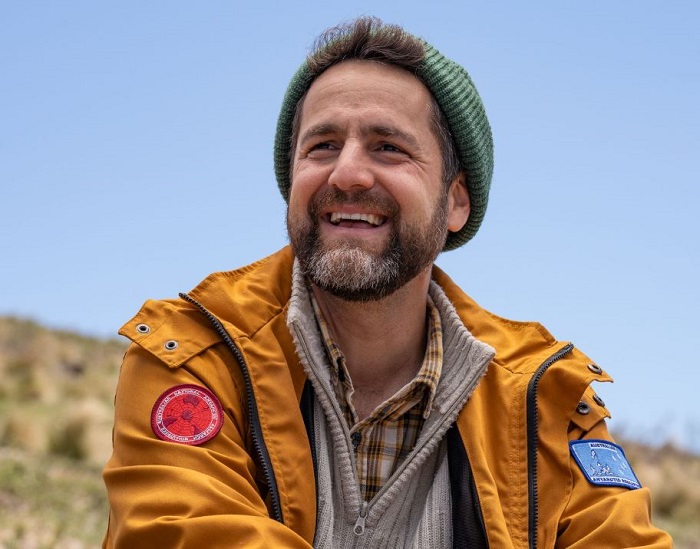
Did Ivan lend a comedic edge to the project that maybe wasn’t there in the script? How did that work?
Sam: “The comedy was already there in the script. 98% of the film follows the script. We do a bit of improv, but outside of that, it’s 98% exactly as it was in the script. We wanted this to be a dry comedy, which I think appealed to Ivan because it’s so different to what he does on stage where everything is so much bigger.”
Mel: “Sam plays to the actor’s strengths. When Ivan came on board, Sam encouraged him to add his Venezuelan bent or his flavour to it, which was how a lot of the humour came about. It was very much an invitation to actors to bring what they had to the table to change the script to that.”
Sam: “I found some old Venezuelan sayings and I said, ‘Do you actually say this in Venezuela?’ And Ivan said, ‘Yes, we do.’ It became a legitimate, fun part of the film.”
Mel: “And that gives it a flavour. It gives it a very unique flavour that is also very authentic. That’s Yesterday Island.”
Yesterday Island will enjoy event screenings in Sydney (Ritz Cinemas, November 27) and Melbourne (Cinema Nova, December 1) before opening nationally on December 10. Click here for our review.
